
Choosing a pneumatic nails manufacturer for woodworking and assembly lines

When buyers search for a pneumatic nails manufacturer, they are usually not just comparing fasteners. They are trying to solve a production problem: how to secure trim, frames, cabinet parts, or light assemblies quickly without creating rework at the finishing stage. In woodworking and joinery, the fastener is small, but the consequences of a poor choice are not. A bent shank, inconsistent strip feeding, or a finish that splits thin stock can slow an entire line.
That is why the real decision is often broader than “who makes the nails.” It is about whether the supplier understands the tool, the application, and the way the fastener behaves in real production. A brad nails manufacturer or finish nails manufacturer may sell products that look similar on paper, yet the actual performance in a nailer can differ enough to matter at the bench.
What the tool setup tells you about the application
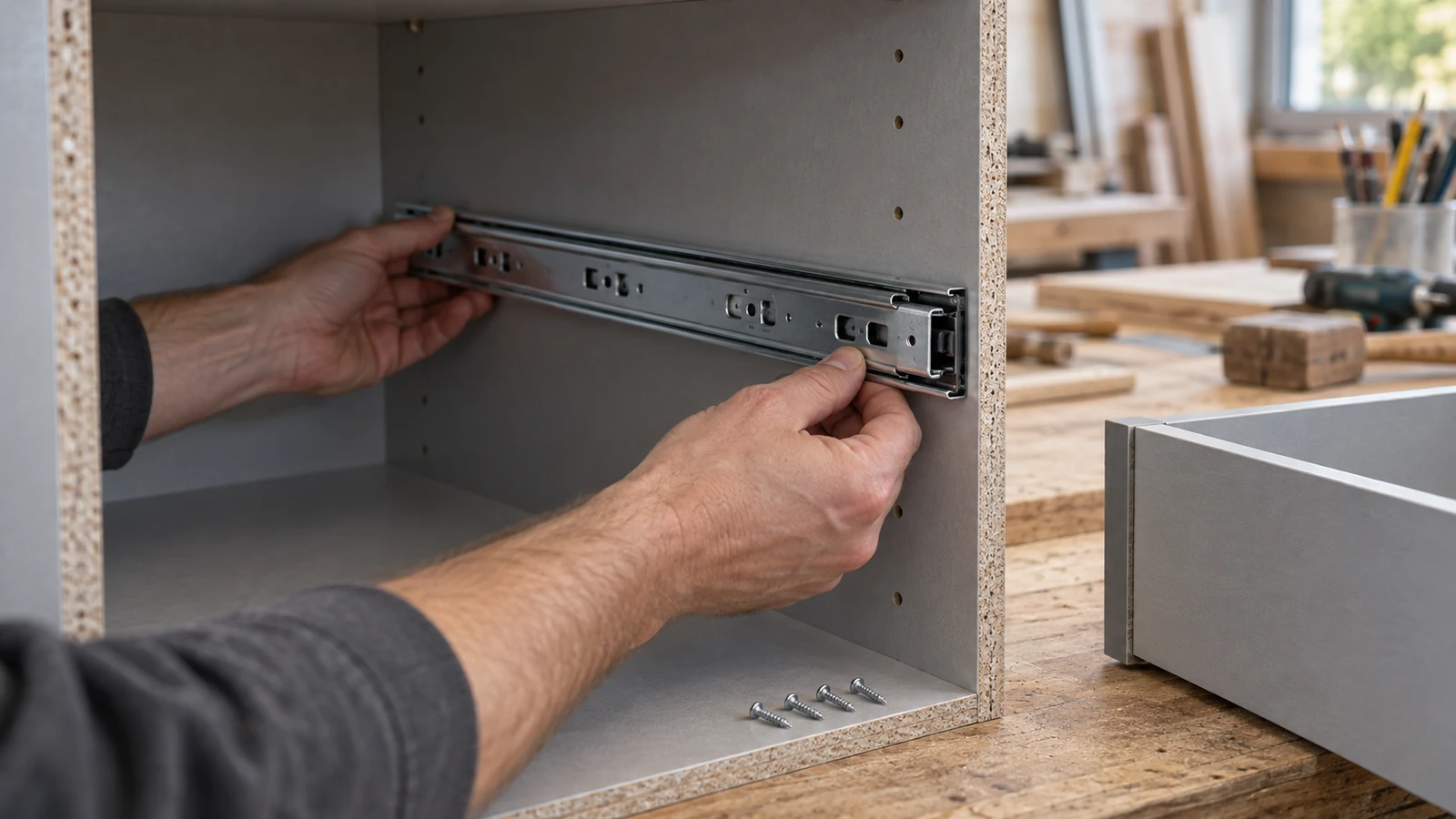
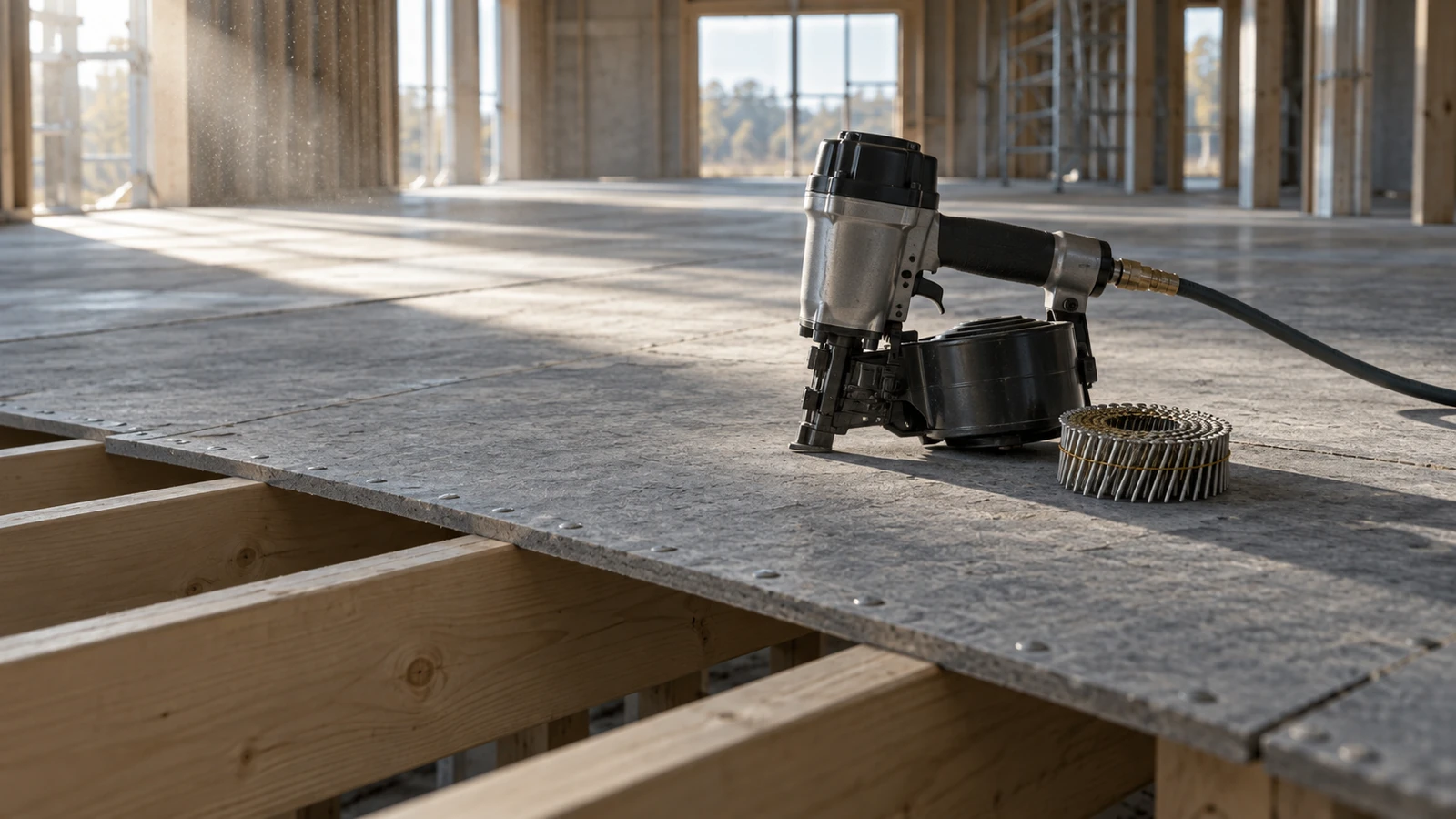
The scene behind this topic is familiar to anyone in cabinetry or trim work: a handheld pneumatic nail gun connected to an air hose, with an operator aligning a small wooden corner joint. That image points to a common manufacturing need. The parts are light enough that adhesives alone may be too slow, while clamps may not be practical for every station. Pneumatic fastening gives speed and repeatability.
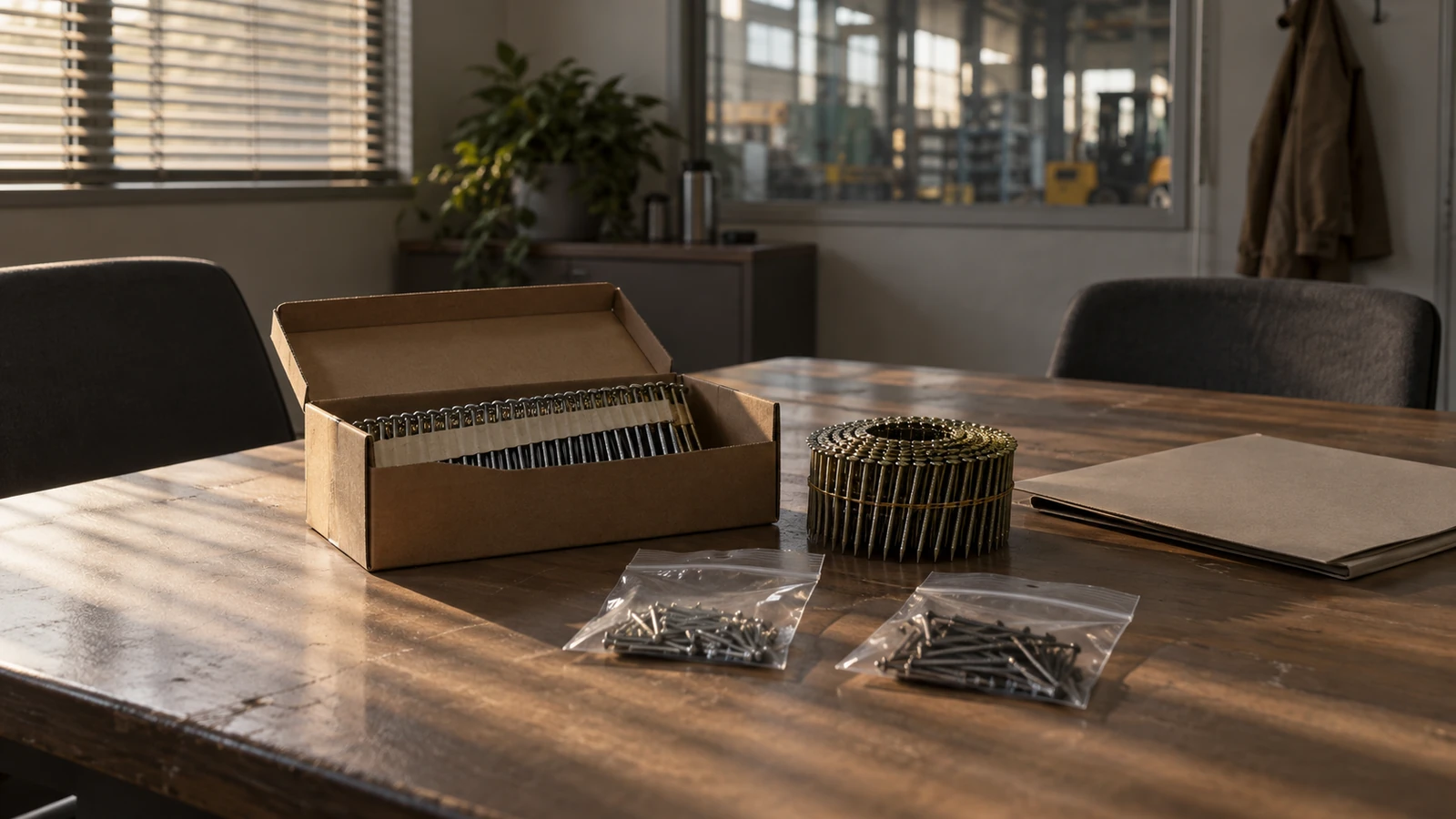
In this kind of work, the fastener must do a few things well. It needs to drive cleanly through painted or primed trim, hold parts in alignment, and avoid visible damage at the surface. For that reason, nail geometry, strip format, and consistency matter as much as raw holding power. Buyers sometimes focus only on price per box and overlook how much waste a poor-running strip can create. That is a mistake with a direct cost.
Brad nails versus finish nails: quick reference for buyers
For many purchasing teams, the first question is whether the application calls for brad nails or finish nails.
Brad nails
Brad nails are generally chosen for lighter trim work, delicate moldings, and smaller decorative assemblies. They are useful where minimizing visible damage is important. In cabinet and frame work, they can be a practical option when the joint needs temporary or moderate holding during glue cure.
Finish nails
Finish nails are often preferred when more holding strength is needed, especially for heavier trim, thicker molding, or parts that see more handling before final installation. They are commonly used where the buyer wants a stronger joint without moving to a much larger fastener.
The important caution is simple: don’t choose by name alone. Two suppliers can label products similarly while still offering different strip configurations, shank behavior, or coating approaches. Compatibility with the nail gun matters.
What a buyer should evaluate before placing an order
A practical sourcing review should start with the tool, not the catalog photo. Confirm the nailer type in use, the expected fastening depth, and the stock thickness being assembled. In the image context here, the operator is working at a corner joint on light wood with a painted or primed profile. That suggests a need for controlled penetration and a clean surface result, not brute force.
Buyers should also ask:
Whether the fastener strip feeds smoothly in the intended pneumatic tool
Whether the coating or finish is appropriate for visible trim work
Whether the nail profile suits the substrate and reduces split risk in thinner sections
Whether the supplier can support repeatable dimensions across batches
Those are not glamorous questions, but they are the ones that keep production moving.
Common mistakes in sourcing pneumatic fastening products
One common mistake is treating all pneumatic fasteners as interchangeable. They are not. A product that performs adequately in one nail gun may misfeed or mar surfaces in another. Another frequent issue is ignoring the finish side of the part. If the assembly will be painted, the buyer still needs to know whether the fastener leaves an acceptable repair profile. Hidden defects have a way of showing up later, often during final inspection.
A second mistake is buying only for one job and forgetting the broader shop mix. Many woodworking operations switch between frames, cabinets, and trim. A supplier with a narrow offer may look fine for one line item but become a constraint when the work changes.
How to work with a supplier more effectively
If you are comparing a pneumatic nails manufacturer with other sources, ask for application-fit information rather than marketing language. The most useful supplier conversations usually cover nailer compatibility, substrate type, visible finish requirements, and the job’s expected production pace. If the supplier also covers brad nails or finish nails, that can simplify procurement, but only if the product ranges are clearly differentiated.
For product teams, it helps to share the actual use case: cabinet face frames, window trim, picture frames, or similar light- to medium-duty assemblies. That narrows the risk of receiving a fastener that is technically plausible but operationally awkward.
FAQ: short answers buyers usually need
Is a pneumatic fastening system only for high-volume shops?
Not necessarily. It is often chosen for speed, but even smaller shops use it when consistency and reduced assembly time matter.
Should I choose brad nails or finish nails?
Start with the part geometry and the visible finish requirement. Lighter trim usually pushes buyers toward brad nails, while heavier trim or stronger hold often calls for finish nails.
What should I verify first with a supplier?
Tool compatibility, intended application, and batch consistency. Those three points prevent most avoidable problems.
Next step for sourcing teams
If you are narrowing suppliers, build your comparison around the actual job on the shop floor: the tool in hand, the wood species or panel type, the visible surface, and the rate at which the line needs to run. That approach will tell you more than a simple catalog comparison ever will. A good pneumatic nails manufacturer should be able to talk through those details without forcing you to guess.
If your application spans trim, cabinet work, and decorative assembly, keep a close eye on whether one supplier can support both brad nails and finish nails in a way that matches your production needs.