
Why buyers still care about a pneumatic nails manufacturer
When sourcing fastening tools for trim, cabinetry, and other fine carpentry work, a pneumatic nails manufacturer is rarely judged on one feature alone. Engineers and sourcing teams usually care about how consistently the tool drives, how well it handles corner work, whether the nose can reach into tight joints, and whether the platform fits the rest of the plant’s compressed-air setup. In finish applications, a weak or poorly balanced nailer slows the crew down, and a tool that misfires or crushes delicate material can turn a small assembly step into a costly rework problem.

That matters because pneumatic fastening is often used where appearance is part of the specification. Picture a framed mirror, cabinet face frame, or interior molding run: the fastener must hold, but it should not leave the work looking bruised. In that setting, the choice between a brad nails manufacturer and a finish nails manufacturer is not just a catalog decision. It shapes the visual result, the holding profile, and the amount of cleanup needed after assembly.
What the tool is doing in finish carpentry
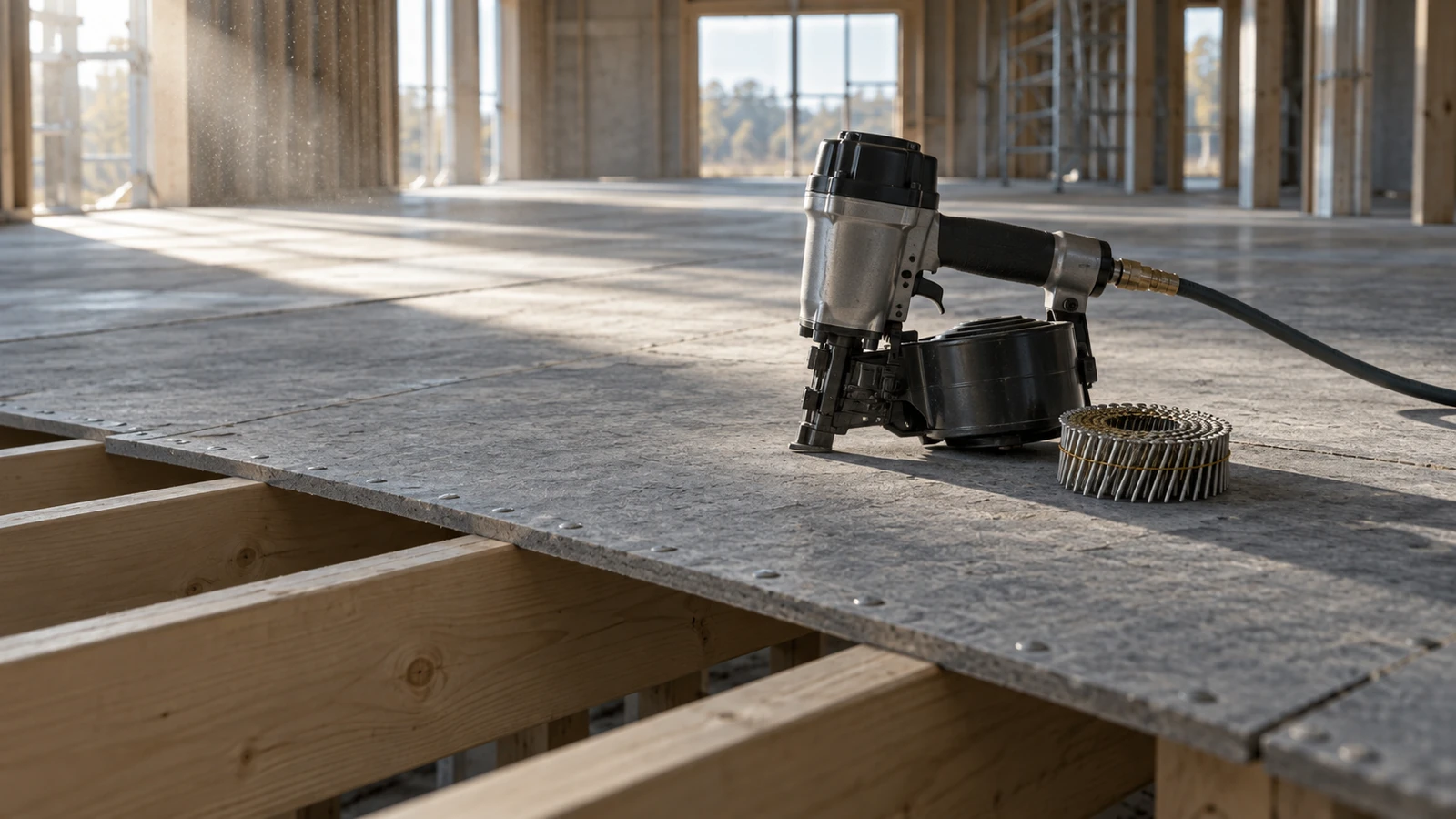
The image behind this topic shows a handheld air-powered nailer pressed into the corner of a wood frame. The body is compact, with a black grip, a metal housing, and a blue air hose connected at the rear. That is a familiar setup in woodworking shops and on trim crews. The narrow nose suggests the operator is aiming for precise placement at a joint rather than broad-area fastening.
These tools are used for door and window casing, baseboards, picture frames, mirrors, cabinet trim, and similar interior work. They are valued because they combine speed with control. Compared with manual fastening, they reduce fatigue and help maintain a more even installation rhythm. Compared with larger framing tools, they are built for smaller fasteners and cleaner surfaces.
Brad nails or finish nails: the practical difference
For buyers, the first question is usually which fastener family fits the job. A brad nails manufacturer typically serves applications where smaller-diameter fasteners are preferred and visual impact needs to stay low. A finish nails manufacturer is often chosen when a bit more holding power is needed for trim, molding, and other interior components that must stay aligned over time.
Quick comparison
Brad-style fastening is generally better when the material is thin, delicate, or easy to split. Finish nails are often selected when the profile is heavier and the joint needs more retention. That said, this is not an absolute rule. Material density, profile geometry, adhesive support, and the installer’s tolerance for surface repair all affect the final choice. A small cabinet shop may lean one way; a high-volume interior fit-out team may choose another.
Selection criteria that matter in real sourcing
When evaluating a pneumatic nails manufacturer, do not stop at the fastener label or the marketing photo. Look at the full fastening system. A tool may be compact and well shaped, but if the magazine feed is inconsistent or the nose is awkward in corners, it will frustrate production. In finish work, placement accuracy is often worth more than raw speed.
Buyers should also consider compatibility with existing air lines and shop practices. Pneumatic tools depend on stable air delivery, clean supply air, and routine maintenance. Even a well-made nailer will suffer if the compressor system is poorly managed or if operators run it outside the intended setup. That is a mundane point, but in manufacturing it is usually the mundane points that create downtime.
Common mistakes in procurement
The most common error is specifying only by general tool name. “Brad nailer” or “finish nailer” may be enough for a starter quote, but it is not enough for reliable purchasing if the tool will live in a production environment. Ask how the tool is intended to be used: trim installation, cabinet assembly, frame work, or mixed interior finishing.
Another mistake is ignoring the workpiece. Light wood, painted trim, and decorative molding behave differently from denser stock. If the application includes visible corners, the buyer should pay attention to nose geometry and how the operator reaches the joint. The image example is a good reminder: corner fastening is often less about brute force and more about access.
What a good supplier conversation should cover
A serious sourcing conversation should cover tool type, intended materials, fastener family, compressed-air requirements, maintenance expectations, and replacement parts support. If the supplier also offers both brad and finish solutions, it can simplify standardization across different workstations. That can be helpful in cabinet shops, architectural millwork lines, and interior fit-out operations where one team handles multiple fastening tasks.
If you are comparing suppliers, ask for plain technical answers, not just sales language. How is the nose designed for corner access? How does the magazine load? What is the recommended use case for the platform? Those questions are simple, but they reveal whether the manufacturer understands finishing work or is merely reselling a generic tool.
Buyer-facing takeaways
If your application involves trim, molding, mirrors, or cabinet-style frames, pneumatic fastening remains a practical choice because it is fast, compact, and easy to integrate into shop air systems. The main decision is not whether to use air power; it is which fastening family and tool format best fit the material, the joint, and the appearance requirement.
For procurement teams, the safest next step is to map the actual use case before comparing vendors. Separate delicate finish jobs from heavier trim jobs, then ask suppliers to show how their pneumatic tools and fasteners align with each task. That approach usually leads to fewer surprises on the shop floor and a better chance of getting a tool that does the job without unnecessary rework.
FAQ
Is pneumatic fastening only for high-volume factories?
No. It is used in factories, cabinet shops, and installation crews alike. The key is whether the work justifies compressed-air equipment and the need for consistent fastening.
Can one tool cover all finish applications?
Sometimes, but not always. Trim thickness, visibility, and material density can push buyers toward different fastener families or different tool sizes.
What should be checked first when evaluating a supplier?
Start with application fit, tool ergonomics, and fastener compatibility. After that, look at maintenance support and whether the supplier can explain the system in practical terms rather than only by catalog description.