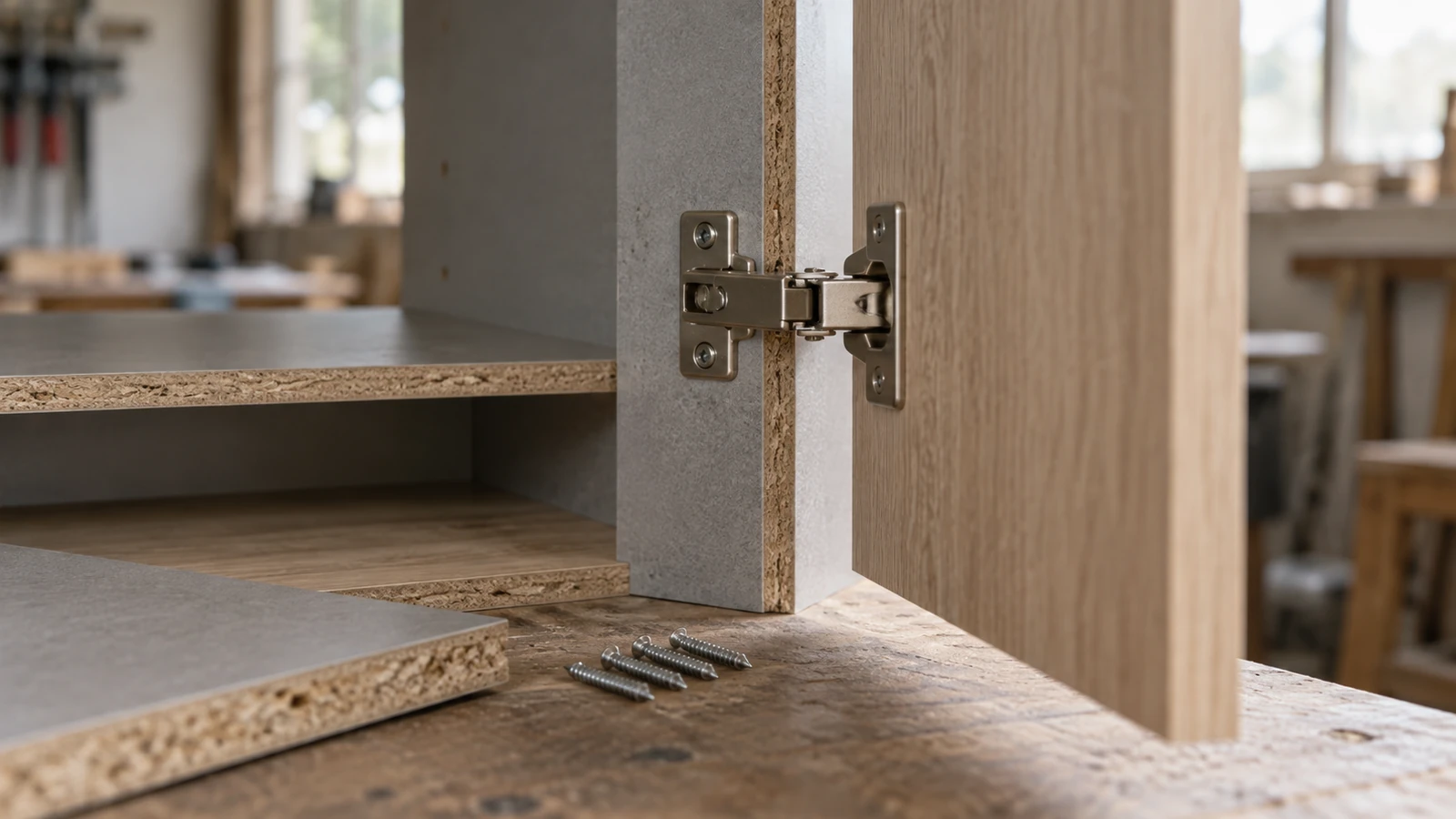

What buyers usually mean when they ask for a pneumatic fastener source
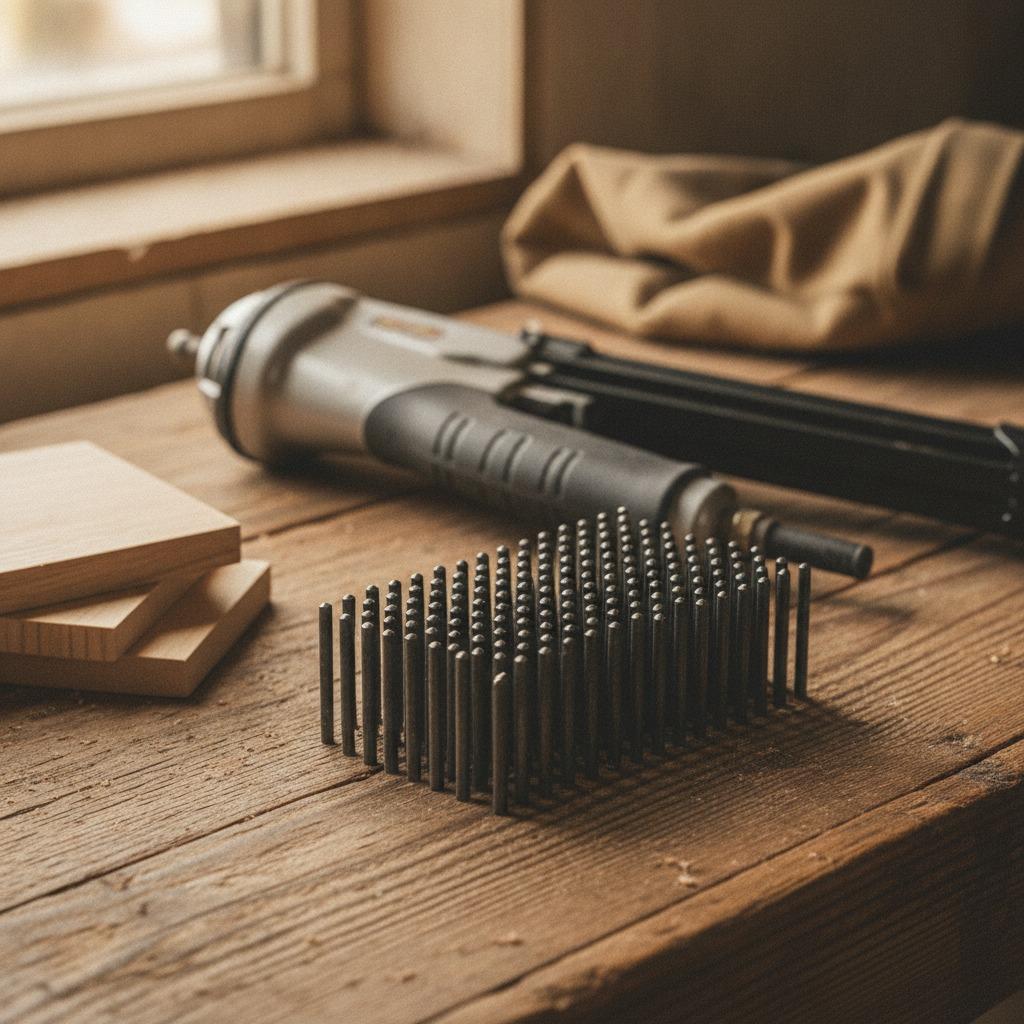
In practice, a pneumatic nails wholesale supplier is not just a place to buy boxes of nails. For most buyers, it is a sourcing partner for the fastening system around the nail: the strip-fed consumable, the air-powered tool, and the consistency that keeps a workshop, cabinet line, or trim crew moving. That matters because a fastener problem rarely shows up as a tidy procurement issue. It shows up on the bench, in split wood, in jams, or in wasted labor time.
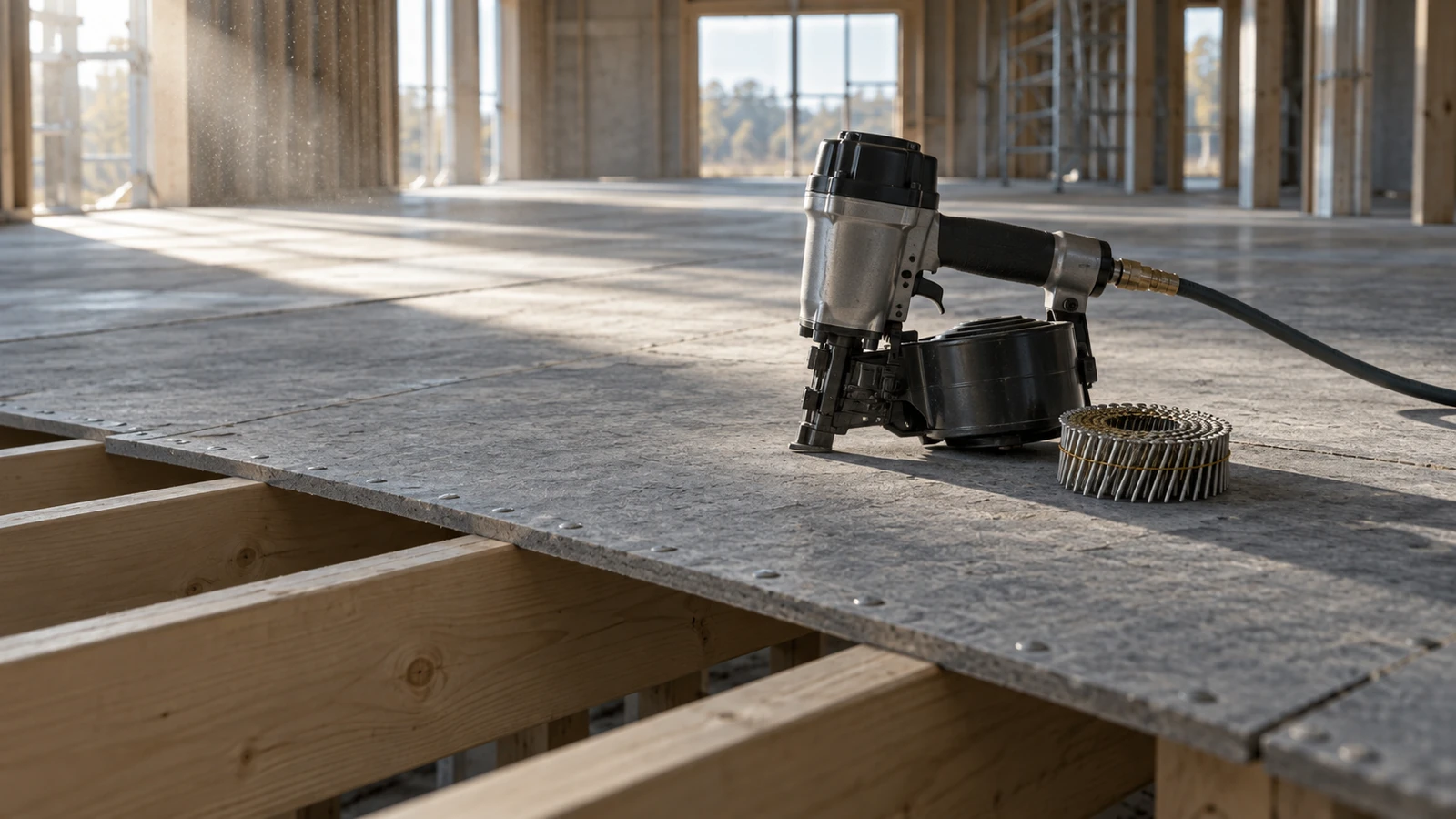
The product data points to a strip-fed, hand-held pneumatic nailer or similar fastening tool, with a metal housing, black textured grip, and a long front magazine. The loose fastener sample suggests a strip format with small nails or brads. That combination is familiar in woodworking, furniture assembly, cabinetry, and finish work, where speed matters but so does control.
Interview note: what experienced buyers ask first
If I were sitting across the table from a production manager, the first question would not be “What is the price?” It would be: what are you fastening, and how forgiving is the joint?
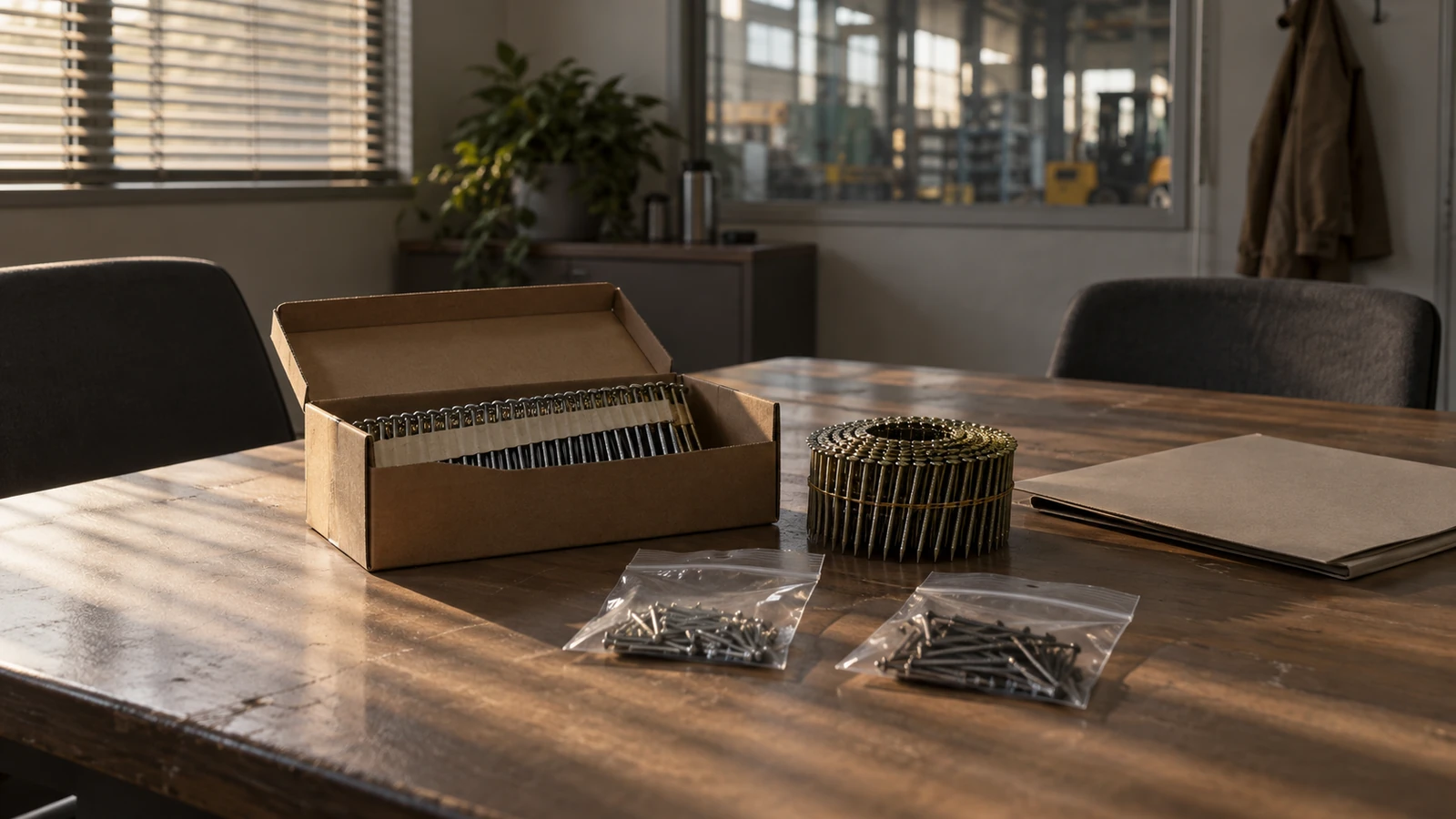
For light wood assemblies, trim, and shop work, buyers often compare brad nails wholesale options against other strip-fed fastener types. Brad nails are typically chosen when the hole needs to stay small and the visible face matters. Coil nails wholesale supply is usually a different conversation, more common where volume and feed efficiency matter. Strip nails wholesale is the broader category many buyers use when they want a straight-feed format and simple handling.
That distinction sounds minor until a tool operator is stuck with the wrong fastener geometry for the job. Then it becomes very expensive, very fast.
What the visible tool design suggests
The visible tool body appears to be built for hand-held use, with a compact profile and a textured grip for better control. The front magazine looks long and rectangular, which is typical of strip-fed fastening systems. In woodworking environments, that usually points to a preference for access and maneuverability rather than brute force.
That is useful for buyers because tool shape often tells you more about the intended workflow than a marketing sheet does. A compact pneumatic tool can be easier to use in cabinet interiors, on trim edges, or during repetitive assembly work. It may also be a better fit for stations where operators are working around fixtures and clamps. The caveat, of course, is that the exact model and fastening range are not visible here, so no one should assume capability from appearance alone.
Selection criteria that actually matter on the shop floor
When sourcing from a pneumatic nails wholesale supplier, the most practical questions are about fit, feed, and repeatability.
1. Fastener compatibility
If your operation uses brad nails wholesale supply, check that the nail dimensions, strip angle, and collation style match the tool and the workpiece. A mismatch here creates jams or inconsistent drive depth, and both are production killers.
2. Feed reliability
Strip-fed systems are popular because they are straightforward to store and load, but not every strip behaves the same. Consistent collation and clean feed paths matter more than most first-time buyers expect.
3. Application fit
Furniture and cabinetry buyers usually care about surface finish, minimal marking, and clean joint presentation. Light framing or shop assembly may prioritize speed and fast reloads instead. That is where coil nails wholesale or strip nails wholesale comparisons become more than a catalog exercise.
4. Handling and ergonomics
A textured grip and balanced housing are not cosmetic details. On a long shift, they affect fatigue, control, and operator confidence. In small shops, that may decide whether a tool gets used correctly every day or abandoned after the novelty wears off.
Common mistakes in fastener sourcing
The most common buyer mistake is buying by category name and not by working condition. “Pneumatic nail” sounds specific, but it still leaves a lot unresolved: material thickness, wood species, finish requirements, and operator skill level all change the right choice.
Another frequent issue is assuming all strip-fed fasteners are interchangeable. They are not. Even within similar-looking products, the loading format, shank style, and coating or surface finish can affect performance. The image shows dark-coated tips and bright metallic shanks, but the coating itself cannot be confirmed from the photo, so that detail should be treated carefully during sourcing.
Buyer advice: how to qualify a supplier before you commit
Ask for the exact fastener dimensions, the feed format, and the tool compatibility before placing a large order. If the supplier is also handling tool supply, ask whether they can support both the consumable and the nailer side of the operation. That can simplify purchasing, but only if the supplier is disciplined about product identification.
For production buyers, it also helps to request samples and run them in the actual wood species and line conditions you use every day. Shop conditions are less forgiving than a product page. Dust, operator technique, and material variation all show up quickly.
Interview takeaway
A good pneumatic fastening source is not just selling nails; it is helping you keep the line stable. If you are comparing a pneumatic nails wholesale supplier against broader brad nails wholesale, coil nails wholesale, or strip nails wholesale options, start with the workpiece and the feed format, then work backward to the tool. That approach saves time, reduces jams, and avoids the quiet cost of mismatched purchasing.
If you are preparing a sourcing shortlist, the next step is simple: define the fastening task, confirm tool and strip compatibility, and ask for sample packs before you commit to bulk buying.