
Why buyers look for a pneumatic nails wholesale supplier
If you are sourcing fastening consumables for a production line, a pneumatic nails wholesale supplier is often really a search for reliability, not just price. Plants that run upholstery, furniture assembly, packaging, or light wood fastening cannot afford frequent feed jams, inconsistent strip loading, or boxes that arrive short. Even when the term “nails” is used loosely, the actual buying need may be pneumatic staples, brads, or other collated fasteners that work with air-driven tools.
That distinction matters. A buyer may be comparing wholesale pneumatic nails for a workshop, but what the line actually uses could be industrial staples with a narrow crown and straight legs. In the wrong box, that small naming mismatch becomes a production interruption. So the first decision is not simply who is cheapest, but who can supply the correct collated fastener in a format that matches the tool and the job.
What the product details usually tell you
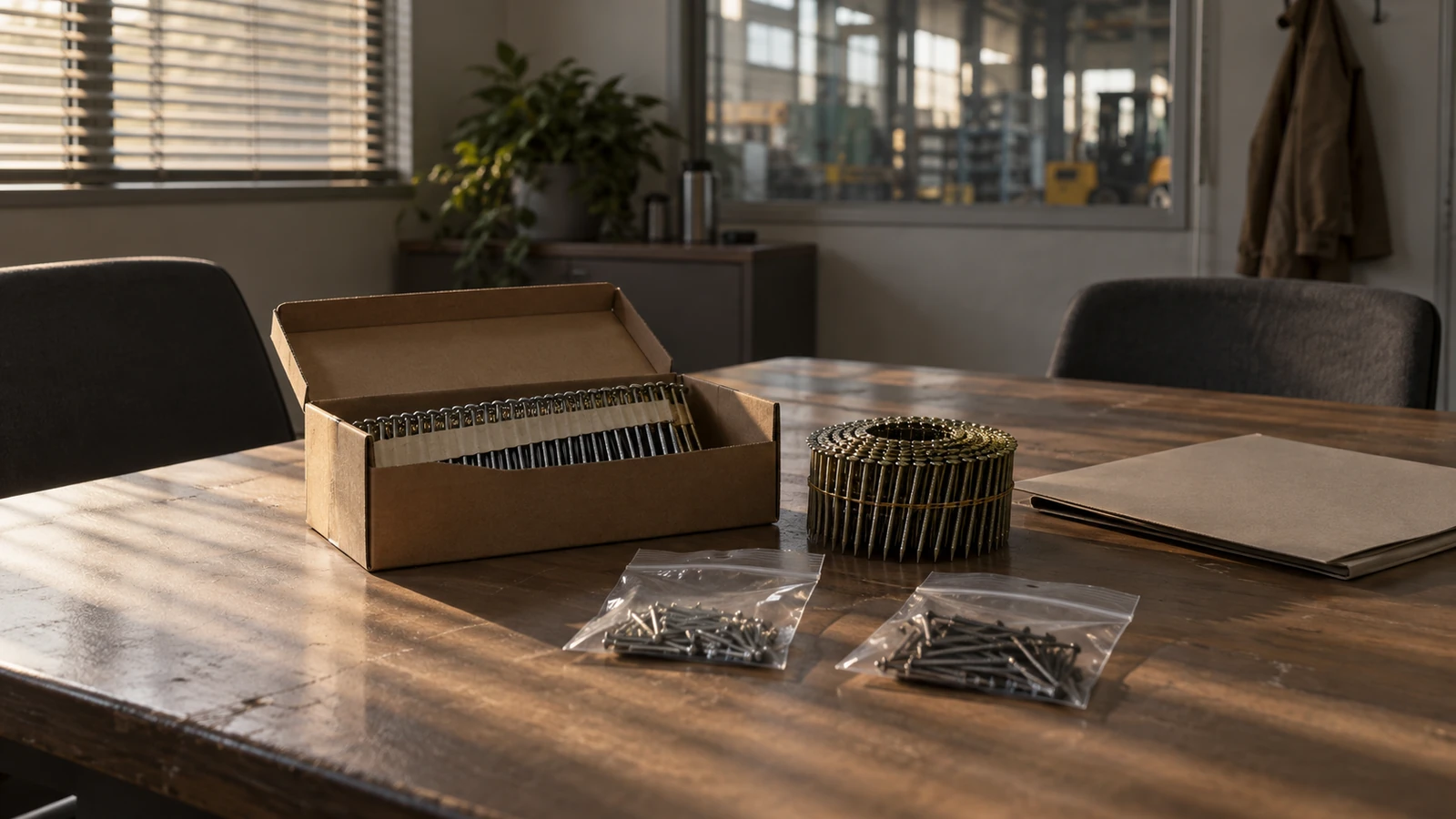
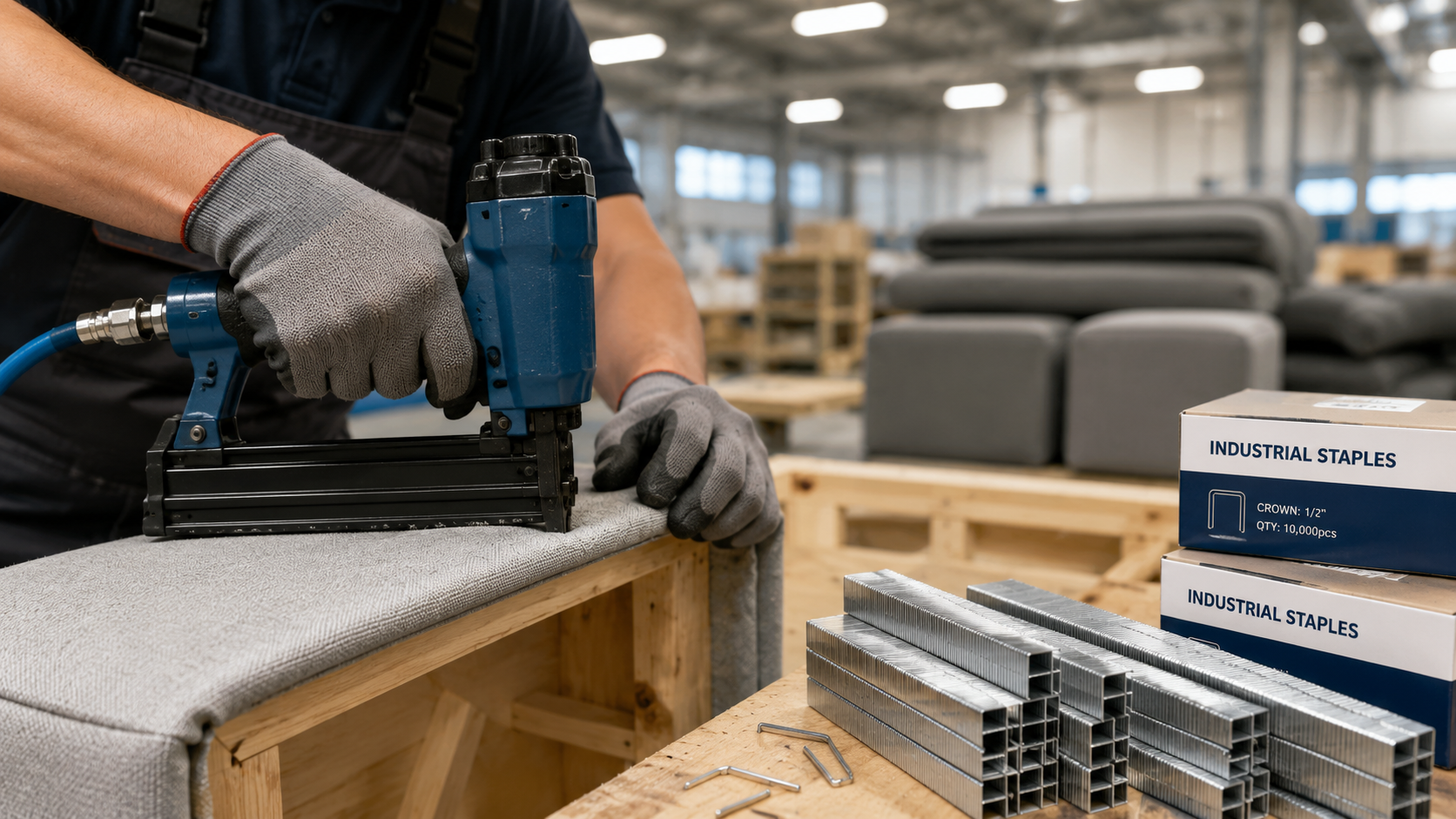
The fastening product described here is an industrial staple used with a pneumatic staple gun or nailer for fastening fabric, upholstery, packaging, or light wood materials. The visible geometry is straightforward: U-shaped staples, flat crown, straight legs, bright metallic finish, and strips arranged for magazine loading. The box label shows a 1/2 inch crown and 10,000 pieces, which is the sort of detail procurement teams should actually anchor on.
Those visible points tell you more than a marketing sheet sometimes does. Crown width influences the contact area on the material, and the collated strip format affects how smoothly the fastener feeds through the magazine. For upholstery and padded panels, that smooth feed is not a minor convenience; it is part of keeping operators moving without constant clearing.
Quick buyer checklist for wholesale sourcing
Confirm the fastener type first
Do not assume every air-driven fastener is a nail. Many buyers searching for a pneumatic nail supplier really need staples. Ask whether the application calls for staple crown width, leg length, or a specific nail/brad profile. A wrong assumption here can make an entire shipment unusable.
Match the tool and magazine format
Collation style matters. The product shown comes in long strips or rows suited to magazine loading. That is practical for repetitive work, but only if the stapler accepts that strip geometry. Pneumatic tools can be picky, and compatibility should be checked against the existing equipment, not guessed from a catalog title.
Look at quantity and packing discipline
A box of 10,000 pieces is useful only if the pieces are consistent and the carton arrives intact. Wholesale buyers should ask how the strips are packed, whether the boxes are inner-packed for storage, and how the supplier handles palletization for larger orders. These are unglamorous details, but they affect line-side efficiency.
Where these fasteners fit in production
In upholstery, the staple is a workhorse. It secures fabric to frames, holds seat padding in place, and helps create a clean edge on cushioned panels. In packaging or crate assembly, the same broad category of fastener can close light-duty wooden components or secure linings. In workshop settings, pneumatic fastening equipment is valued because it repeats the same motion all day without tiring the operator in the way manual stapling would.
That said, not every job should use the same fastening consumable. Light wood assembly, for example, may tolerate a different leg length or crown size than fabric-to-frame work. Buyers should be cautious about treating one “universal” staple as a catch-all. That shortcut usually comes back to cost more in rework than it saves in purchasing time.
Common mistakes when sourcing wholesale pneumatic fasteners
The most common mistake is buying by vague description alone. Another is ignoring whether the finish and base material suit the environment. The visible product here appears to be metallic steel with a bright silver finish, but exact steel grade, coating, and corrosion resistance are not stated. If the application is in a humid storage area or a product that may be exposed to moisture, that missing detail becomes important.
Buyers also sometimes overlook operator behavior. If a strip feeds poorly, the issue may not be the tool at all. It may be the collating, the strip rigidity, or simply a mismatch between staple geometry and the magazine. In practice, line technicians tend to notice these issues before purchasing does, so it helps to get their feedback before switching suppliers.
Questions to ask a pneumatic nail supplier before placing an order
Ask for the exact fastener category, crown width or nail size, strip format, and pack quantity. Confirm whether the product is intended for upholstery, packaging, or light assembly. If the supplier claims broad compatibility, ask which tool families have been tested or commonly used. If that information is not available, treat the claim carefully.
Also ask about replenishment consistency. Wholesale sourcing is not just about one carton; it is about repeatability from the next carton and the next purchase order. A stable supply of the same specification is what keeps a production line predictable.
Practical next step for buyers
If you are comparing a pneumatic nails wholesale supplier with other options, start by matching your tool, your application, and the exact fastener geometry. For upholstery and similar fastening work, the 1/2 inch crown, 10,000-piece packaging, and magazine-friendly strip format are the kind of details that help narrow the field quickly.
Before ordering in volume, request the specification sheet, confirm compatibility with your pneumatic stapler or nailer, and verify how the cartons are packed for storage and replenishment. That short check usually prevents the most expensive mistake in fastener sourcing: discovering the problem after the shipment is already on the floor.