
Why pneumatic nails wholesale matters to buyers
Buying pneumatic nails wholesale is rarely just a purchasing exercise. For any shop that runs nailers every day, the fastener supply affects uptime, assembly speed, and the consistency of the finished product. A shortage on the bench can stall a framing crew, slow a packaging line, or force a production team to switch tools mid-shift. That is why buyers usually care less about the marketing on the carton and more about whether the nails feed cleanly, hold their strip shape, and arrive in the right bulk format for the work they actually do.
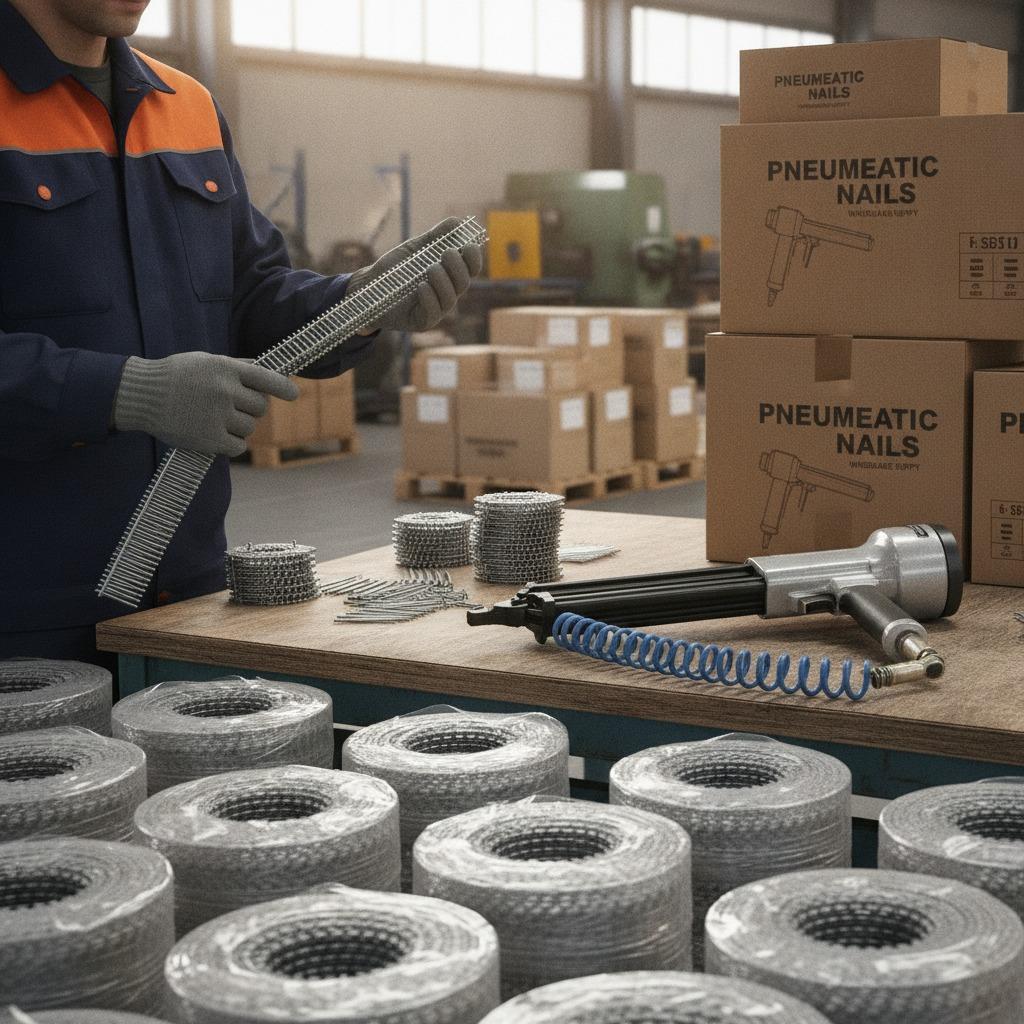
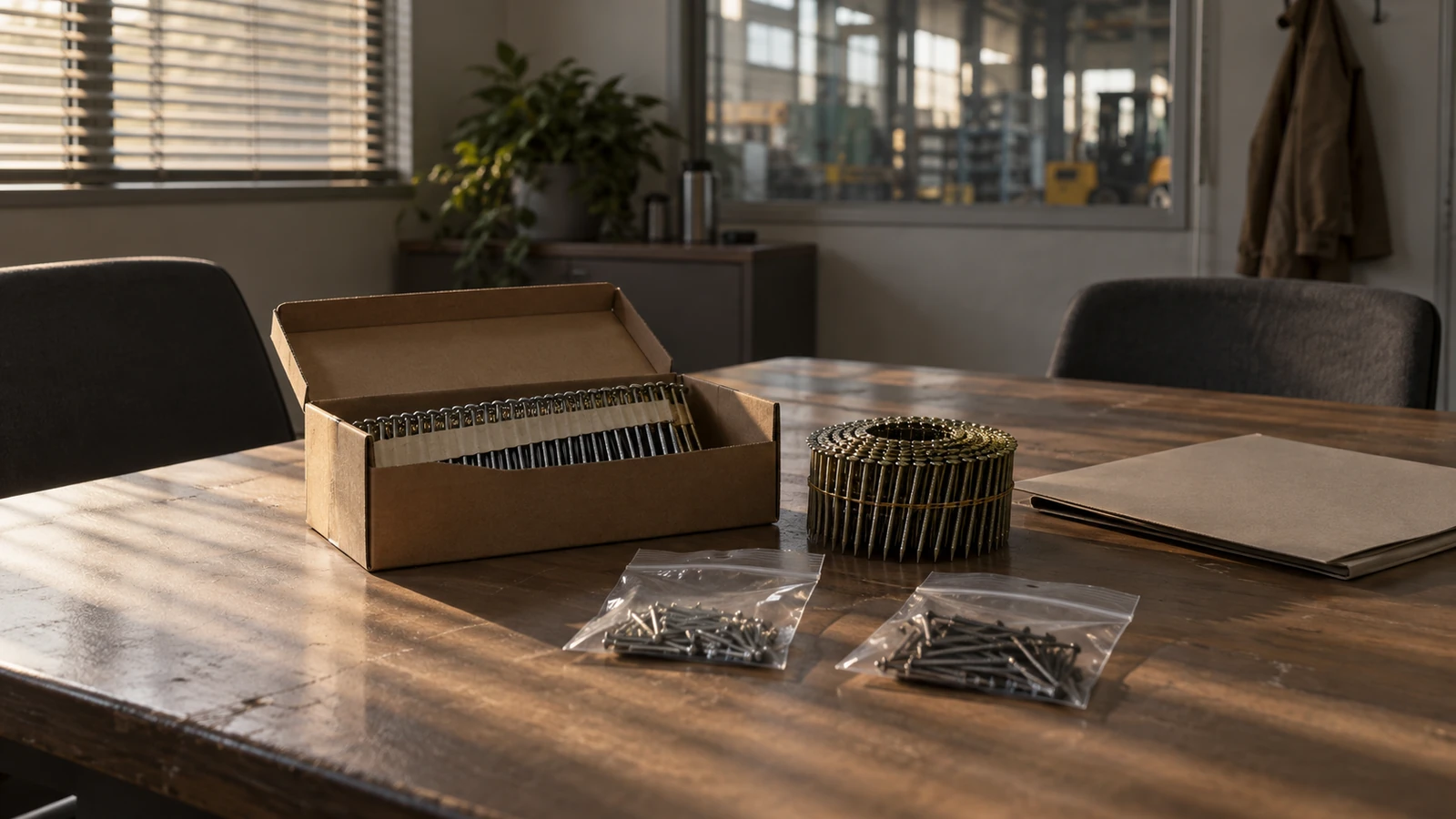
The photo data points to collated nails used with air-powered nail guns, with bright metallic nails packed in wholesale cartons and some held in plastic or resin strips. That is the practical center of this topic: fasteners made for repetitive use, where hand-driving would be too slow or too inconsistent. For sourcing managers, the decision is not simply “which nail?” It is “which collated nail format will keep the line moving without adding waste, jams, or avoidable rework?”
What these nails are used for
In normal production settings, pneumatic nails serve the tasks that demand speed and repeatability. Framing is the obvious one, but they also show up in carpentry, pallet and crate assembly, furniture manufacturing, packaging, and general construction work. The common thread is repetitive fastening. When a crew drives hundreds or thousands of nails in a shift, even a small inconsistency in strip feed or nail geometry can become a real problem.
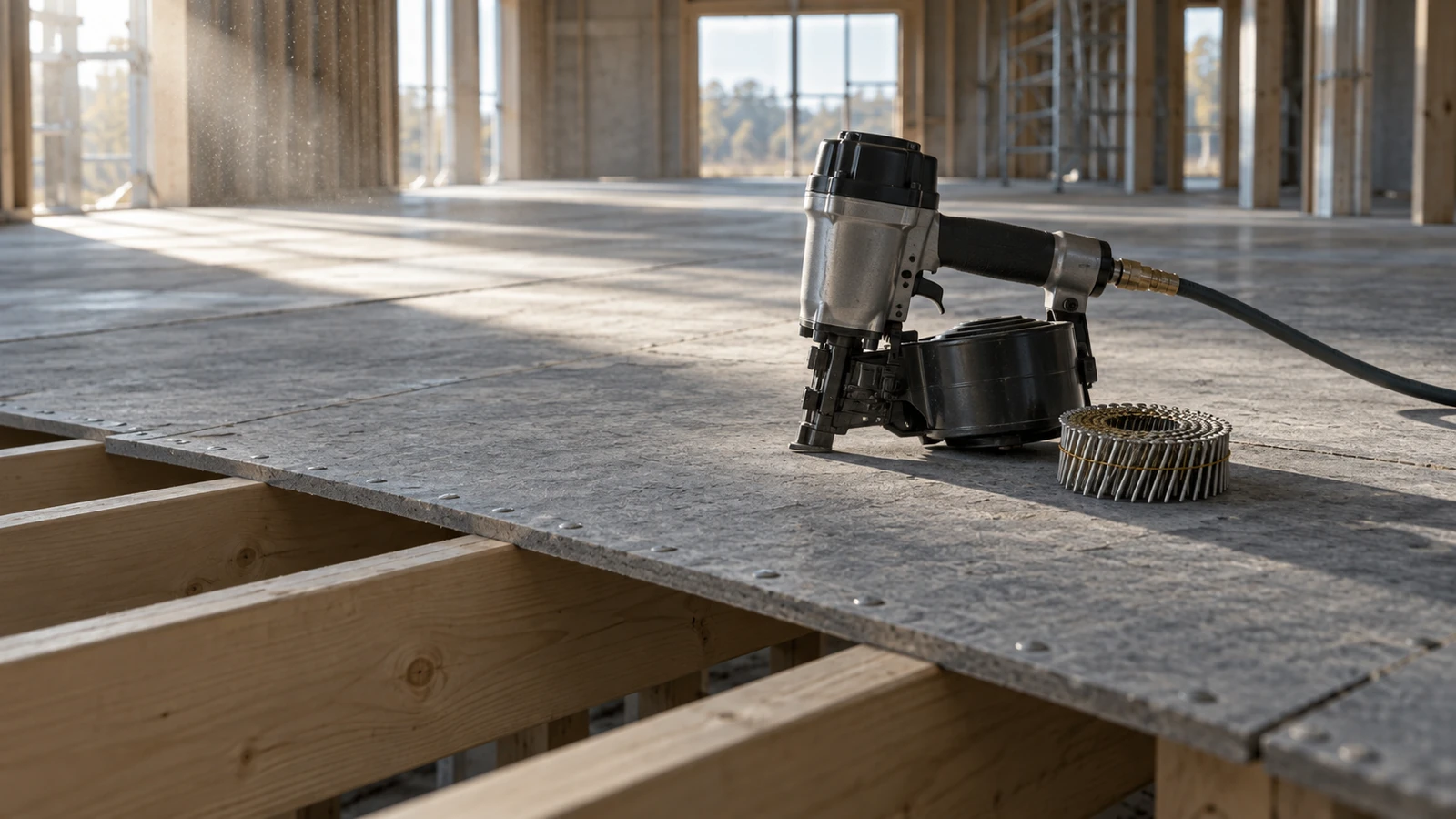
The image also shows a pneumatic nailer connected to a compressed air hose. That matters because the nail itself is only half of the system. A collated nail may look standard on a table, but if the strip angle, collation material, or finish does not suit the gun, it can create misfeeds. That is one of those small shop-floor issues that often gets blamed on the tool when the fastener is the actual mismatch.
Quick comparison: what buyers usually weigh
Bulk supply versus convenience packs
Wholesale packaging makes sense when usage is steady. It reduces the frequency of reordering and usually fits better with warehouse handling. The trade-off is simple: bigger packs require more storage discipline and better lot control. If a plant uses several nail sizes or strip formats, labeling becomes more important than people expect.
Collated strips versus loose nails
Collated strips are designed for pneumatic feeding and are the practical choice for nail guns. Loose nails may be visible in the carton image, but the key buying point is still the collated form. The strip material, feed angle, and nail spacing all influence whether the tool cycles smoothly.
Manufacturing basics behind the product
Although the exact nail type is not verifiable from the image, the manufacturing path is familiar: wire is formed, cut, headed, and then collated into strips for use in pneumatic nailers. In industrial fastener supply, that last step is not cosmetic. Collation has to preserve alignment while surviving packaging, shipping, and shop handling. If the strips deform too easily, feeding problems tend to follow.
The visible metallic finish suggests a plain bright surface on many pieces, but it would be a mistake to assume a specific coating or corrosion level from the photo alone. Buyers should confirm finish, material grade, and intended application before ordering in volume, especially if the nails will be used outdoors, in treated lumber, or in demanding warehouse environments.
Selection criteria that actually matter
For sourcing teams, the useful questions are straightforward:
Does the nail format match the nailer in use?
Does the collation hold up in transport and on the line?
Is the bulk pack size practical for daily consumption?
Will the nails suit the material being fastened?
Those questions sound basic, but they prevent the most common purchasing mistake: ordering by appearance or carton description alone. A nail that looks standard can still be wrong for a particular gun or jobsite requirement. And once a production run starts, a mismatch costs more than the nail itself.
Common mistakes buyers should avoid
The most common error is assuming all air nailer nails are interchangeable. They are not. Another is treating construction nails wholesale as a single category when, in practice, nail shape, collation, finish, and strip arrangement all matter. Buyers also sometimes overlook packaging quality. If cartons arrive crushed or strips loosen in transit, the downstream handling cost can erase the savings of buying in bulk.
One practical caution: if a supplier prints terms like “consistent quality” or “industrial strength” on the box, that is useful as a sales claim, but it is not a substitute for clear product specifications. Procurement teams still need the measurable details before approving a regular supply.
Practical buyer advice
If you are evaluating a wholesale fastener source, start with the tool, the material, and the usage rate. Then ask for the exact nail specification in writing. That should include the dimensions, strip format, finish, and any compatibility notes the supplier can verify. For repeat buyers, it is also worth standardizing one or two approved pack sizes so warehouse staff are not guessing from run to run.
For production managers, the real value of a dependable nail supply is not dramatic. It is the absence of delays, fewer feed issues, and less time spent sorting fasteners that should have been right the first time.
Where to go next
When you are comparing pneumatic nails wholesale offers, focus on compatibility, packaging integrity, and specification clarity before price alone. If the supply can keep your nailers feeding smoothly and your team working without interruption, that is the kind of purchasing decision that pays back quietly, day after day.