
Pneumatic nails wholesale: what buyers actually need to sort out before placing a bulk order
Buying pneumatic nails wholesale is rarely just a price exercise. For contractors, distributors, and production teams, the real question is whether the nails will feed cleanly, hold up in the job environment, and match the nail guns already in service. A box can look ordinary on the outside and still cause stoppages if the collation, size, or finish is off by a small margin. That is why bulk fastener purchasing deserves more attention than it often gets.
These nails are typically collated for use in pneumatic nail guns, where speed matters and consistency matters even more. In woodworking, framing, packaging, furniture assembly, and pallet or crating operations, the fastener is part of the process flow. If the nails jam, misfeed, or vary too much from strip to strip, the whole line slows down. That is the decision this article is meant to help with: what to check before choosing a wholesale supply, and where buyers should be cautious.
What the product is, and why the packaging matters
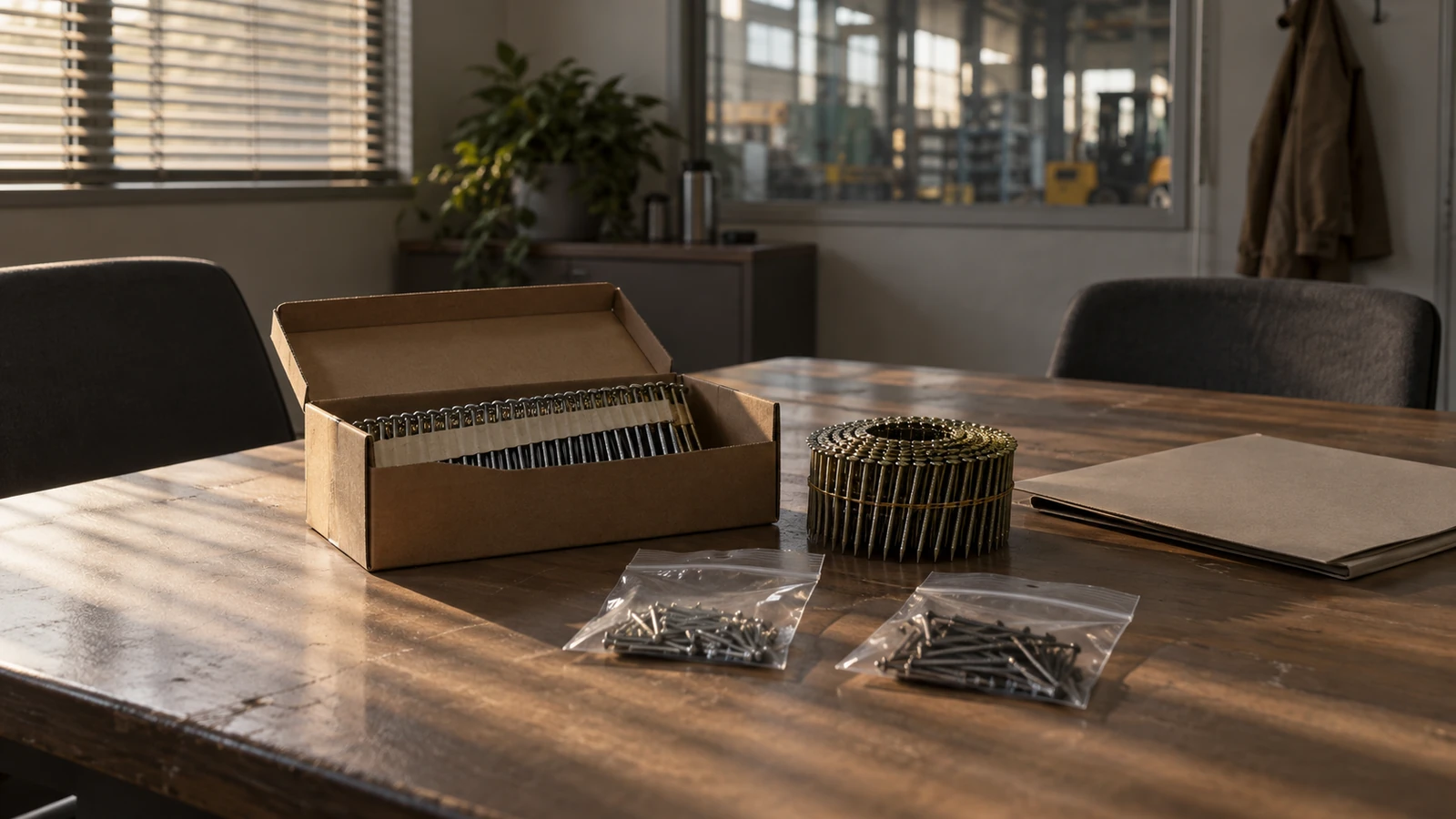
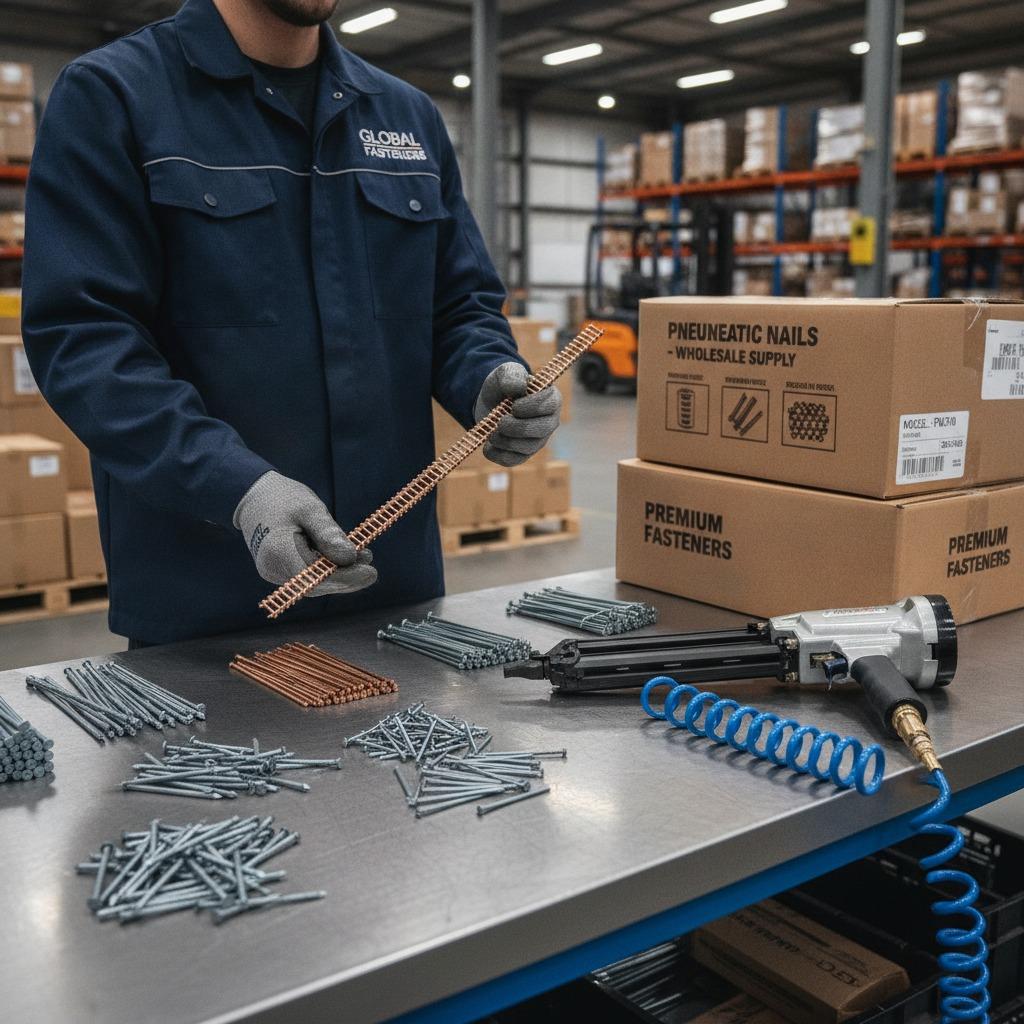
The product category here is straightforward: pneumatic nails, also called collated nails, supplied in bulk boxes for air-powered nailers. The visible format is a strip of straight metal nails arranged for feeding, with some held by paper-style or plastic carriers. The packaging shown suggests wholesale distribution rather than retail blister packs, which usually means buyers are looking at higher quantities and repeat use.
That packaging detail matters more than it seems. In wholesale buying, the box label is often the first practical sign of whether the supplier understands industrial handling. Clear size and quantity markings help receiving teams, and they reduce the sort of errors that show up later on the job floor. A carton labeled for bulk supply also signals that the product is intended for distribution, storage, and repeated dispatch, not just one-off retail sale.
Quick reference: what to compare before you buy
When evaluating air nailer nails wholesale offers, buyers usually need to compare a few basic things first: collation style, nail geometry, finish, and the intended application. The exact nail type in the supplied material is not fully identifiable, so it is safer to verify specifications rather than assume compatibility.
Here is the practical order I would use:
1. Match the collation to the nailer.
2. Confirm the nail size and strip format.
3. Check the finish for the work environment.
4. Review packaging quantity and carton handling.
5. Ask for samples if the order will run in production.
That may sound basic, but in fastener purchasing, basic checks save the most time. A small mismatch can turn into a recurring stoppage, and stoppages are expensive in ways a unit price never shows.
Where these nails fit in real manufacturing and construction work
Wholesale pneumatic nails are used where speed and repeatability matter. In woodworking and cabinet-related assembly, they can support fastening before glue cures or while parts are held in fixtures. In framing and general construction, they help crews move quickly through repetitive fastening tasks. In packaging, pallet, and crating operations, their value is even more obvious: the work is repetitive, the timing is tight, and the fastener must feed without drama.
For furniture and wood product assembly lines, the main benefit is controlled throughput. For distributors, the benefit is inventory coverage across several end uses. The same broad category can serve different buyers, but only if the collation and nail format align with the nailers already in use. That is the detail that gets overlooked when a buyer sees a low unit price and stops there.
Selection criteria that matter more than the headline price
Collation and feeding reliability
Nails arranged in strips are meant to feed smoothly through a pneumatic tool. If the strip breaks too easily, carries inconsistent spacing, or arrives with excess debris, feeding problems can show up fast. Buyers should ask how the nails are collated and how the packaging protects them in transit.
Finish and working environment
The product material appears metallic, likely steel, with bright silver finishes on many pieces and darker or coated areas on some strips. The exact coating is not identifiable from the available information, so buyers should not assume corrosion resistance or outdoor suitability. If the application involves moisture, storage exposure, or exterior use, finish questions need to be answered clearly before purchase.
Consistency across cartons
Wholesale supply only works when the same nail runs the same way from box to box. That means consistent size, uniform strip formation, and predictable packaging. A supplier may talk about industrial strength, but the real test is whether the nails perform the same way after they have been shipped, stacked, and opened on a busy site.
Common buyer mistakes
The most common mistake is assuming that all pneumatic nails are interchangeable because they look similar. They are not. Nail gun compatibility depends on format, size, and feed style, and those details are easy to miss in a rush.
Another mistake is buying solely on carton quantity. Bigger boxes help with purchasing efficiency, but only if the contents suit the tool and the job. A third problem is ignoring storage and handling. Wholesale cartons may sit in a warehouse before use, and if the packaging is weak or the finish is not suited to the environment, quality can degrade before the nails ever reach the tool.
Practical advice for sourcing teams and distributors
If you are sourcing pneumatic nails for resale or production, build your inquiry around the actual use case. State the nailer type, the application, and whether the product will be used indoors, outdoors, or in a production environment with higher humidity. Ask for the exact size, collation style, and pack configuration. If the supplier cannot answer those basics clearly, that is a warning sign, even if the price looks attractive.
For distributors, wholesale packaging also affects warehouse efficiency. Carton labeling, stackability, and quantity control matter because they affect order picking and customer confidence. For contractors, the key is simpler: does it feed cleanly and keep the job moving? If not, the savings disappear quickly.
FAQ: a few questions buyers tend to ask
Are these nails suitable for every pneumatic nail gun?
No. Compatibility depends on the nailer and the collation format. That should be verified before ordering.
Can I assume the coating is corrosion-resistant?
No. The supplied information does not confirm the coating type, so that should be checked directly if corrosion matters.
Is wholesale supply only for large distributors?
Not necessarily. Contractors, carpentry shops, and industrial assembly teams also buy in bulk when usage is steady.
A sensible next step before you place the order
Request the nail size, collation format, packaging quantity, and compatibility details in writing, then compare them against the nailers and applications you actually run. If the supplier can provide a sample or a clearer spec sheet, that is often worth more than a small price break. In bulk fasteners, the cheapest carton is not always the least expensive choice.
For buyers evaluating construction nails wholesale or air-tool fasteners more broadly, the best purchasing habit is simple: verify the feed, verify the finish, and verify the box before you commit to volume.