
What buyers really need from a sofa staples manufacturer
When an upholstered sofa starts to show loose fabric, uneven edges, or weak attachment points, the fastening method matters more than most buyers expect. A reliable Sofa Staples Manufacturer is not just supplying metal fasteners; it is helping upholsterers, furniture makers, and repair teams keep fabric, webbing, and trim fixed in place under daily use. That sounds simple until you are dealing with a minimalist couch with a light wood frame, thick cushions, and visible webbing or straps in the seat area. In that setting, the wrong staple size or poor holding power can turn a clean finish into a service call.
This guide is for sourcing managers, production teams, and workshop buyers who need to understand what to look for before placing an order. The decision is not only about price. It is about whether the staple will drive cleanly, grip the substrate, and stay secure in furniture that sees repeated movement, humidity changes, and long-term wear.
Why staple choice matters in upholstered furniture
Sofas and couches put fasteners under a different kind of stress than general packaging or light assembly work. Upholstery staples have to anchor fabric without tearing it, hold webbing without slipping, and sit flush enough that they do not telegraph through the finished surface. In a light beige sofa with low arms and boxy lines, even a small fastening problem can show up as a cosmetic flaw.
That is why a sofa staples supplier should be evaluated with the same care as any other critical component vendor. If the staple jams, bends, or fails to penetrate consistently, the line slows down. If the staple is too aggressive, it can split thin wooden members or damage delicate materials. In reupholstery work, the stakes are just as practical: a clean repair depends on fastening that blends into the structure instead of fighting it.
Key things to check before you buy
Not every furniture staples factory makes products suited to upholstery. Some fasteners are built for broader industrial use, where appearance and delicate grip are less important. For sofa work, ask how the staples are intended to perform in wood-backed frames, webbing, and layered cushion builds.
Match the staple to the frame and material stack
Wood frame density, fabric weight, and whether the job uses webbing or backing material all affect selection. A staple that performs well in one type of frame may be a poor choice for another. This is especially true when the furniture has visible exposed wood, because the fastening points are often close to finished surfaces.
Look for consistent feeding and clean driving
In production, the most annoying problems are often the small ones: misfeeds, bent legs, or inconsistent seating depth. These create rework and waste time. Buyers should ask the manufacturer how the staples are packaged, whether they are designed for stable feeding in standard upholstery tools, and how consistency is controlled from batch to batch.
Consider the finish and corrosion resistance
For living-room furniture and lounge seating, long-term appearance matters. Staples hidden inside the build still need enough resistance to handle the indoor environment and normal handling during service life. If the application involves damp storage, transport, or coastal conditions, that caution becomes more important. It is better to confirm the intended use than to assume a general-purpose staple will be sufficient.
What the visible sofa design suggests for fastening needs
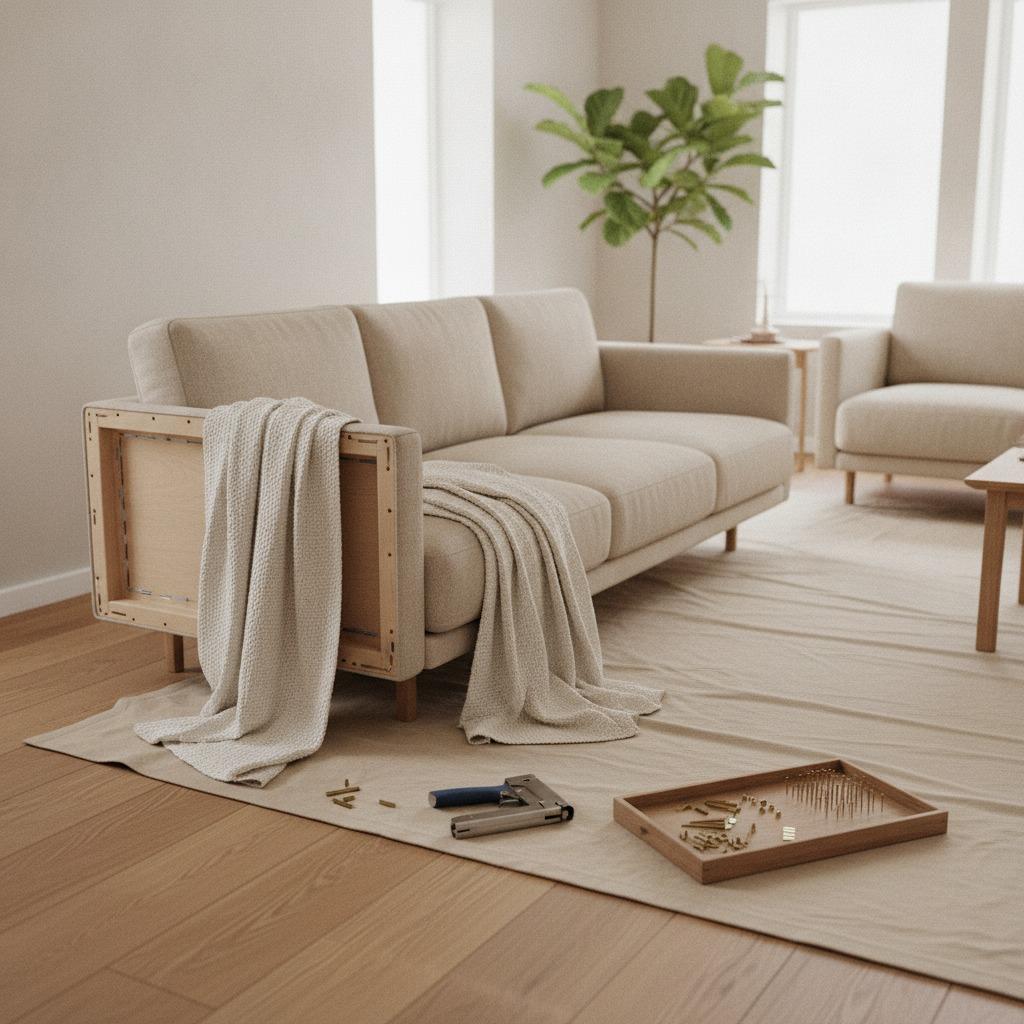
The visible product category here appears to be an upholstered sofa or couch with neutral beige fabric, a light wooden base, and a low-profile silhouette. That style usually demands careful staple placement because the geometry is clean and there is little room to hide poor workmanship. The seat area also appears to use brown webbing or securing straps, which means the fastening system likely has to support both structure and finish.
For buyers, that is a useful reminder: modern minimalist furniture can be less forgiving than bulky traditional pieces. If the staple line is uneven or the fabric tension is off, the flaw is obvious. A well-chosen fastener contributes to a crisp edge and a stable build, even when the sofa itself looks simple.
Common mistakes buyers make
One mistake is treating all upholstery fasteners as interchangeable. Another is buying only on gauge or size without asking how the staple behaves in real production. A third, and very common one, is overlooking tool compatibility. If your shop uses a specific stapler format, the staple must match it exactly or the savings disappear fast.
Buyers also sometimes forget the service side. If the furniture is being repaired or reupholstered rather than built from scratch, the staple needs to work cleanly around older frame holes, mixed materials, and previously stressed wood. That is where a practical conversation with the supplier matters more than a glossy product sheet.
Practical buying advice
Ask for product details that connect directly to the job: intended material use, staple form, compatibility notes, and any guidance for upholstery or furniture assembly. If your team works across both new production and repair, it may be worth standardizing on a short list of approved fasteners rather than chasing the lowest unit cost each time.
Also, do not ignore sample testing. Even a small trial run can reveal whether the staple drives cleanly into the frame and holds fabric securely without damaging the finish. That kind of test is often more valuable than a long specification sheet with no context.
FAQ
What makes sofa staples different from general staples?
They are typically chosen for secure fastening in wood frames, webbing, and upholstery layers, with attention to clean driving and discreet placement.
Should furniture buyers focus only on price?
No. In upholstery work, feed consistency, tool compatibility, and holding performance often matter more than a small unit-price difference.
When should reupholstery teams test a new staple?
Any time the frame material, fabric stack, or stapling tool changes, a trial run is a sensible step.
Next step for sourcing teams
If you are comparing a Sofa Staples Manufacturer, narrow the field by application first: sofa assembly, upholstery, or repair. Then request samples that match your tools and frame materials. A supplier that understands furniture fastening will ask about the build, not just quote a part number. That is usually a good sign.