
Choosing a sofa staples manufacturer is really about controlling assembly risk
If you buy sofa staples for upholstery work, you are not just buying small pieces of metal. You are buying consistency. A reliable sofa staples manufacturer helps keep fabric tension, frame hold, and line speed under control, which matters whether you are running a repair bench, an upholstery shop, or a furniture assembly line. A weak batch can jam a pneumatic stapler, split wood, or leave a loose edge that shows up later in the customer’s living room. That is the kind of problem that costs time twice.
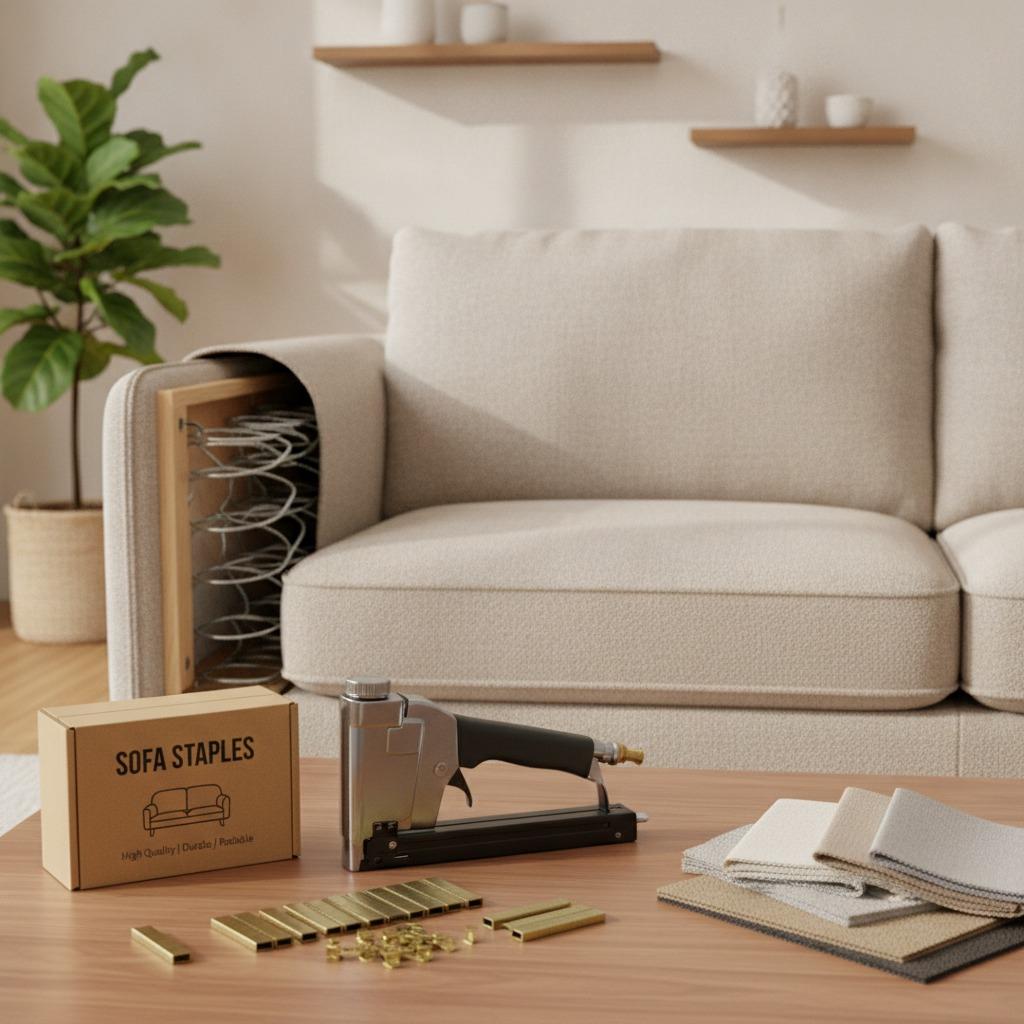
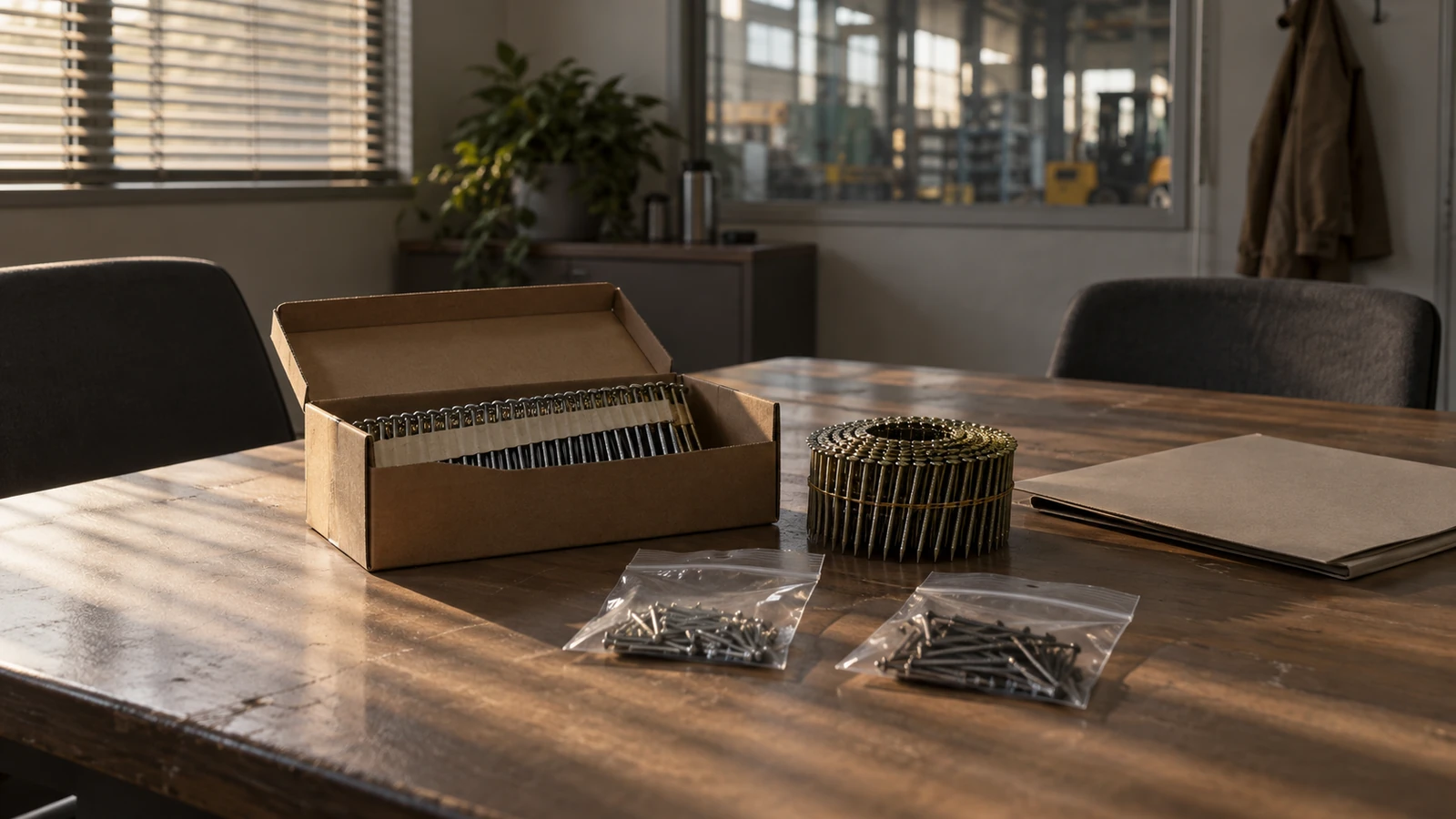
The product type here is straightforward enough: strip-style U-shaped staples, collated for air staplers and used to fasten fabric, webbing, trim, or backing to a wooden sofa frame. In the set shown, multiple staple lengths are presented together, which is useful for repair work and mixed upholstery tasks. The visible finish appears gold or yellow, likely a coated or plated metal surface, though the exact process is not stated and should not be assumed. That caution matters, because the finish affects feeding, appearance, and sometimes corrosion behavior.
What buyers usually need from a sofa staples supplier
Most sourcing teams are trying to solve one of three problems: poor staple feeding, inconsistent penetration, or too many SKUs in the tool room. A good sofa staples supplier should make the decision easier by offering staple sizes that fit common upholstery jobs and packaging that is easy to identify on the shop floor. The “SOFA STAPLES” labeling shown on the box is a small detail, but it is the sort of thing that reduces mix-ups when different fastening products are stored together.
For furniture makers, speed is only part of the equation. Staples need to drive cleanly into wood, hold fabric without tearing it, and keep a neat profile under trim or dust covers. For repair work, the priority may be flexibility: one box for a range of jobs, not a highly specialized fastener that only fits one machine or one frame style. That is why buyers often look for suppliers that can support several lengths in the same family, even if the exact dimensions are not listed in every listing.
Why staple geometry and finish matter more than they first appear
U-shaped upholstery staples look simple, but geometry drives performance. The crown has to sit properly; the legs need to enter the wood cleanly; the strip has to feed through a pneumatic stapler without bending or breaking apart. When any of those things go wrong, the operator feels it immediately. The gun may hesitate, or the staple may crown over instead of seating flush.
Metal and coating choices
The visible gold/yellow color suggests a coated or plated surface, though the exact specification is not available here. In practice, buyers usually care about three things: smooth feeding, storage stability, and whether the fastener leaves a clean finish behind the fabric. For some applications, appearance is a minor issue. For exposed upholstery details, it is not. That is where a supplier with stable manufacturing control becomes more valuable than a lower-priced source with uncertain lot quality.
How to evaluate an upholstery staples manufacturer before you place a bigger order
When comparing an upholstery staples manufacturer, start with the basics that can actually be verified. Ask what staple lengths are available, how they are collated, and whether the packaging clearly separates sizes. If your shop uses different staplers, check compatibility rather than assuming all strip staples are interchangeable. That assumption causes more trouble than many buyers expect.
You should also ask about dimensional consistency across batches, because even small variation can affect feeding. If a supplier cannot clearly describe the staple family, the material, or the finishing method, treat that as a signal to request samples or move slowly. In upholstery, “close enough” often becomes visible once the fabric is stretched tight.
Common mistakes in sofa staple sourcing
The most common mistake is buying by price alone. Another is choosing a staple size that works on one job but creates extra stock on the next. Shops sometimes stock too many near-duplicate sizes, then spend time sorting boxes instead of building furniture. It is also easy to overlook the stapler itself. A staple may be fine on paper and still perform badly if the tool is worn or not matched to the strip format.
There is also a practical caution for repair businesses: if you are reupholstering older sofas, the frame condition matters. Old wood can be brittle, and even a good staple may not hold as expected. That is not a staple defect; it is a job-site reality that should be accounted for before committing to a full production run.
Quick buyer questions worth asking
Before you approve a sofa staples manufacturer, ask: Which staple lengths are included? What finish is used? How are the staples collated? What furniture or upholstery applications are they intended for? Can the supplier provide consistent packing and clear labeling? Those answers tell you more than a glossy product claim ever will.
Next step for sourcing teams and upholstery shops
If you are shortlisting suppliers, start with a sample box and a real shop-floor test. Run the staples through your actual pneumatic stapler, on the wood you normally use, with the fabric and tension your team sees every day. A good supplier should welcome that test. If you want, I can also help turn this into a product page, a sourcing guide, or a comparison article aimed at upholstery buyers.