
A distributor can own hundreds of fastener SKUs and still leave customers searching for the right box. The hard part is not adding another length. It is building a range that connects tools, applications, labels, carton quantities, sales knowledge, and replenishment. Buyers sourcing wholesale nails and staples should design that system before placing a mixed container order.
The strongest assortment is usually not the largest. It covers the jobs customers actually perform, makes compatibility visible, and gives the warehouse a practical way to separate products that look nearly identical.
Begin with tool families and customer work
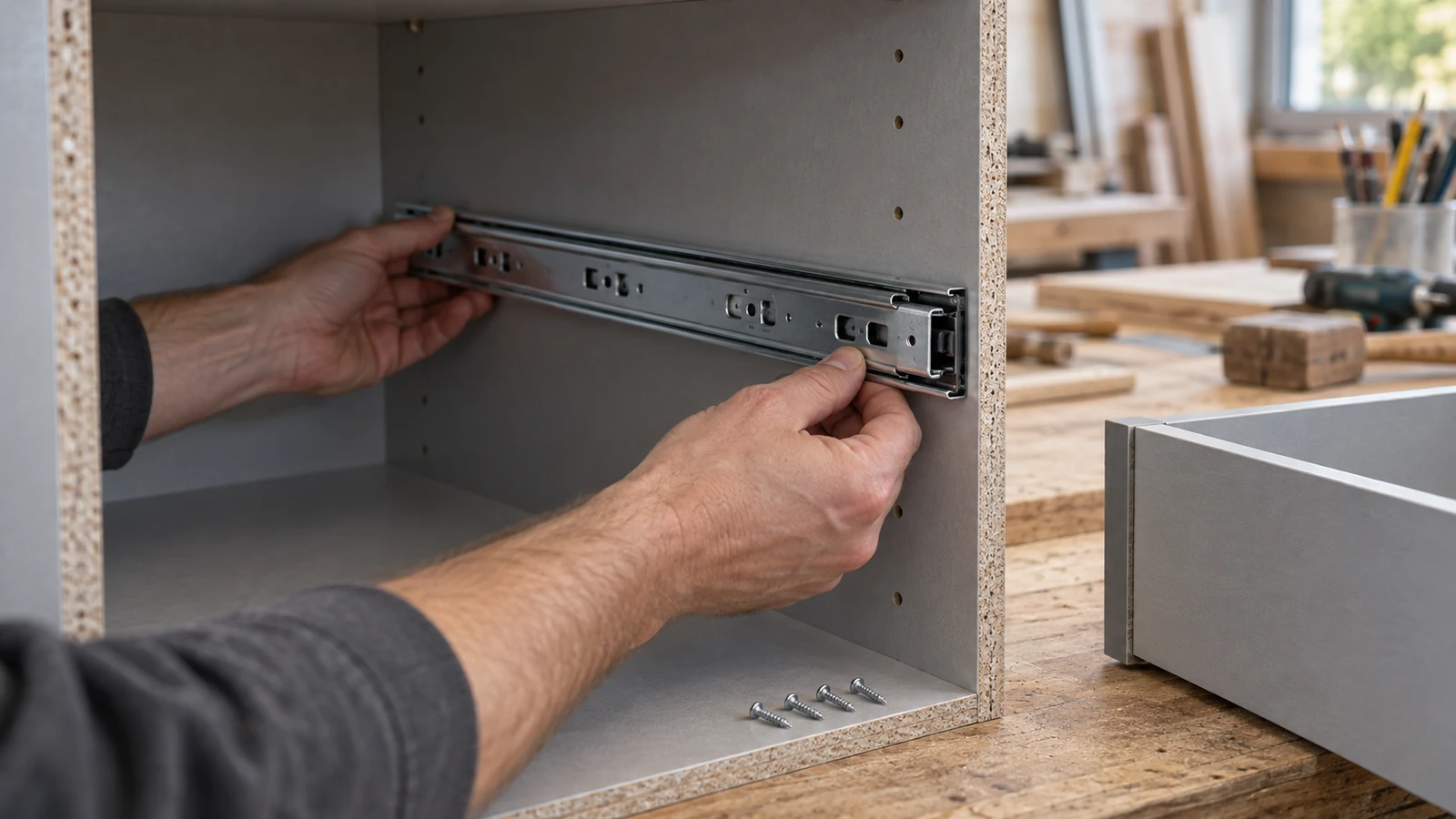
List the nailers and staplers already common in the market. Then map the real work: trim, cabinets, furniture, pallets, crates, carton closure, fencing, and general construction. This reveals where a short range of dependable sizes is more useful than a long catalog assembled without demand evidence.
Gauge, crown, length, collation angle, shank, finish, and point should be organized in a way that sales teams and customers can understand. A nominal size alone may not establish compatibility, particularly for collated fasteners.
Mixed orders need a deliberate carton plan
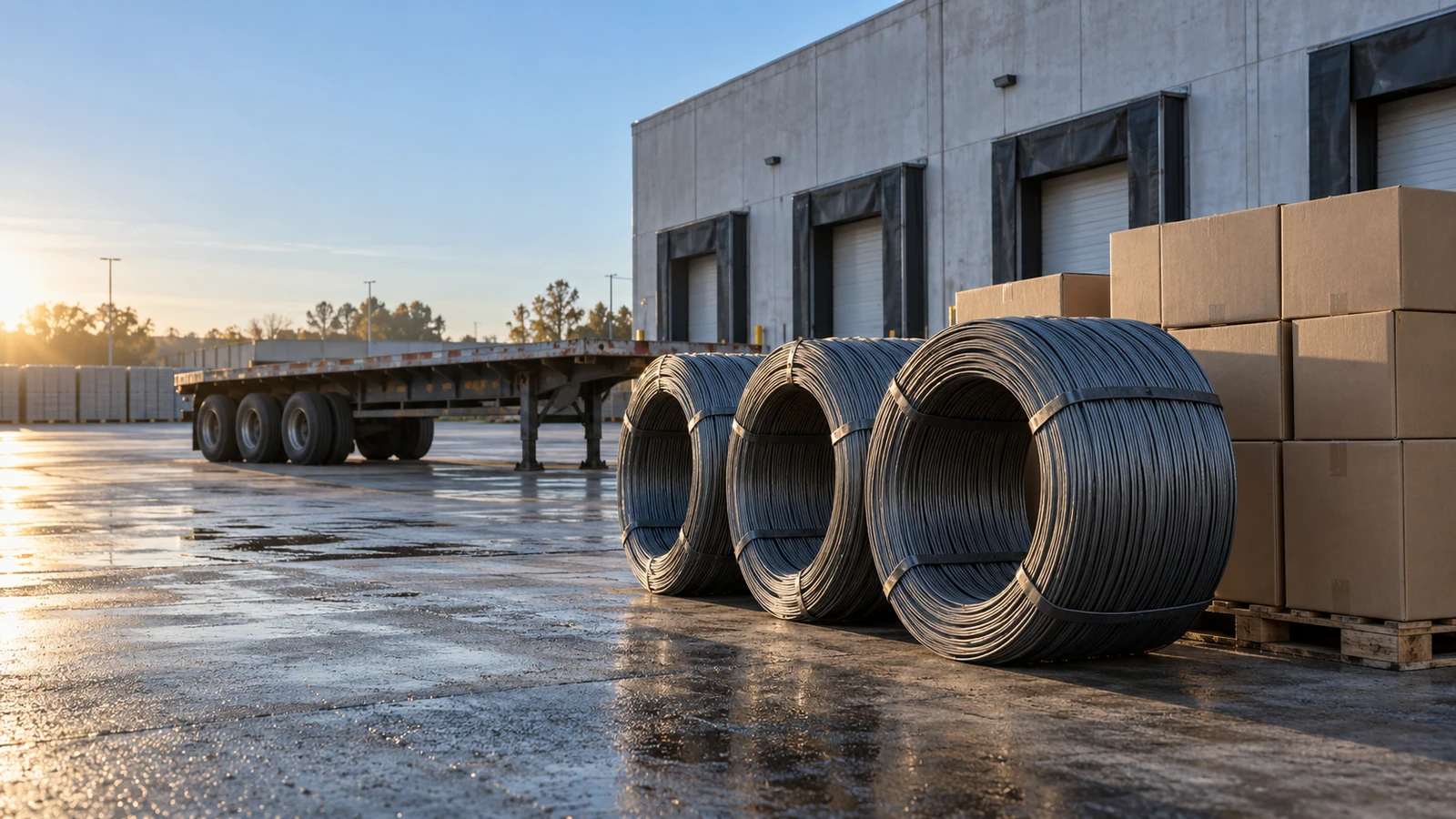
Coils, fine brads, staples, and screws do not tolerate shipping in the same way. Heavy cartons can crush lighter boxes. Moisture can damage finishes and collation. A container plan should consider carton weight, stacking, pallet pattern, inner protection, and how mixed sizes will be unloaded.
Labels need strong visual separation. Put the product type, dimensions, finish, quantity, and compatible tool family where warehouse staff can find them quickly. Barcodes and private-label files should be checked against the packing list before mass printing.
Samples should represent the assortment, not decorate a meeting
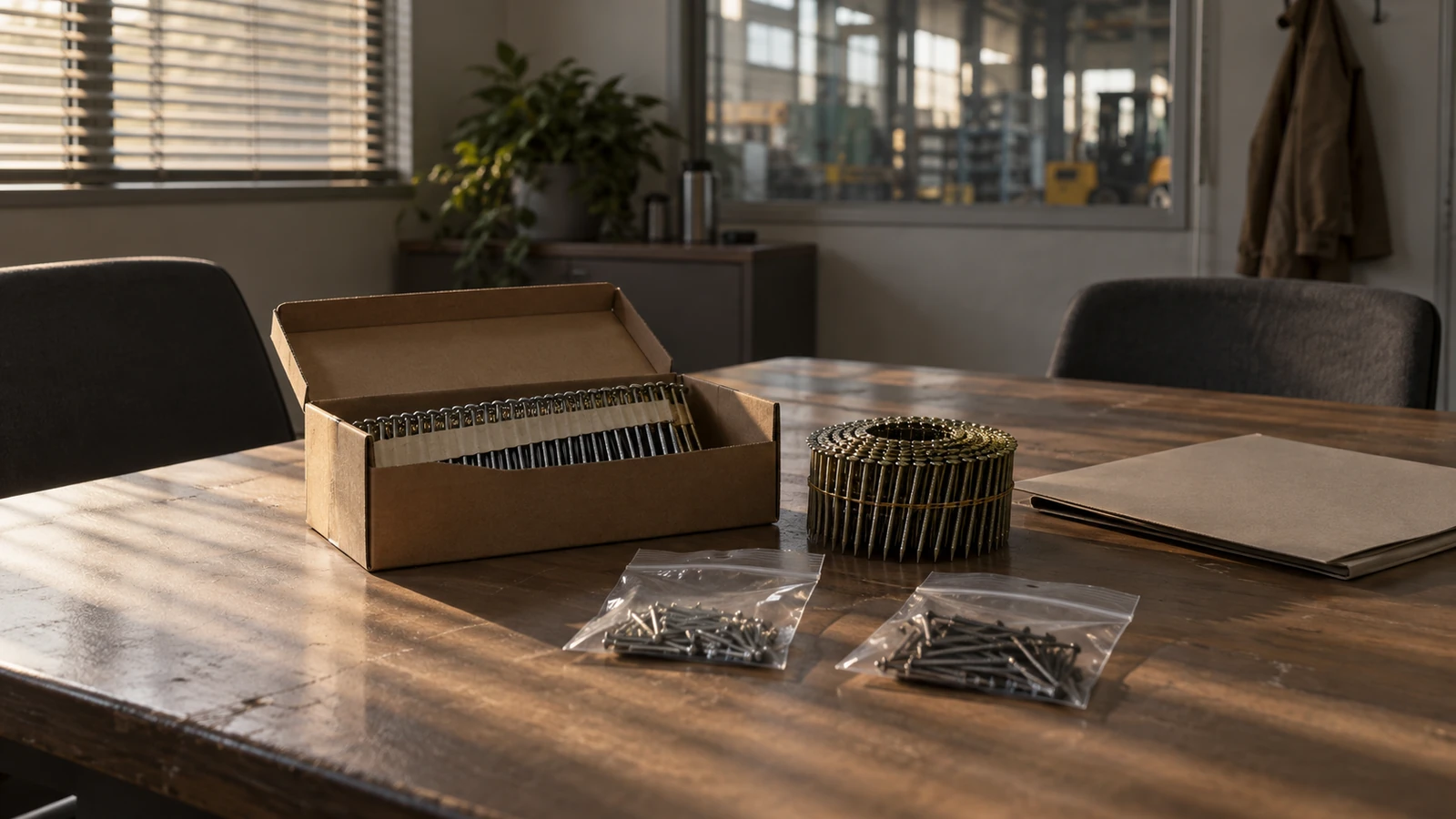
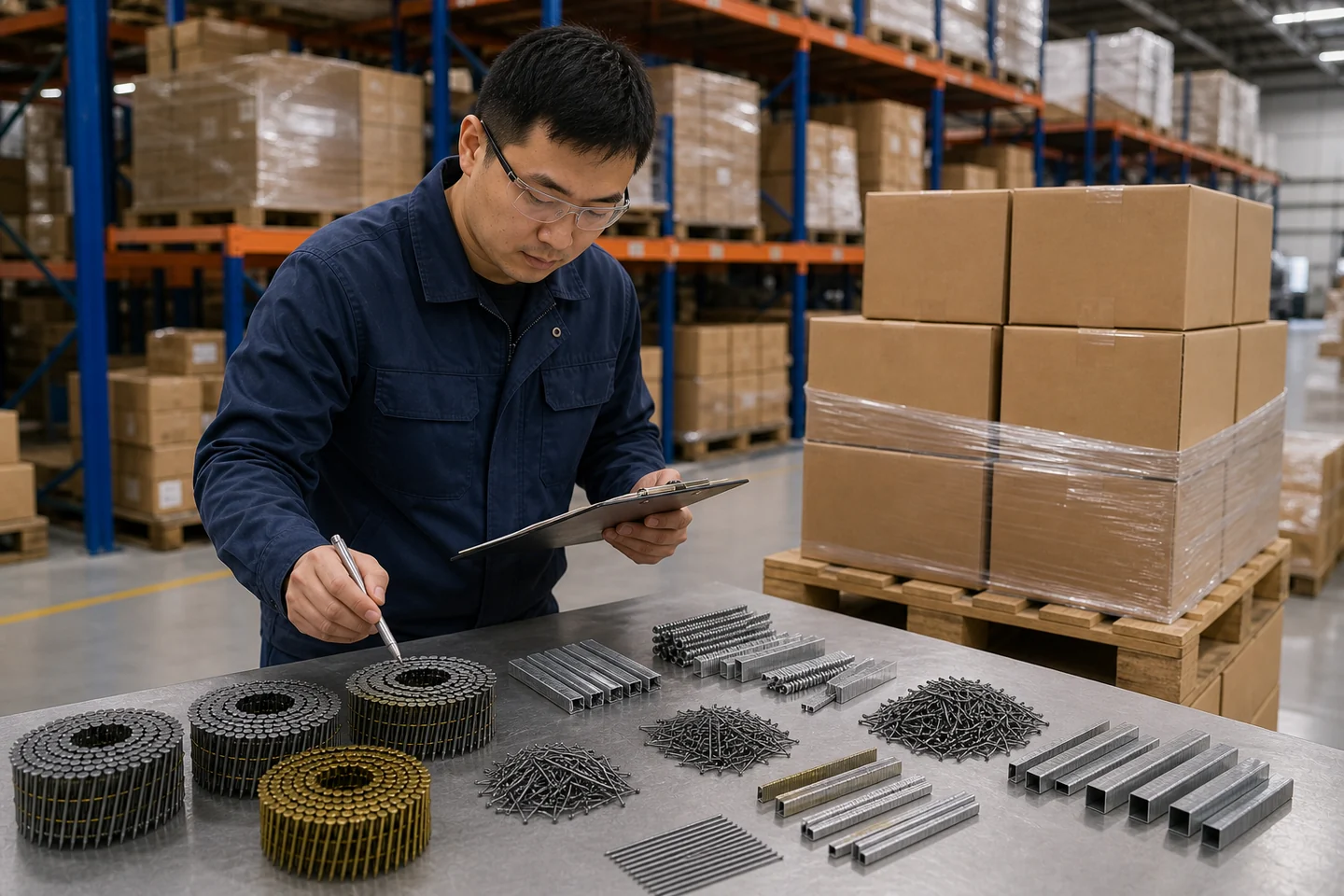
Choose samples from each product family and run them in the tools customers use. The review should include feeding, driving, material response, strip or coil condition, and box handling. For repeat orders, keep approved samples and note any agreed tolerances or packing changes.
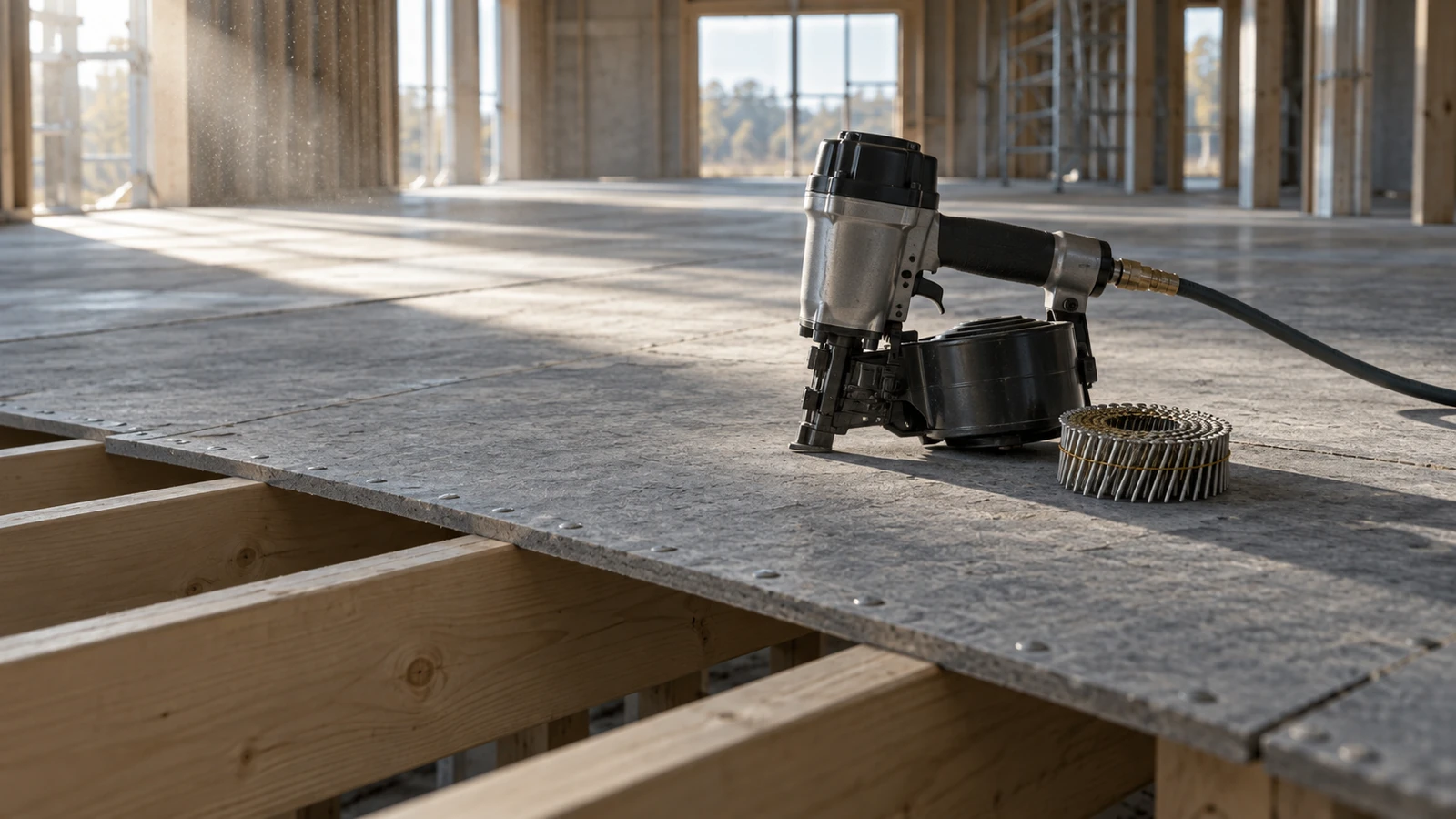
Pneumatic products also bring tool-safety responsibilities. OSHA's guidance on pneumatic tools is a useful general reference, alongside the tool manufacturer's instructions and local workplace requirements.
Inventory decisions should follow evidence
Early sales data often shows that a few sizes carry most of the movement while specialist items sell slowly but protect important customer relationships. Review reorder frequency, margin, stockouts, tool complaints, returns, and customer requests by product family.
When purchasing wholesale nails and staples, use this information to adjust carton quantities and mixed-load ratios. Adding every possible finish or length can tie up capital and make picking errors more likely.
ProAirNails helps buyers assemble a workable range
ProAirNails supplies wholesale nails and staples for importers, distributors, retailers, and industrial supply companies. Buyers can combine pneumatic nails, brads, pins, coil nails, staples, screws, and related tools while discussing samples, labels, box counts, master cartons, and repeat-order references.
Review Pneumatic Nails, browse Brad Nails, compare Air Staple Pin products, or learn more at About ProAirNails.
FAQ
What should a new wholesale fastener range include first?
Start with the tool families, applications, gauges, lengths, and finishes already used by target customers, then expand from sales and service evidence.
Can nails and staples share one mixed container?
They can, but carton weight, stacking, moisture protection, collation protection, labels, palletization, and unloading order should be planned carefully.
How can distributors reduce compatibility complaints?
Use clear tool-family references, accurate dimensions, approved samples, trained sales staff, and product trials in the nailers and staplers common in the market.
Discuss your assortment through the ProAirNails inquiry page.