
Why buyers compare custom and standard fasteners
A custom fastener manufacturer matters most when a standard part almost works, but not quite. That is the point where small mismatches start to create real costs: an assembly line waits, a maintenance crew improvises, or an engineer redesigns around a hardware problem that should never have reached production. For sourcing managers and product teams, the question is not simply whether a part can be made. It is whether the part can be made in a way that fits the assembly, the load, the finish, and the supply plan.
The practical comparison is usually straightforward. Off-the-shelf hardware is faster to buy and easier to replace. Custom fasteners give you control over geometry, material choice, finish, and fit. That control is valuable in OEM assembly, machinery building, industrial construction, and replacement parts where the hardware has to match a specific function rather than a catalog line.
Standard fasteners versus custom fasteners
Standard bolts, screws, nuts, washers, rivets, pins, anchors, inserts, and threaded rods solve a large share of everyday joining problems. They are economical, familiar, and widely available. If the design can accept common dimensions and a conventional drive or head style, standard sourcing is usually the least complicated route.
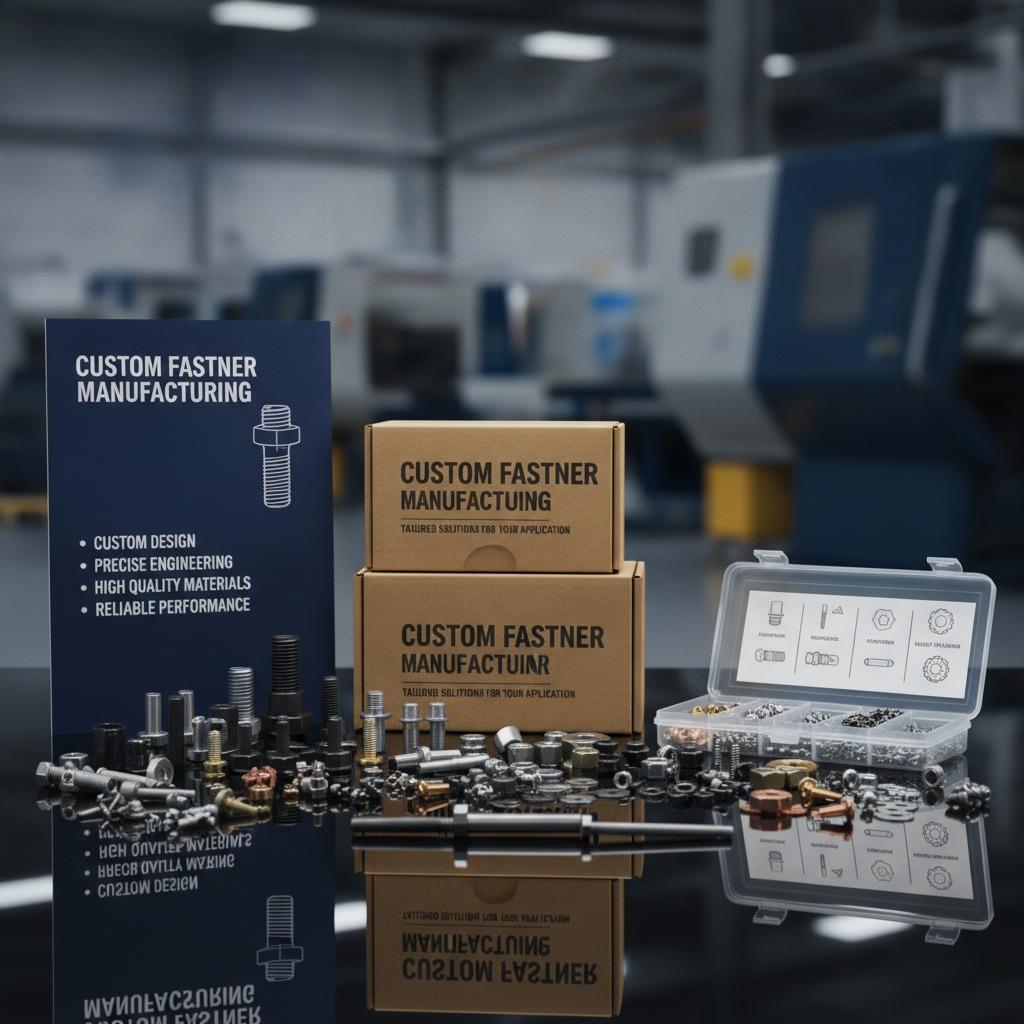
Custom fasteners are different because they are specified around the application instead of forcing the application to adapt. That can mean a nonstandard length, a special shoulder, a turned profile, a mixed-material finish, or a part that combines several functions in one piece. In the assortment shown here, you can see how broad that category can be: hex-head forms, socket- and shoulder-style parts, smooth pins, precision-turned pieces, and small components that look ready for sorting and packaging. Not every part serves the same job, and that is exactly the point.
A custom fastener manufacturer is usually a better fit when the design has one or more of these conditions: limited space, unusual stack-up, specific corrosion concerns, a need for precise location as well as clamping, or a legacy assembly that has to stay in service without a full redesign.
What the manufacturing route changes
Machining and turning versus forming
Fastener production can involve machining, threading, cold forming, turning, plating, or coating. The visible mix of parts suggests that a supplier may support several of these routes, though the exact process for any given item is not shown. That distinction matters. Machined or turned parts can suit lower volumes or more intricate shapes, while formed fasteners are often preferred when repeatability and volume are the priority. For buyers, the key decision is not which process sounds most advanced, but which process suits the part geometry and expected demand.
Buyers often focus on the head or thread first, then discover later that the finish or material is the real issue. A bright silver surface, black-coated surface, brass- or copper-toned part, or stainless-like appearance may all behave differently in service. The best supplier conversation covers appearance, corrosion exposure, assembly method, and whether the part will be handled by automated tools or installed by hand.
Custom bolts are not the whole story
People often search for when they really need a broader fastener solution. That is understandable, but it can narrow the discussion too early. A custom bolt may solve a clamping problem, while a custom pin or insert may be the better answer for location, wear, or repeated assembly. Likewise, washers, nuts, studs, and specialty turned fasteners can all change how the joint behaves without changing the overall structure of the machine.
This is why a strong supplier conversation starts with the function of the joint, not just the dimensions of the drawing. Is the part only holding load, or is it also locating a component? Does it need to be removable after service? Will the assembly see vibration, moisture, or frequent maintenance? Those answers guide the hardware choice more reliably than part names alone.
What to ask a custom fastener manufacturer
Before releasing a drawing or requesting a quote, buyers should be clear about the non-negotiables. The supplier needs the intended application, the material preference if one is already set, any finish or coating requirement, the expected assembly method, and whether the part is for prototype, repair, or ongoing production. If the application is sensitive, include the operating environment and the reason the current part is failing. That last detail is often more useful than a long backstory.
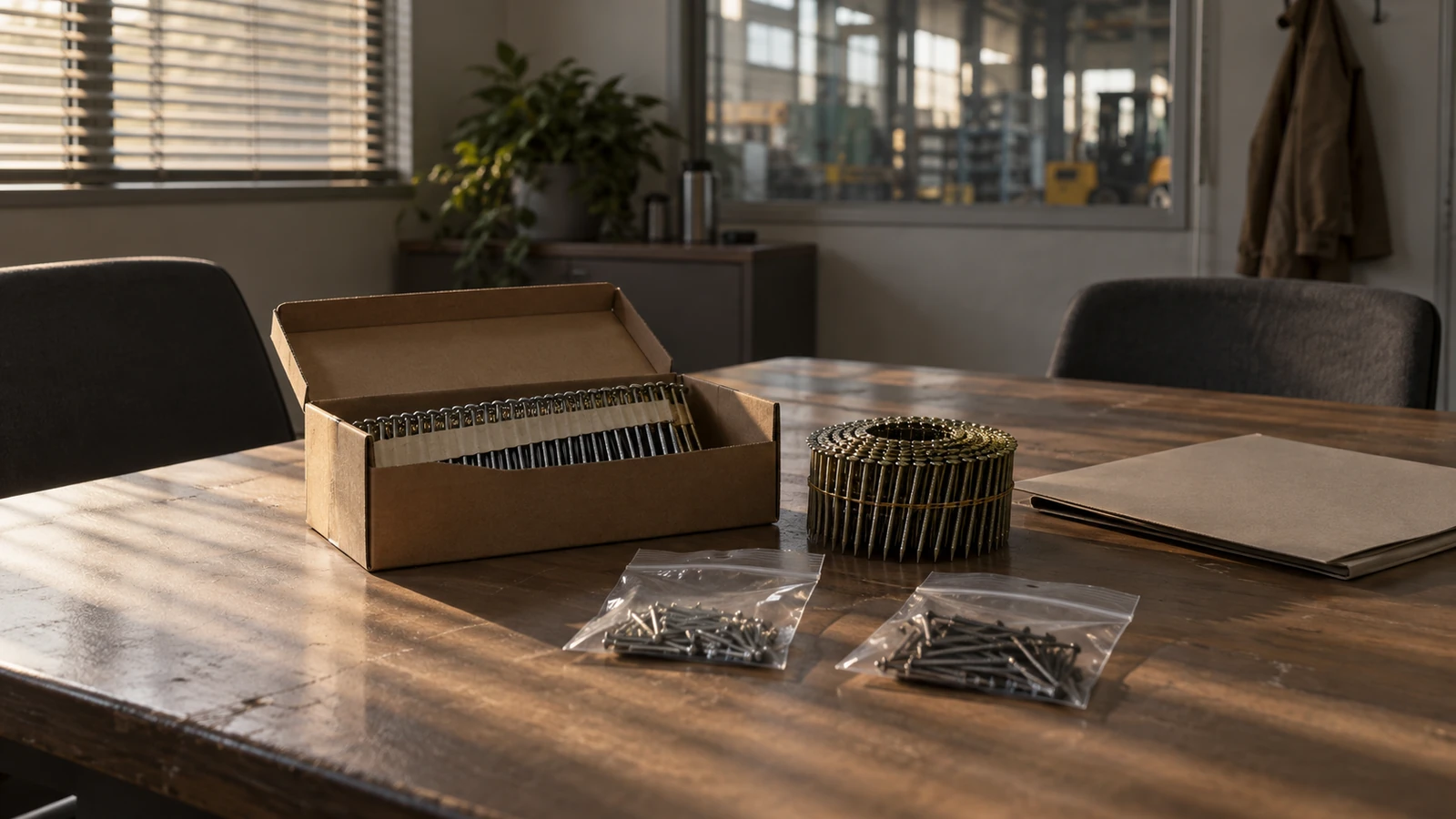
Also ask how parts will be sorted and packaged. The image here shows a clear plastic organizer case and cardboard cartons, which is a reminder that packaging is part of the sourcing decision. Mixed hardware can be easy to confuse on a busy floor, and small parts can lose value quickly if they arrive poorly identified.
Common mistakes buyers still make
The biggest mistake is assuming a visually similar part is functionally equivalent. A bolt that looks right may have the wrong thread, the wrong finish, or the wrong strength behavior for the application. Another common error is over-specifying a part because the team is trying to protect against every possible failure. That can drive cost and lead time without improving the actual assembly.
There is also a tendency to treat custom fasteners as one-off items only. In practice, many programs need a repeatable supply plan. If the part is likely to become a maintenance item or a recurring BOM line, that should be part of the sourcing discussion from the start.
Choosing the right path for the job
If you only need a simple, replaceable item, standard hardware remains the sensible answer. If the part must fit a specific geometry, combine functions, or perform under conditions that standard hardware does not handle well, custom fasteners become the more practical route. The best supplier is not the one that says yes to everything. It is the one that can match design intent with manufacturable detail and explain the tradeoffs clearly.
For teams comparing options, the decision usually comes down to three questions: can the assembly tolerate a standard part, does the application need a custom geometry, and how repeatable does the supply need to be? Once those are answered, the rest of the conversation gets much easier.
Next step for engineers and sourcing teams
If you are developing a new assembly or replacing a hard-to-source component, prepare the functional requirements first, then talk to a custom fastener manufacturer with those requirements in hand. A short, well-structured request will usually produce a better result than a vague part description. And if the job is really about more than just bolts, say so early. That saves time for everyone.