
Why a custom fastener manufacturer matters when standard parts fall short
When a build starts to slip because a stock screw is the wrong length, a bolt head won’t clear a housing, or a thread form does not match the mating part, the search often ends with a custom fastener manufacturer. That is usually not a luxury decision. It is a response to fit, function, or assembly problems that standard catalog hardware cannot solve cleanly.
The practical question for engineers and sourcing teams is not whether custom is “better.” It is whether the added design control is worth the tradeoff in sourcing effort, part setup, and order management. In industrial work, that answer depends on geometry, load path, corrosion exposure, serviceability, and how many variants the program can tolerate.
Custom fasteners versus off-the-shelf hardware
Standard fasteners are easy to buy, easy to compare, and usually the fastest route for maintenance work. They fit common dimensions and are broadly understood by procurement teams and shop-floor staff. The downside is that they force the design to adapt to the part, not the other way around. If the assembly needs a nonstandard shoulder, a special drive style, a specific grip length, or a mixed finish package, the catalog route can become a chain of compromises.
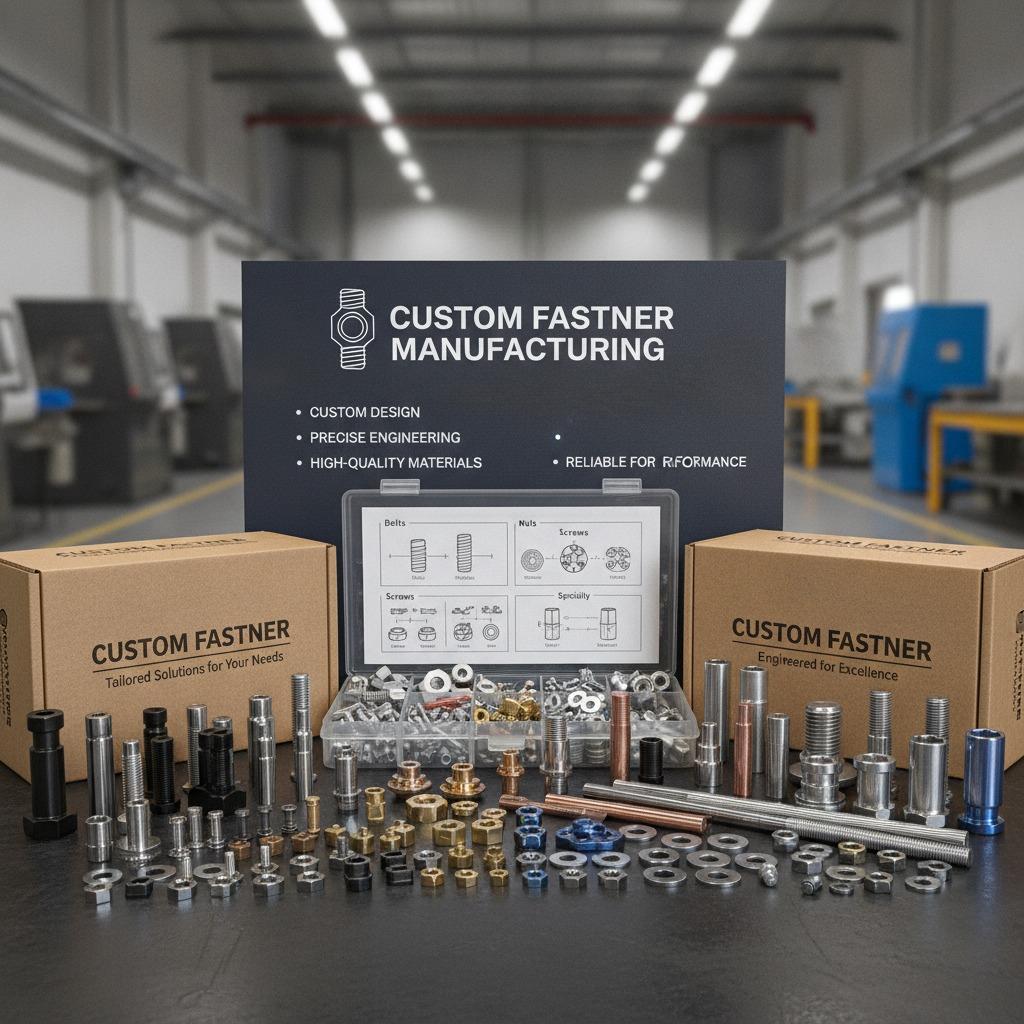
Custom fasteners are different. They are selected or produced to match the assembly’s real geometry and service conditions. The assortment shown in this kind of custom fastener packaging often includes bolts, screws, rivets, pins, anchors, inserts, nuts, washers, and special-purpose fasteners in multiple lengths and head styles. That variety is a clue: one supplier may need to support several joining tasks, not just one commodity part number.
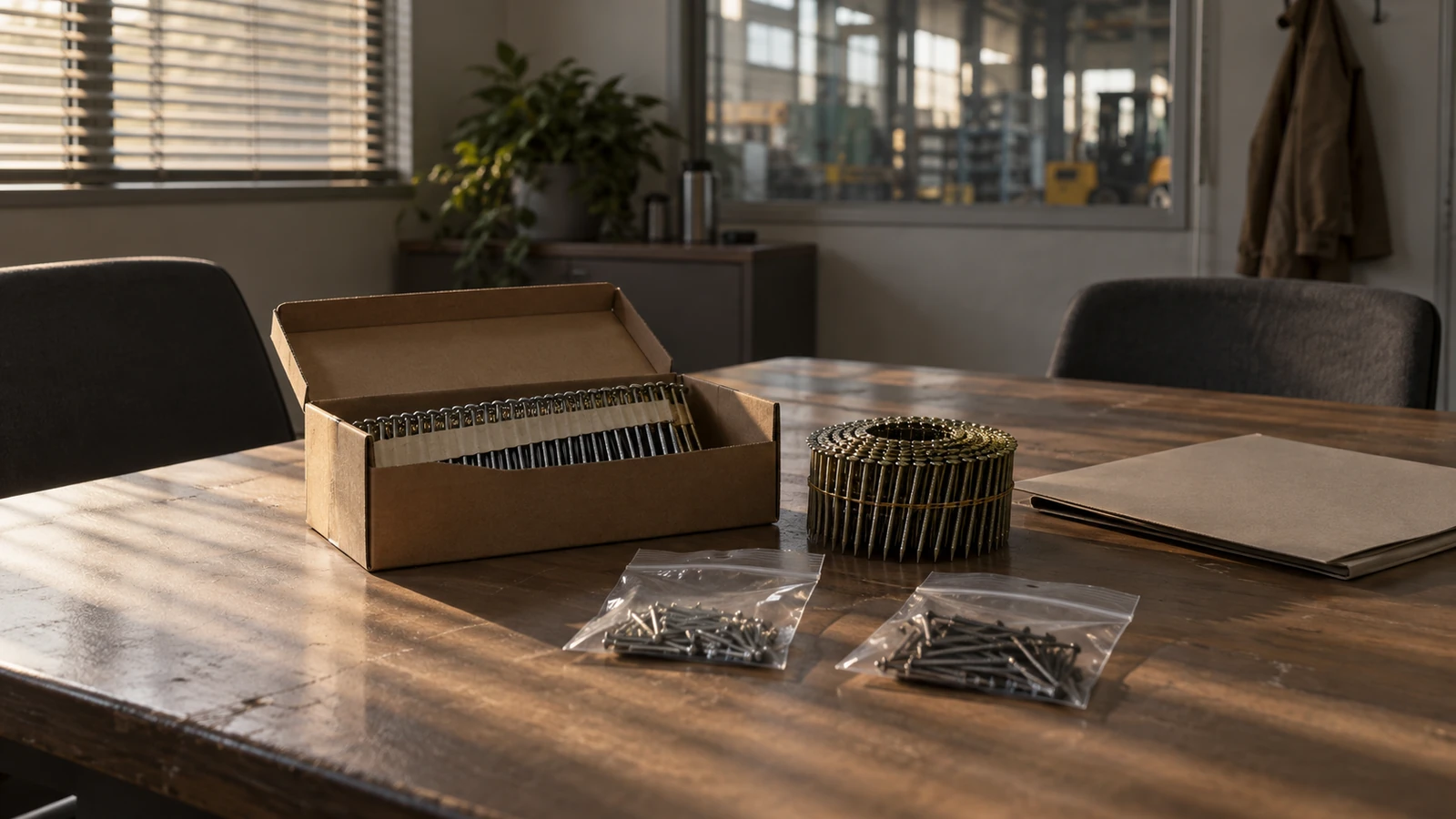
For buyers, that broader scope can reduce the number of part changes during installation. It can also simplify kitting. A clear organizer box with labeled compartments may not look glamorous, but it helps prevent the common shop problem of mixed hardware and wrong pick counts. In production, that matters more than people admit.
Custom bolts are only one piece of the picture
People often say “custom bolts” when they really mean any nonstandard fastener. That is understandable, but it can narrow the conversation too early. A bolt may solve a structural joint, while a pin locates a component, a rivet closes a permanent assembly, and an insert creates a durable thread in a softer material. The best source partner should be comfortable discussing all of these categories, because many applications need a mixed fastening strategy rather than one hero part.
The visible mix of hex-head and socket-style heads, threaded studs, smooth-shank pieces, and long shaft-like components reflects that reality. Some assemblies need clamp load. Others need alignment. Others need access from one side only. A good supplier will ask which function matters most before talking about finish or packaging.
How to compare suppliers without overcomplicating the spec
When evaluating a custom fastener manufacturer, buyers should compare more than price and minimum order quantity. The more useful questions are often the less exciting ones: Can the supplier support multiple geometries? Can they organize mixed-part orders cleanly? Do they understand whether the part is meant to be threaded, partially threaded, or left smooth in one section? Can they match the finish expectation closely enough for the application?
From the image cues alone, this kind of operation appears to involve sorting, kitting, and custom order fulfillment alongside production. That can be a real advantage for OEMs and maintenance teams, because the job is rarely just making one part. It is making the right bundle of parts arrive in the right order, separated and labeled well enough to go straight into assembly.
The finish range also matters. Bright silver-like pieces, black-coated parts, and bronze or copper-colored items suggest that appearance and coating options may vary within one order family. Whether the reason is corrosion control, friction behavior, or visual identification, the buyer should confirm the intended finish rather than assuming “metallic” is sufficient. That is a small detail that can create a large field failure later.
What matters most in a custom program
Geometry comes first, because the part has to fit. Material choice comes next, because the joint has to survive. Finish and coating follow, because the environment still gets a vote. Packaging and identification are not afterthoughts; they influence line-side efficiency and error rates. If a supplier cannot keep those four items aligned, the program becomes harder to manage than it should be.
Common mistakes buyers make
One mistake is treating custom fasteners like a one-off purchasing problem. In reality, the first order often sets the pattern for repeat builds, repair stock, and service spares. If the documentation is vague at the start, every later reorder becomes a clarification exercise.
Another mistake is overspecifying what is not actually critical. Some applications need tight control over dimensions or materials, but others mainly need consistent fit and reliable packaging. A procurement team that requests unnecessary complexity can slow down lead times and raise cost without improving the joint.
A final warning: do not assume a visually similar part will behave the same way. Two fasteners can look nearly identical in a tray and still differ in thread engagement, grip length, or coating performance. That is especially true when mixed assortments are involved.
Buyer advice for OEM, repair, and industrial builds
If you are sourcing for OEM equipment assembly, maintenance, construction hardware, or specialized industrial product builds, start with the application, not the drawing alone. Ask where the fastener sits in the joint, what the assembly sees in service, and whether the part is structural, locating, or purely retention-focused. That framing usually leads to a better specification and fewer revisions.
For teams comparing custom fasteners across suppliers, ask for clarity on process capability, finish options, and sorting or kitting support. You do not need a glossy presentation; you need predictable output, sensible communication, and packaging that makes sense on the receiving dock.
FAQ: short answers buyers usually need
When should I choose custom over standard?
Choose custom when the assembly cannot be adapted cleanly to stock hardware, or when the joint needs a special geometry, finish, or packaging format.
Is a custom order always slower?
Not always, but it usually requires more setup and more documentation than a catalog item. Clear requirements help a great deal.
Can one supplier handle multiple fastener types?
Often yes. The assortment shown here suggests that a capable supplier may support bolts, screws, pins, rivets, nuts, washers, and related components in one program.
Next step
If your build is drifting between standard parts that almost fit and redesigns that cost too much time, it is probably time to talk with a custom fastener manufacturer. Bring the assembly context, the target joint function, and the packaging needs together. That is usually where the useful conversation starts.