
1. Start with the shipment format, not just the nail itself
If you are comparing an industrial nails exporter, the first question is rarely “What metal is it?” It is usually “Can this supplier move the product the way my operation needs it?” For construction buyers, distributors, and packaging manufacturers, industrial nails are often bought in bulk, carton-packed, palletized, and prepared for export shipment. That matters because the wrong packing method can create damage, counting problems, and avoidable delays at the dock.
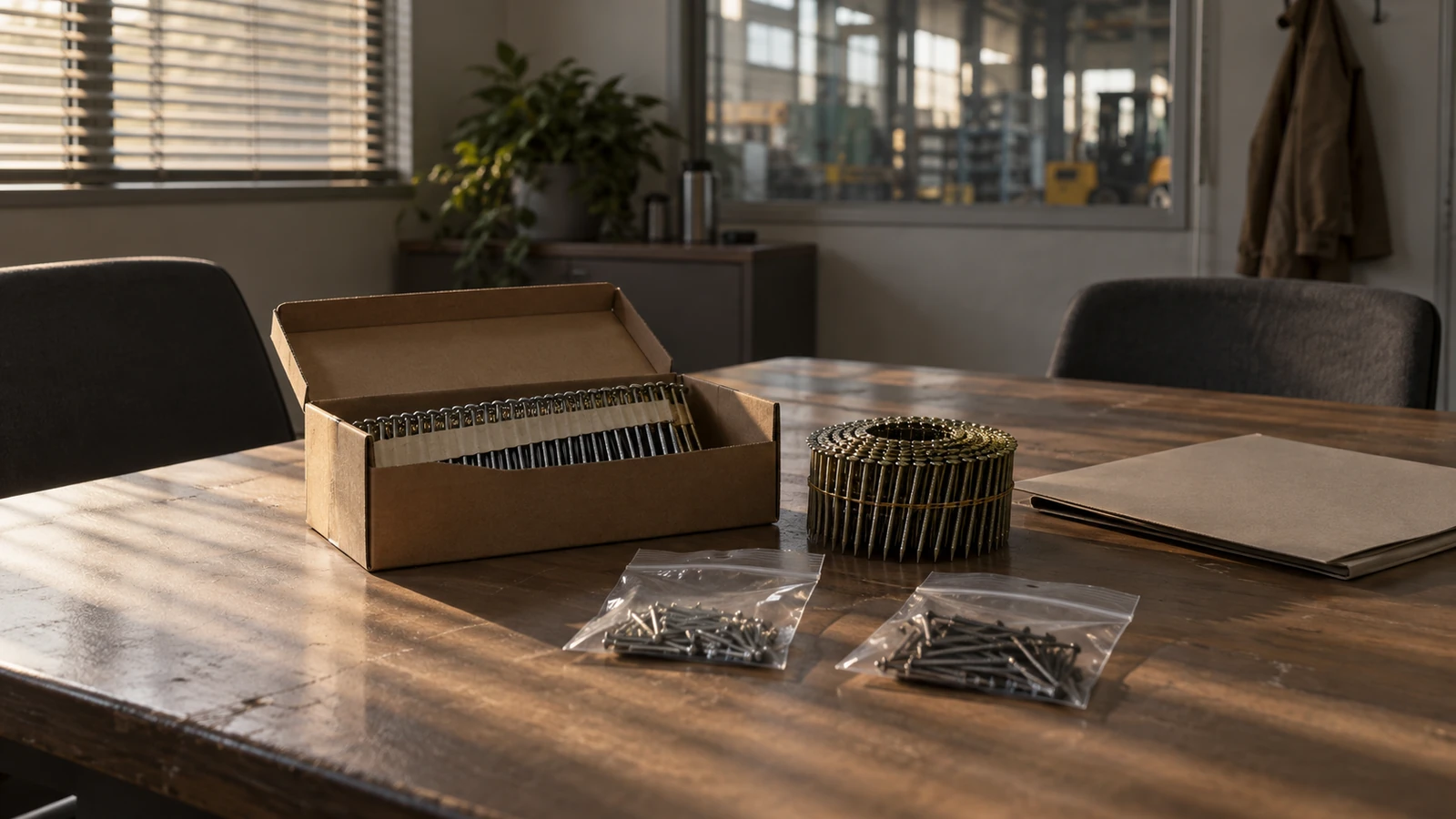
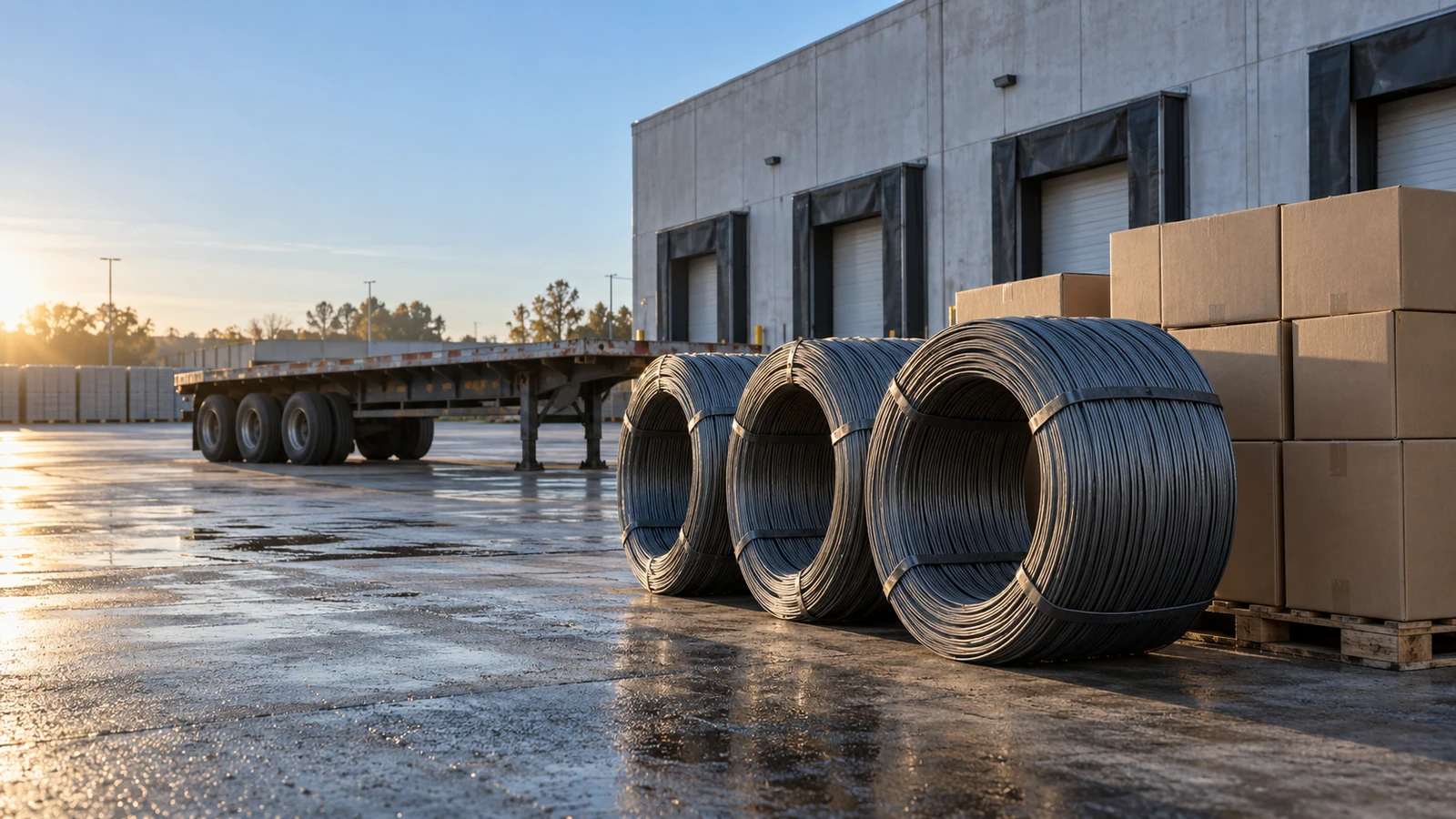
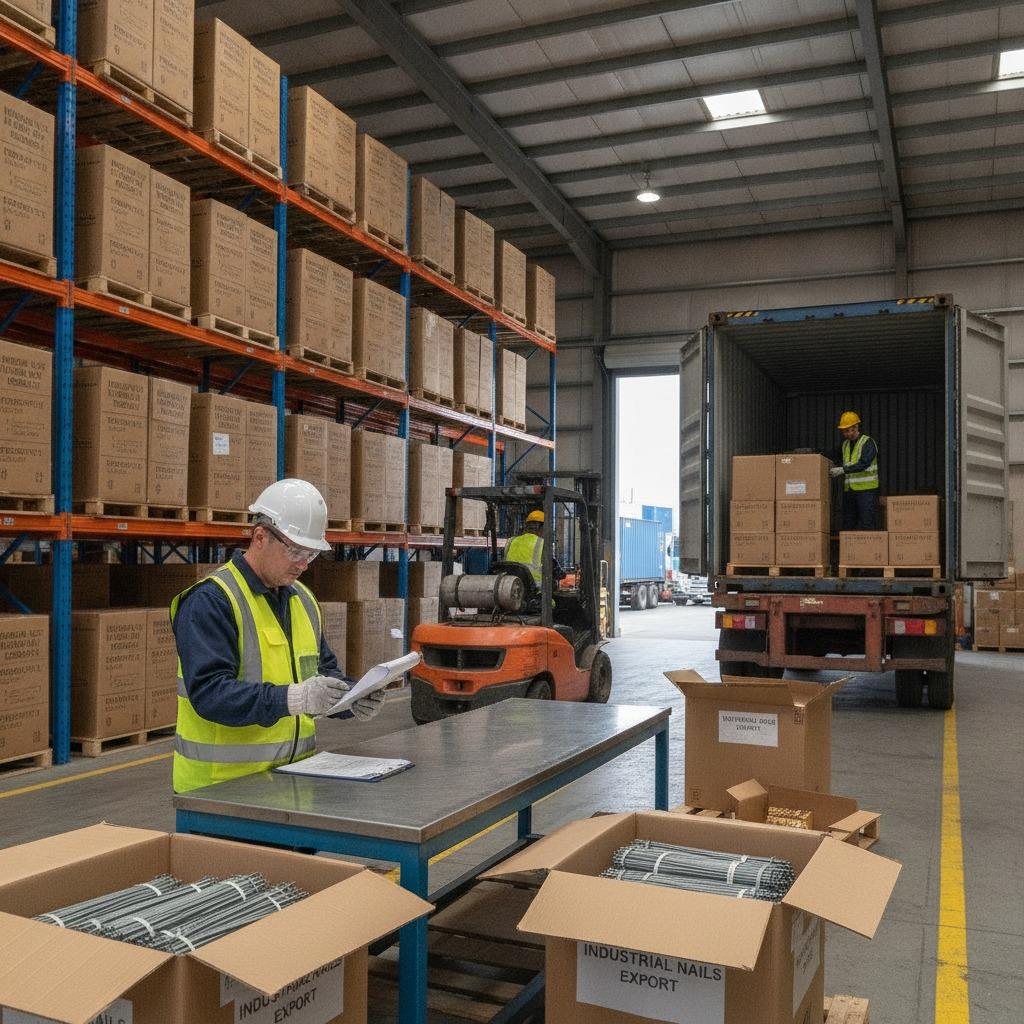
The visible stock here points to a practical export model: boxed inventory, bundled nail lots, warehouse handling, and container loading. That tells a buyer something important. This is not a retail fastener offer. It is a supply-and-logistics proposition, which is often the real decision point for overseas sourcing.
2. What buyers should look for in a bulk nails supplier
A reliable bulk nails supplier should be able to answer simple but meaningful questions before the first purchase order is issued. How are the nails packed? Are they carton-packed for export storage? Are the cartons reinforced enough for stacking and forklift movement? Is the stock organized for pallet loading without excessive repacking?
Those details are not cosmetic. In fastener supply, packaging quality affects inventory control, moisture exposure risk, and how smoothly the goods move through warehouse receiving. A buyer may not need every carton to look perfect, but they do need consistency. Mixed packing styles and unclear box labels are where problems begin.
3. Know the product category before you ask for a quote
“Industrial nails” is a broad label. It can cover nails used in construction fastening, wood framing, carpentry, crate building, pallet making, and general industrial assembly. The material shown appears metallic, likely steel, with a silver-gray look and some yellow or gold-tinted banding visible in parts of the packaging or bundled stock. That is useful context, but it is not enough to define the exact nail type.
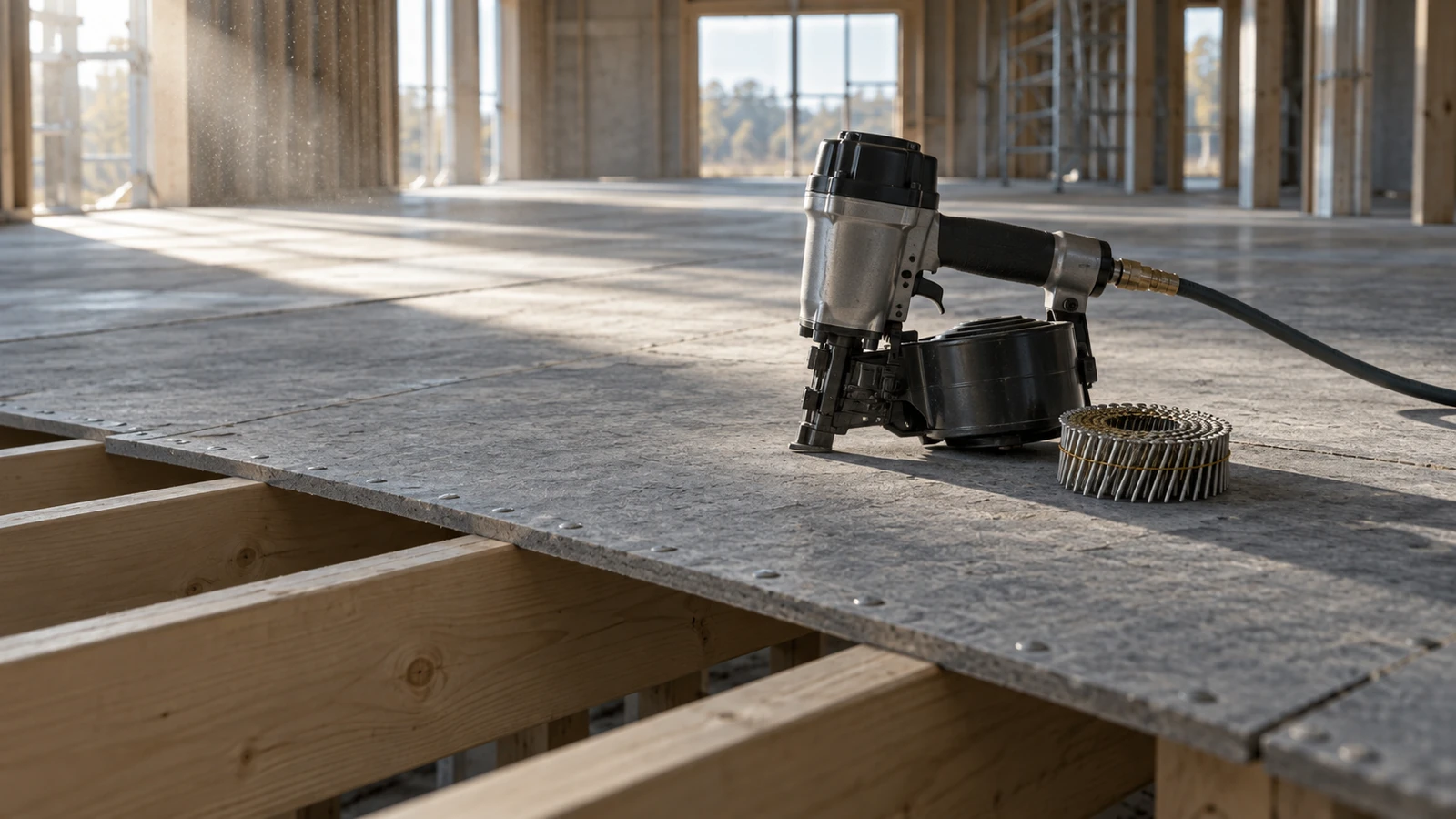
And that is the practical warning: do not assume the box marking alone tells the whole story. If you need common nails, framing nails, roofing nails, coil nails, or strip nails, ask for the exact form, dimensions, and collating method. A nail manufacturer may supply several categories, and a shipment described as industrial nails can still vary a great deal from one order to the next.
4. Use packaging clues to judge export readiness
One reason buyers like export-oriented fastener suppliers is that packaging often reveals how mature the operation is. Open cardboard cartons on pallets, clearly labeled boxes, and organized warehouse handling all point toward a process designed for storage and shipping. In the image context, box markings such as “INDUSTRIAL NAILS” and “EXPORT SUPPLY” reinforce that the product is being prepared for movement beyond a domestic shelf.
That does not guarantee product quality, of course. A neat pallet is not a substitute for accurate specification control. Still, export-ready packaging can reduce handling damage and help distributors receive goods in a form they can resell or redistribute faster. For many importers, that alone can justify choosing one supplier over another.
5. Match the supply model to the end use
Different buyers need different things from the same fastener category. A construction contractor may care most about steady replenishment for framing and general fastening. A crate or pallet maker may care about bulk availability and consistent carton counts. A distributor may care about warehouse efficiency, repeatable packaging, and the ability to load mixed orders into containers without wasting space.
This is where the role of a nail manufacturer and exporter overlaps. One business may produce the fasteners, but the export side determines how well the product lands in the buyer’s operation. For some customers, that is the difference between a convenient supply chain and a constantly improvised one.
6. Common mistakes buyers make when sourcing industrial nails
The first mistake is treating all nails as interchangeable. They are not. Head style, point style, length, gauge, and coating can all affect performance, even before you get to the application method. Another mistake is approving bulk supply without confirming how the nails are packed. Loose assumptions around carton counts or pallet configuration can create receiving headaches later.
A third mistake is overlooking warehouse conditions. Bulk metal fasteners may be sturdy, but storage still matters. If cartons are damaged or if the supply sits poorly wrapped in transit, corrosion risk and product loss go up. That is one reason many buyers prefer export supply that is already organized for container loading and warehouse storage rather than loose, last-minute packing.
7. Questions worth asking before you place an order
- What exact nail type is being supplied?
- How are the nails packed for export shipment?
- Are cartons and pallets suitable for warehouse stacking?
- Can the supplier support bulk orders consistently?
- Is the product intended for construction, carpentry, crate making, or another use?
- What product information can be confirmed in writing before shipment?
Those questions may seem basic, but basic questions are often where the real sourcing risk sits. A supplier who answers clearly is usually easier to work with than one who only sends a photo and a vague product name. That is especially true for export buyers who need fewer surprises, not more.
8. A practical buyer’s takeaway
If you are choosing an industrial nails exporter, do not stop at the product photo. Look at the shipment format, the carton labeling, the pallet arrangement, and the supplier’s ability to describe the goods plainly. For buyers who need bulk nails for construction, woodworking, crating, or industrial assembly, the best supplier is often the one that can combine product consistency with export-ready handling.
That is also why many sourcing teams first evaluate whether a supplier behaves like a bulk nails supplier and only then compare detailed product options. If the logistics are weak, the rest of the offer becomes harder to trust. If the packaging is disciplined and the product description is clear, the purchase conversation usually gets a lot easier.
9. Next step for sourcing teams
When you request a quote, ask for the exact nail category, packaging format, carton count, and shipping arrangement in one response. If the supplier can confirm those points without confusion, you are already closer to a workable export relationship. If they cannot, keep looking. In fastener sourcing, clarity is usually worth more than a polished sales pitch.