
Choosing an Industrial Staples Manufacturer for Furniture, Upholstery, and Light Assembly

When buyers search for an industrial staples manufacturer, they are usually trying to solve a fairly practical problem: which staple line will run cleanly in production, hold material securely, and not create avoidable rework on the shop floor. That sounds simple until you start comparing staple lengths, crown profiles, coatings, and tool compatibility. For upholstery shops, furniture plants, and light manufacturing lines, the wrong staple can slow the crew down just as effectively as a dull pneumatic stapler.
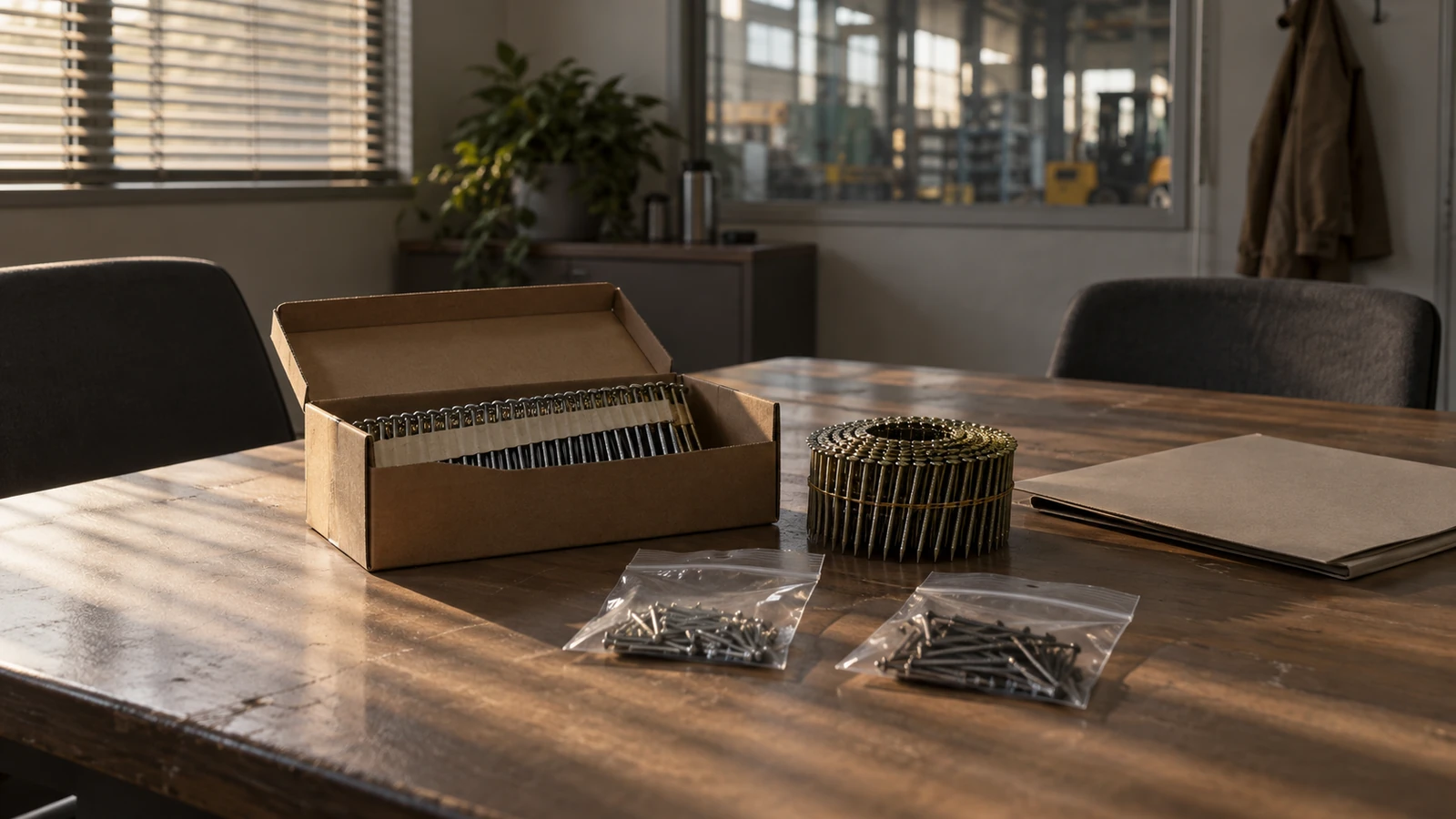
The basic product here is a narrow crown staple strip used with a pneumatic stapler. In daily use, these staples fasten fabric, foam, webbing, backing materials, and related components in furniture and upholstery work, and they can also show up in light woodworking or packaging operations. The staples shown in this type of product presentation are typically long, straight strips arranged by size, which is exactly what buyers and production teams need when they are checking compatibility before loading a tool.
What matters most in an industrial staple supply
For staple buyers, the first decision is not usually price. It is fit. A staple may look ordinary, but the geometry has to match the tool and the application. Narrow crown staples are favored in many upholstery tasks because they leave a smaller visible footprint while still holding fabric and substrate layers together. That matters when the fastening line is exposed or when appearance is part of the finished product.
A second consideration is material and finish. The staples in this category are metallic, commonly steel, and may have a silver or gray finish that suggests zinc-plating or galvanizing, although that cannot be confirmed from appearance alone. Buyers should be careful not to infer corrosion performance from appearance. If the environment is humid, the furniture will be shipped cross-country, or the assembly will be stored before final use, coating choice becomes more important than people sometimes admit in a rush order.
Industrial staple supplier comparison: what buyers usually check
A useful way to evaluate an industrial staple supplier is to compare a few practical points side by side:
- Tool compatibility: Will the staple run in the pneumatic stapler already on the line?
- Size range: Are multiple lengths or sizes available for different substrates?
- Strip consistency: Do the strips feed smoothly, or do they bind during loading?
- Finish and storage: Is the surface treatment appropriate for the work environment?
- Packaging format: Is the supply suited to wholesale use and repeated shop handling?
The wholesale angle matters more than some procurement teams expect. In upholstery staples wholesale purchasing, the buyer is rarely picking a single size for a single job. They are trying to support several product lines, several operators, and more than one fastening depth. If a supplier only covers one staple format, that can create bottlenecks later.
Why staple geometry affects production quality
Staples are a fastening consumable, but they influence assembly quality in a very direct way. If the crown is too wide, the staple may show more than expected. If the leg length is off, the fastener may not penetrate deeply enough, or it may overdrive and bruise the material. In furniture work, either result can become a visible defect. In light woodworking, the issue may be less about appearance and more about holding power.
The product format shown here—long staple strips laid out for inspection before use—suggests the kind of pre-loading check that good shops rely on. Operators compare sizes before putting a strip into the pneumatic stapler, which helps avoid misfeeds and costly stoppages. It is a small step, but in a production environment small steps keep turning into saved minutes.
Common mistakes when sourcing staples
One common mistake is treating all staples as interchangeable because they are “just staples.” They are not. Narrow crown, wire profile, strip length, and the driver’s magazine design all have to line up. Another mistake is buying only on headline cost and ignoring finish quality or feeding consistency. The cheapest box can become expensive if it causes jams or inconsistent fastening.
A third mistake is forgetting the application. Upholstery fastening is not the same as rough framing or packaging. Fabric and foam respond differently from wood and sheet goods, and a staple that performs well in one environment may be a poor fit in another.
Buyer questions worth asking before you place an order
Before choosing a staples manufacturer or industrial staple supplier, ask a few direct questions:
- Which pneumatic stapler models are compatible with this staple format?
- What staple lengths or sizes are available in the line?
- Is the supply intended for upholstery, light woodworking, or broader industrial fastening?
- How is the product packed for wholesale handling and storage?
These questions may sound basic, but they often expose hidden problems early. If the supplier cannot answer them clearly, that is a warning sign.
Practical takeaways for sourcing teams
If your operation depends on repetitive fastening, the best industrial staples manufacturer is the one that helps you reduce uncertainty. That means clean strip geometry, reasonable size coverage, and packaging that suits the shop floor. It also means understanding the difference between a staple that simply exists on paper and one that actually runs well through a pneumatic stapler day after day.
For buyers comparing staples manufacturer options, the safest approach is to match the staple to the tool, then to the substrate, then to the finish requirement. Order samples or trial packs when possible, and check feeding behavior under real production conditions, not just on a catalog page.
FAQ
Are these staples only for upholstery?
No. Upholstery is a major use case, but narrow crown staples are also used in furniture assembly, light woodworking, and some packaging or light manufacturing tasks.
Why does staple size matter so much?
Because the wrong leg length or crown profile can affect holding power, appearance, and feed reliability. In production, those issues show up quickly.
Should I choose based on finish alone?
No. Finish matters, especially where corrosion could be a concern, but compatibility and application fit come first.
Next step
If you are comparing industrial staple options for upholstery or light assembly, start with tool compatibility and the material stack you are fastening. Then narrow the field by strip format, size range, and wholesale packaging. That sequence saves time, and it usually saves a few headaches too.