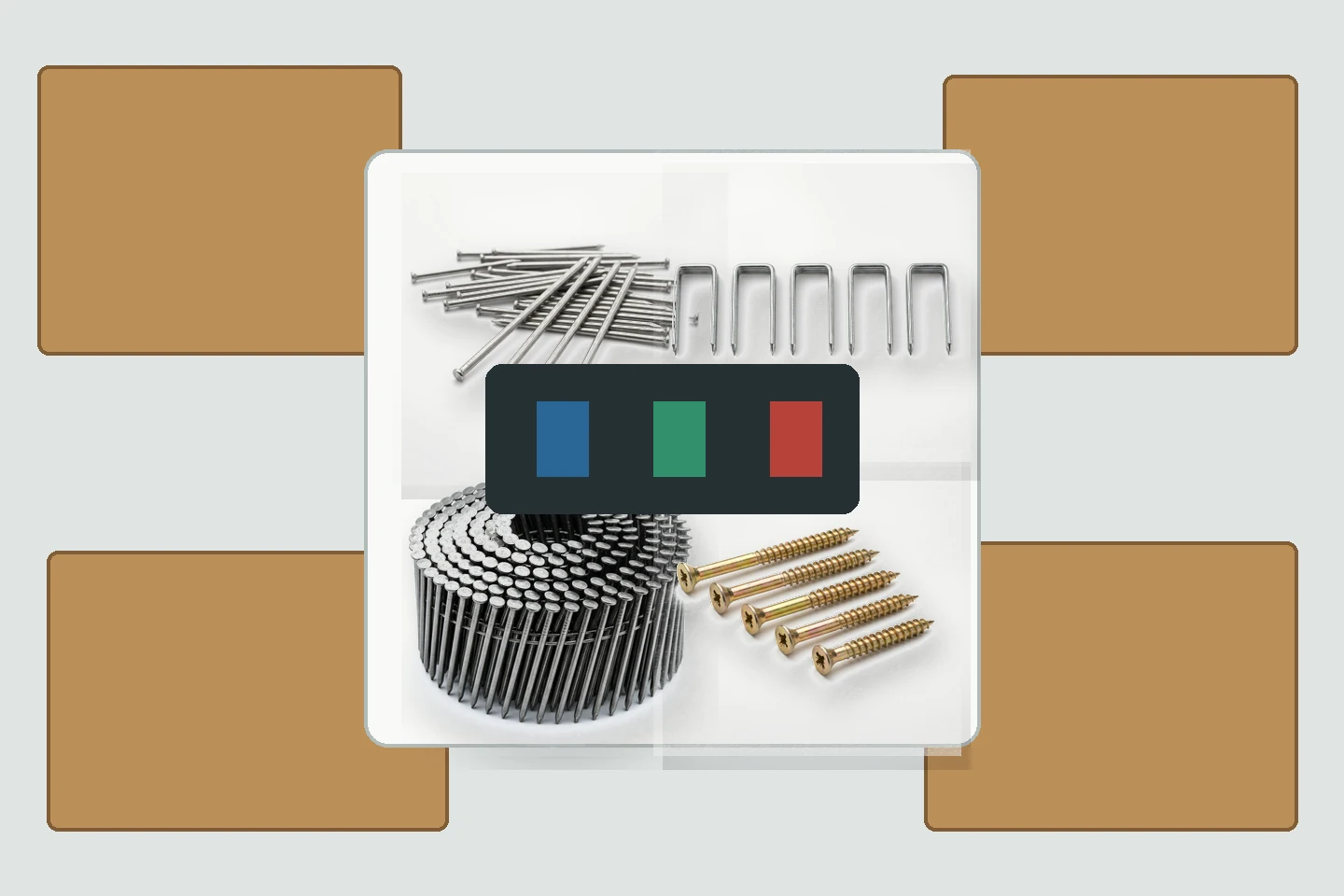

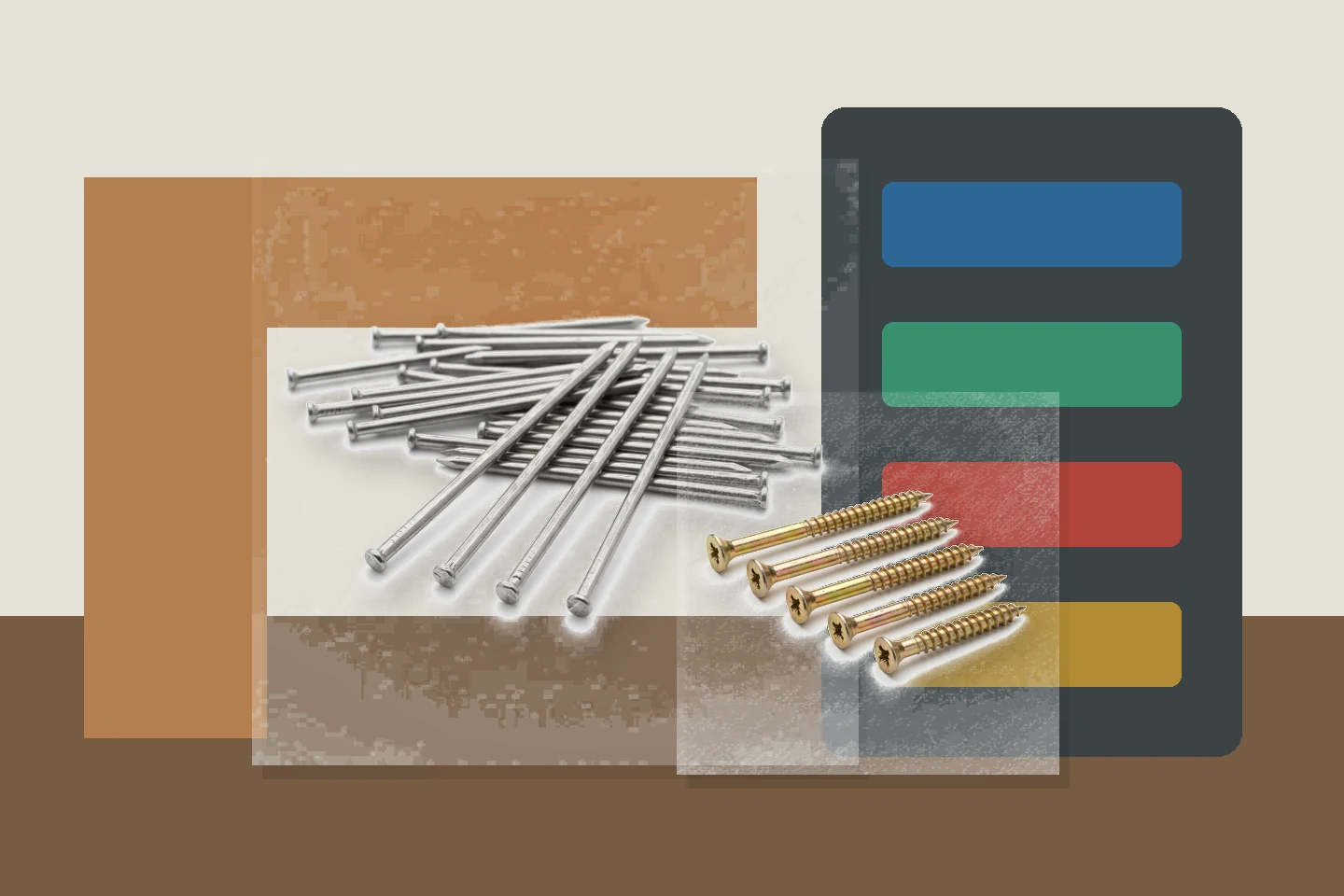
Control nails for furniture manufacturing by production station, because the fastener used to position a glued frame has different evidence needs from one used on visible trim, cabinet backs, or an upholstered component. Map the joint role, materials, tool, entry face, hidden path, appearance rule, and process owner before consolidating SKUs.
ProAirNails recommends building the map from the factory route rather than from a supplier catalog. The goal is a small, clearly identified range that covers validated jobs without encouraging unapproved substitution.
Start at receiving: release identity before performance
Verify buyer and supplier SKU, type or series, dimensions, length, point, head, finish, collation, count, lot, box condition, and tool references. Separate mixed, wet, damaged, loose, or unidentified material under the quality plan. Keep nearby sizes physically and visually distinct.
Receiving cannot prove joint performance, but it can prevent a wrong or damaged product from entering a line where the error becomes harder to trace.
Map the fastener role at every station
| Station | Possible fastener role | Primary evidence |
|---|---|---|
| Frame or subassembly | Position parts during adhesive cure | Fit-up, bond process, handling sequence |
| Case or panel assembly | Attach backs, cleats, or light components | Material stack, depth, exit and load checks |
| Molding and trim | Hold visible decorative profiles | Entry mark, filler, finish, hidden path |
| Upholstery support | Secure selected wood or trim elements | Tool access, material damage, holding result |
| Repair or rework | Restore a defined condition | Approved method and hidden-fastener map |
Write the role in the work instruction. If one nail is used differently at two stations, treat those as separate application approvals even when the carton is the same.
At cutting and machining: protect the future path
Fasteners may conflict with drilling, routing, trimming, sanding, hardware installation, or later repair. Mark hidden metal zones where downstream tools can encounter them. Confirm the sequence so a temporary pin is not placed in a future cutter path.
Changes to profile thickness, groove position, or hardware can alter edge distance and hidden clearance. Include manufacturing engineering in the review rather than leaving the decision to the fastening station alone.
At subassembly: define the adhesive relationship
When brads or pins maintain alignment during cure, control surface preparation, adhesive amount, open time, contact, pressure, cure conditions, movement, and handling. Make clear whether the fastener carries service load, supplements the bond, or only positions the part.
Using nails for furniture manufacturing cannot compensate for a gap, missing adhesive, contaminated surface, or early handling. Inspect the complete assembly process.
At visible trim: approve the finished surface
Set limits for entry size, head depth, depression, fiber lift, split, tool-nose mark, filler area, sanding, stain, coating, and viewing conditions. Trial the actual finish sequence and inspect after cure. An entry that is discreet on unfinished wood can become prominent under stain or gloss.
Use concealed entry directions or a finer product only when the hidden path and joint role remain acceptable. Appearance and holding evidence must be evaluated together.
At case assembly: check the complete material path
| Path factor | What to record | Risk to control |
|---|---|---|
| Top piece | Material and actual thickness | Unexpected remaining engagement |
| Receiving member | Species, panel, density, grain, voids | Bending, curl, poor hold |
| Edge and reverse face | Clearance and finish status | Split or side exit |
| Joint fit | Gap, support, movement | Deflection and inconsistent depth |
| Nearby features | Hardware, wire, cutter path | Collision or later service hazard |
Section representative samples when needed. A surface check alone does not prove the internal route.
At each tool: validate compatibility and pace
Record brand, model, accepted series, length range, approved operating range, contact condition, service status, and line location. Check loading, feeding, skips, doubles, jams, depth, head or crown condition, and recovery at normal pace.
Follow the tool manual and use the NIOSH nail gun safety guide for broader safe-use context. Do not bypass safety features or exceed approved settings to improve appearance.
At finishing and packing: look for delayed evidence
Inspect for filler shrinkage, coating cracks, telegraphing, splits, protrusions, handling damage, and marks exposed by final lighting. Packing pressure and transport simulation may reveal movement absent at the station. Feed those observations back to the application map.
Keep approved samples representing show faces, hidden faces, edges, profiles, and final finish. Photographs help, but physical references can make borderline appearance decisions more consistent.
Control the factory-wide SKU matrix
- Buyer and supplier SKU with clear carton labels
- Approved tools, stations, lengths, and material stacks
- Joint role, adhesive relationship, and load assumption
- Visible-face standard and hidden-path evidence
- Lot trace, retained sample, and change-notification rule
- Line-clearance and wrong-size containment method
Review overlaps deliberately. Consolidate only when the same product passes every affected application; do not convert a warehouse simplification into production ambiguity.
Turn station data into supplier feedback
Report events by SKU, lot, tool, station, material, symptom, drives or assemblies, rejected output, and clearing time. A cluster at one tool means something different from the same event across stations after a lot change.
Review nails for furniture manufacturing with both quality and production teams so a low defect count does not hide repeated micro-stoppages, sorting, filler work, or downstream repair.
The limitation is clear: a station map organizes evidence but does not design the furniture joint or prove structural capacity. Apply qualified design requirements and repeat trials after relevant changes.
Use wood guidance within its limits
The USDA Forest Products Laboratory's Wood Handbook resource provides context on wood and mechanical fastening. It does not approve specific nails for furniture manufacturing for a product line.
Send ProAirNails the station map
Review ProAirNails brad nails, pin nails, air staple pins, and the wider pneumatic nail range. Send station, tool, material, joint, finish, length, quantity, and packing data through the ProAirNails inquiry page.
Effective nails for furniture manufacturing stay connected to one approved job from receiving through the finished and packed product.
FAQ
Which nails are commonly considered for furniture production?
Brads, fine pins, and other pneumatic fasteners may fit selected operations, depending on tool, joint role, material, finish, and validation.
Can one nail size serve every furniture station?
Only if it passes each station's tool, material path, appearance, joint-role, and process requirements without creating substitution risk.
Why map fasteners by production station?
Station mapping connects each SKU to its actual tool, materials, sequence, acceptance rule, owner, and downstream risks.
Should furniture brads always be used with adhesive?
Not universally. The joint design should define whether the fastener positions, supplements, or carries load and how adhesive is controlled.
How are visible nail marks controlled?
Control product profile, depth, tool contact, support, wood response, entry position, filler, sanding, coating, and viewing conditions.
What causes a nail to exit a furniture edge?
Grain, density, gaps, hard features, entry angle, excessive length, narrow clearance, movement, or tool condition can contribute.
How should nearby nail lengths be controlled?
Use distinct SKUs, labels, physical separation, line clearance, approved application matrices, and wrong-size containment rules.
When should a furniture fastener trial be repeated?
Repeat after relevant changes to fastener, tool, material, profile, joint, adhesive, finish, station, packing, or acceptance criteria.
What data should be reported to the supplier?
Report SKU, lot, tool, station, material, symptom, event rate, rejects, clearing time, photos, and retained samples.
What should I send for a furniture nail quotation?
Send tool models, station uses, product specifications, material stacks, joint roles, finish limits, quantities, packing, and sample plans.