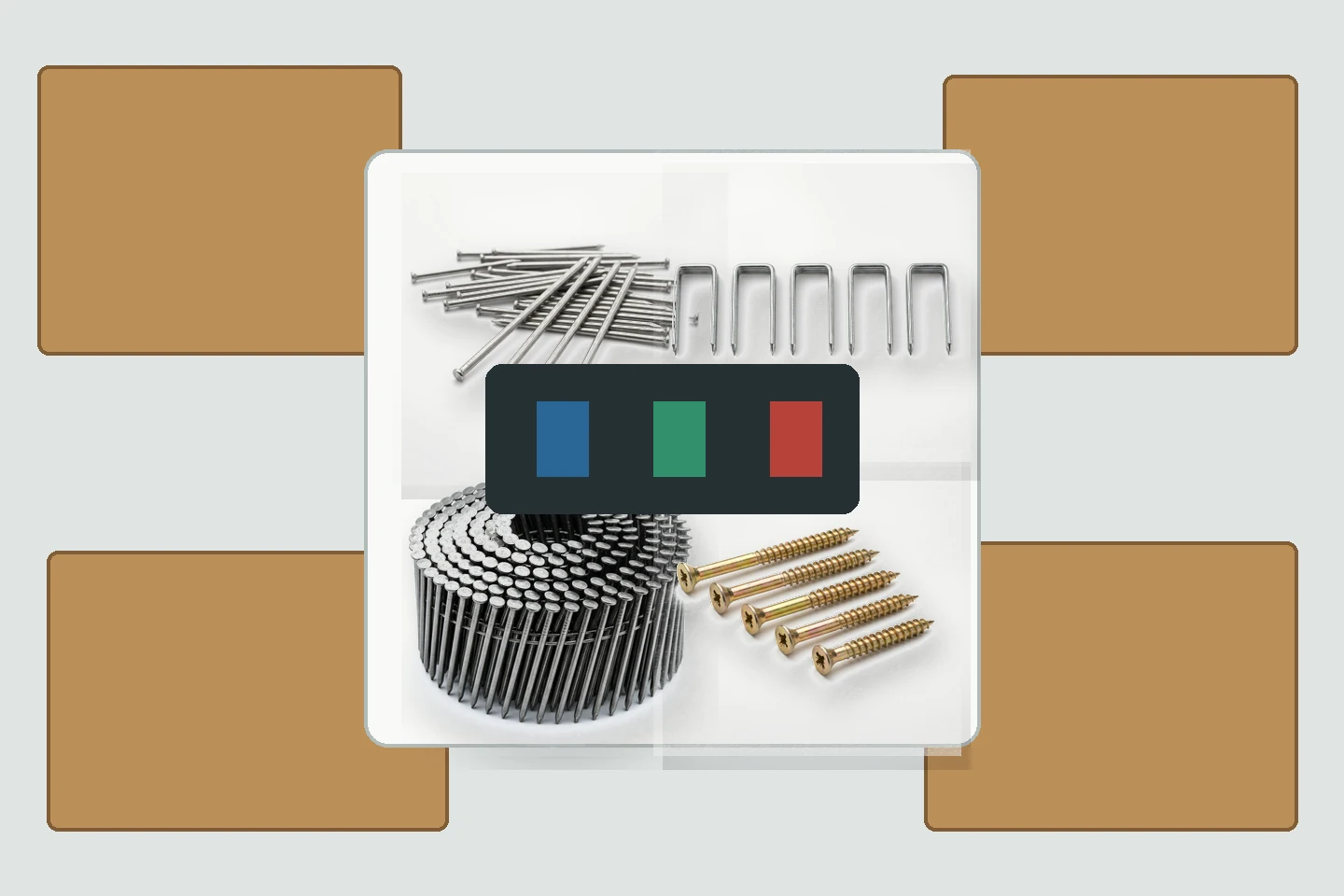

Use pin nails for woodworking when a very small entry mark supports positioning or light attachment and the joint's real load path is already understood. Start with the joint role, then follow the decision tree through finished-face limits, hidden path, length, tool fit, adhesive, and production trials. Stop whenever evidence is missing.
ProAirNails recommends approving the complete combination rather than a pin in isolation. Wood species, profile, grain, finish, joint gap, support, pinner, direction, and operator sequence can change the result.
Decision node 1: what job must the pin perform?
| Joint role | Continue when | Stop when |
|---|---|---|
| Positioning during adhesive cure | Adhesive and handling process carry the intended load | The pin is assumed to replace unverified bonding |
| Decorative trim attachment | Service load and appearance are validated | Movement or impact requirements are unknown |
| Temporary fixture | Removal or retention is defined | Hidden metal conflicts with later machining |
| Primary structural connection | A qualified design specifically permits it | Small appearance is mistaken for adequate strength |
Write one sentence beginning “the pin is used to...” If design, production, and quality provide different answers, resolve the role before selecting a length.
Decision node 2: is the entry face allowed to show?
Define allowable entry size, depression, fiber lift, finish crack, filler area, tool-nose mark, and viewing condition. Test on the real species and finish sequence. Clear coating, stain, gloss, and directional lighting can reveal a mark that looked acceptable on unfinished scrap.
If no visible repair is permitted, compare a concealed entry direction, a different joint sequence, or another joining method. “Headless” does not mean invisible.
Decision node 3: can the hidden path be accepted?
Map top-piece thickness, receiving material, grain direction, edge distance, voids, profiles, finished reverse faces, and nearby hardware. Fine pins can deflect with grain, curl at a hard feature, follow a gap, or exit a narrow edge.
Section representative samples when practical and safe. Record the entry direction and compare accepted and failed paths. A clean surface cannot prove correct internal engagement.
Decision node 4: which length has the lowest complete risk?
| Candidate condition | Possible advantage | Evidence required |
|---|---|---|
| Shorter pin | Lower side-exit and hidden-face exposure | Adequate role and receiving engagement |
| Longer pin | More potential engagement | Bend, curl, split, and path testing |
| Several nearby lengths | Covers more material stacks | Label and substitution controls |
| Unknown backing | None | Confirm the stack before driving |
Select the shortest validated range that covers approved applications. More lengths can increase warehouse and operator errors without improving the joint.
Decision node 5: does the pin match the installed pinner?
Record tool brand, model, accepted gauge or series, length range, magazine condition, and approved operating range. Load complete strips and observe follower movement, strip damage, skips, doubles, jams, and depth consistency at realistic pace.
Follow the tool manual and use the NIOSH nail gun safety guide as broader safety context. Do not modify pins, hand-correct collation, bypass safeties, or exceed approved settings to force a pass.
Decision node 6: is the adhesive process controlled?
When pins position parts during cure, validate adhesive type, surface preparation, application amount, open time, pressure or contact, cure conditions, handling time, and gap control. Trial a realistic interruption or delayed handling condition when it reflects production risk.
The choice of pin nails for woodworking should not conceal a weak bond line, poor fit-up, or moving assembly. Record which element carries service load and which only holds alignment.
Run the decision tree through three evidence levels
- Bench comparison with one controlled variable at a time
- Limited production with normal tools, operators, pace, and finishing
- Pilot shipment with ordinary strips, boxes, labels, and lot identity
- Final review after coating cure and representative handling
- Requalification triggers for relevant product or process changes
Use the same acceptance rule at every level. A presentation sample should not receive a stricter standard than production, and a pilot should not pass under a looser one.
Record the approved path and the stop conditions
Create an application matrix containing tool, pin series, length, material stack, entry face, direction, support, joint role, adhesive, finish, visible result, hidden-path evidence, and approval owner. Mark untested combinations clearly.
The limitation is that a decision tree cannot calculate joint capacity or guarantee every piece of wood. It makes assumptions and evidence visible so changes can trigger a controlled review.
Use wood references as context, not a product verdict
The USDA Forest Products Laboratory's Wood Handbook resource provides broader information about wood and mechanical fastening. It does not select pin nails for woodworking for one profile or certify a finished assembly.
Send ProAirNails the decision-tree inputs
Review ProAirNails pin nails, compare brad nails when a larger finish fastener may fit the role, and browse the wider pneumatic nail range. Send pinner models, lengths, materials, joint role, finish, quantity, packing, and trial plan through the ProAirNails inquiry page.
Well-chosen pin nails for woodworking follow an approved path from the visible entry to the hidden result and the finished part.
FAQ
What are pin nails used for in woodworking?
They are often considered for discreet positioning or light finish attachment, frequently alongside adhesive, subject to complete joint validation.
Are headless pins completely invisible?
No. They can leave an entry, depression, fiber lift, finish crack, filler need, or tool-nose mark depending on the application.
How do I choose pin nail length?
Compare material thickness, joint role, receiving engagement, grain, edge distance, finished reverse faces, and tested hidden-path risk.
Can a longer pin curl inside wood?
Yes. Grain, density, hard features, gaps, entry angle, excessive path, damaged pins, and tool condition can contribute.
Should pin nails be used with glue?
Many assemblies use pins for alignment during adhesive cure, but the design must define each element's load-carrying role.
How can I check a hidden pin path?
Use representative sectioned samples or another qualified inspection method, recording entry direction, stack, tool, pin, and result.
Are all 23 gauge pins interchangeable?
No. Profile, dimensions, length, collation, strip condition, and tool specifications can differ. Approve the exact combination.
When should a woodworking pin trial be repeated?
Repeat after relevant changes to tool, pin, length, wood, profile, adhesive, finish, support, direction, or acceptance criteria.
What should an approved sample record?
Record pin identity, lot, tool, settings, material stack, entry face, direction, visible result, hidden path, date, and approver.
What information should I send ProAirNails?
Send pinner models, accepted series, lengths, materials, thicknesses, joint purpose, finish target, quantity, packing, and sample plan.