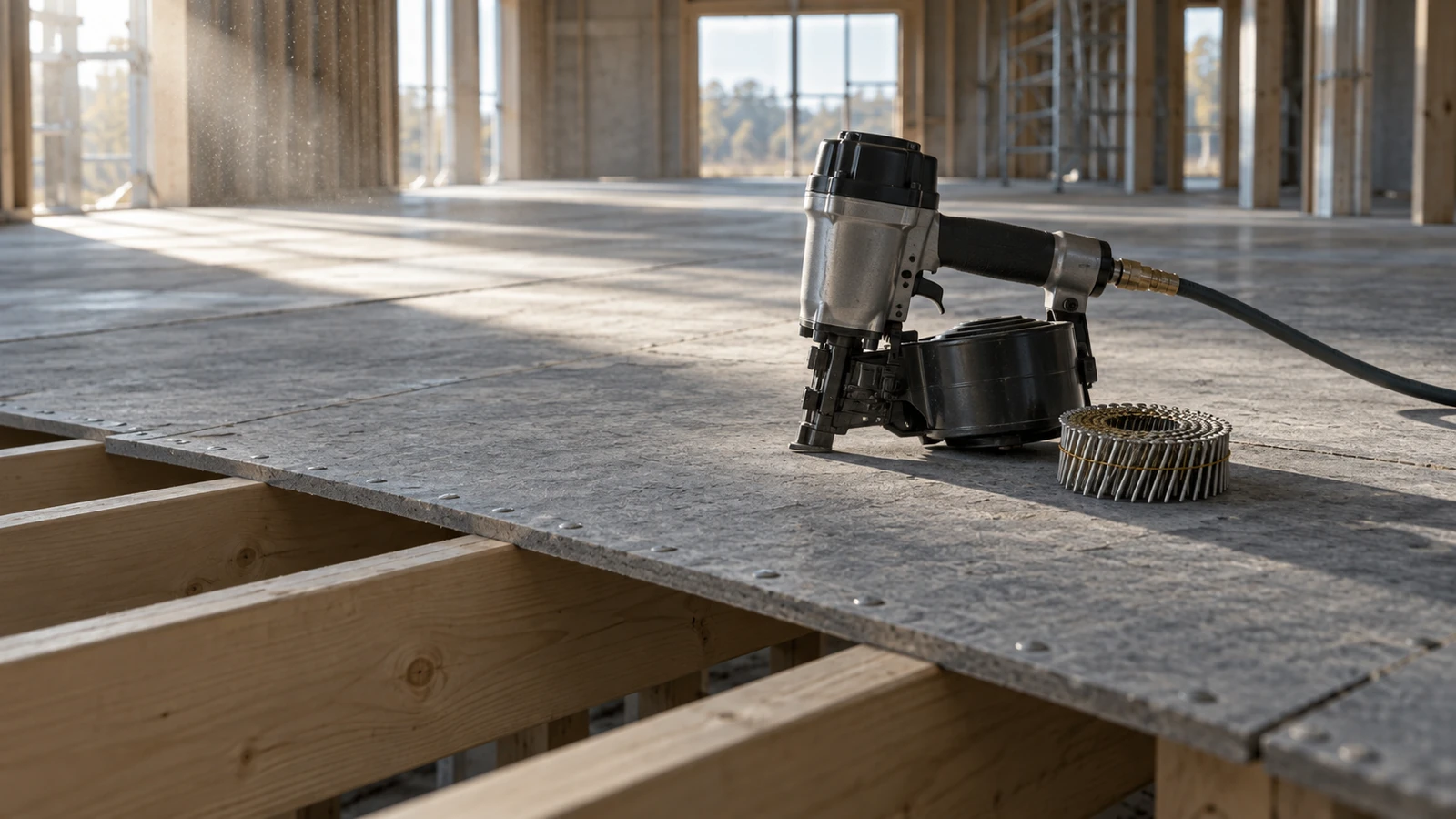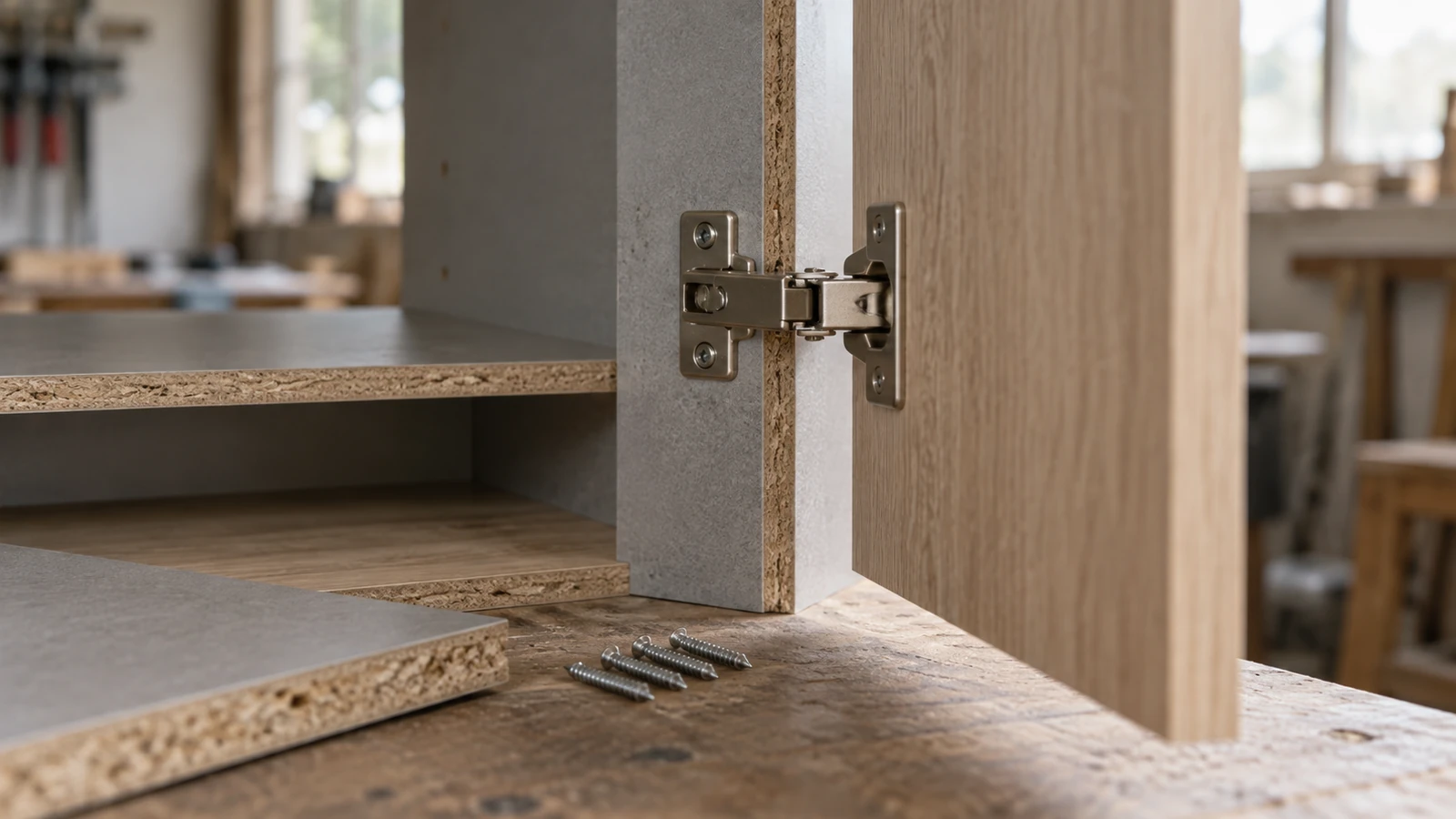

Why the staple line matters in sofa manufacturing
When buyers talk about a Sofa Staples Manufacturer, they are usually not looking for decorative hardware. They are looking for the small fastening parts that hold upholstery, webbing, padding, and fabric in place while a sofa is built, repaired, or re-covered. In a workshop setting, those staples are doing quiet but serious work. If they are the wrong size, the wrong crown, or poorly driven, the result shows up later as loose fabric, squeaks, shifting webbing, or a frame that does not stay tight under daily use.
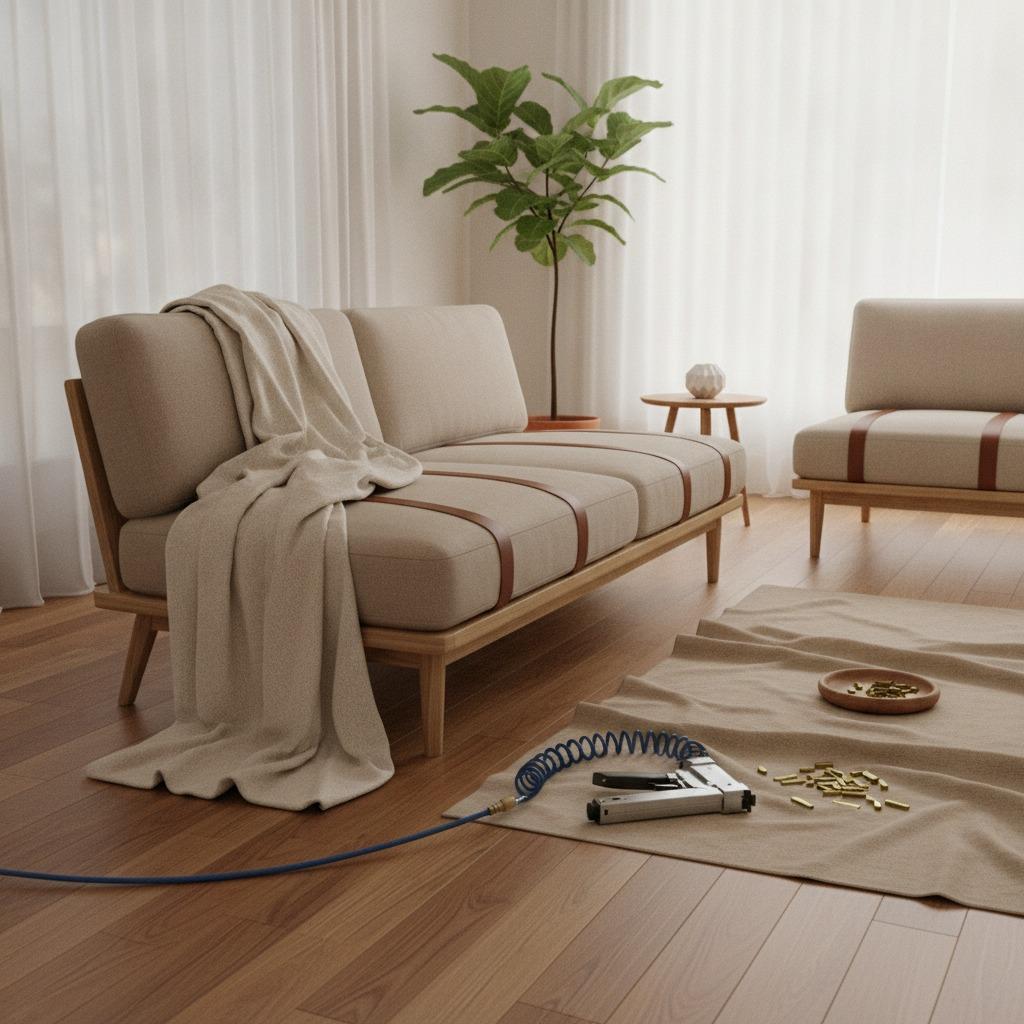
The image data points to an upholstered seating piece in an unfinished state: light beige fabric, exposed wood edge, white padding, and brown webbing across the seat area. That is a familiar sight in furniture assembly or reupholstery. It also explains why sourcing the right fastening partner is not a minor purchasing decision. A Sofa Staples Supplier affects production speed, consistency, and the long-term feel of the finished furniture.
What sofa staples actually do
In upholstered furniture, staples are used to secure fabric to the frame, fasten webbing, lock batting or padding into position, and support clean edge finishing. A good fastening line should disappear into the build. It should not tear through fabric, split the wood unnecessarily, or leave the operator fighting jams on the line.
For workshops making compact seating such as a loveseat, straight-arm sofa, or similar lounge piece, staples are part of the hidden structure that keeps the outer shape crisp. In repair work, they are just as important. Reupholstery often means removing old covers and reinstalling new material onto the existing frame. That puts extra pressure on the staple choice, because the substrate may already have been fastened once before.
Quick buyer takeaways
If you are comparing options from a Furniture Staples Factory, start with the basics: staple wire material, leg length, crown width, and compatibility with your fastening tool. Those four items decide most of the practical outcome. A staple that is technically “strong” can still be a poor fit if it does not match your upholstery thickness or hardwood frame conditions.
It is also worth asking whether the staples are intended for softwood, hardwood, or mixed furniture construction. That may sound obvious, but it is where many production headaches begin. Softer frames accept fasteners differently from dense hardwood rails, and upholstery fabric reacts differently from webbing or filler layers.
How to choose the right supplier
1. Match the staple to the build sequence
In sofa production, staples may be used early for internal webbing and later for visible upholstery turns. A single fastener type does not always suit every step. Sourcing teams should check whether the supplier can support multiple lengths or styles for different station requirements.
2. Look at run consistency, not just headline strength
For factory use, uniform feeding matters as much as holding power. If a staple line pauses the operator or creates uneven penetration, the process slows and the cover line gets messy. That is especially important when working around neat geometry, like the boxy frame and clean edges often seen in modern upholstered pieces.
3. Consider the fabric and internal materials
Woven upholstery fabric, foam or fiber padding, textile webbing, and wood framing all behave differently under fastening. The supplier should understand that the fastener is part of a layered system, not a standalone part. In practice, this means the staple has to perform without telegraphing through the cover or crushing the material underneath.
Common mistakes in upholstery fastening
One common mistake is using a staple that is too long for the application. That can create unnecessary breakout on the reverse side of the frame, especially in thinner members. Another is selecting a fastener that is too short, which may seem fine during assembly but can loosen after the furniture has been moved, sat on, and flexed over time.
Another buyer-side problem is assuming every workshop tool is equally forgiving. It is not. Staples and tools have to work together, and a change in supplier may require a quick check of feed behavior and penetration consistency. Small issue, big disruption if it reaches the production floor.
What matters in furniture repair and custom upholstery
Custom upholstery and restoration place a different kind of demand on staples than high-volume factory work. The operator may be working around an older frame, uneven wood, or previously repaired joints. In those cases, clean fastening is even more valuable because the staple has less margin for error.
The photo’s unfinished seat area, with visible webbing and padding, is a reminder that upholstery is both structural and visual. The hidden fastening system supports the final look. If the staple work is sloppy, the cover may look fine on day one and still fail early at the corners or seams.
Practical questions to ask before buying
Ask what staple sizes are commonly used for sofas, loveseats, and related seating lines. Ask whether the supplier can support bulk factory supply as well as smaller workshop orders. Ask how the fasteners behave in mixed-material builds where wood, textile, and padding all meet at the same edge. Those are simple questions, but they help separate a generic fastener seller from a real Sofa Staples Manufacturer.
If you are sourcing for a production line, it is also smart to request sample packs for internal testing. Not because every purchase needs a lab report, but because furniture builds can vary more than people expect. One frame design may accept a staple cleanly, while another with harder rails or thicker webbing may not.
Final buyer note
Furniture fastening is one of those areas where small parts carry a surprisingly large share of the risk. The upholstery may be the visible product, but the staple line is part of what keeps that product usable after the showroom shine is gone. For sourcing managers, engineers, and custom furniture teams, the practical goal is simple: choose a supplier that understands the full build, not just the fastener.
If you are evaluating a Sofa Staples Supplier for production or reupholstery work, start with your frame type, fabric stack-up, and tool setup. Then compare options from a Furniture Staples Factory with those real conditions in mind. That is usually where the useful answer appears.