
Two plants can answer the same question with the same sentence, and only one of them is telling you the truth. That is the whole difficulty with industrial nails supplier verification: the language sounds identical whether the wire was drawn in the room next door or six hundred kilometres away in somebody else's building.
I watched a buyer lose a quarter to this. Two quotations matched almost to the cent, so he treated them as two versions of one plant. He visited the first, stood at the collation line and signed. The second quote had come from an office with a phone, a folder and a good memory for technical detail. The nails that arrived were real nails, drawn from a different wire grade than the ones he had held in his hand.
Nothing in the paperwork contradicted anybody. What separated the two sellers was a two-hour visit and four questions asked in the right order. Below is how that visit works, and how to run it without turning a commercial relationship into an interrogation.
The second visit is the one that counts
The first visit is a tour. The second is a test, and it costs you a day.
Ask for the same line to be running the same product you were shown before. A plant that cannot run the same process twice inside a month is telling you something. Book it on a normal working day rather than a quiet one, and arrive without a described agenda. Being slightly unexpected is not rude; it is the point of the exercise.
What you are looking for is not perfection. You are looking for the moment when the story and the floor stop matching, because that is the only evidence which cannot be prepared in advance. It is also the part of industrial nails supplier verification that no questionnaire can do for you.
Four questions a factory answers without noticing
These four do the heavy lifting. They are deliberately boring, and almost impossible to answer convincingly from a desk in another city.
| What you ask | What a factory says | What a trader says |
|---|---|---|
| Where is the wire drawn? | Names the drawing line, describes the finish, offers to walk you there | "We work only with very reliable wire suppliers" |
| Which furnace runs heat treatment? | Gives a cycle and a temperature band, and can be wrong in a way that sounds human | "Everything is fully heat treated, top quality" |
| Who collates the strips? | Points at the benches and names the shift pattern | "Our partner handles that part" |
| Show me the last first-article record | Finds a signed sheet with measured values and a date | "Our quality is one hundred per cent" |
Read that right-hand column again: none of it is a lie and none of it is an answer. The tell is the absence of anything that could be checked.
The signals that give a trading company away
Working with a trading company is not automatically wrong. Working with one while believing you are buying from a plant is what costs money. These are the patterns I look for during any industrial nails supplier verification, in roughly the order they appear.
- Answers arrive faster than the questions deserve, and every process belongs to "our partner".
- The photographs are real but empty: clean floors, no people, no half-finished work in the frames.
- Nobody on the call has an opinion about your order. A production manager argues with you about collation; an intermediary agrees with everything.
- The sample is superb and the production run is merely acceptable.
- Nothing has ever gone wrong. Every plant I have visited has a story about the week the furnace went down. A seller with no war stories has not been at war.
Why industrial nails supplier verification starts at the wire
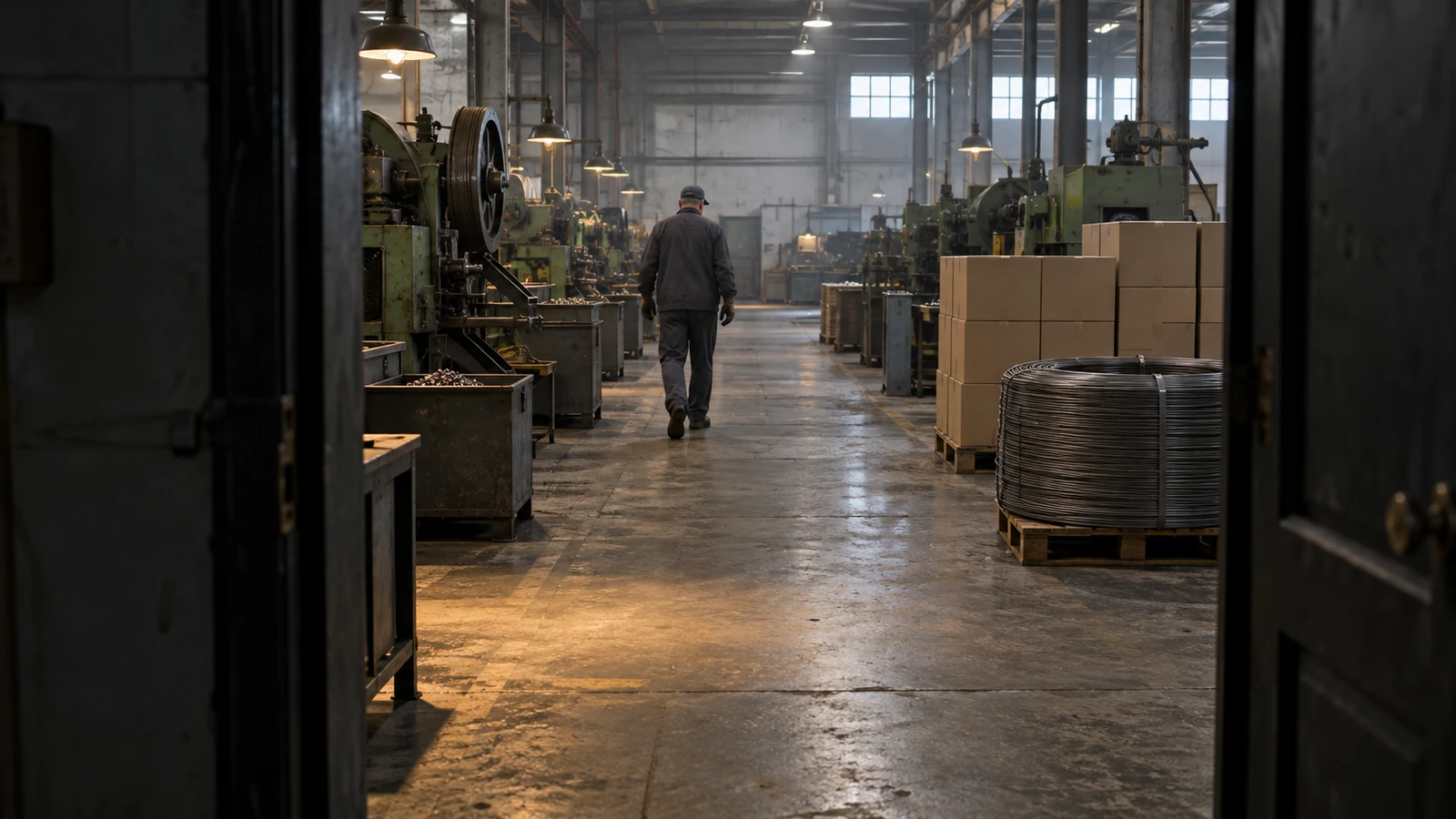
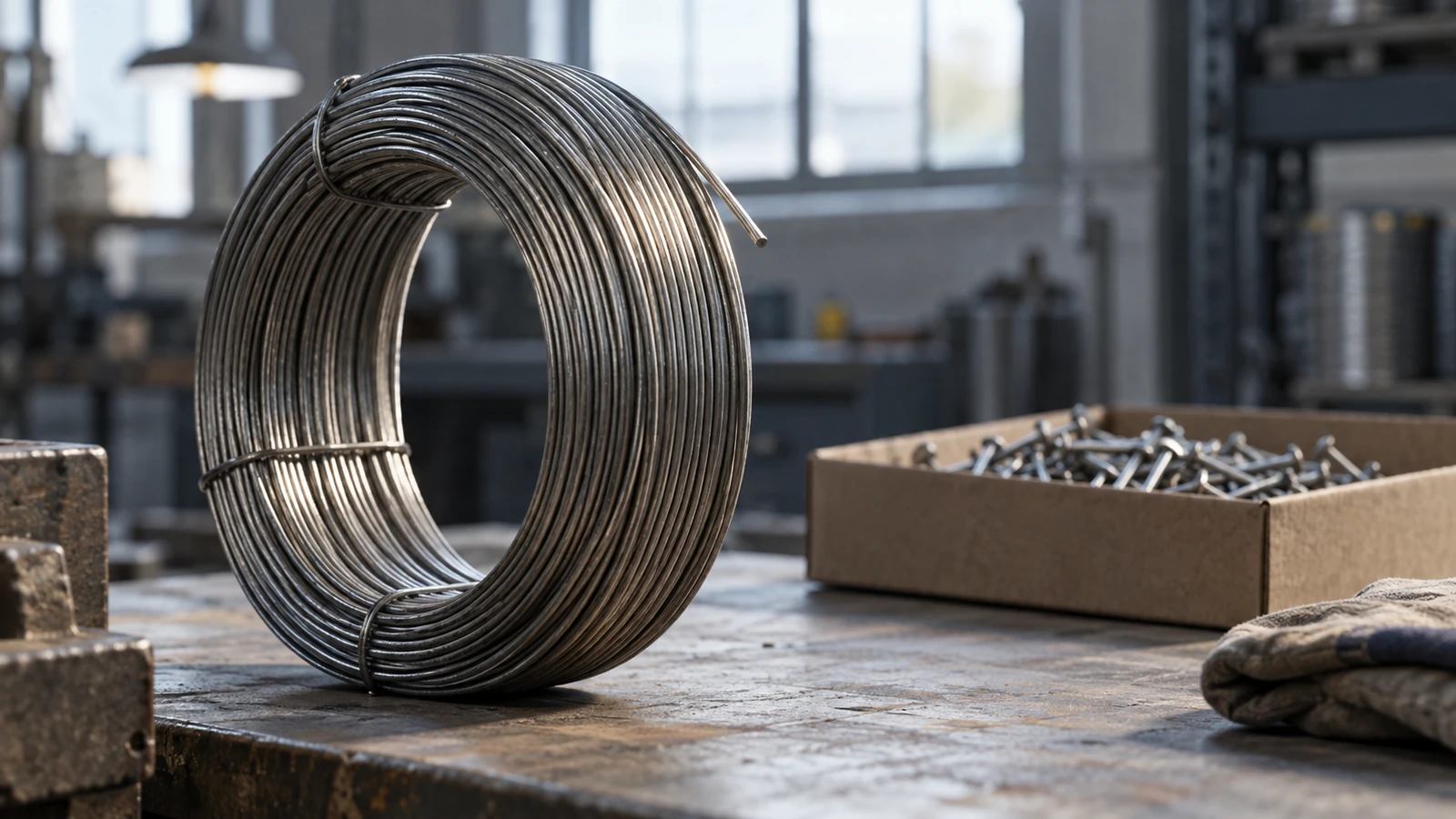
If you only ask one thing, ask about the wire. Wire is most of the cost, most of the strength and most of the corrosion behaviour, and it is the single easiest part of the chain to change quietly.
A factory will tell you the diameter, the grade and the finish, and it will usually tell you where it is drawn. The follow-up matters more: ask what happens when a coil arrives out of tolerance. A plant has a procedure, a scrap bin and a supplier conversation. A trading company has a shrug with polite wording wrapped around it.
Where the price can move without touching the spec
Most importers negotiate the one thing they should leave alone and give away the three that cost them nothing to keep. Put the levers in order before the call.
| Lever | Effect on the price | Effect on the order |
|---|---|---|
| Container size and order frequency | Real, and the biggest of the safe levers | Small, if the specification stays written down |
| Carton grade and pack count | Visible, quickly | Crushed cartons on the second leg |
| How far ahead you book | Modest but genuine | None, as long as the plant has capacity |
| How much of the range comes from one plant | Real, through fewer changeovers | Concentration risk you should price separately |
| Wire grade | The largest lever on the sheet | Head strength and coating life |
| Coating thickness | Large, and invisible on a quote | Corrosion inside the first year |
So trade volume, timing and carton configuration. Do not trade wire grade, coating thickness or heat treatment, and put a number on each of them in the specification. A quotation that says "galvanized" and nothing else cannot be inspected, and a specification you cannot inspect cannot be defended later.
Splitting an order without splitting the specification
Two plants on one specification is the most useful arrangement an importer can have, and it fails for one predictable reason: the specification quietly becomes two documents, and then two products.
Write one sheet. Same wire grade, same coating weight, same head shape, same collation count, same carton grade and pack count. Send it to both plants unchanged, then negotiate separately: price and lead time on one page, quality on another, and never let the second conversation into the first.
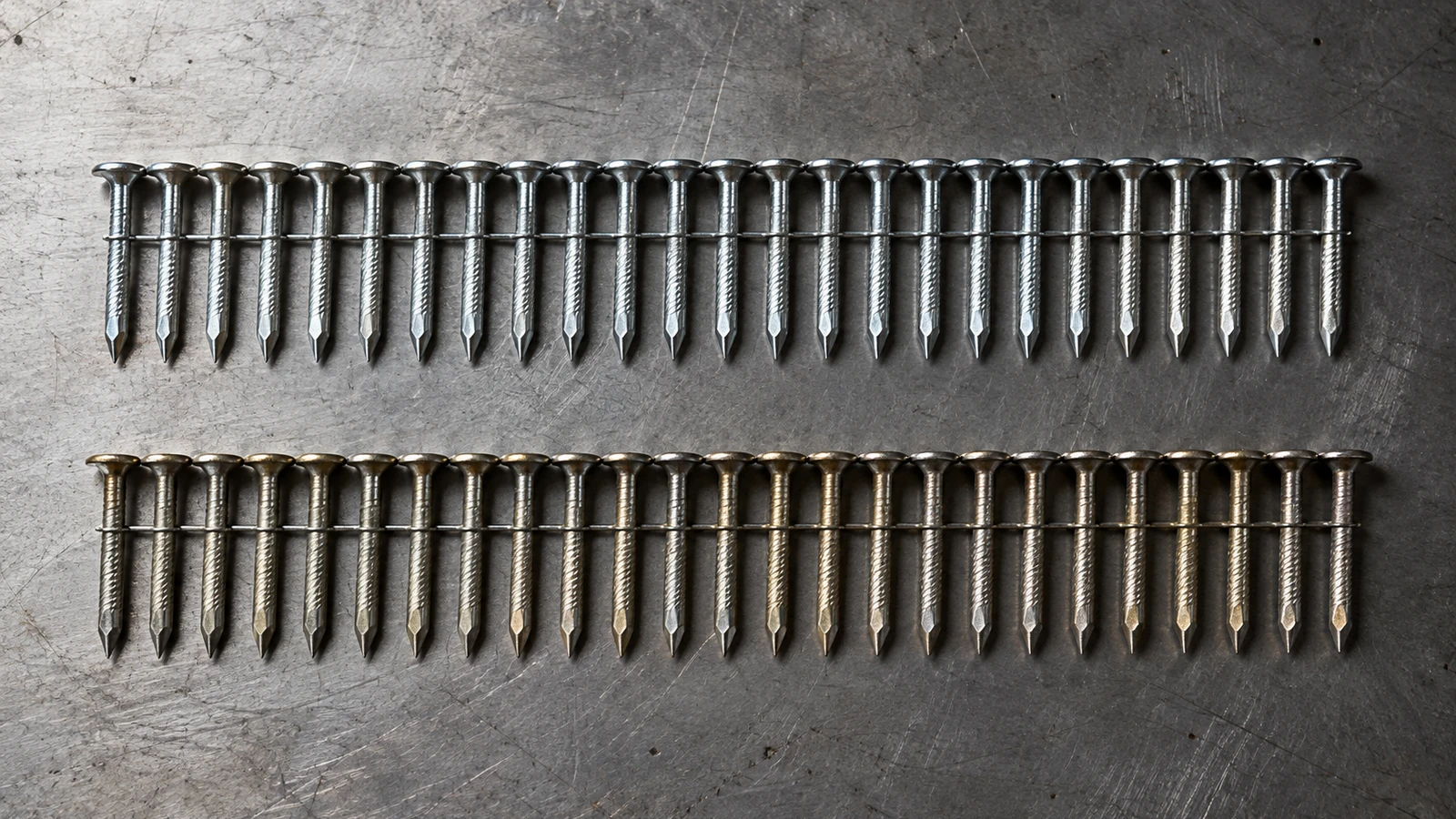
Give the backup a small live order every year, because a supplier you only call during a crisis is one you are meeting for the first time. Ask both plants to keep the same first-article record and compare the two sheets at the start of every run.
What two plants cost you in practice
Split sourcing has a price and it is usually worth paying. You lose the discount of a single larger programme and you spend time keeping two processes aligned.
What you buy is the ability to say no, which is the part of industrial nails supplier verification that pays for itself. When one plant drops a furnace or starts treating your order as filler work, you have somewhere to go that already knows your specification.
What industrial nails supplier verification still cannot settle
No visit proves a plant will behave next year. It cannot tell you how a company handles a full order book, a new owner, or the month its best toolmaker leaves. A clean result is a limitation of risk rather than a guarantee, and any supplier who says otherwise is selling reassurance instead of nails.
What it does settle is comparability. Once you have seen the wire drawn and the strips collated, the two quotations in front of you stop being numbers and become two processes you can weigh against each other.
How ProAirNails answers the four questions
We run pneumatic nails and coil nails through the same four stations under one roof, so the answers are short: where the wire is drawn, what the furnace cycle is, who collates, and what the last first-article record measured. Ask ProAirNails for any of the four before you ask for a price and you will get the document rather than the adjective.
Two further documents help: a factory audit checklist for the visit itself, and the first container sizing note for the order that follows. Coating terminology is worth reading at source: the ASTM specification for mechanically deposited coatings is F1667, and the trade terms are defined by the ICC Incoterms rules.
Questions importers ask after the second visit
How do I raise the price question without inviting thinner coating?
Move the conversation to volume, timing and packaging, and put a number on every characteristic you will not change. Say plainly that wire grade and coating weight are fixed and everything else is open. A supplier who keeps returning to the coating has answered the question you did not ask.
Which signals tell me I am talking to a trading company?
Process questions that come back as adjectives, photographs with nobody in them, and a plant with no history of anything going wrong. Ask who runs heat treatment and what happens when a coil arrives out of tolerance. That second question separates a plant from an office.
Is it safe to split an order across two suppliers?
Yes, with one written specification and two separate negotiations. The arrangement fails when the sheet is rewritten per plant, or when the backup is kept as a threat instead of given real work. Give it a small order each year and it stays a supplier rather than a promise.
How long does a proper verification actually take?
Half a day on site once the paperwork has arrived, plus a few days of reading. A useful industrial nails supplier verification is two visits inside a month, not one, because that is what shows you the same process on two different working days.
Do I have to fly out to run this myself?
Not always, but somebody has to stand on the floor. A third-party inspection confirms what you asked it to confirm; it will not notice that the collation benches you were promised belong to the building next door. If you cannot travel, ask for a live walkthrough and treat the missing half of the industrial nails supplier verification as a risk you have chosen to carry.
What should I collect before the second visit?
Ask for the last first-article record, the wire specification with the drawing source, the coating method and thickness, and the packing configuration in writing. Bring the last quotation and the sample you were given, then compare all of it against the floor when you arrive.
Can a trading company ever be the right answer?
Sometimes. If your volume is small, your range is very wide, or you need three product families on one invoice, an intermediary earns its margin. Order a small batch, inspect it properly, and price the risk rather than pretending it is not there.
How do I compare a factory quote with a trader quote fairly?
Ask both to state wire grade, coating method and coating thickness, carton grade and pack count. Once those four lines exist, a trader quote usually stops looking cheaper, or it turns out to be the same offer with an extra hand in the middle. ProAirNails returns those four lines on every quotation, in the same order, so two offers can be read side by side.
What do I do when the two plants quote differently?
Assume the specifications differ before you assume the prices do. Put the two sheets side by side and find the line that moved. It is almost always coating weight, packing count or carton grade, and cheaper to fix the specification than to renegotiate.
Where does a specification usually drift first?
Coating thickness, then carton grade, then the number of strips per coil. All three are invisible until something fails, which is why the pack count belongs on the same sheet as the wire.
The useful output of industrial nails supplier verification is not a verdict on a supplier, it is a specification you can inspect. Send that finished document to ProAirNails before you ask for the price and the quotation comes back against something you can check line by line. Our contact desk answers the four questions in the same order they are asked above.