
What buyers really mean when they search for a pneumatic nails manufacturer
When sourcing a pneumatic nails manufacturer, most buyers are not just looking for a factory that can stamp out fasteners. They are usually trying to solve a broader production problem: keep fastening operations moving, reduce rework, and make sure the staples or nails match the tool, the material, and the pace of the line. In upholstery, furniture assembly, light construction, and packaging work, the wrong fastener can slow operators down fast.
That is why the search often overlaps with terms like pneumatic nail supplier. In practice, buyers want a dependable source for industrial fastening products that arrive consistently, feed smoothly, and hold up under repetitive air-tool use. If the staples jam, bend, or do not seat cleanly, the cost shows up in labor long before it shows up on a procurement spreadsheet.
What the product scene suggests
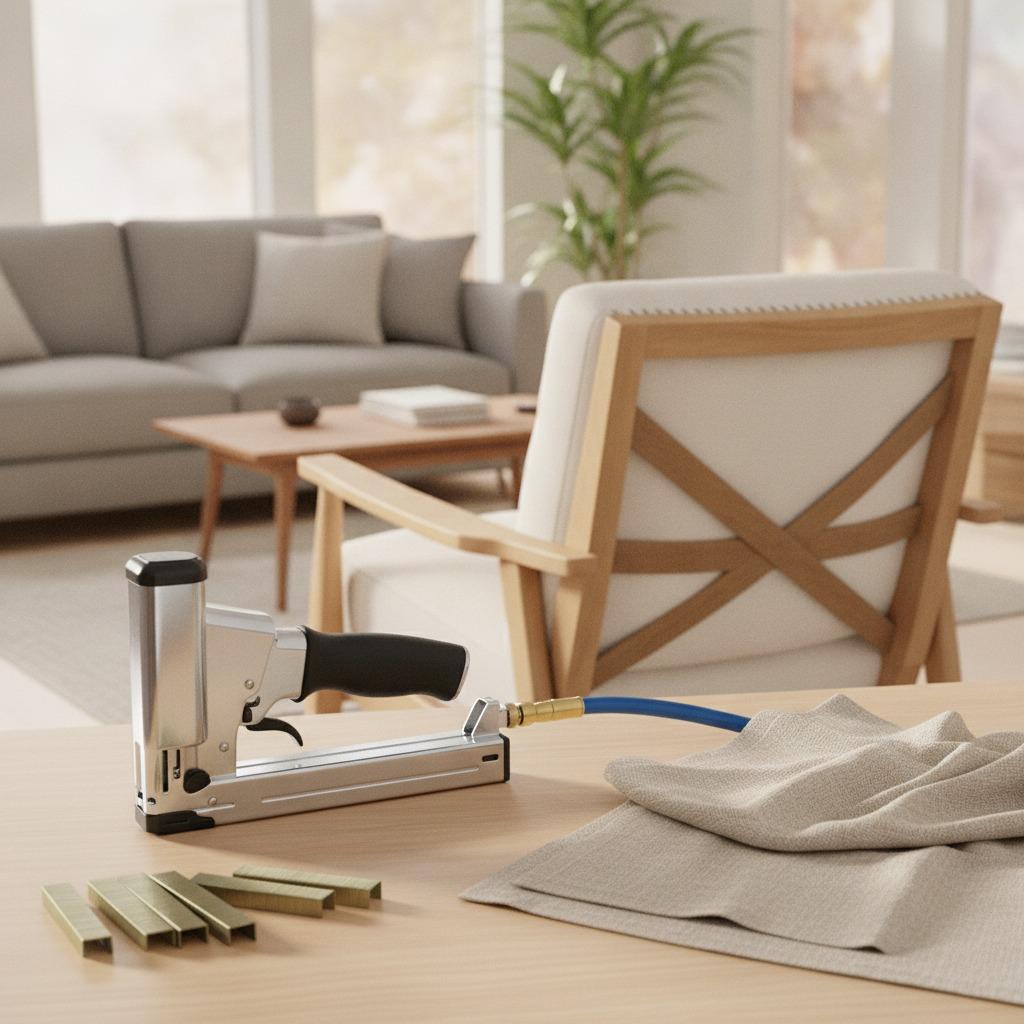
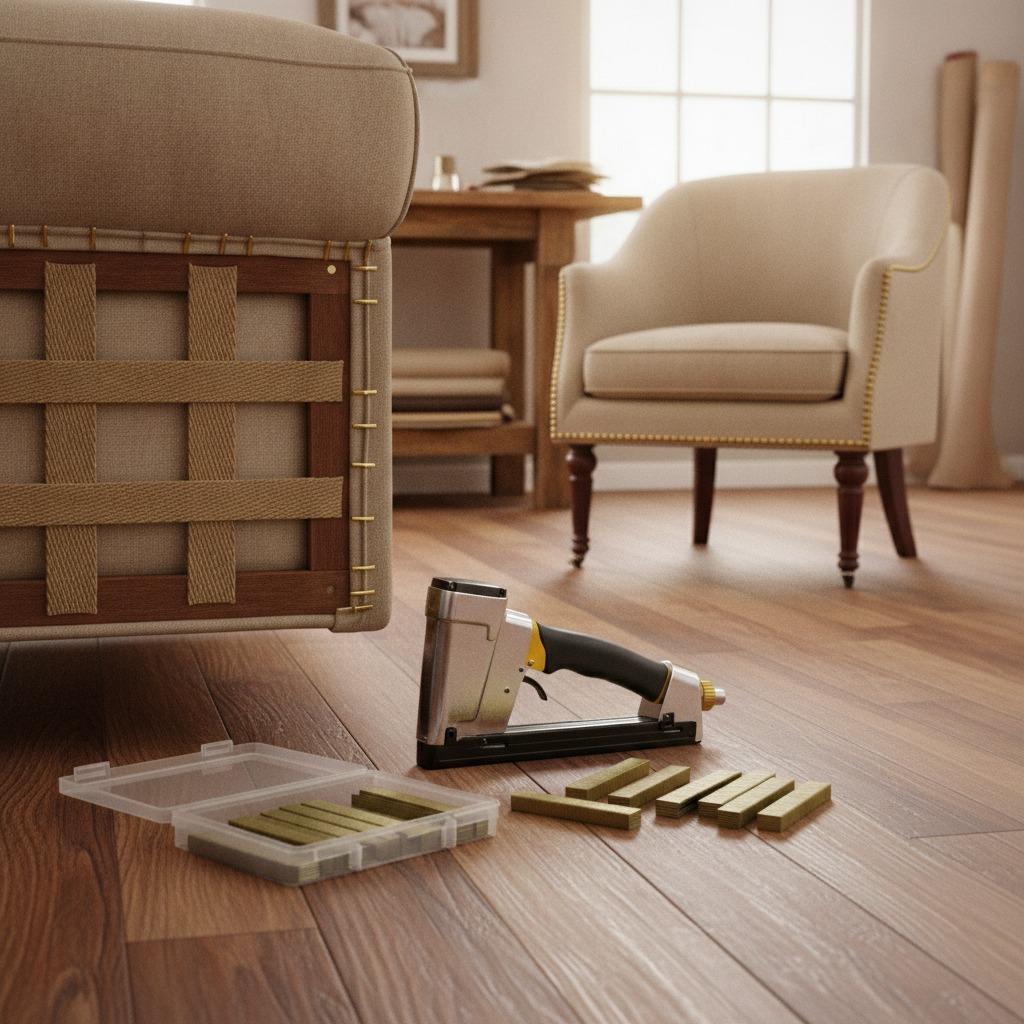
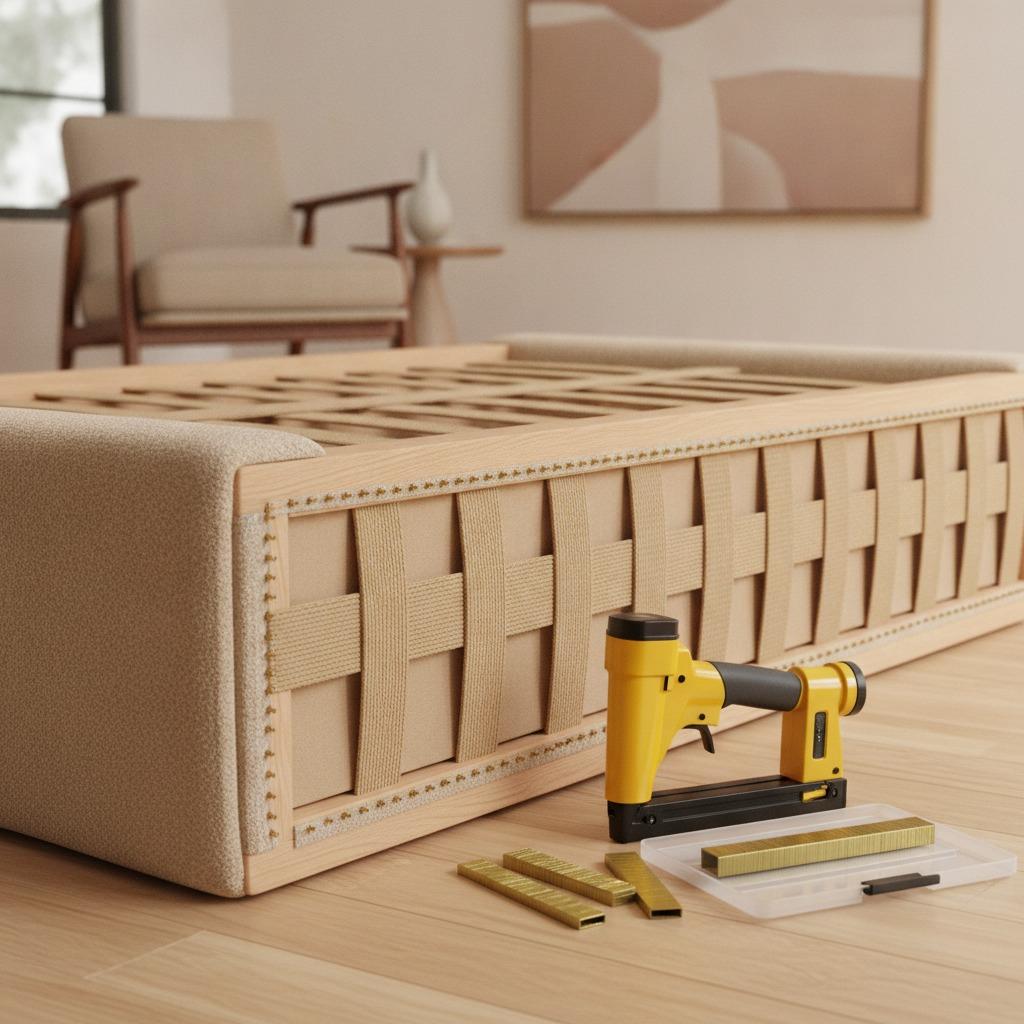
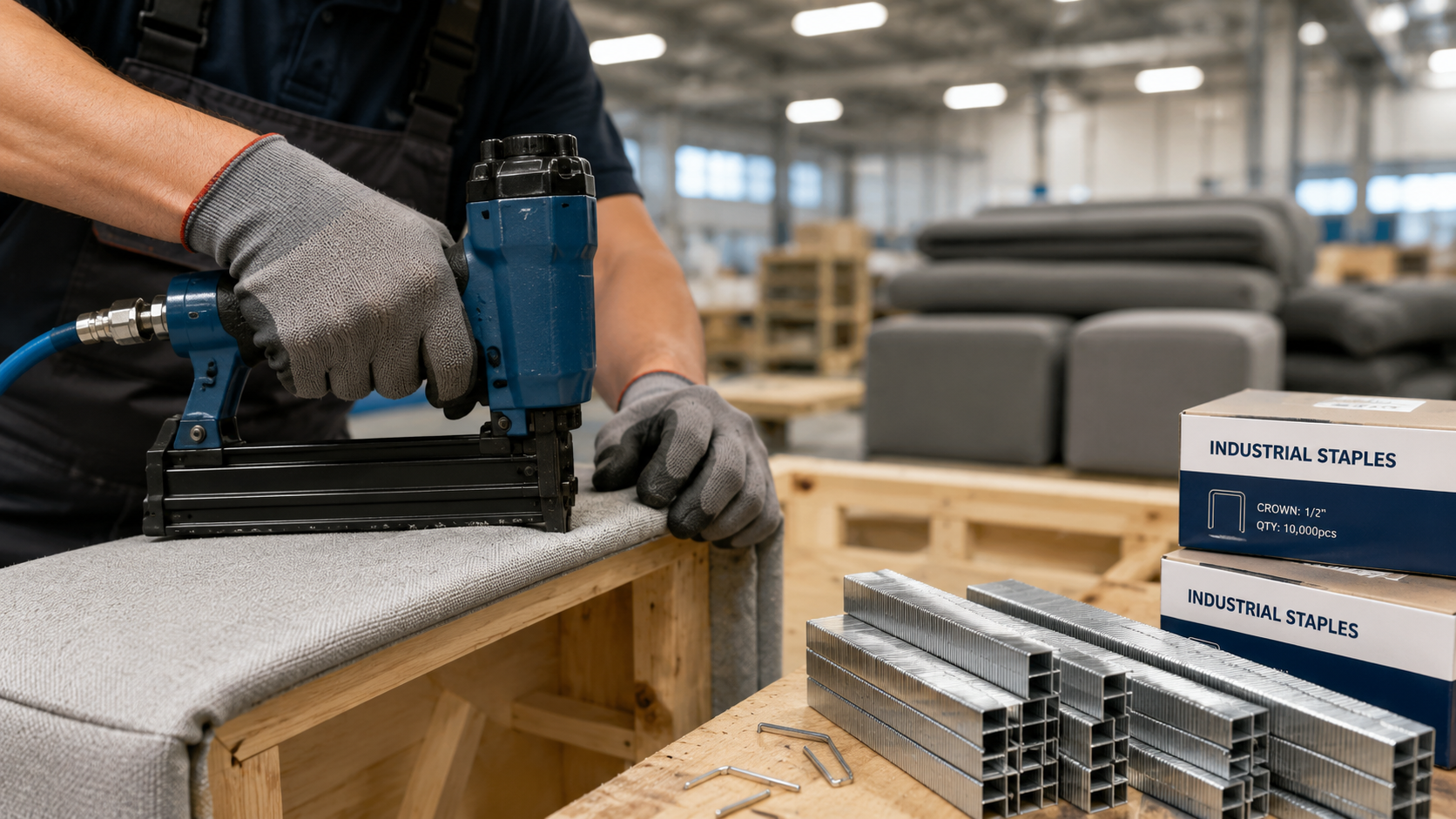
The tool shown in the preparation data is a pneumatic staple gun, or air-powered stapler, used on cushioned upholstered material. It has a blue and black metal body, a rectangular magazine, a trigger handle, and a front nose area that drives U-shaped staples using compressed air from a connected hose. That is a familiar setup in upholstery shops and furniture production, where speed matters and hand stapling would be too slow for routine work.
Nearby packaging shows “INDUSTRIAL STAPLES,” “CROWN: 1/2",” and “QTY: 10,000pcs.” That tells a sourcing manager two useful things right away: the fastening system is aimed at bulk industrial use, and the staple supply is being managed in volume rather than as a small retail accessory. For many operations, that is the real buying decision. The question is not whether the tool works in isolation, but whether the tool and staple supply stay compatible over long runs.
Key factors to compare before placing an order
Fastener compatibility
Start with the staple profile, crown size, and the style of the tool’s magazine. In the image, the visible packaging identifies a 1/2" crown. That is a specific and useful clue, but it is not enough to assume every staple length or gauge will fit. Buyers should confirm the exact fastener family the tool accepts and match that to the production job.
Material and finish
The visible staples appear zinc-colored or galvanized, which is common for industrial staples where basic corrosion resistance is needed. That may be enough for upholstery or indoor assembly, but it may not be the right choice for every environment. If the finished product faces moisture, handling wear, or storage variability, it is worth asking whether another finish is more suitable. This is a simple question, but it is often skipped when procurement is under pressure.
Feed reliability
A pneumatic fastening setup is only as useful as its feeding consistency. Even a well-made air tool becomes frustrating if staples misfeed or vary too much in strip quality. For high-volume users, staple geometry and packaging consistency matter almost as much as the tool itself.
Where pneumatic fastening pays off
Upholstery shops use air-powered staplers to secure fabric and cushioning materials quickly and with less hand fatigue. Furniture makers rely on them for repetitive attachment work. Light woodworking and crate assembly can also benefit, especially where operators are fastening similar parts all day. The common thread is repeatable motion. Once the air tool is set up, the operator can move faster and more evenly than with manual fastening.
That said, not every job should be forced into a pneumatic workflow. If the substrate is delicate, the access is awkward, or the production run is tiny, the setup time and hose management may outweigh the speed advantage. A buyer should keep that in mind before standardizing one tool across every station.
Common sourcing mistakes
One frequent mistake is buying by generic description alone. “Staples” is not specific enough when crown width, strip format, and tool compatibility all affect performance. Another mistake is assuming the tool and the fasteners come from the same system just because they look similar. In industrial fastening, close is not good enough.
Another practical warning: bulk packaging is useful, but only if the cartons stay intact in storage and the strips remain undamaged during handling. Bent staple strips create nuisance jams that operators usually blame on the tool, even when the root cause is the supply.
What to ask a pneumatic nails manufacturer or supplier
Before you buy, ask for the accepted staple specifications, packaging format, and whether the product is intended for upholstery, furniture assembly, packaging, or another industrial use. If you are comparing a pneumatic nail supplier against another vendor, ask how they control consistency across batches and how they label the fastener dimensions. Those are not glamorous questions, but they save time later.
It is also worth asking for sample quantities before committing to a production order. In fastening operations, a small sample often reveals more than a specification sheet does. Feed behavior, seating quality, and operator feel matter.
Quick buyer takeaway
If your operation depends on pneumatic fastening, the right supplier is the one that keeps the tool and the staple supply aligned. The air tool, the crown size, the strip format, and the bulk packaging all need to work together. That is the real sourcing task, not just finding the lowest unit price.
Next step
Review your current staple specifications, check what crown size and strip format your tool accepts, and compare that with the industrial staple supply you are using now. If there is any mismatch, fix it before it becomes a production problem.