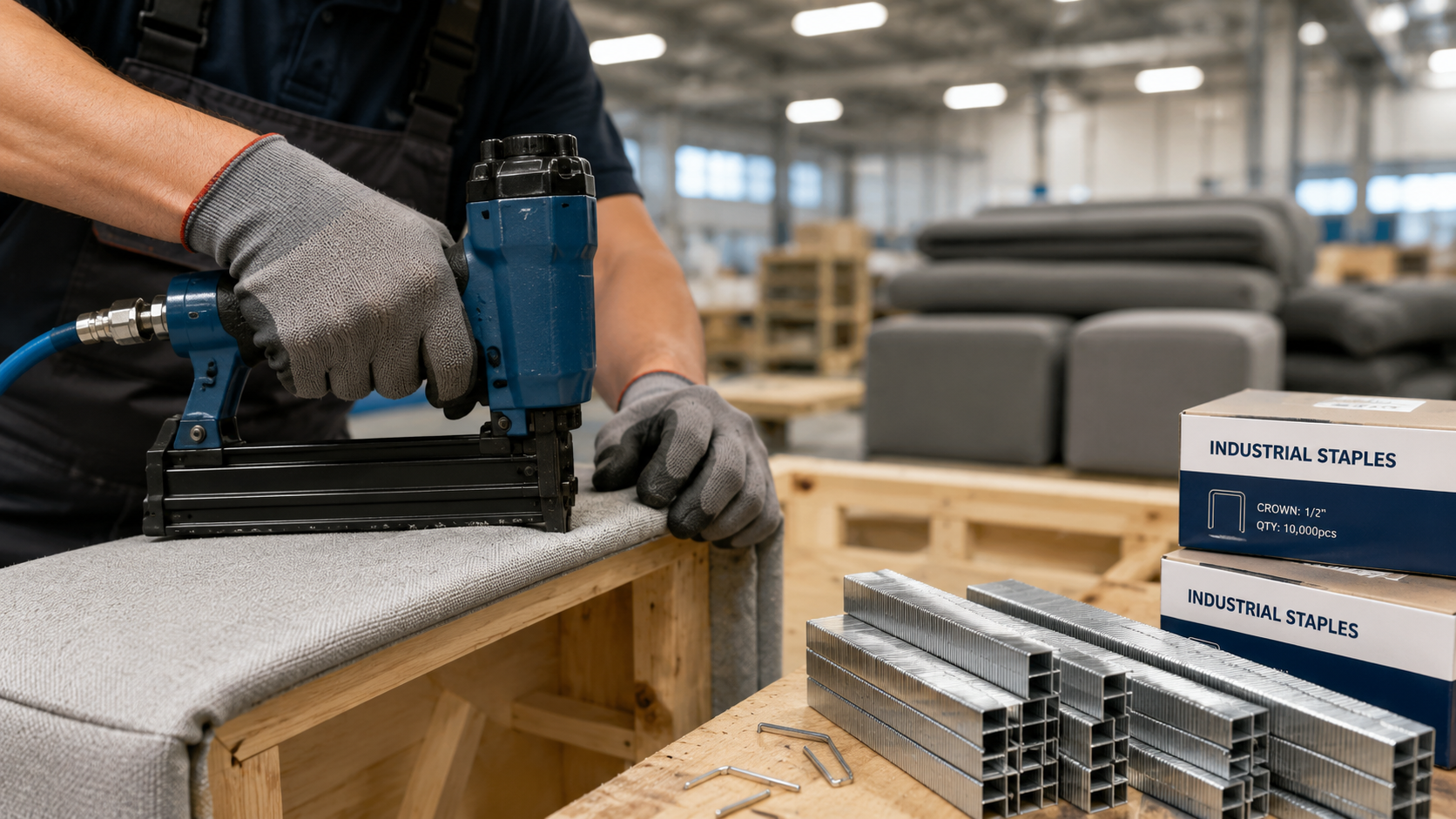

Why furniture fastening is harder than it looks
If you work in upholstery, assembly, or furniture repair, you already know that fastening fabric is never just about “getting it attached.” Choosing the right furniture staples manufacturer can affect how clean the edge looks, how well the material holds under tension, and how much time the shop spends reworking loose corners. That matters whether you are building sofas on a production line or restoring a single chair in a small workshop.
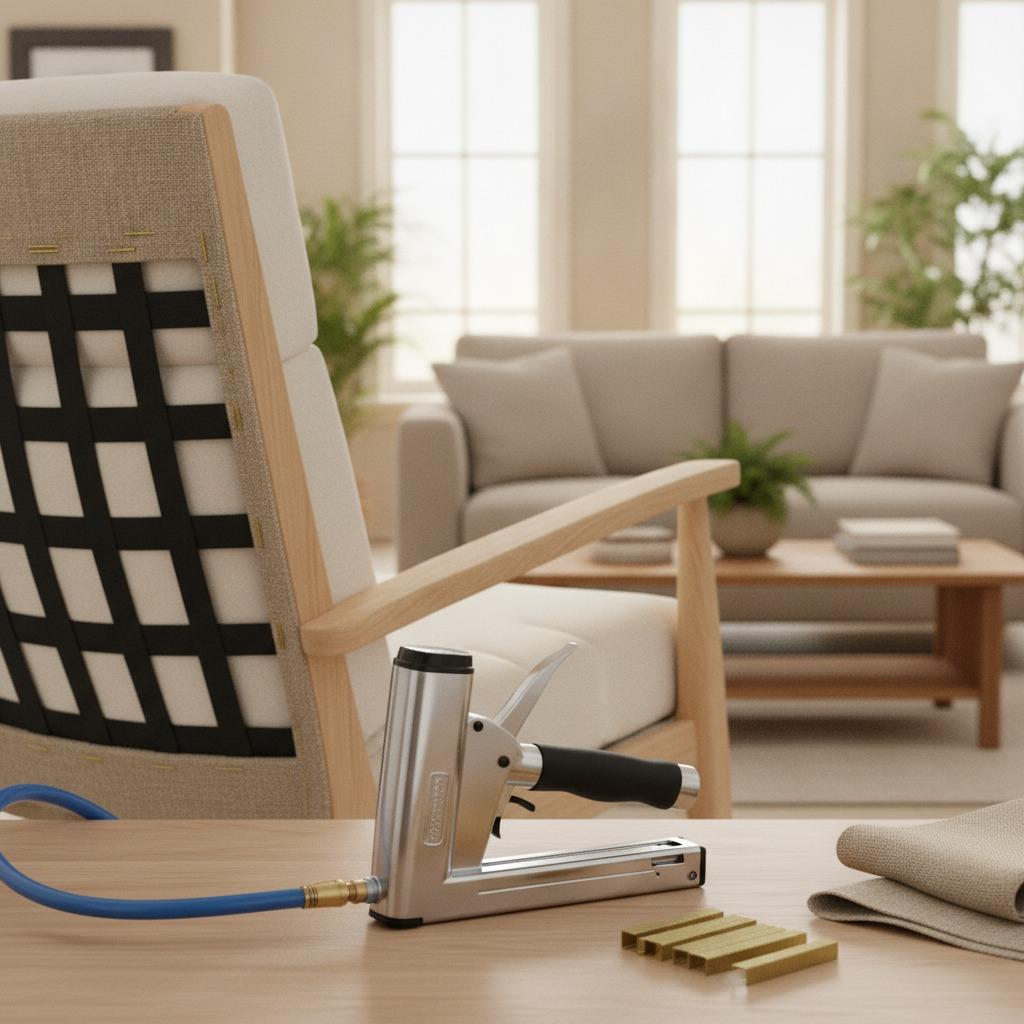
The visible job is simple enough: secure upholstery fabric, padding, batting, lining, or a dust cover to a wooden frame. The practical job is more delicate. Staples need to go in straight, hold without tearing the fabric, and work smoothly with the tool feeding them. If the strip-loading or the staple profile is off, operators notice it immediately at the bench. Not glamorous, but very real.
What the fastening setup tells you
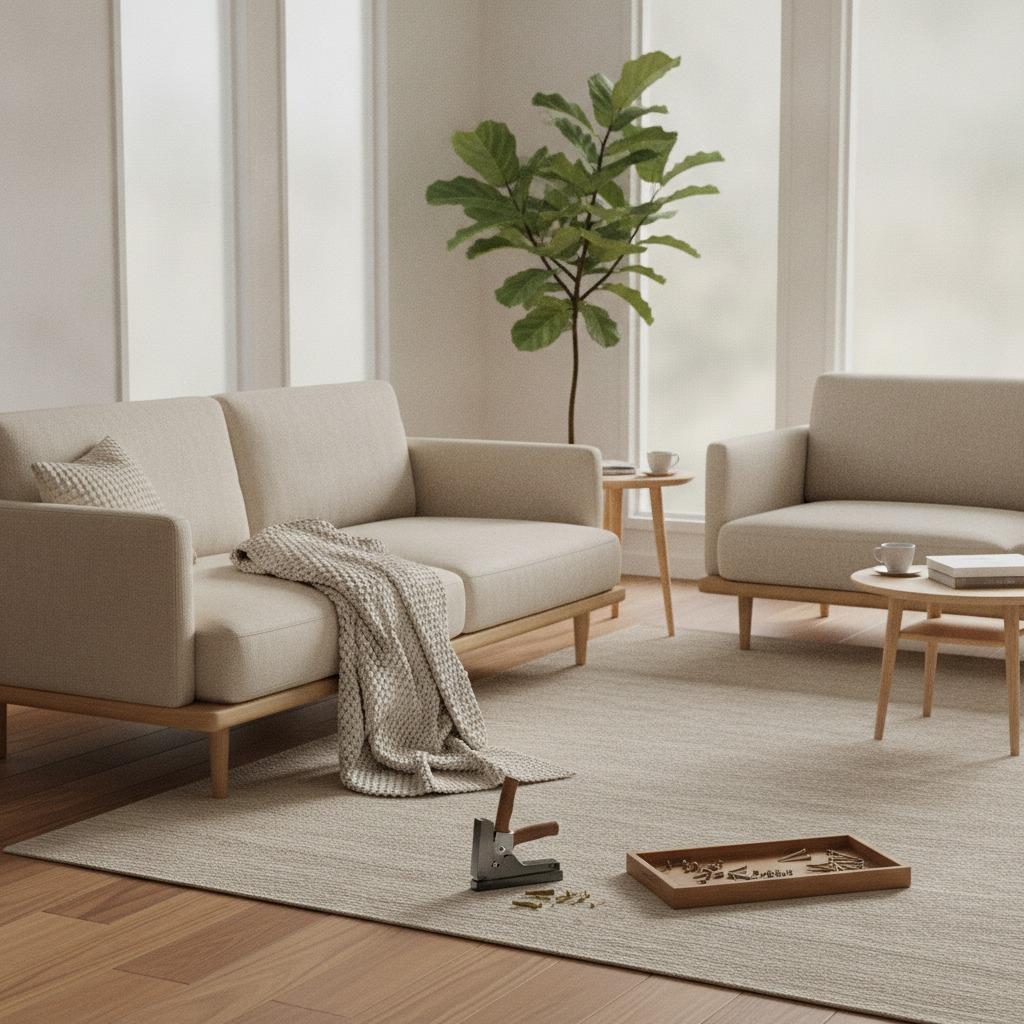
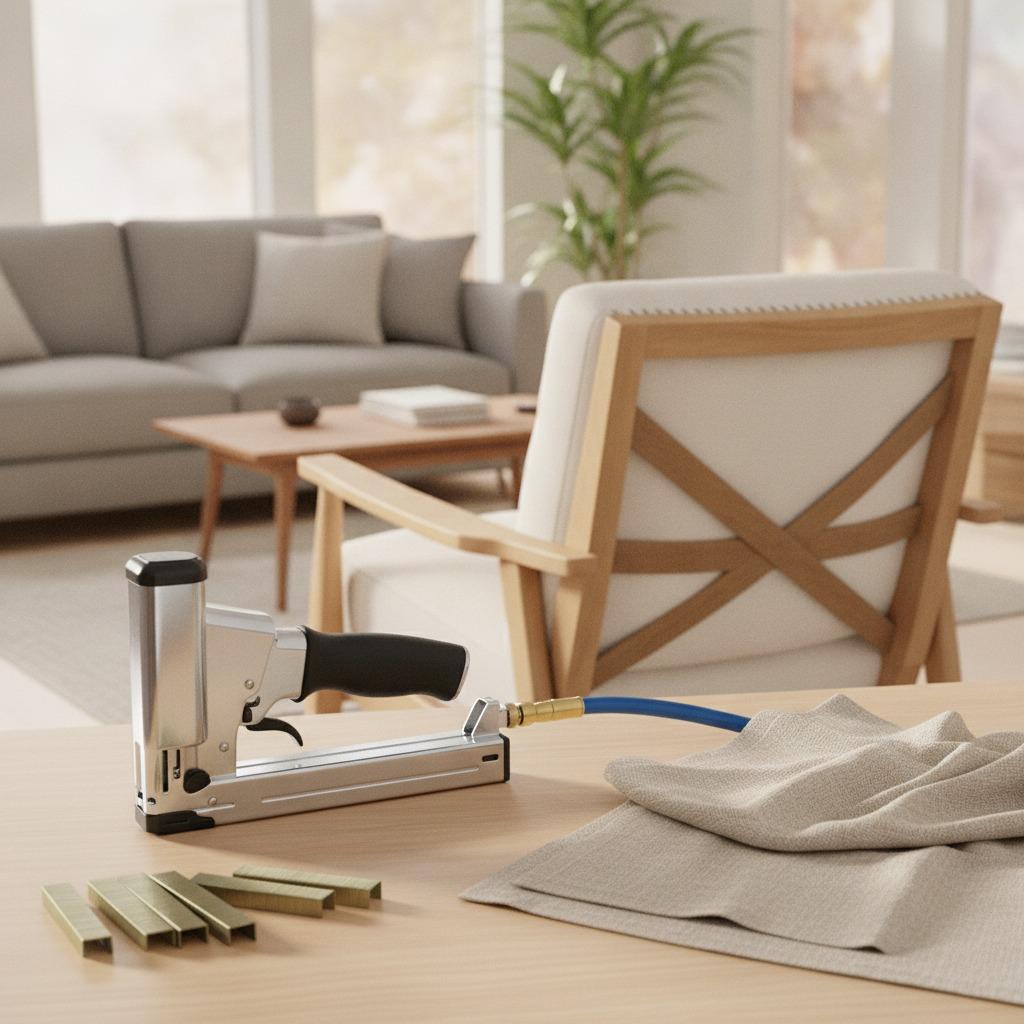
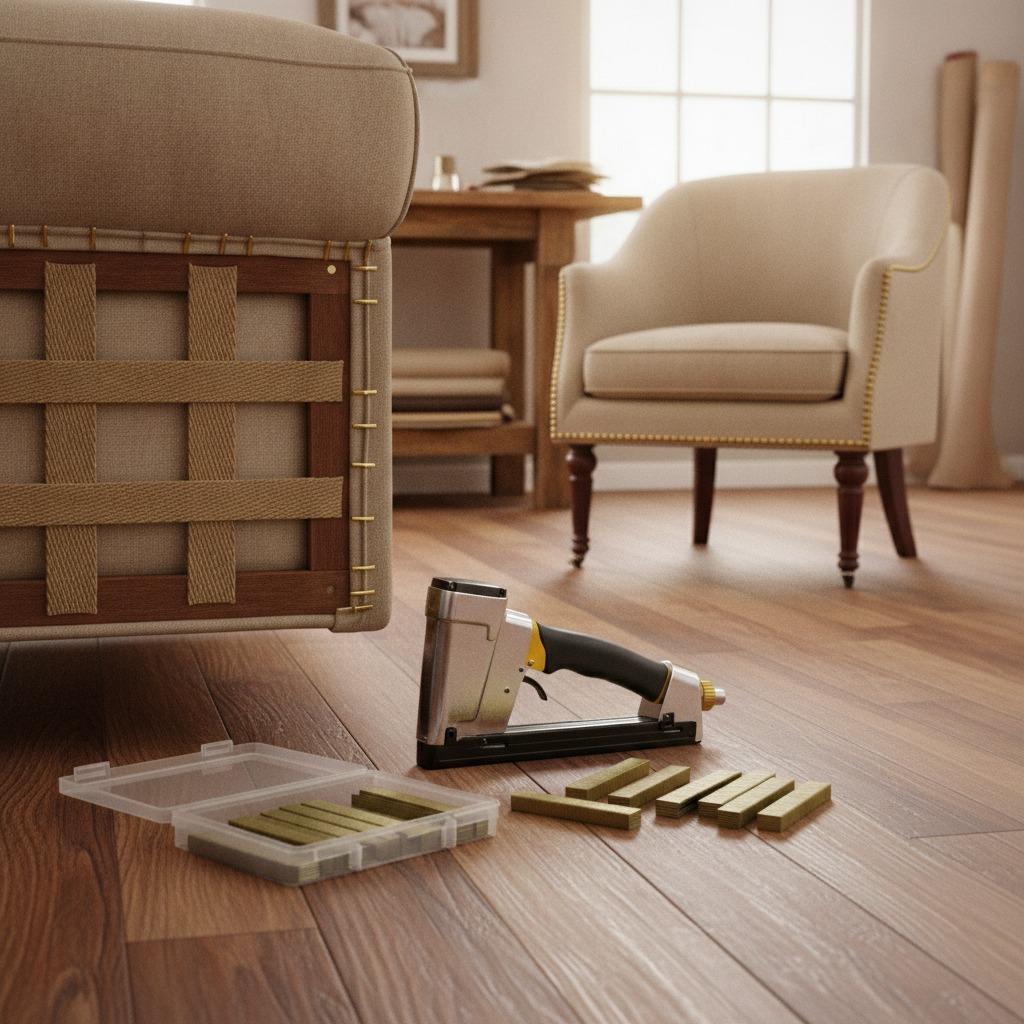
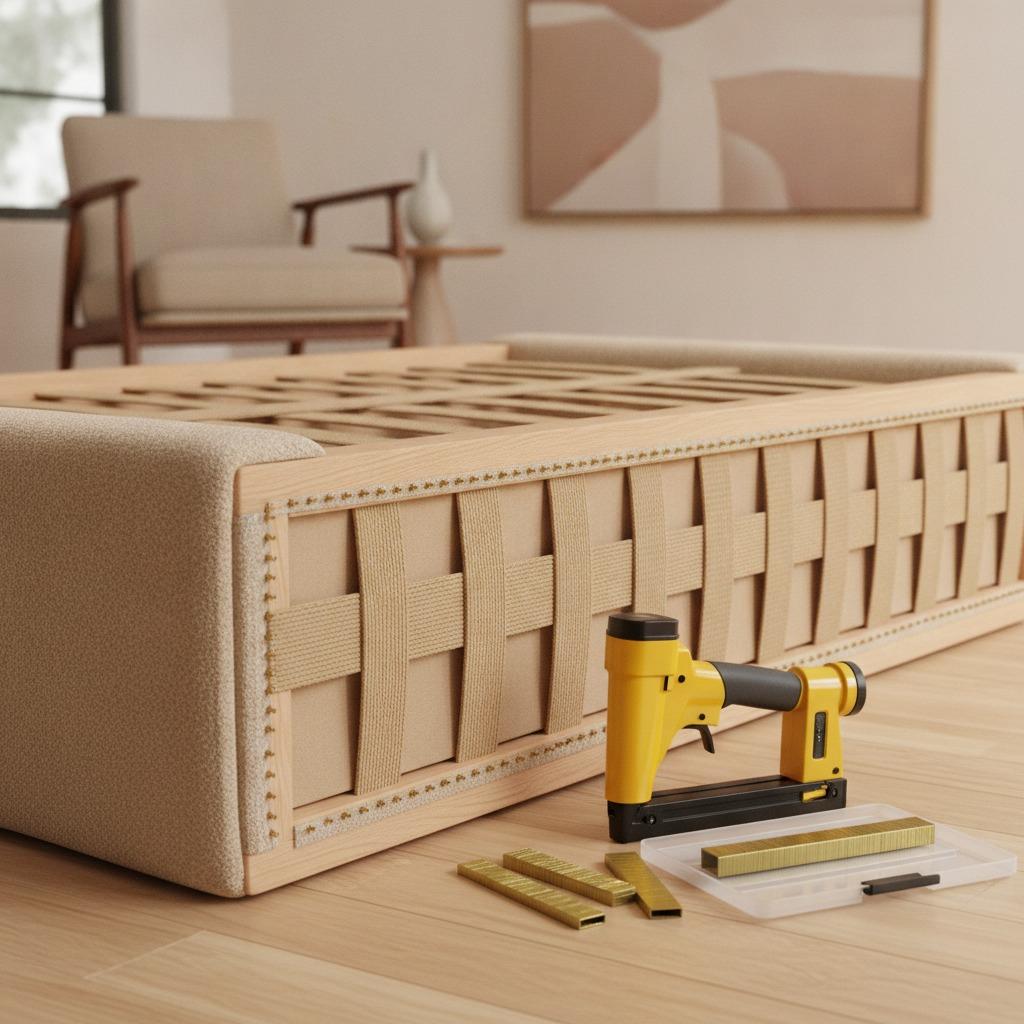
The product information points to two linked parts of the process: strip-loaded furniture staples and a pneumatic upholstery stapler, or air stapler, used to drive them into wood frames. The staples are shown in bundled strips, which is the format most shops want because it loads efficiently into a magazine-fed tool. The stapler itself is handheld, with a trigger, grip, magazine, and compressed-air hose connection.
That combination is common in sofa and chair production, as well as reupholstering and repair work. In practice, it’s used along seam edges and hidden frame areas where fabric needs to be pulled tight and fixed fast. The visible materials also tell a story: a wood frame, light beige woven upholstery fabric, and white batting or foam at the edge. That is a standard furniture assembly scene, but the fastening step is where a lot of quality issues start.
Choosing between a furniture staples supplier and a tooling partner
Some buyers treat staples as a commodity. Sometimes that works. But if a line runs pneumatic staplers all day, the buyer is not just sourcing metal strips; they are managing feeding reliability, edge consistency, and the way the staple sits in the frame. That is where a furniture staples supplier becomes part of the process rather than just a box on the receiving dock.
If your operation uses an upholstery staples manufacturer directly, you may have more control over packaging format, strip consistency, and product matching to the tool. For shops with mixed jobs — one week chair seats, the next week repair work — this flexibility can matter more than it first appears. A stapler that runs smoothly with one strip format but jams on another is a hidden cost, and usually a stubborn one.
Selection points that matter on the shop floor
1. Strip form and loading behavior
Because the staples are presented in strip form, the first practical question is whether they feed cleanly in the magazine. The article data does not give exact gauge, crown width, or leg length, so it would be a mistake to guess. Still, buyers should confirm compatibility carefully before switching suppliers or moving a tool to a different staple format.
2. Material and finish
The staples shown have a gold- or brass-colored finish. That may be a surface finish or coating, but the exact treatment is not specified, so it should not be assumed. For buyers, the safer approach is to ask what finish is used and whether it matches the intended furniture environment, especially if the piece may face humidity or long service life.
3. Frame and fabric behavior
Upholstery fastening is sensitive to the materials being joined. Wood frames, woven fabrics, batting, foam edges, webbing, and dust covers all behave differently under a staple. Softer materials may accept fastening more easily; denser frame sections can require more care. Operators generally learn this by experience, and good sourcing supports that experience instead of fighting it.
Common mistakes buyers still make
One common mistake is assuming all staples that look similar will perform the same. Another is overlooking the tool side of the equation. A pneumatic upholstery stapler can only do so much if the staple strip is inconsistent or poorly matched. Shops also sometimes buy for price alone, then discover the real cost during stoppages, misfeeds, or finish defects on the furniture edge.
There is also a tendency to over-specify where the application is modest. Not every furniture repair shop needs the same setup as a high-volume sofa plant. The right buying decision is usually a balance of material, tool compatibility, and the pace of the work.
Practical buyer advice for upholstery and repair teams
If you are sourcing for production or workshop use, ask for the staple format, the compatible tool category, and enough detail to verify loading and fastening behavior. If the supplier cannot clearly describe the staple strip configuration, that is a warning sign. If you are comparing products across vendors, keep the focus on fit and feeding first, then look at finish and packaging.
For teams doing furniture repair or restoration, keep a few sample strips and test them on representative wood offcuts before committing to a larger order. That small step saves a surprising amount of frustration later.
What to ask before you place an order
Start with the basics: Is the staple intended for upholstered furniture work? Is it supplied in magazine-friendly strips? Is it suitable for your current pneumatic stapler setup? From there, ask for the dimensions and coating details, because those are the specifications that determine whether the staple will be a clean fit or a recurring nuisance.
If you are evaluating a furniture staples manufacturer, the best next step is a short sample test with your own frame material and fabric stack-up. That is usually more revealing than a long product sheet. In upholstery, the bench test tends to tell the truth faster than the brochure.