
Why buyers look for a pneumatic nails manufacturer
Anyone searching for a pneumatic nails manufacturer is usually trying to solve a production problem, not just buy fasteners. In upholstery, light assembly, packaging, and shop-based fabrication, the real issue is speed and consistency. A hand-driven fastener may work on a bench sample, but it becomes slow, tiring, and uneven when the job moves into volume work. That is where pneumatic fastening products earn their place.
The term itself can be a little loose in the market. Some buyers mean pneumatic nails, others are really looking at industrial staples used in pneumatic stapling applications. The distinction matters because the fastening system has to match the tool, the feed format, and the base material. A mismatch can mean jams, split material, loose joints, or plain wasted labor.
What the visible product tells a buyer
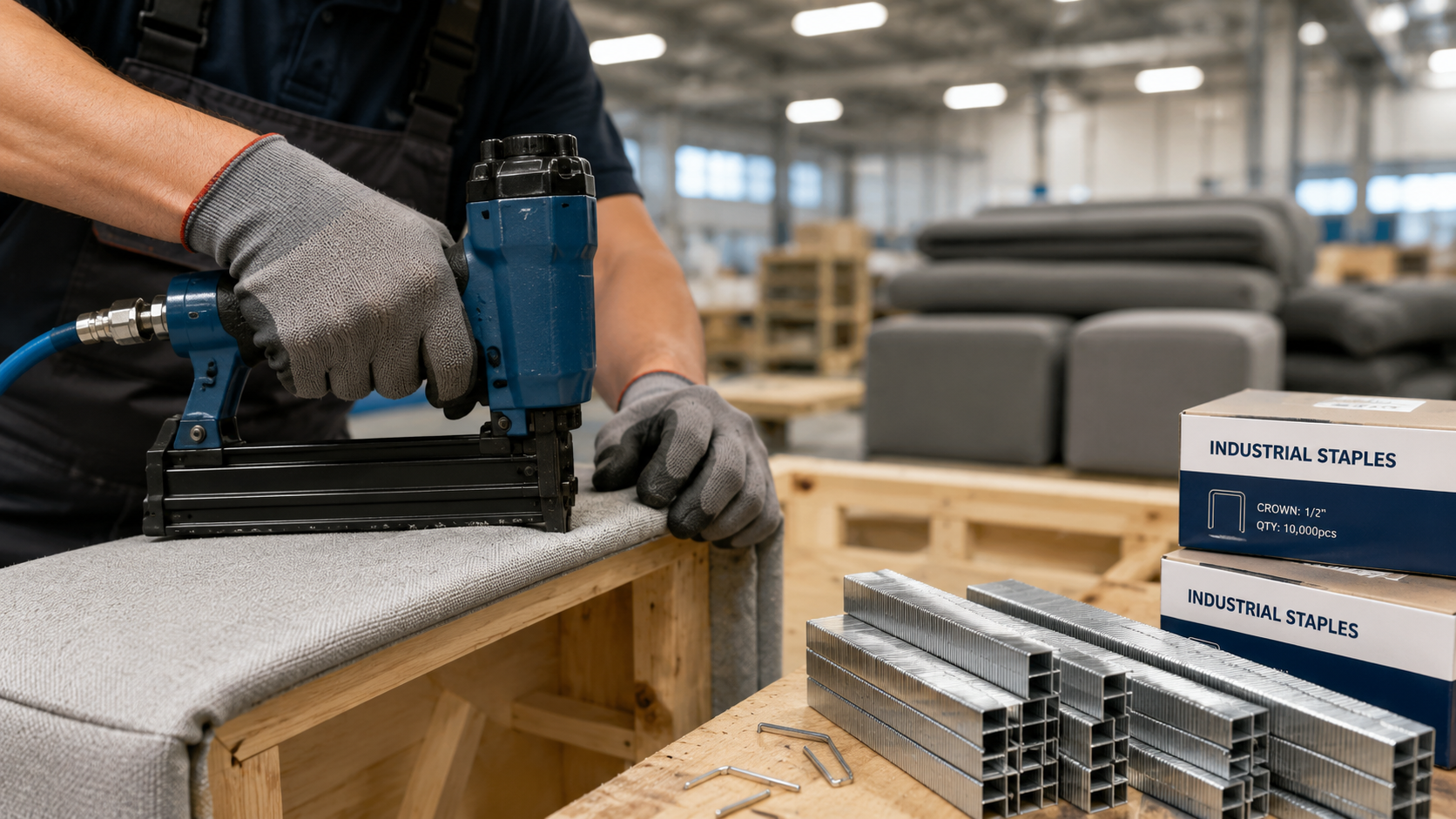
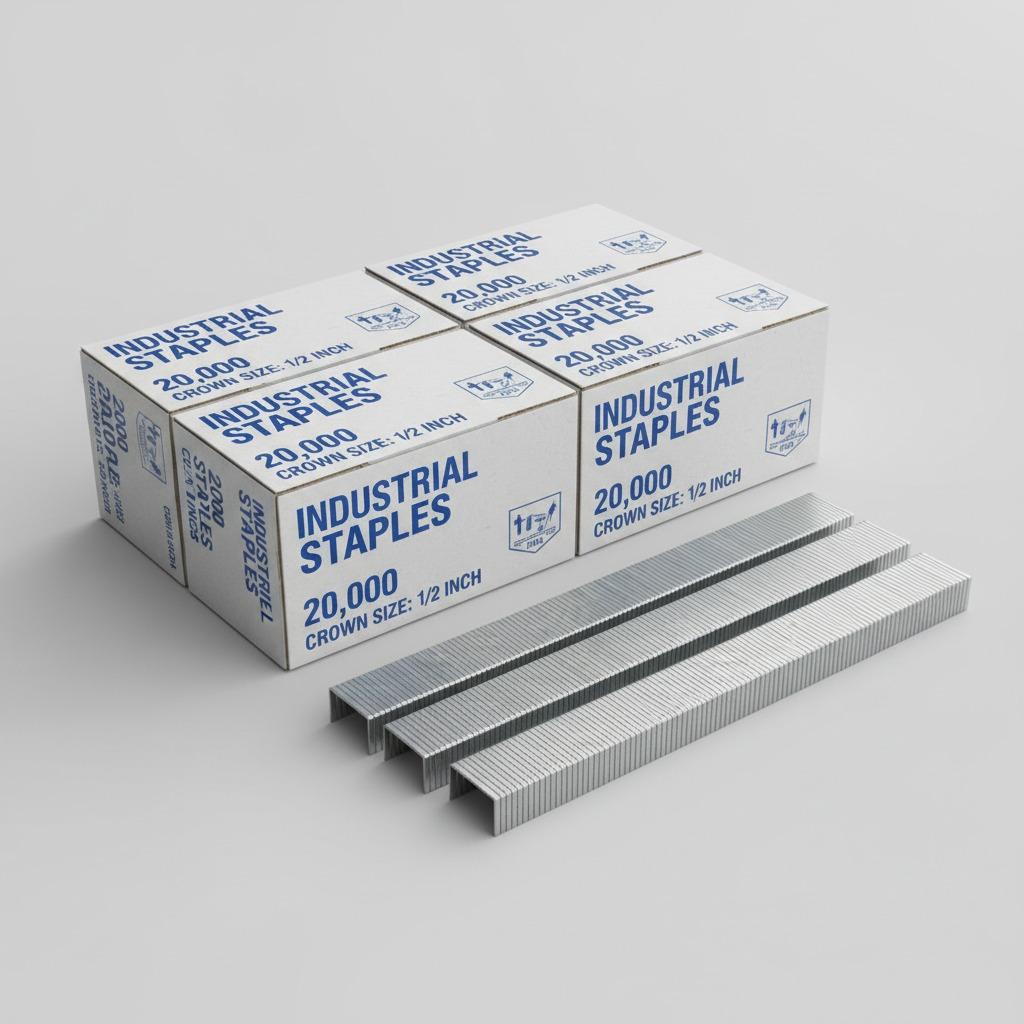
The supplied product information points to industrial staples packaged for pneumatic stapling or nailing applications. The visible cartons are labeled “INDUSTRIAL STAPLES,” and one box shows a crown width of 1/2 inch and a quantity of 10,000 pieces. The staples are stacked in long strips, which is the format most pneumatic tools expect for rapid feeding.
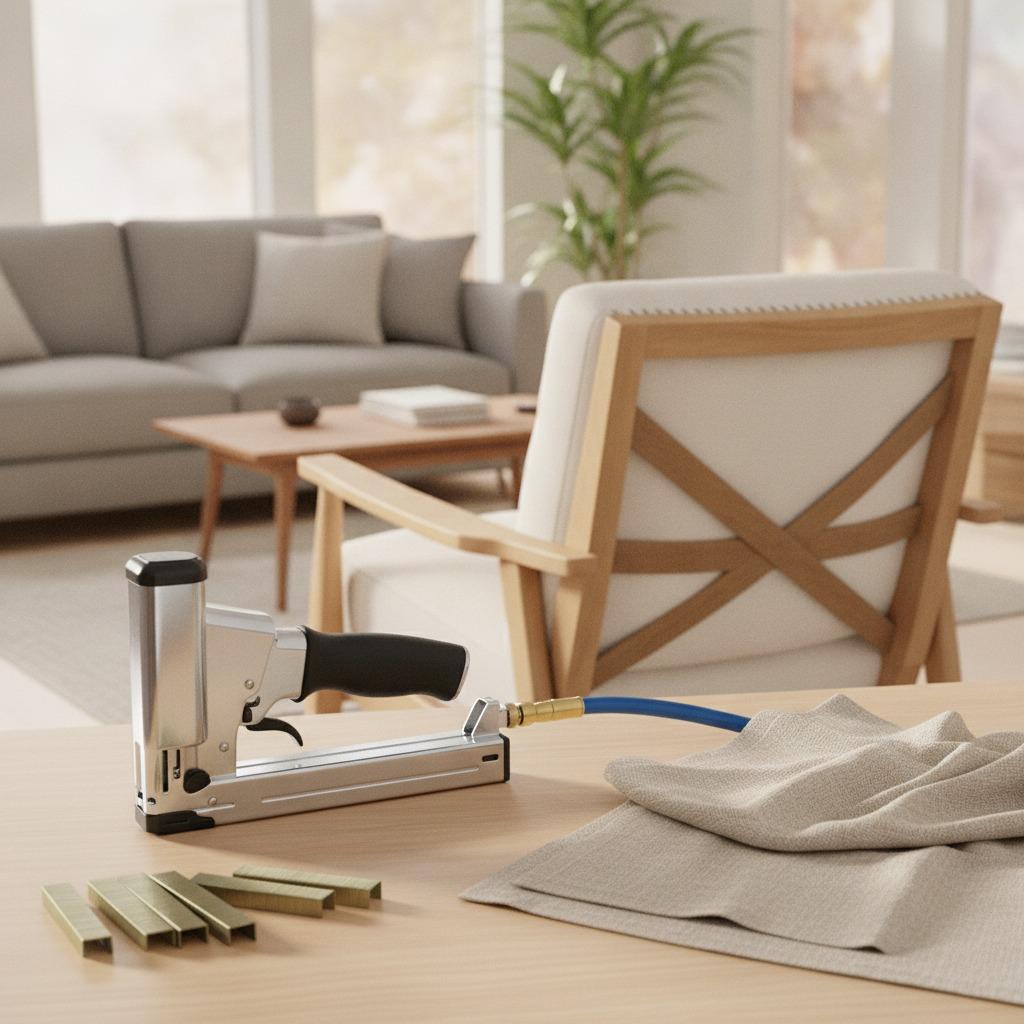
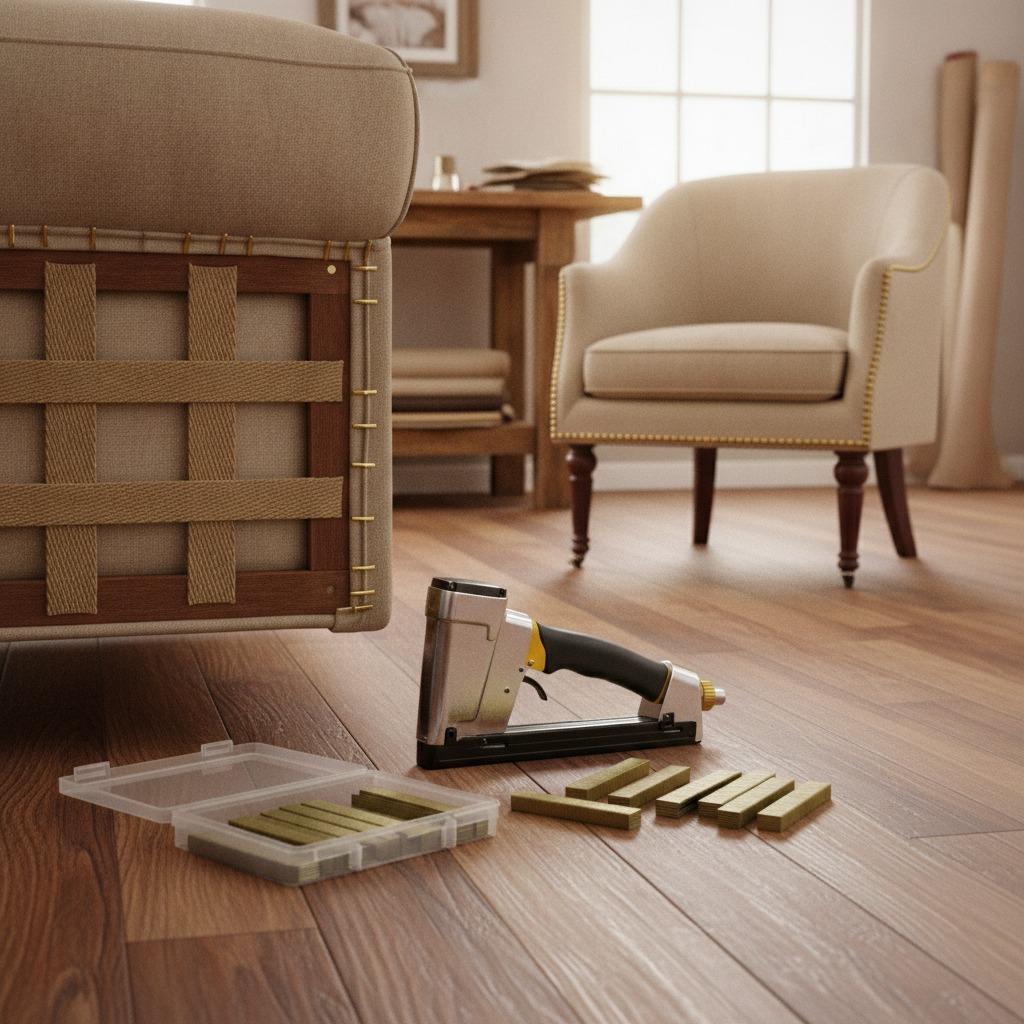
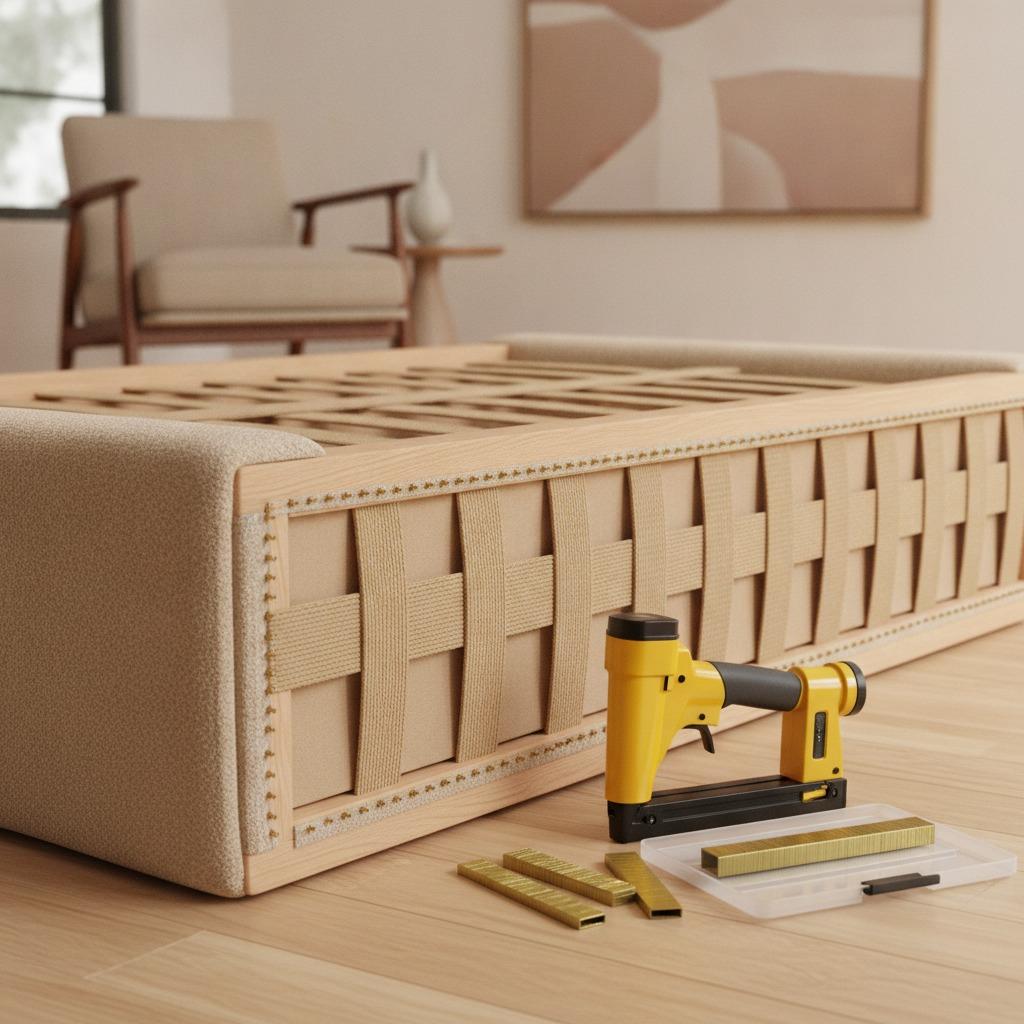
From the application image, the use case appears to be upholstery or a similar soft-material assembly task. That usually means fastening fabric, foam, leatherette, or thin wood elements to a wooden frame or substrate. In practical terms, the buyer is not just purchasing metal; they are buying a repeatable fastening motion that can hold materials in place without slowing the line.
Industrial staples versus other pneumatic fasteners
It helps to separate the broad categories before ordering. In the market, people may use “nails” as a shorthand for several air-powered fasteners, but staples and nails do different jobs. Staples present a U-shaped geometry with a crown, which spreads holding force across a wider strip of material. Nails concentrate force more narrowly and are usually chosen for different substrates and finish requirements.
For upholstery, soft furnishings, mattress work, cabinet back panels, and some light assembly tasks, staples are common because they hold material securely without excessive surface damage. That said, the right choice still depends on the substrate thickness, tool compatibility, and the appearance standard of the finished product. A fastening choice that looks fine in a sample room may behave differently once production starts and the operator is moving faster.
Selection criteria that actually matter on the shop floor
Tool compatibility
The first check is whether the staple format matches the pneumatic stapler or nailer being used. Feed strip geometry, crown width, and overall fastener size all need to fit the tool specification. Buyers sometimes focus only on the fastener and overlook the feed system, which is where a lot of stoppages start.
Material and finish
The visible staples appear to be metal, likely steel, with a bright zinc-like silver finish. That tells you very little about exact corrosion performance, but it does suggest a standard industrial finish rather than a decorative one. For buyers, the important question is whether the application is dry indoor work or something with more exposure. If the answer is not clear, caution is wise; don’t assume every bright fastener is suitable for every environment.
Holding pattern and appearance
Crown width influences how the staple sits on the material and how much area it covers. A 1/2 inch crown is useful information because it narrows the search quickly. For upholstery and similar work, the visible footprint can matter just as much as pull-out resistance, especially when the finished product will be seen by end users.
Common mistakes when sourcing pneumatic fastening products
One common mistake is treating all pneumatic fastening products as interchangeable. They are not. Another is buying by carton count alone. Ten thousand pieces per box sounds efficient, but only if the fastener runs reliably in the tool you already own. Buyers also sometimes forget the substrate. A staple that works cleanly in a softwood frame may not behave the same way in denser stock or layered assemblies.
There is also a practical sourcing warning here: if the supplier listing is vague about leg length, gauge, or coating, ask before committing. Those omissions are not minor details. They are the difference between a fastener that supports production and one that creates rework.
What to ask a pneumatic nail supplier before ordering
If you are evaluating a pneumatic nail supplier or staple source, ask for the dimensions that matter to your tooling and your product. Confirm crown width, fastener length, strip format, and compatibility with the exact machine in use. If your application has any exposure to moisture or handling wear, ask carefully about finish and corrosion expectations rather than assuming.
It is also smart to request packing details. Boxes labeled clearly and quantities stated per carton help production planning and receiving control. In busy plants, small packing inconsistencies become big headaches when operators are trying to keep a line moving.
Buyer takeaway
The decision is not simply whether you need a pneumatic nails manufacturer. It is whether you need a fastener partner who can supply the right strip format, crown width, and application fit for a pneumatic tool-driven process. For upholstery, cabinet work, packaging, and light assembly, industrial staples can be the right answer when the tool and substrate are matched properly.
If you are comparing suppliers, start with the visible facts: the crown size, the boxed quantity, the strip configuration, and the end-use material. Then verify the details that are not shown. That short list will save more time than a long catalog search.
FAQ
Are pneumatic nails and pneumatic staples the same thing?
Not exactly. The terms are often mixed in casual buying, but staples and nails are different fasteners with different shapes and uses. Matching the fastener to the tool is essential.
Can industrial staples be used for upholstery?
Yes, that is one of the common uses suggested by the provided product image and application context. Upholstery, foam, and soft furnishings are typical staple applications.
What should I confirm before placing an order?
Confirm crown width, quantity per box, strip feed compatibility, and the unstated dimensions such as length and gauge. If the finish or corrosion behavior matters, ask for that explicitly instead of guessing.
Next step
When you compare a pneumatic nails manufacturer or a pneumatic nail supplier, focus on whether the fastener matches the tool and the material, not just the carton label. If the application is upholstery or light assembly, a well-matched industrial staple can improve throughput with very little fuss. The details are modest, but in production, modest details are what keep jobs moving.