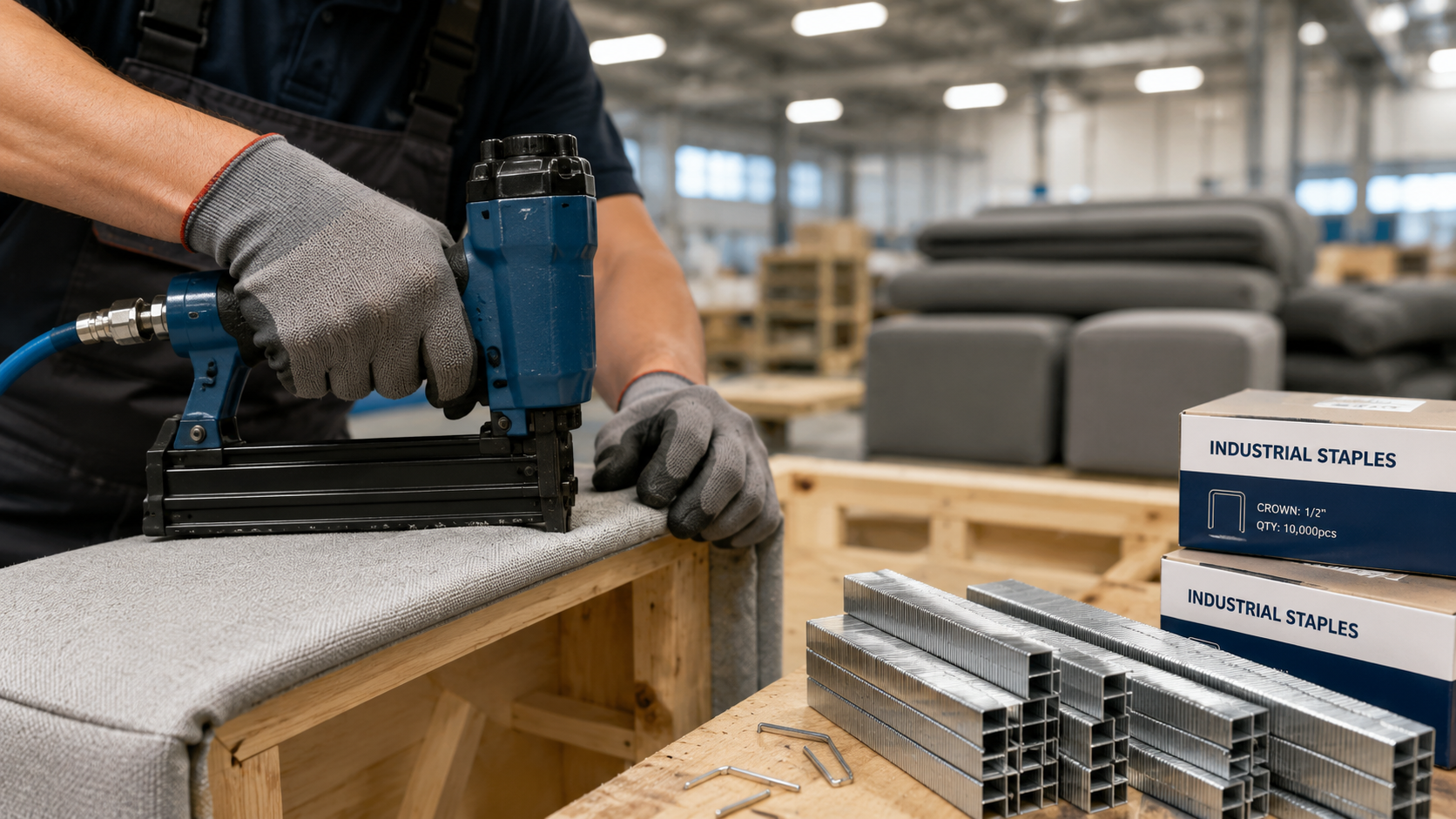

Why sofa staples deserve more attention than they usually get
When a sofa starts to squeak, loosen at the edges, or lose its clean upholstery line, the culprit is often not the fabric first. It is the fastening system underneath, and that is where a reliable sofa staples manufacturer quietly earns its keep. For furniture makers, sourcing teams, and product developers, staples may look like a small commodity item. In practice, they affect assembly speed, holding power, finish quality, and whether a chair or loveseat still looks presentable after real use.
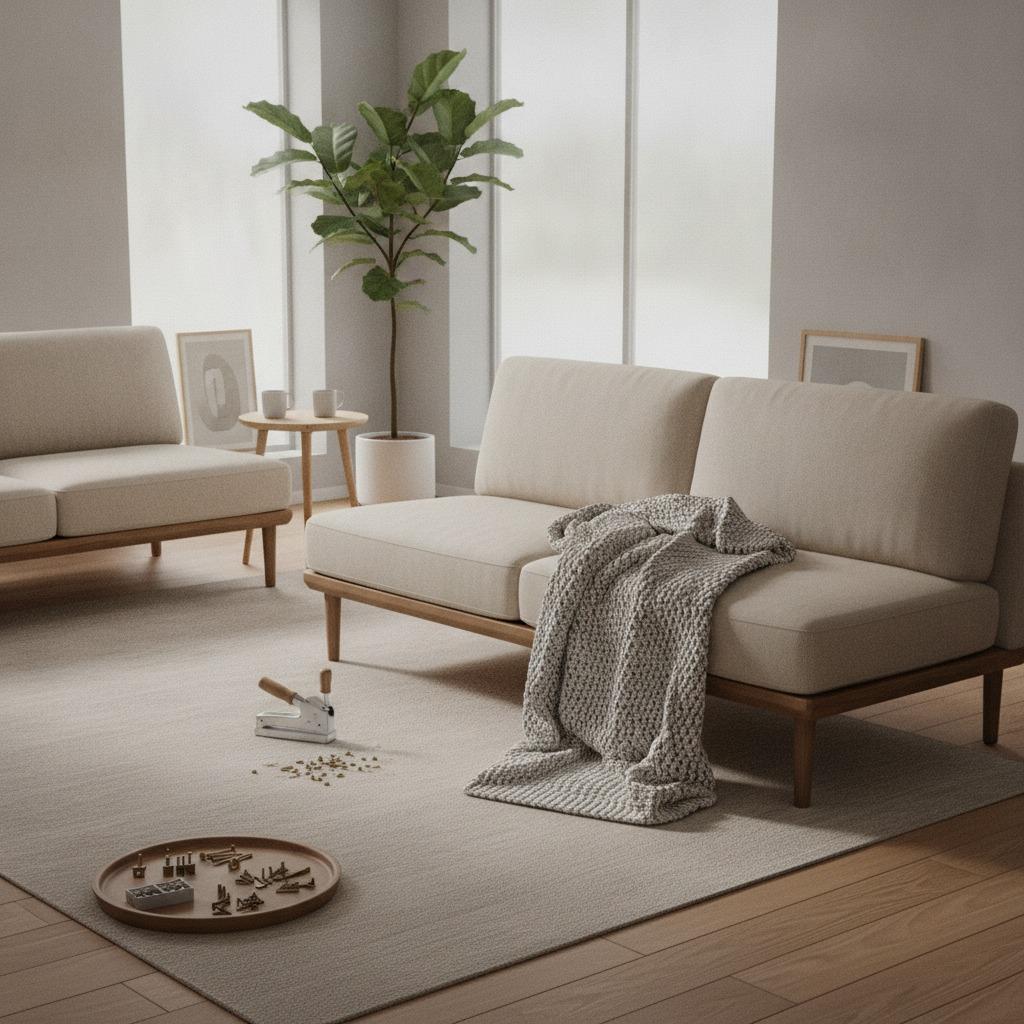
This matters most in upholstered wooden frames, including compact two-seat sofas, loveseats, reception seating, and lounge pieces with visible joinery and fabric wrap. A well-made frame can still fail cosmetically if the staples are the wrong gauge, the crown is poorly formed, or the staple does not sit flush in the timber. Buyers comparing a sofa staples supplier against a broader fastener source should treat this as a furniture-specific purchase, not a generic hardware line item.
Sofa staples versus the rest of the fastening job
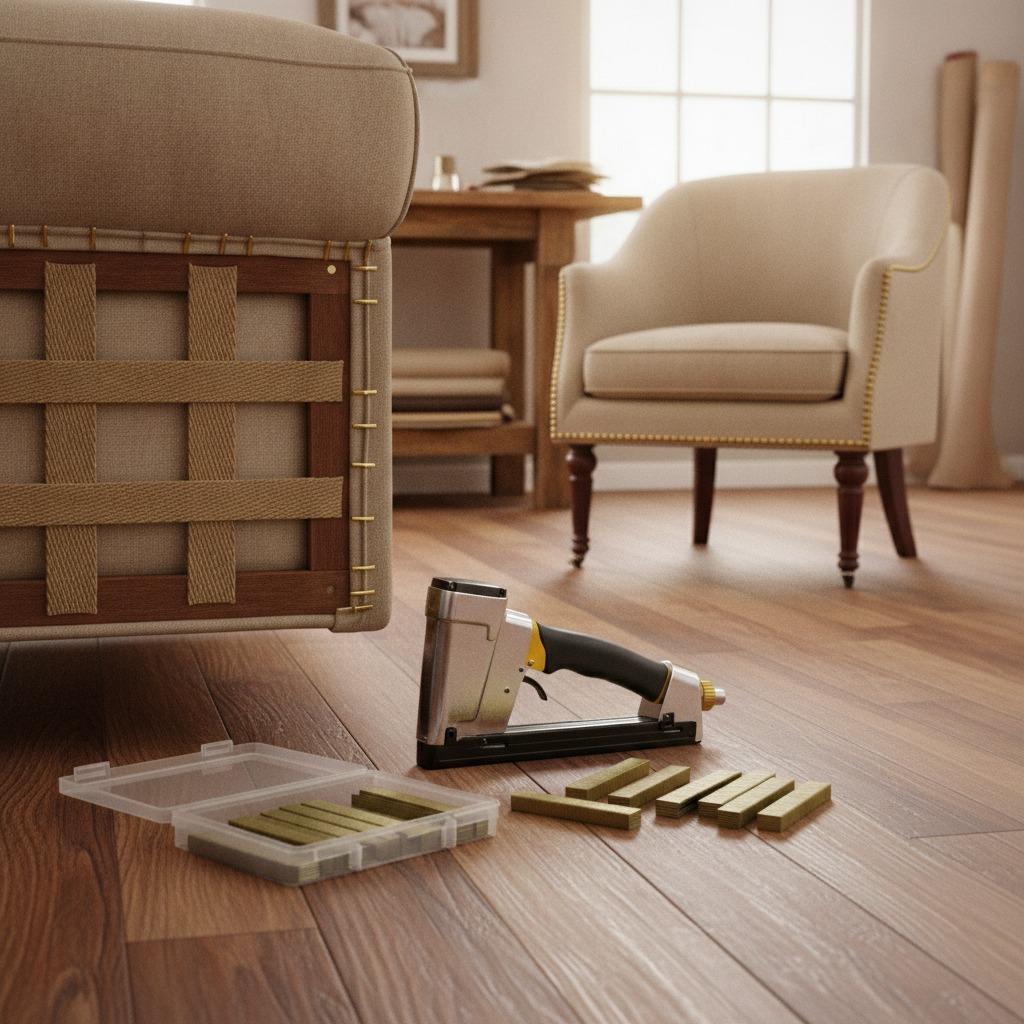
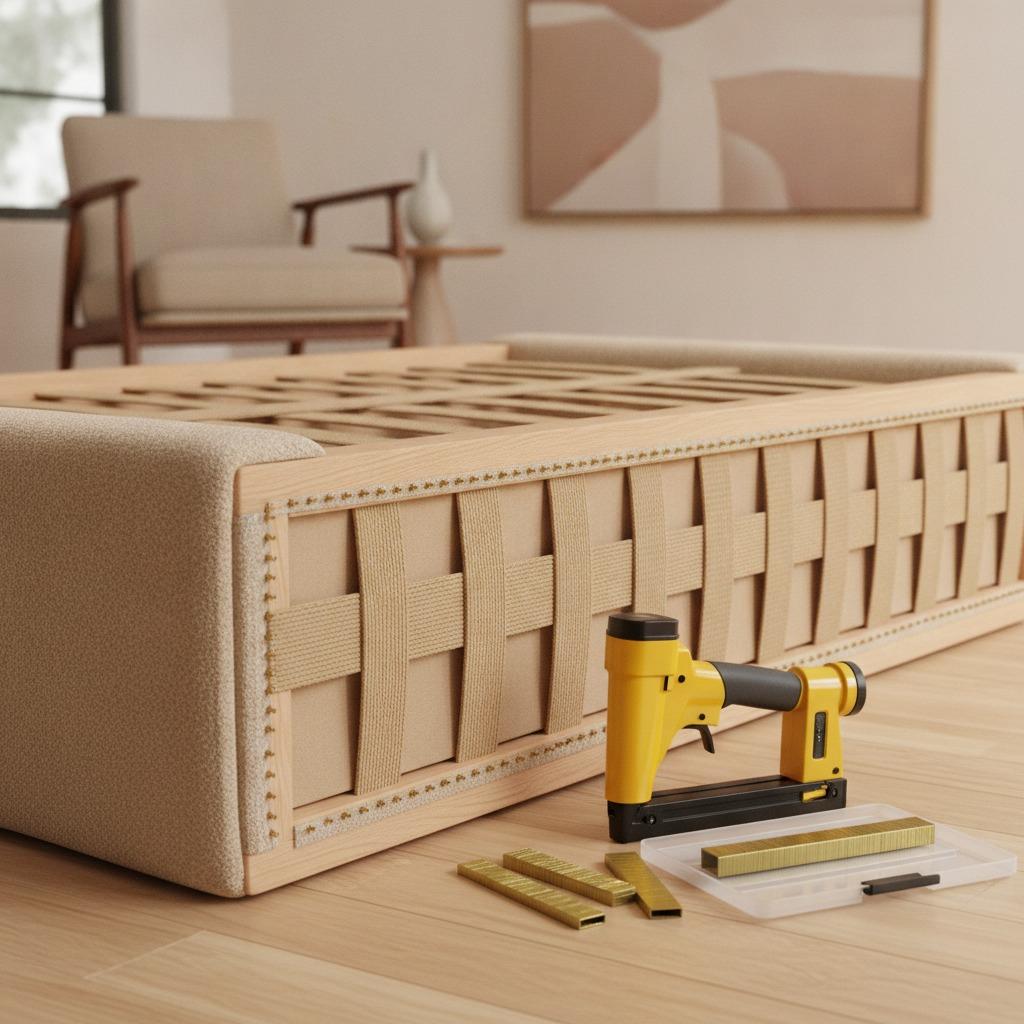
In upholstery work, staples do not do the same job as screws, nails, or adhesive. They are part of a fastening system that has to work across different materials: wood, foam, fabric, webbing, and sometimes trim detail around exposed frame edges. On a compact upholstered sofa with visible wood grain and clean rectangular lines, a staple that is too large or poorly driven can telegraph through the fabric or disturb the edge profile. Too short, and it may not hold under repeated seating stress.
That is why manufacturers often evaluate staples by application rather than simply by size. Sofa upholstery staples for back panels are not always the same choice as those used on seat decks, dust covers, or decorative fabric returns. The right call depends on the wood density, the thickness of the upholstery stack, and the firing performance of the stapler being used.
What a furniture buyer should compare
Holding power and legibility on the line
A sofa stapler manufacturer may talk in terms of tool compatibility, but production teams should ask a more practical question: will the staple drive consistently into the specific frame stock being used? In mixed wood-and-upholstery construction, consistency matters more than a dramatic spec sheet. If one staple sits proud and the next sinks too deep, the line speed slows down and rework follows.
Corrosion behavior and finish risk
Furniture is often going into homes, reception areas, or staged interiors where appearance matters. A staple that stains, rusts, or reacts badly with a finish is a problem even if it holds. This is especially relevant around exposed side panels, open frame details, and other places where the build leaves less margin for concealment.
Compatibility with the stapling process
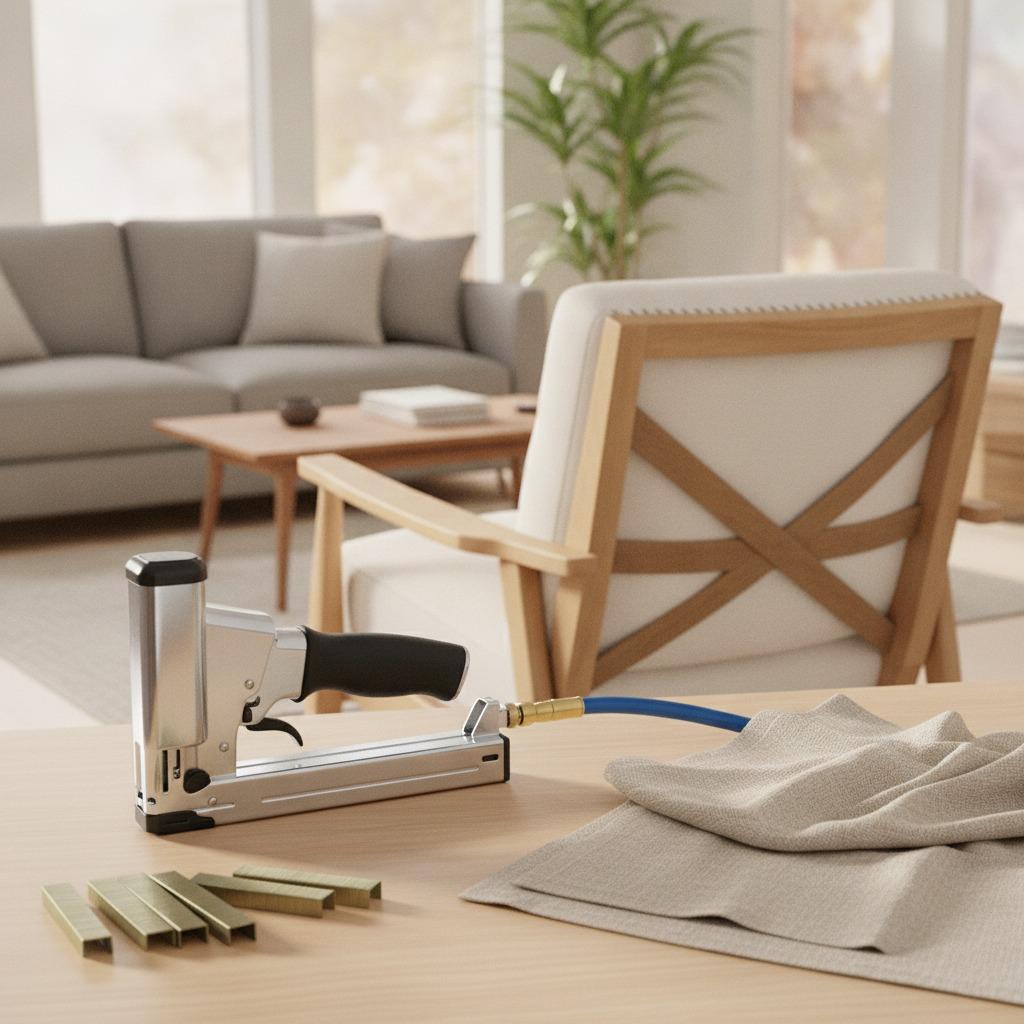
Not every staple works well in every production setup. Some upholstery lines are tuned for high-volume repeat work; others are smaller-batch operations where craftsmanship and repairability matter more. A sofa staples manufacturer should be able to support the staple format your equipment can feed reliably, rather than forcing a switch that looks efficient on paper and awkward on the shop floor.
Why the sofa itself changes the fastening choice
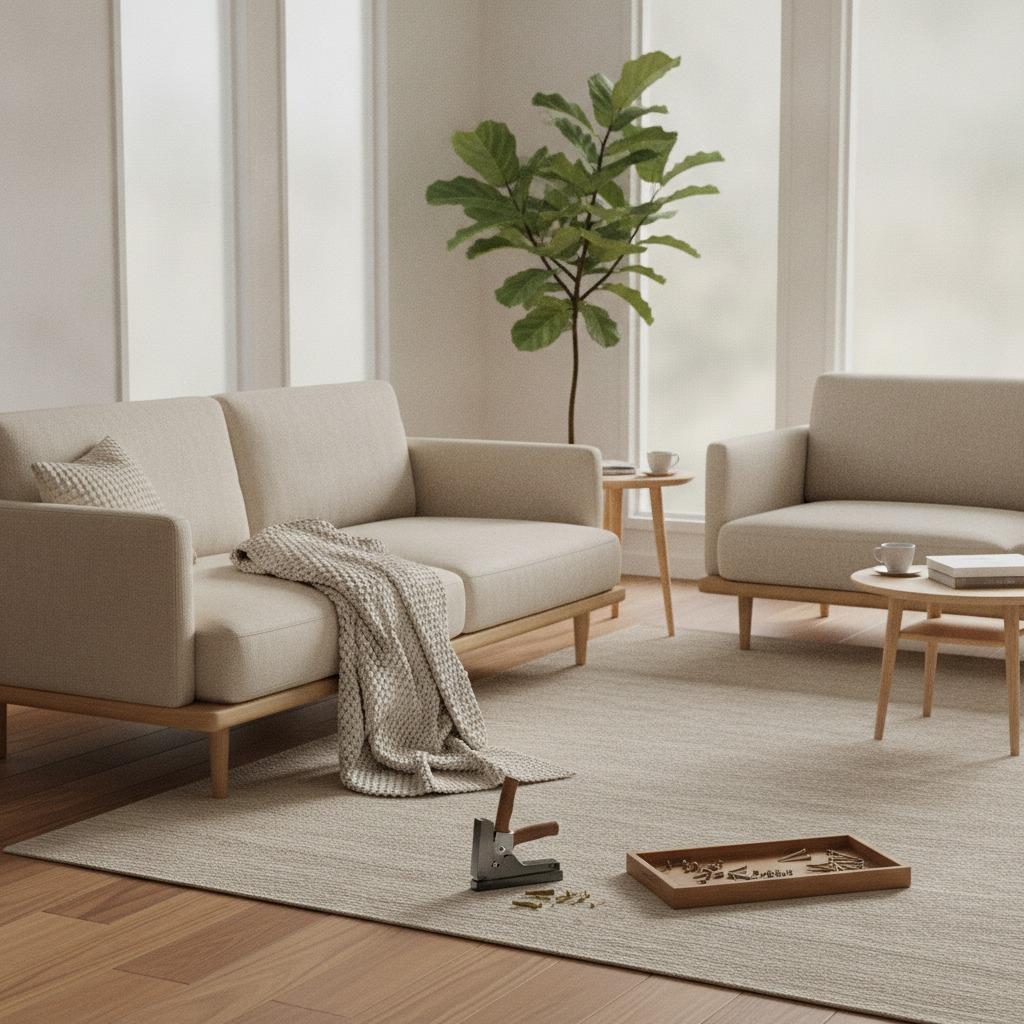
Look at a compact wooden-frame loveseat with beige cushions and tapered legs. The furniture is clean, low-profile, and visually honest about its structure. That style leaves little room for sloppy fastening. The wood edge, the fabric transition, and the joinery details all sit in view. On a piece like that, the staple line is part of the product’s perceived quality, not hidden industrial noise.
By contrast, bulkier fully skirted upholstery can hide minor fastening imperfections more easily. That does not mean the staple matters less; it means the tolerance for visible error is lower on contemporary pieces with exposed structure. Buyers sourcing for residential lounge furniture should keep that distinction in mind.
Common sourcing mistakes
One frequent mistake is buying staples as if they were interchangeable across all upholstery programs. They are not. Another is focusing only on unit price and ignoring tool compatibility, which can be expensive once stoppages and waste are counted. A third is overlooking how the staple behaves in the actual substrate. Softwood, hardwood, and composite frame members do not all respond the same way, and an upholstery line that looks fine on a sample bench can behave differently in serial production.
It is also worth saying that not every issue blamed on the staple is actually the staple’s fault. Poor frame preparation, inconsistent fabric tension, or the wrong stapling angle can all create failures that look like a fastener problem. Still, the staple is where many of those problems become visible.
Practical buyer advice for sourcing teams
If you are comparing a sofa staples supplier or evaluating a new sofa stapler manufacturer, start with the actual furniture construction. Review the wood members, the upholstery stack-up, and the parts of the product where staple heads might be seen. Ask for guidance tied to your application, not just a broad product catalog. For a contemporary loveseat with a visible frame and separate cushions, the standard for neatness is higher than for a hidden-frame contract chair.
For product teams, the best internal test is simple: inspect the staple line the way a customer would inspect the sofa in a showroom. If it looks uneven, rough, or prone to edge lift, that fastening choice needs another look before production scales up.
FAQ: quick answers buyers usually want
Are sofa staples all the same?
No. They differ by crown width, leg length, wire size, finish, and intended upholstery application.
Should I buy from a general fastener source?
Only if they understand furniture production. A sofa staples manufacturer or furniture-focused supplier is usually better positioned to support tool compatibility and finish requirements.
What should I check first?
Check wood substrate, fabric thickness, stapling equipment, and whether any staple locations may remain visible on the finished sofa.
Next step
If you are sourcing upholstery fasteners for a wooden-frame sofa or loveseat program, compare suppliers on application fit, not just catalog size. The right staple choice can protect line speed, reduce rework, and help the finished piece keep its clean profile in the market.