
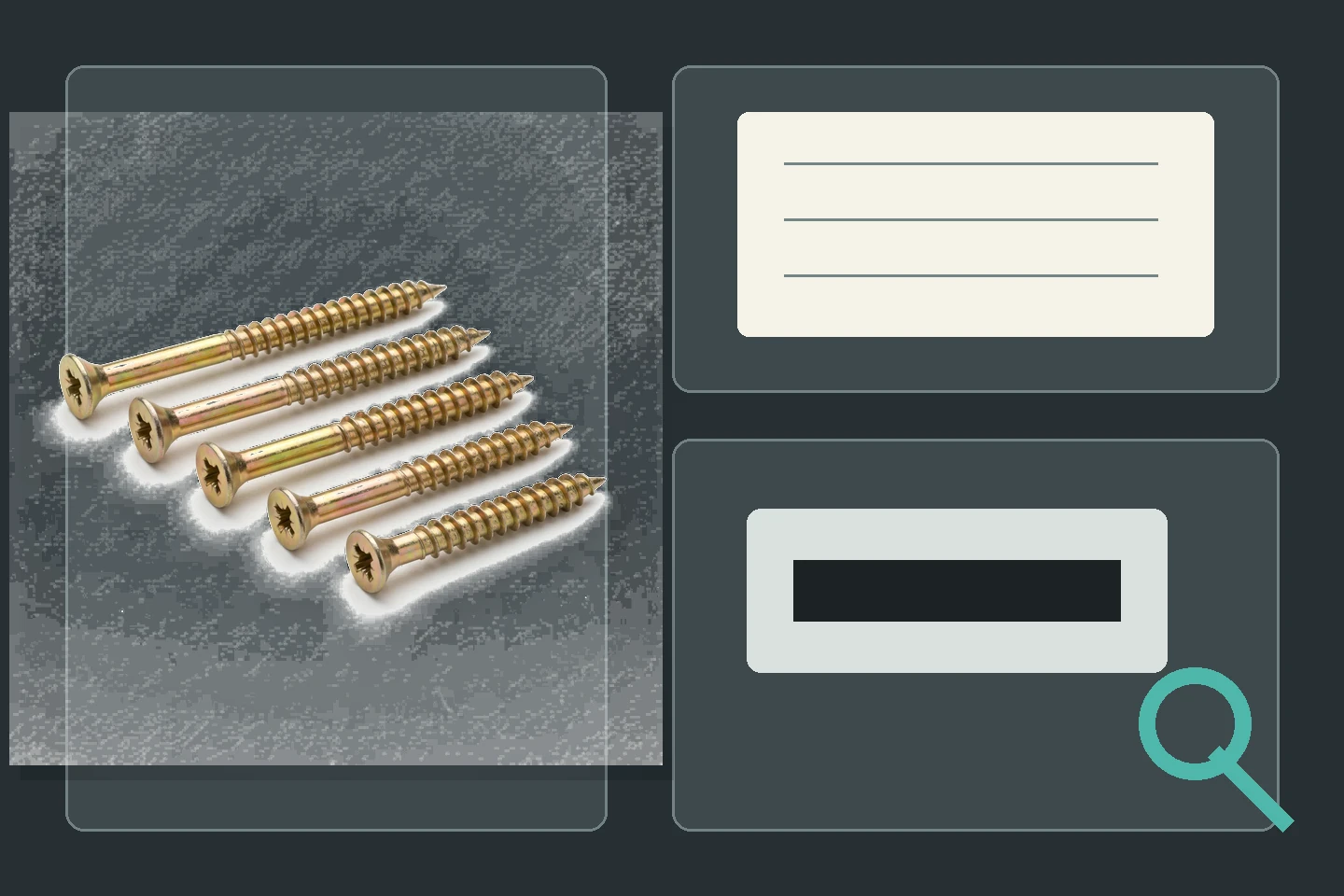
Before issuing a purchase order, a chipboard screw supplier should connect every important promise to a controllable piece of evidence. The file should identify the exact screw, intended material and use, approved sample, dimensional and visual checks, packaging, traceability, commercial assumptions, and changes that require notice.
ProAirNails recommends building this evidence file before price negotiations are finished. It prevents a sales description, sample bag, artwork proof, and production shipment from quietly referring to different products.
File section 1: product identity
Start with buyer SKU, supplier SKU, drawing or specification revision, nominal diameter and length, head and recess, thread, point, material and finish description, packaging count, and intended application. Add clear photographs and a retained sample code.
Do not approve the phrase “standard chipboard screw” without more detail. Similar-looking screws can differ in geometry, finish, recess, length, and intended substrate. Every quotation exception should be stated beside the requested item.
File section 2: application boundary
| Buyer input | Evidence to provide | Decision protected |
|---|---|---|
| Chipboard or panel type and thickness | Representative material stack and trial record | Entry, splitting, stripping, and seating behavior |
| Joint geometry and edge distance | Assembly drawing or labeled test sample | Path, breakout, pull-up, and visible damage |
| Driver and bit | Confirmed recess and controlled drive method | Bit fit, wobble, cam-out, and head damage |
| Service environment | Specified finish and supporting document when required | Prevents appearance from being treated as corrosion proof |
The supplier can help discuss compatibility, but the responsible buyer or designer must approve the joint and performance criteria.
File section 3: sample-to-production link
Label the sample with product revision, date, production route where relevant, packaging, and inspection result. Ask whether it was selected from normal production or made separately. Define which supplier sample is retained and which buyer sample controls later comparison.
A chipboard screw supplier should explain how the approved sample links to the shipment through lot, carton, pallet, and production records. A perfect sample without traceability has limited value.
File section 4: representative drive evidence
| Trial stage | Record | Do not conclude from one result |
|---|---|---|
| Start and entry | Point behavior, alignment, surface breakout | That every panel or edge position behaves the same |
| Thread engagement | Pull-up, spinning, stripping, splitting | That visual seating proves joint capacity |
| Head seating | Flushness, recess condition, surface depression | That more torque is always corrective |
| Removal or rework | Head damage, hole condition, replacement rule | That reused material retains its original performance |
Use the actual panel, thickness, joint, bit, driver, speed, and support. Change one variable at a time. Keep clean and failed samples so the review does not overfocus on the most dramatic outcome.
File section 5: process and quality records
Ask how incoming material and finished products are identified, how dimensions and visible features are checked, how nonconforming material is segregated, how measuring equipment is controlled, and how complaints are traced. Request examples with confidential details removed.
Do not accept a certificate name as evidence for every product claim. Confirm the legal entity, site, scope, validity, and relevance. ProAirNails does not use this article to declare a material grade, heat-treatment condition, coating thickness, capacity, or certification for every SKU.
File section 6: packing and artwork
Include pieces per box, boxes per carton, carton dimensions and weight, pallet pattern, moisture protection, barcode, lot code, language, destination marks, and private-label artwork. Approve a physical packed sample when the program is new.
A technically correct screw can still fail commercially if quantities are wrong, similar lengths are mixed, labels are unclear, or cartons do not survive handling.
File section 7: commercial assumptions
- Minimum quantity and mixed-SKU rules
- Sample, artwork, tooling, or document charges
- Lead-time start point and production window
- Incoterm, named place, freight responsibility, and insurance
- Inspection, partial shipment, replacement, and complaint terms
- Changes requiring prior buyer approval
Use the ICC's official Incoterms rules resource to define delivery responsibilities accurately. A three-letter term without a named place and agreed version leaves room for different interpretations.
Score the file before releasing the PO
Classify each item as verified, conditionally accepted, open, or not applicable. Block the PO when the unresolved item can change product identity, application safety, regulatory status, packaging correctness, or landed-cost responsibility. Minor formatting gaps can have a dated closure action.
The selected chipboard screw supplier should close critical evidence gaps before the PO rather than asking the buyer to treat the first production shipment as an uncontrolled trial.
The USDA Forest Products Laboratory's Wood Handbook resource provides broader wood-fastening context, but it does not approve the proposed screw or joint. Use it to improve questions, then rely on the applicable design and test criteria.
Open a ProAirNails evidence request
Review the ProAirNails chipboard screw range, compare the broader screw category, and keep drywall screws tied to their intended systems rather than treating them as automatic substitutes. Send the drawing, panel stack, sizes, quantities, packing, destination, documents, and sample plan through the ProAirNails inquiry page.
A strong chipboard screw supplier file makes the purchase order the conclusion of due diligence, not the beginning of product identification.
FAQ
What should be in a chipboard screw specification?
Include product code, dimensions, head, recess, thread, point, material and finish description, packaging, application, inspection method, labels, and approved sample.
Is a supplier sample enough to place a bulk order?
No. Confirm that it represents the planned process and specification, passes the buyer's application trial, and can be traced to later production.
Why record the panel type?
Panel density, construction, thickness, edge condition, and surface can affect entry, splitting, stripping, pull-up, and head seating.
What proves bit compatibility?
Confirm the recess specification, approved bit, engagement, controlled drive trial, and acceptable recess condition after seating.
Should I request certificates?
Request only documents relevant to the product and destination, then verify entity, site, scope, validity, and connection to the ordered SKU.
How should approved samples be labeled?
Use product and drawing revision, sample code, date, relevant process identity, inspection result, packaging, and buyer approval status.
What packing evidence matters?
Review physical packed samples, counts, labels, barcode, lot code, carton strength, moisture protection, pallet plan, and mixed-SKU prevention.
What changes need advance notice?
Material, finish, dimensions, geometry, process route, site, inspection, box count, carton, label, barcode, or artwork changes may require approval.
Can price be finalized before evidence is complete?
A provisional price may be discussed, but unresolved specification, packing, documents, Incoterm, or testing assumptions should be clearly stated.
What should I send ProAirNails first?
Send the screw schedule, panel and joint details, driver and bit, quantities, destination, packaging, artwork, required documents, and sample approval plan.