
Why buyers search for galvanized staples wholesale in the first place
When purchasing teams look for galvanized staples wholesale, they are usually trying to solve a very practical problem: how to keep fastening costs predictable without sacrificing throughput or reliability. In manufacturing, packaging, upholstery, woodworking, and similar operations, staples are not a decorative accessory. They are a consumable that needs to feed cleanly, hold consistently, and arrive in bulk packaging that fits the pace of the line.
The challenge is that staple buying often gets treated as a simple replenishment item. It is not always simple. The wrong strip geometry, a poor finish, or an incompatible feed style can create jams, weak joints, or wasted labor. For sourcing managers and product teams, the decision is less about finding the cheapest box and more about selecting a fastening supply that matches the tool, the application, and the expected volume.

What the product image suggests
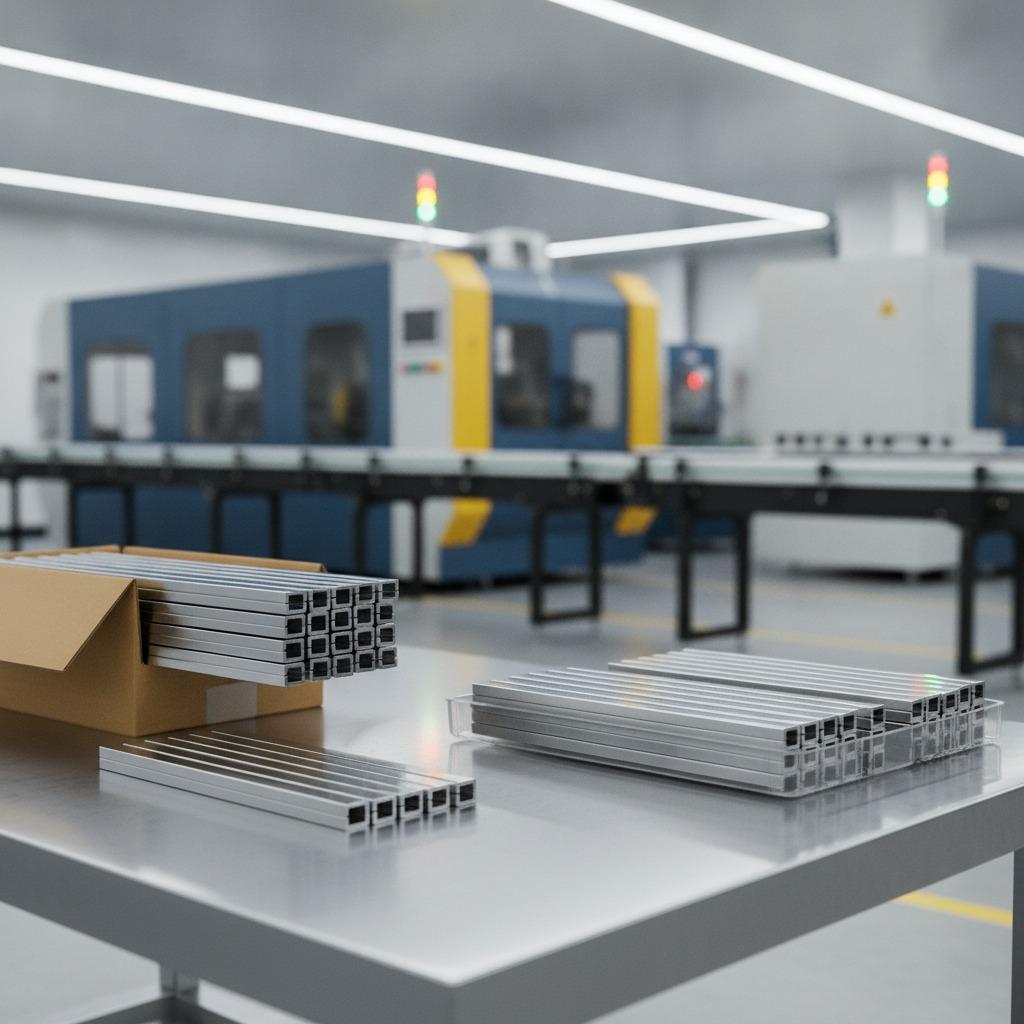
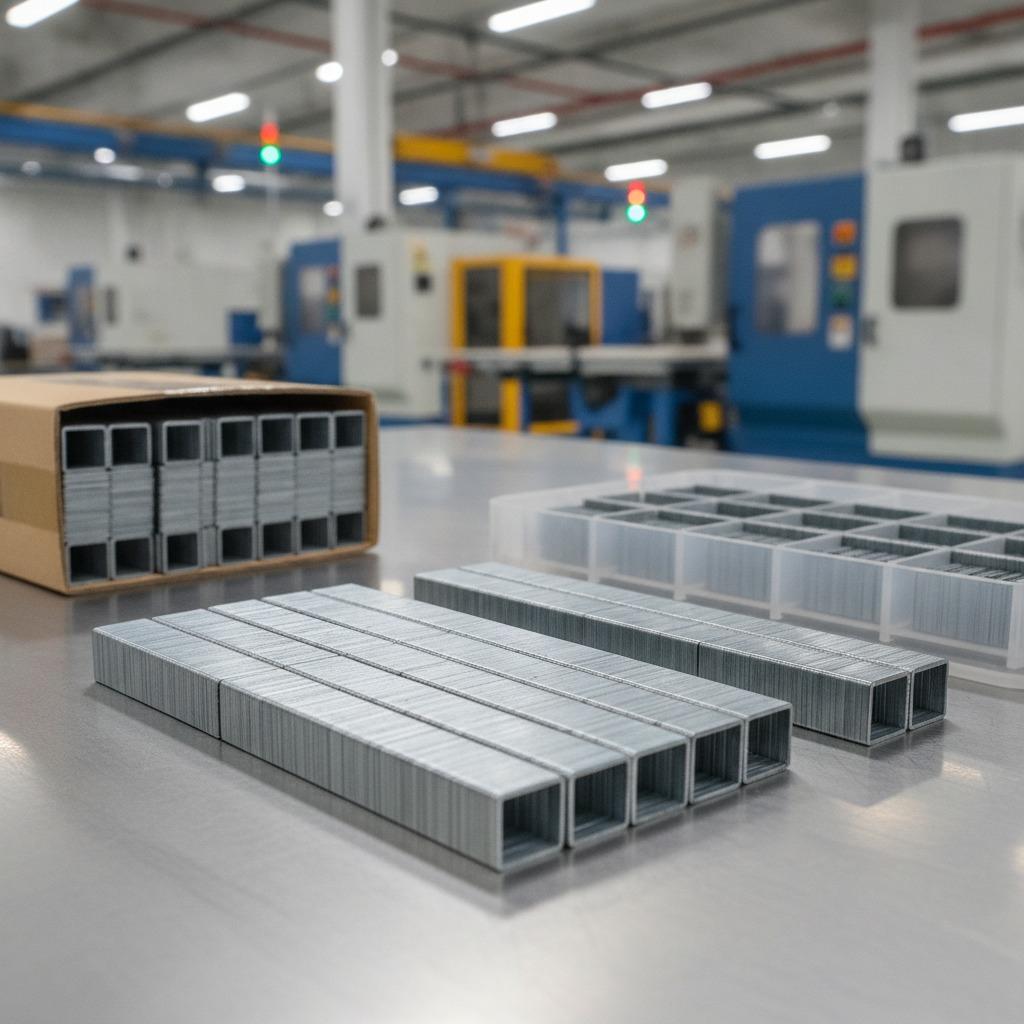
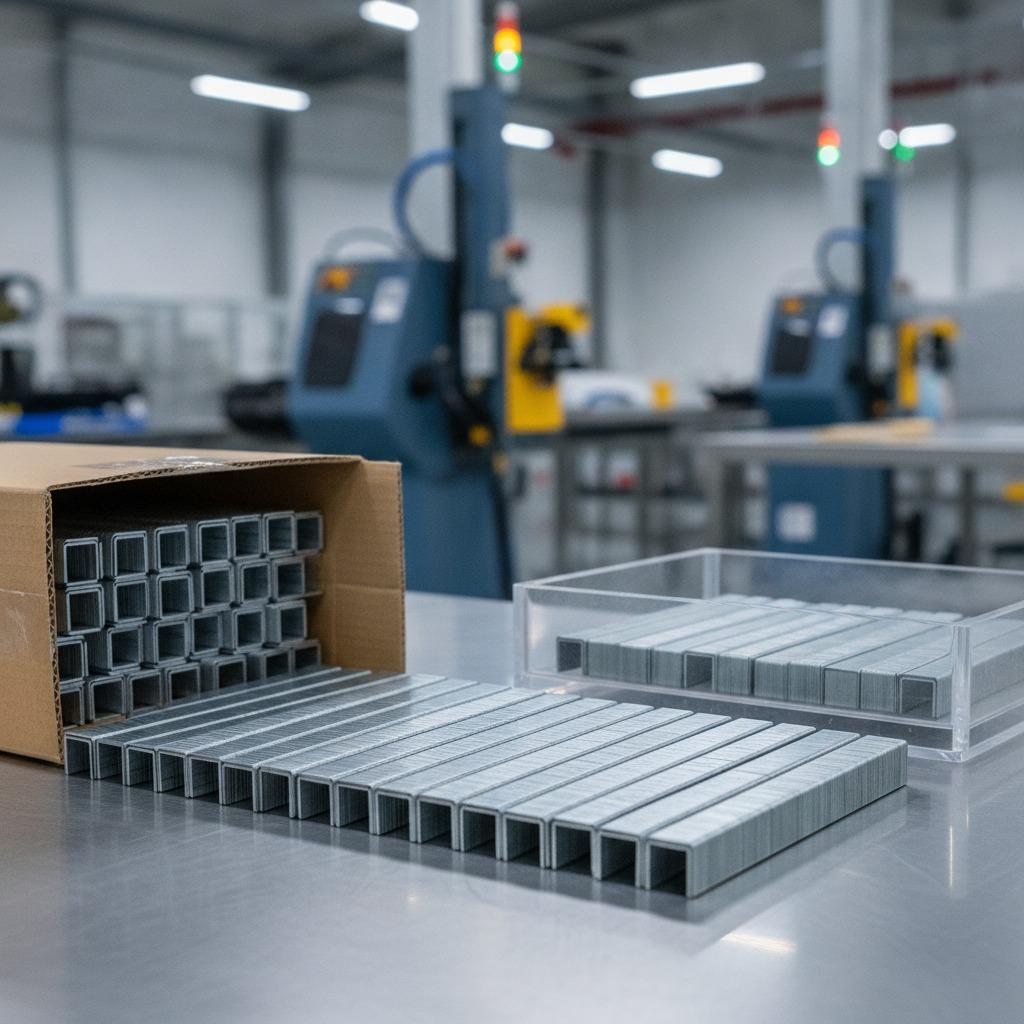
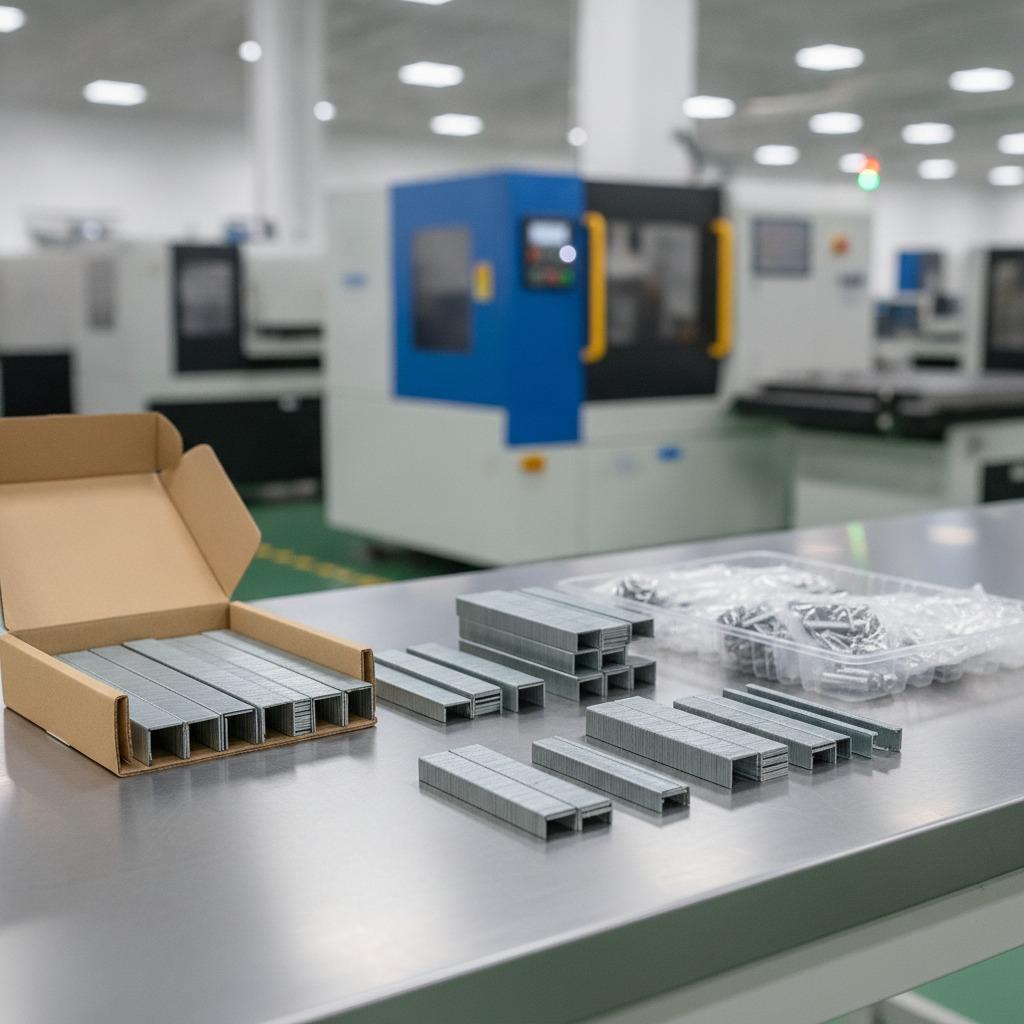
The available product information points to stacked metal fastening consumables arranged in neat strips inside a cardboard box and a clear plastic tray. The strips have a long, narrow shape with repeated divisions, which suggests joined staples or a similar strip-fastener format used in mechanical fastening equipment. The surface appears silver or steel-like, with a smooth, uniform finish.
That matters because buyers often need to confirm more than just the name on the carton. They need to know whether the fastener is a staple, staple strip, or another related consumable; whether it is meant for industrial stapling, packaging closure, upholstery work, or another application; and whether the dimensions and feed format match the tool on the floor. The image alone does not identify exact size, coating, or compatibility, so those details should be verified before ordering at scale.
Quick takeaways for wholesale staple buyers
Bulk purchasing works best when the staple specification is locked down before the purchase order is issued. In practice, that means confirming the staple type, crown width, leg length, strip configuration, and compatible equipment family. If the operation runs more than one fastening station, it is worth checking whether all stations use the same format. Mixed inventory looks manageable on paper and becomes a nuisance very quickly in production.
For teams comparing galvanized staples bulk options, the key question is usually not “Which supplier has inventory?” but “Which supplier can deliver repeatable geometry and packaging that supports our process?” Bulk fastening consumables should arrive organized, protected from damage, and easy to stage near the line.
Why galvanized finish is often requested
A galvanized finish is commonly associated with improved corrosion resistance compared with untreated steel, which is one reason buyers ask for it in wholesale fastening supplies. In real use, that can matter anywhere the staple may see humidity, storage variation, or exposure in the finished assembly. It is not a magic shield, and it does not remove the need to match the fastener to the environment, but it can be a useful baseline for many industrial buyers.
That said, the word “galvanized” should not be used casually in procurement. Ask what finish is actually being supplied and whether it is suitable for the end use. If the product information does not clearly state the coating or treatment, treat that as a gap to close rather than a minor detail. Fasteners are small; the consequences of getting them wrong are not.
Selection criteria that matter more than price
Tool compatibility
The first filter is always compatibility. A staple that looks standard may still fail to feed in a particular machine. Buyers should verify the exact tool or dispenser requirements rather than relying on general descriptions.
Geometry and consistency
Uniform strip geometry is a useful sign in any bulk fastening consumable. Consistent shape supports smoother feeding and reduces variability from box to box. The product information here suggests organized stacks and standardized repeatable dimensions across the lot, which is the kind of visual consistency procurement teams like to see.
Packing format
For wholesale galvanized staples, packaging is part of the product. Loose or damaged strips can slow staging and increase waste. Cardboard boxes and clear trays are common bulk formats because they help protect the staples and make count verification easier during receiving.
Common buying mistakes
One common mistake is assuming all staples with a similar appearance are interchangeable. They are not. Another is ordering by price alone and discovering that a lower-cost bulk lot creates feeding issues or requires rework downstream. A third is failing to align purchasing with the actual consumption pattern on the floor; if the line uses staples continuously, inconsistent replenishment can cause avoidable stoppages.
It is also easy to overlook storage conditions. Even when the finish is intended to resist corrosion, bulk metal fasteners still need sensible handling. Damaged cartons, damp storage areas, or rough transshipment can undermine the benefit of an otherwise suitable product.
Practical buyer advice before you place an order
Ask for the exact staple specification, the packaging count, and the compatibility statement for the intended tool. If the supplier cannot provide those basics, the procurement risk is higher than it first appears. For volume programs, it is also wise to request a sample or a small trial lot before committing to a large wholesale order. That is especially important when switching suppliers, because apparently “same size” products can still behave differently in use.
If your project involves recurring demand, build the staple into the approved materials list with clear naming. It saves time later and reduces the chance that a substitute will be ordered under pressure.
FAQ
Are galvanized staples always better than plain steel staples?
Not always. They are often preferred where corrosion resistance is useful, but the right choice depends on the application and storage environment.
Can I buy wholesale galvanized staples without knowing the tool model?
Not safely. Compatibility matters, and staple dimensions or feed style can vary enough to cause trouble.
What should I inspect on arrival?
Check packaging integrity, strip alignment, visible damage, and whether the lot appears consistent with the ordered specification.
Next step for sourcing teams
If you are evaluating galvanized staples wholesale for production or packaging use, start by confirming the staple format and machine compatibility, then compare packaging quality and lot consistency. Once those basics are clear, the supplier conversation becomes much easier—and the risk of line disruption drops with it. For bulk procurement, that is usually the real win.