
1. Why buyers keep searching for a coil nails wholesale distributor
If you buy fasteners for framing, fencing, pallets, roof work, or light assembly, the phrase coil nails wholesale distributor usually means one thing: fewer stockouts, steadier pricing, and a supply chain that does not wobble every time a production run changes. That matters more than it sounds. Fasteners are not glamorous, but they can stop a crew, delay a shipment, or force a shop to switch tools and re-qualify work on short notice.
For sourcing managers and production teams, the decision is rarely just “who has nails?” It is “who can support the exact nail format, pack size, and replenishment rhythm we need without creating surprises?” That is where distributor selection starts to matter.
2. Quick take: what a good distributor should help you solve
A capable distributor should make it easier to compare bulk coil nails, verify compatibility with your fastening equipment, and keep the supply consistent enough that operations do not pause every time demand spikes. In practice, that means helping with product availability, packaging options, and the boring but essential questions around grade, finish, and application fit.
In many shops, the hidden cost is not the nails themselves. It is the labor lost to wrong collations, inconsistent feeding, or a last-minute substitution that should have been avoided. Buyers who treat fasteners as a controlled input usually get better results than those who buy opportunistically.
3. A practical list of what to check before placing a wholesale order
1) Nail type and application fit
Start with the job, not the catalog. Industrial coil nails are commonly chosen for higher-volume fastening because coil packaging can reduce reload time and support faster work on repetitive applications. But the right choice still depends on the substrate, holding requirement, and the tool being used. A nail that feeds smoothly in one tool may behave differently in another.
2) Collation format and feed behavior
Coil nails are often selected because the collated format supports efficiency, but the collation method must match the nailer or fastening system. This is one of those small details that becomes a large headache if ignored. A mismatch can show up as jams, inconsistent drive depth, or wasted labor on the line.
3) Finish and environment
Finish matters when corrosion resistance is part of the specification. Indoor furniture assembly, exterior framing, and shop fabrication do not all need the same surface protection. If the application is moisture-prone or exposed, the buyer should confirm suitability rather than assume one “general purpose” fastener will cover every job.
4) Packaging and replenishment logic
Wholesale buying only works when pack sizes fit your consumption rate. A small team with variable jobs may want flexibility; a plant or contractor with repetitive use may prefer larger case quantities to reduce changeovers and receiving noise. The wrong pack strategy can clog storage just as quickly as it solves purchasing pressure.
4. Common mistakes that cost more than they should
One frequent mistake is over-focusing on unit price and under-focusing on feed reliability. Another is treating nail purchase as a one-time buy instead of a recurring supply decision. That often leads to inconsistent lots, rushed substitutions, and avoidable downtime.
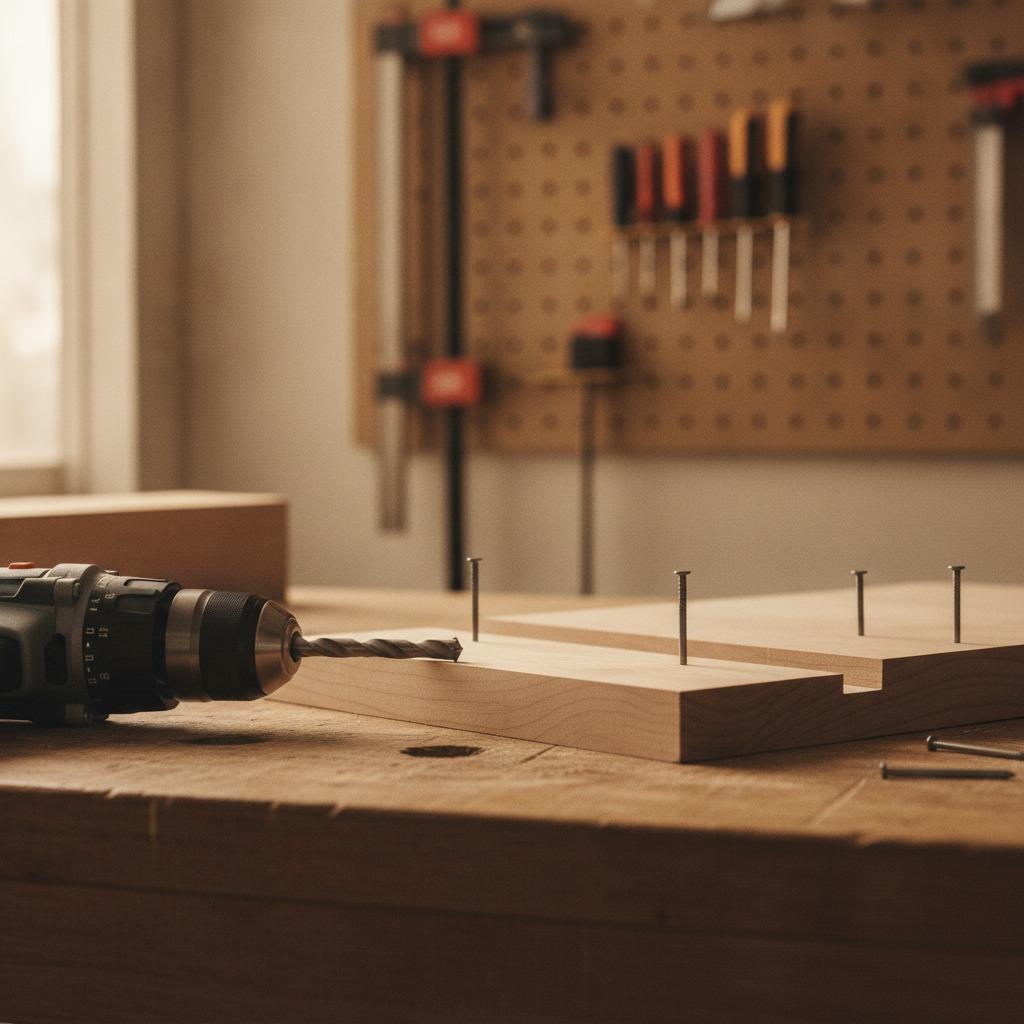
There is also a practical warning worth stating plainly: if your operation uses compact handheld fastening tools in woodworking or assembly, keep a close eye on compatibility around fastener length, diameter, and tool access. A fastener that looks close enough on paper may not seat correctly in a narrow groove, stepped slot, or tight fixture area. Small errors tend to show up quickly in real shop conditions.
5. What industrial buyers usually want from the distributor relationship
Good distributors do more than move cartons. They help buyers narrow the field when product descriptions are broad and real-world use is specific. In a manufacturing setting, that can mean helping procurement teams compare fasteners for cabinets, joinery, light carpentry, repair work, or fixture fabrication without overbuying every variant on the shelf.
If your production includes wood assembly, a compact powered screwdriver or drill/driver is often used around the fastening step, but the fastener still has to be right. The best distributor understands that the tool, the nail, and the workpiece are part of the same system.
6. Questions to ask before you commit
Ask what formats are routinely stocked, which applications are best supported, and whether the distributor can help you avoid mixing similar-looking products that behave differently in use. Also ask how replenishment is handled when demand changes unexpectedly. The answer may reveal more than the price sheet does.
For buyers comparing suppliers, it is usually smarter to evaluate consistency, communication, and product clarity first, then price. A low number on a quote is useful only if the nails actually arrive in the form your operation can use.
7. Next step for sourcing teams
If you are reviewing a coil nails wholesale distributor, build your shortlist around application fit, feed compatibility, packaging, and repeat supply—not just catalog breadth. That approach usually surfaces the suppliers that can support real production, not just one-off purchases.
If you want, I can also turn this into a buyer’s checklist, a comparison table, or a category page article focused on bulk coil nails for industrial procurement.