
How to Evaluate a Coil Nails Manufacturer for Woodworking and Light Assembly
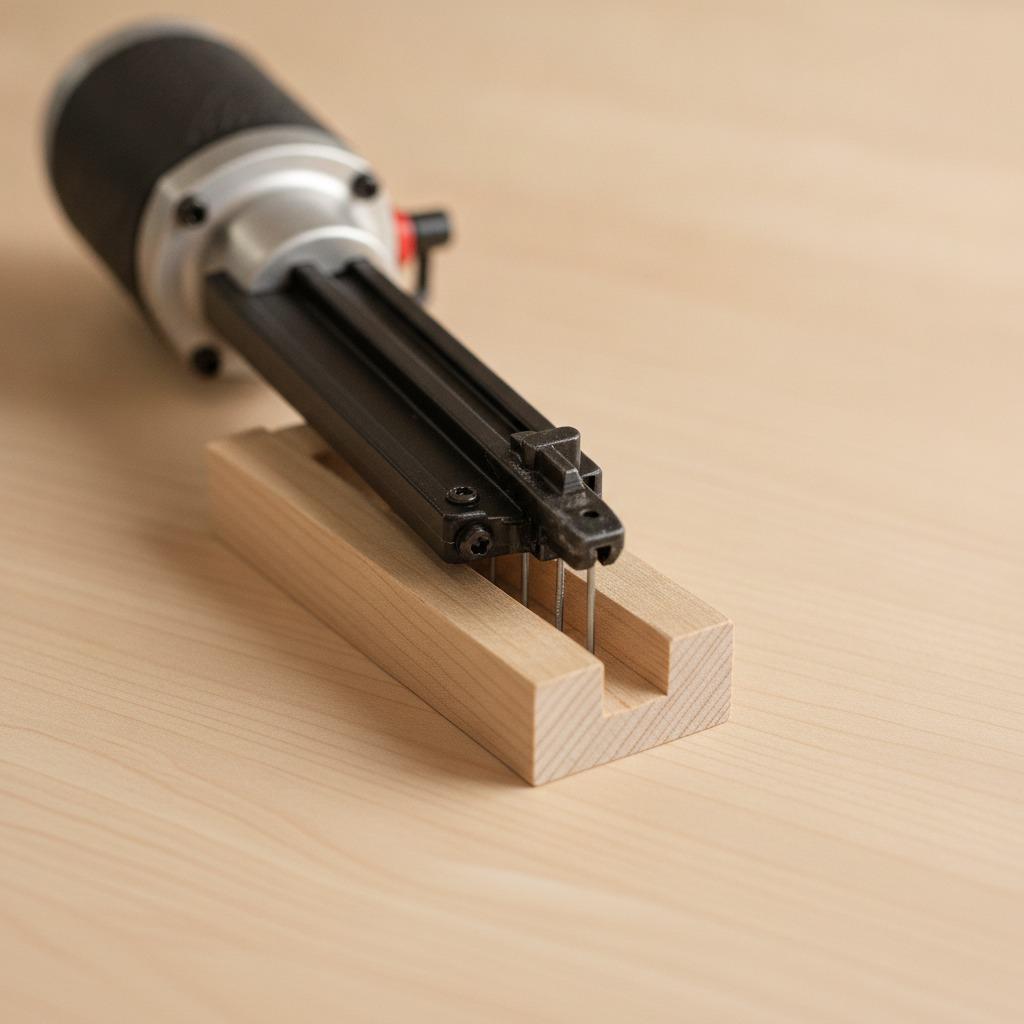
Choosing a coil nails manufacturer is not simply a matter of finding the lowest unit price. The fastener must match the nailer, the wood assembly, the magazine format, and the finish required at the work surface. That distinction matters here because the product shown appears to be a compact handheld nailer or pin nailer for woodworking, with a narrow magazine and a small fastener at the nose. It may support thin nails or pins, but the visible design does not by itself confirm that it uses collated coil nails.
For a sourcing manager or product engineer, the immediate decision is therefore twofold: identify the tool and fastener format correctly, then qualify a supplier that can provide consistent, compatible product. A manufacturer may offer coil-packed fasteners, straight-strip nails, or small pins, and those formats are not interchangeable simply because they have similar diameters.
Start with the tool, not the catalogue title
The pictured tool has an elongated black housing, a separate dark grip area, a narrow black magazine, and a compact metal-colored nose with a visible firing channel. Its proportions suggest finish-nailing, micro-pin, or another light woodworking application rather than heavy framing. The tool is positioned over a wooden assembly, where small fasteners are being used to join or secure narrow components.
That makes it relevant to cabinet and drawer assembly, furniture production, trim and molding work, small joinery, and workshop fastening. In these applications, a large fastener can split a thin strip, leave an unacceptable mark, or interfere with a later finishing operation. A narrow nose is useful because it can reach between or close to small wooden parts without obstructing the operator’s view.
The power source cannot be confirmed from the available information. No battery pack or air hose is visible, so the tool should be treated as a pneumatic or motor-driven nailer only in the broadest sense. Buyers should not assume operating pressure, battery requirements, firing rate, or trigger configuration until those details are supplied by the tool maker.
Coil nails and small woodworking pins are different buying categories
Bulk coil nails are commonly selected when a compatible tool requires a high-volume collated supply. The coil format can reduce reload frequency and may suit production environments where operators repeat the same fastening operation. But the fastener must match the magazine, collation method, nail dimensions, and firing mechanism. A coil nail is not automatically suitable for a compact finish tool.
Construction coil nails are generally associated with more demanding assembly or construction tasks than the small joinery shown in the product information. The term can cover a broad range of nail sizes and applications, so it is not enough to specify “coil nails” during an inquiry. The buyer should state the intended material, joint type, nailer model, required visible finish, and expected production volume.
For the pictured product, the narrow magazine and small fastener suggest that straight small nails or pins may be more relevant than a conventional coil format. That is an important qualification point. The image demonstrates compatibility with small-gauge fasteners based on visible geometry, but it does not confirm the nail or pin gauge, usable length range, magazine capacity, or exact collation arrangement.
What to request from a prospective manufacturer
Fastener compatibility
Ask the supplier to identify the supported fastener type in a written specification. The request should cover gauge, length range, head or headless design, collation angle or format, material, coating, and packaging. If the tool is intended for painted, stained, or clear-finished furniture, the fastener’s surface condition and potential for marking may matter as much as holding power.
Tool and magazine details
Request the nailer model, magazine configuration, nose dimensions, loading method, and any depth-control or safety features. The visible product includes a guided magazine and a compact firing channel, but those observations do not establish the operating specifications. A supplier should confirm whether the tool accepts a continuous coil, a strip, or individual small pins before a buyer commits to a fastener programme.
Production consistency
For repeat purchasing, ask how the manufacturer controls wire forming, cutting, collation, and packaging. General claims about quality are less useful than a clear description of inspection points and lot identification. Buyers should also request samples for the actual tool and wood assembly. A fastener that performs well in a soft test board may behave differently in thin trim, narrow frames, or a finished cabinet component.
Common sourcing mistakes
The first mistake is treating the product image as a complete technical drawing. It is not. The image supports observations about the compact format, narrow nose, magazine, and apparent small-fastener application, but it does not prove brand, model, dimensions, power source, certifications, or performance.
The second mistake is ordering by fastener name alone. “Bulk coil nails” may describe the packaging preference, while the tool requires a particular collation geometry. Confirm the tool-fastener combination before comparing prices. Otherwise, a low-cost shipment can become unusable inventory.
A third mistake is overlooking the joint itself. Thin strips, decorative parts, and small wooden frames may need discreet fastening rather than maximum penetration. Consider access, surface appearance, risk of splitting, and whether the fastener will be concealed or filled after installation.
A practical qualification path
Begin with a short technical brief: application, wood components, joint dimensions, desired appearance, approximate usage, and the tool currently available. Send that brief to several manufacturers or distributors and require each response to identify the exact compatible fastener format.
Next, test samples in the real assembly. Check loading, misfeeds, penetration, surface damage, holding behavior, and the operator’s ability to position the narrow nose accurately. Keep the test simple and repeatable. If the product is for light production-line fastening, include a longer run rather than judging the supply from a handful of shots.
Finally, separate confirmed information from assumptions in the purchasing record. For this pictured nailer, the confirmed direction is woodworking and light assembly with small fasteners. Gauge, length, firing rate, force, operating pressure, noise, weight, certifications, and specific wood suitability remain open questions.
FAQ
Is the pictured tool definitely a coil nailer?
No. Its narrow magazine and small visible fastener suggest a finish-nailing or micro-pin application, but the available information does not confirm a coil magazine or a specific nail format.
Where might this type of tool be used?
Likely applications include cabinet and drawer assembly, furniture and woodworking, trim and molding, small joinery, and securing thin decorative or frame components.
What should a buyer ask a coil nails manufacturer first?
Ask for the exact fastener format, gauge, length range, collation method, compatible tool models, material or coating, and sample availability. Also request confirmation of any specifications that affect production, such as loading and feeding requirements.
Next step for buyers
Before requesting a quotation, prepare a photo of the tool’s magazine and nose, the current fastener, and the wooden assembly. Add the intended application and approximate usage. A capable manufacturer should be able to use that information to distinguish coil fasteners from small straight nails or pins and recommend a testable product rather than making a broad, unsupported match.