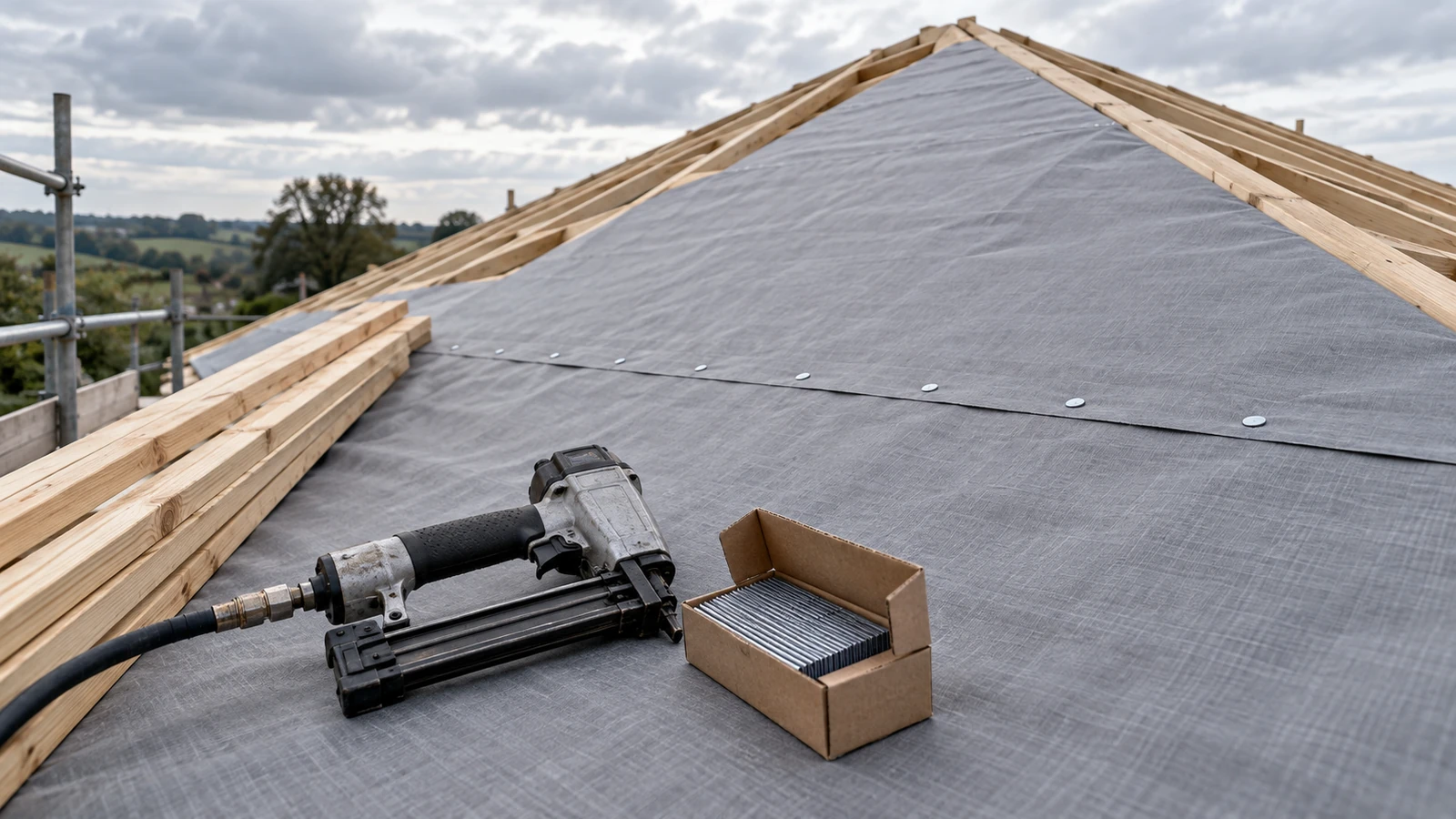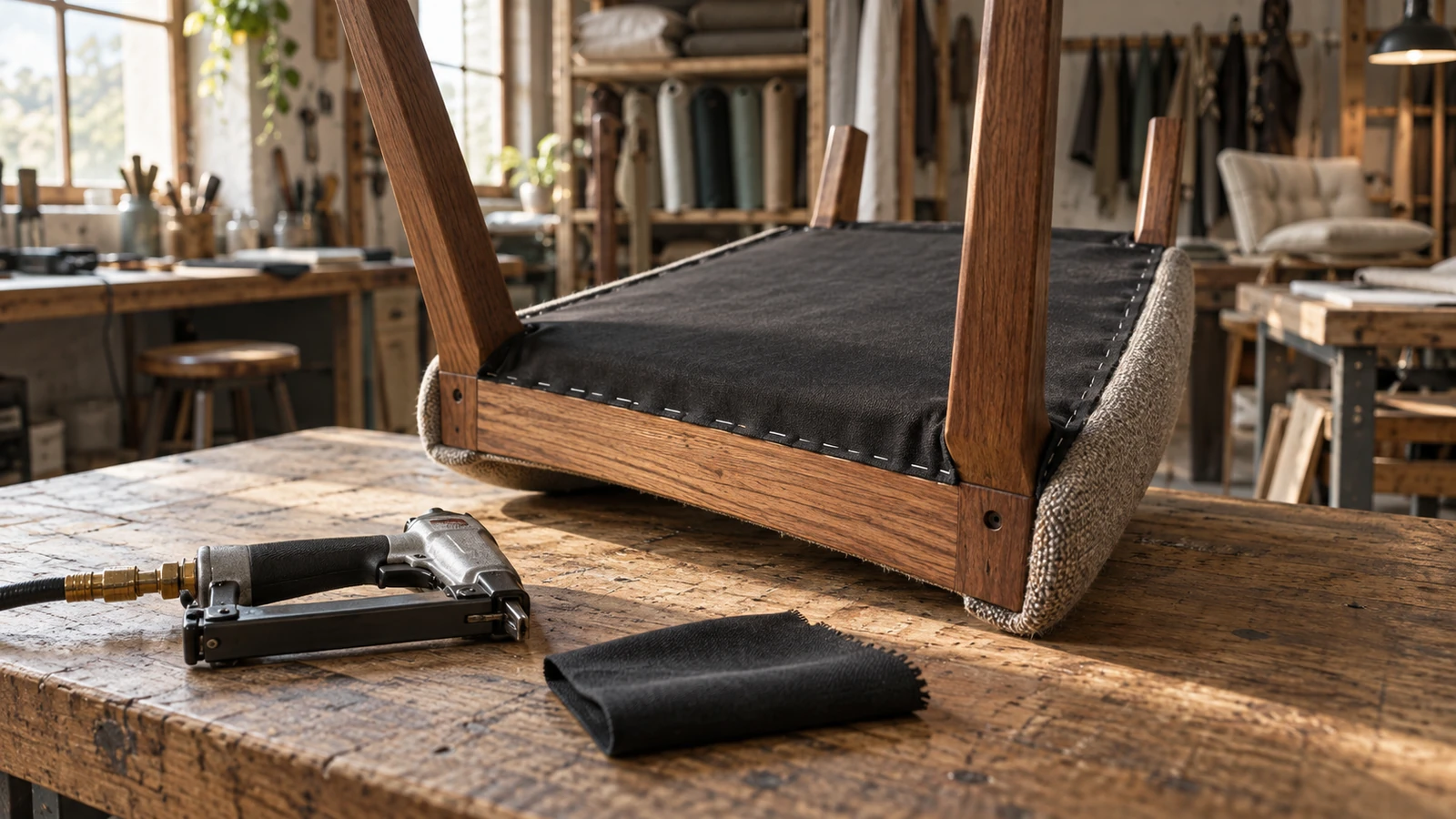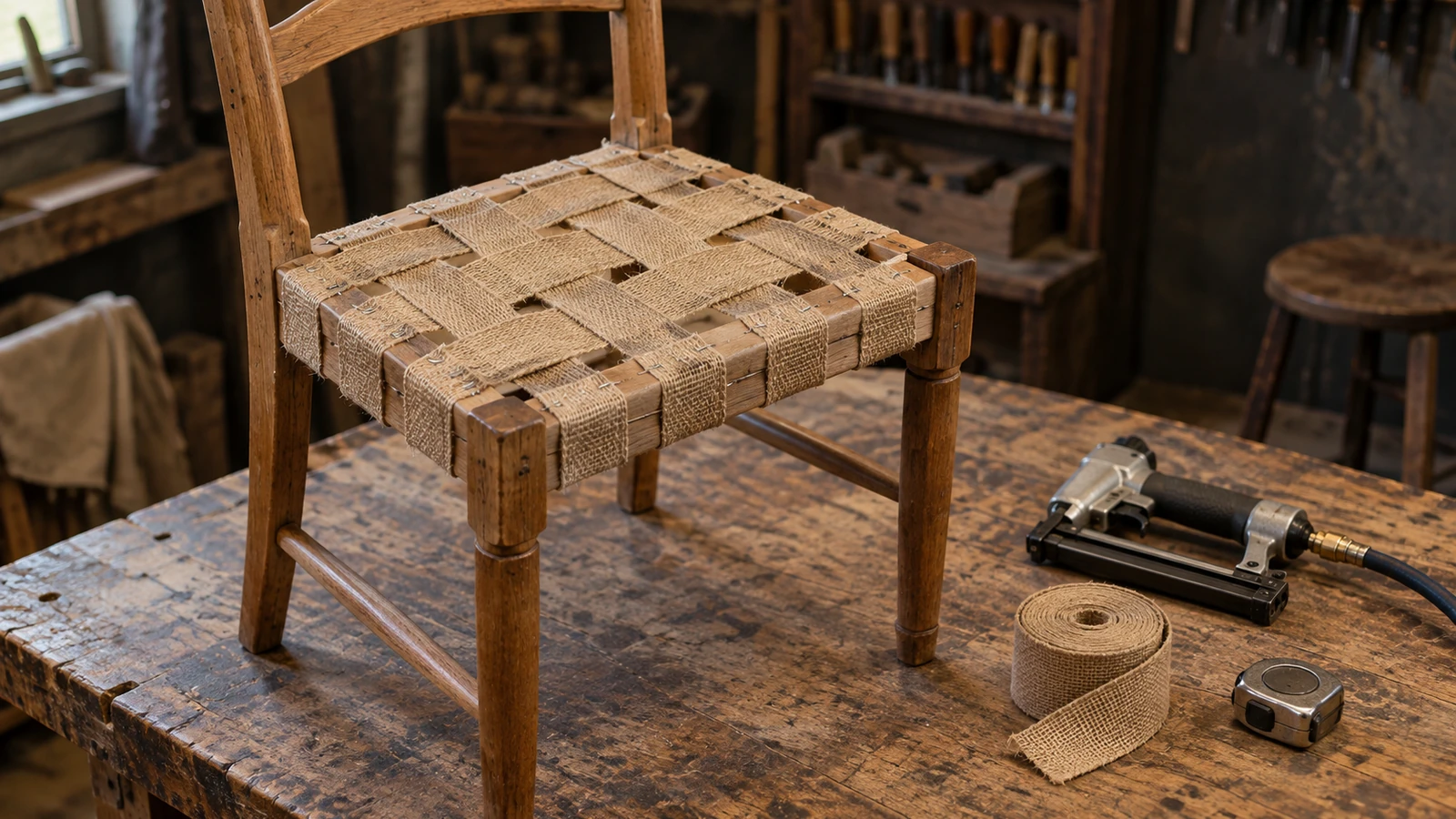

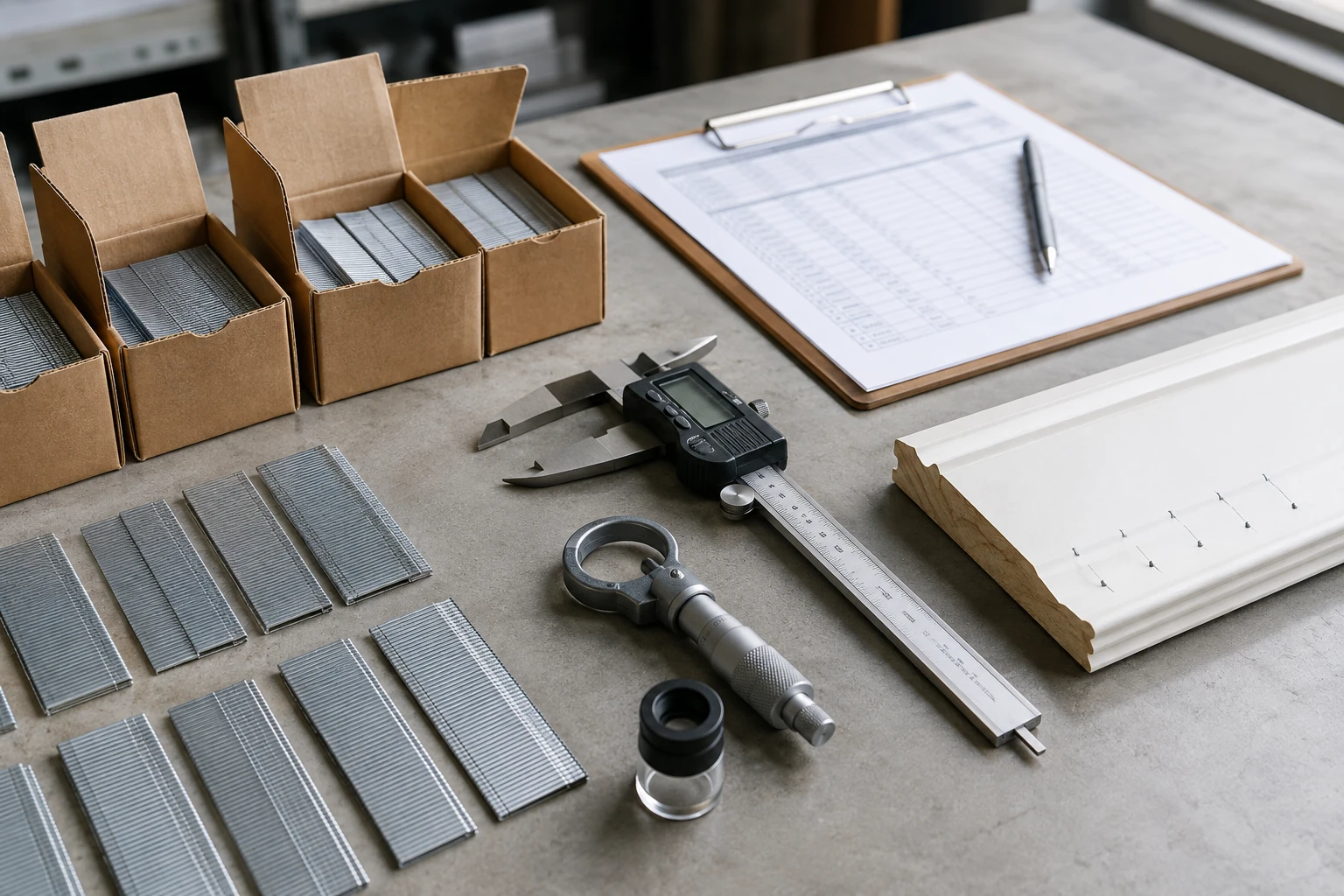
A 16 gauge brad nails supplier should receive a specification that can be sorted into clear, uncertain, and unacceptable fields. “16 gauge” identifies a wire family, but it does not finish an RFQ. Crown or head form, length, point, collation, coating, tool series, substrate, and visible-face requirements still decide whether a sample deserves a production trial.
ProAirNails recommends triage before negotiation. Mark each field green when it is declared and evidenced, amber when a sample or drawing is needed, and red when the offer changes the intended application. This keeps a low price from hiding a specification gap.
Make the first page a specification triage sheet
Put the drawing or reference sample at the top. Under it, list the fastener fields, tool fields, application fields, package fields, and evidence fields. Give every line an owner. Purchasing can request the data; engineering can judge fit; quality can define the receiving check. A short owner name beside each field prevents a quote from becoming an unowned collection of assumptions.
What the 16 gauge label leaves unanswered
The wire family does not tell you the exact diameter tolerance, length range, head dimensions, point style, shank finish, collation angle, adhesive, or strip count. It also does not tell you whether the brad will sit correctly in a particular nailer or disappear under the planned filler and paint. The supplier should quote the complete series, not a gauge in isolation.
What a 16 gauge brad nails supplier must confirm
A 16 gauge brad nails supplier must confirm the complete series against the drawing, named magazine, trim stack, finish schedule, package, and sample plan. This is the point where a gauge label becomes a purchase specification.
Use a red-amber-green field map
| Field | Green evidence | Amber or red trigger |
|---|---|---|
| Length | Declared range matches the drawing and sample | Range is substituted or only “approximate” |
| Point | Point form is identified and visible on samples | Point is changed without notice |
| Collation | Angle, strip, adhesive, and count fit the magazine | “Compatible” is offered without a named tool |
| Surface | Finish and appearance are shown on retained samples | Finish is described only as “premium” |
| Package | Lot identity and carton protection are defined | Mixed items or unlabeled inner bags appear |
Run the tool trial before discussing speed
Load the proposed strip into the exact nailer and magazine. Check the first shot, steady feed, pause and restart, final strip, head seating, driver marks, and any interventions. Use the production substrate and the intended backing. A brad that performs on a bench block may still split a trim edge or leave a visible seat when the production angle changes.
- Record nailer model, magazine, driver, and pressure.
- Use the intended trim, backing, filler, and finish.
- Separate feed failures from substrate failures.
- Retain accepted, borderline, and failed coupons.
- Link each coupon to the supplier lot and carton.
Sort exceptions instead of arguing from averages
When one sample behaves differently, do not average it away. Ask whether the exception follows a carton position, strip end, point defect, tool cycle, edge zone, or finish condition. Photograph the event and put it on the triage sheet. An exception that cannot be explained should remain amber until the buyer decides whether the risk is acceptable.
Check appearance after the full finishing sequence
Drive brads into the actual trim and apply filler, primer, topcoat, and cure time. Inspect proud heads, sink marks, splitting, filler shrinkage, discoloration, and sheen changes. The visible-face result is part of a finish-fastener approval. If the head will remain exposed, state the visibility rule and lighting conditions used for review.
Use ASTM F1667 as a reference boundary
The official ASTM F1667/F1667M-21a page lists requirements for driven fasteners within its stated scope, including dimensions, materials, physical properties, coatings, and finishes. It does not approve the buyer's trim, filler, nailer, pressure, or decorative acceptance rule. Keep those application decisions in the triage record.
Keep pneumatic tool safety separate
The official ISO 11148-13:2017 page addresses safety requirements for hand-held non-electric fastener driving tools within its scope. It does not approve this brad series in a particular workplace or trim line.
Ask for a sample set that can expose variation
Request more than one strip and more than one carton position when the program is important. Label samples by lot, production date if supplied, and package position. Compare length, wire, head, point, collation, and surface. The purpose is not to create an oversized laboratory program; it is to see whether the quoted identity remains stable across ordinary sample handling.
Turn the approved sheet into a reorder check
| Reorder checkpoint | Record | Escalate when |
|---|---|---|
| Item identity | Supplier code, drawing revision, lot and carton | Code or label changes without approval |
| Geometry | Sampled length, wire, head, point and strip | Measurement or visual result leaves the envelope |
| Tool result | First shot, run, restart, seating, interventions | Feed or seat behavior changes |
| Finish result | Coupon photos and accepted appearance | Filler, paint or edge behavior changes |
| Package result | Inner bag, carton, protection and damage check | Loose, mixed or rubbed strips appear |
Send ProAirNails the triage sheet
Include the reference sample, drawing, nailer and magazine, trim stack, finish schedule, annual volume, carton expectations, target market, sample quantity, and red-amber-green acceptance rule. ProAirNails can discuss brad nails, related pneumatic fasteners, the product range, and samples through the inquiry page.
Limit a supplier approval to the declared series
16 gauge brad nails supplier approval does not cover another head, point, coating, strip angle, tool, trim, finish, carton, or production revision. ProAirNails can support an identified sample and evidence path; the buyer owns the application release, maintenance, and change response.
FAQ
Is 16 gauge enough information for a quotation?
No. Add length, head, point, shank, collation, surface, tool, substrate, finish, package, and evidence requirements.
What does green mean on a triage sheet?
The field is declared, matches the reference, and has evidence suitable for the next decision.
When is a field amber?
It is plausible but needs a drawing, sample, tool trial, measurement, or application coupon before approval.
Why name the nailer model?
Magazine, driver, feed path, and seating behavior vary; a generic “16 gauge tool” is not a complete setup.
Should every carton be measured?
Use a risk-based receiving plan, but retain enough identity and sample evidence to catch a changed or mixed lot.
What should a finish coupon include?
Production trim, backing, filler, primer, topcoat, cure sequence, lighting, and the declared appearance rule.
Can a low feed rate be solved with more pressure?
Do not assume so. Check series, magazine, driver, coil condition, pressure limits, and tool instructions first.
What is an unexplained exception?
A result that cannot yet be linked to a defined field such as lot, carton, tool event, substrate, or finish.
When should the approval be reopened?
Reopen it after changes to dimensions, point, coating, collation, tool, trim, finish, package, or acceptance limits.
What should a 16 gauge brad nails supplier confirm first?
Confirm the complete geometry, tool and magazine, trim stack, finish, package identity, sample evidence, and change rule.