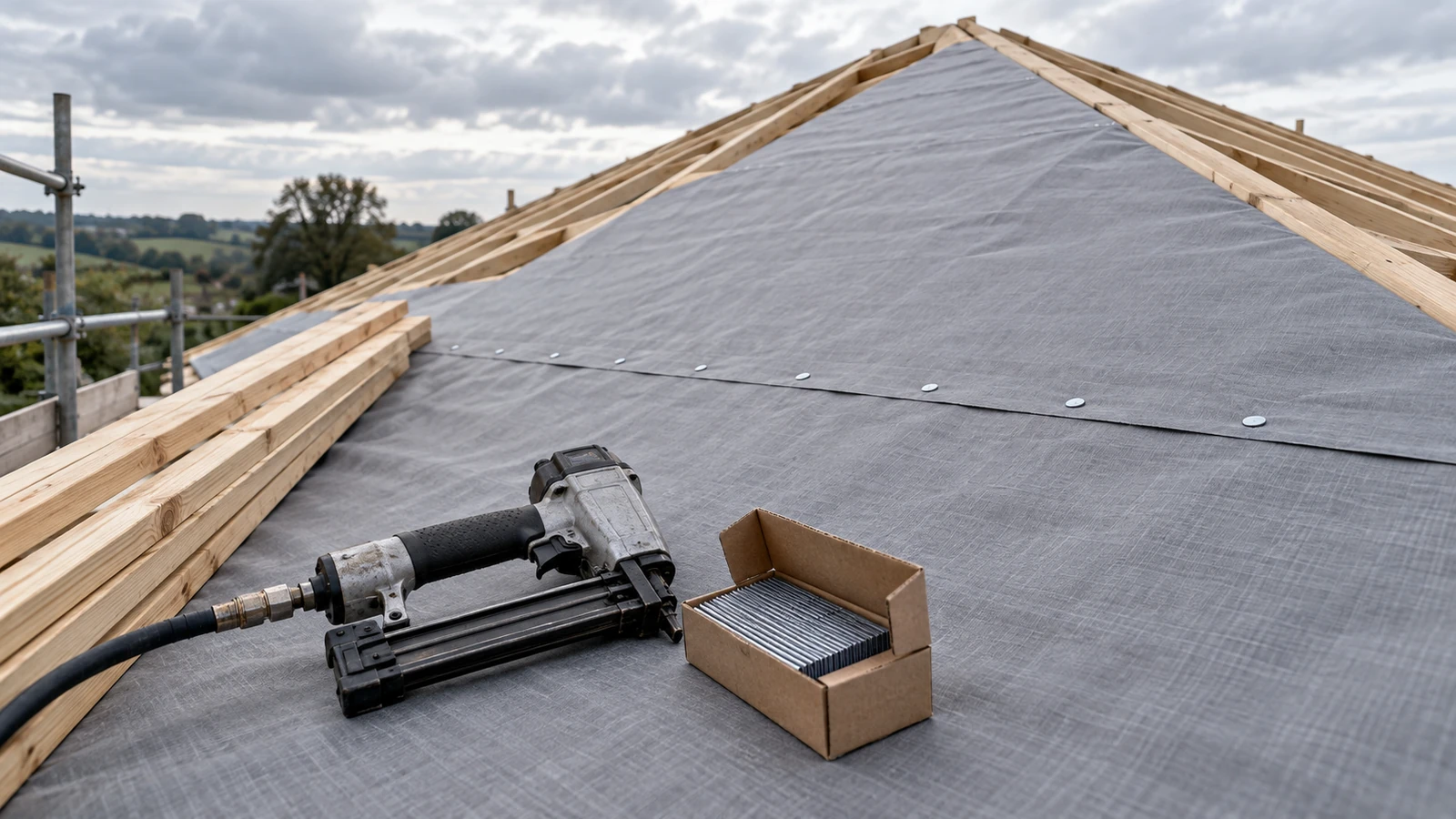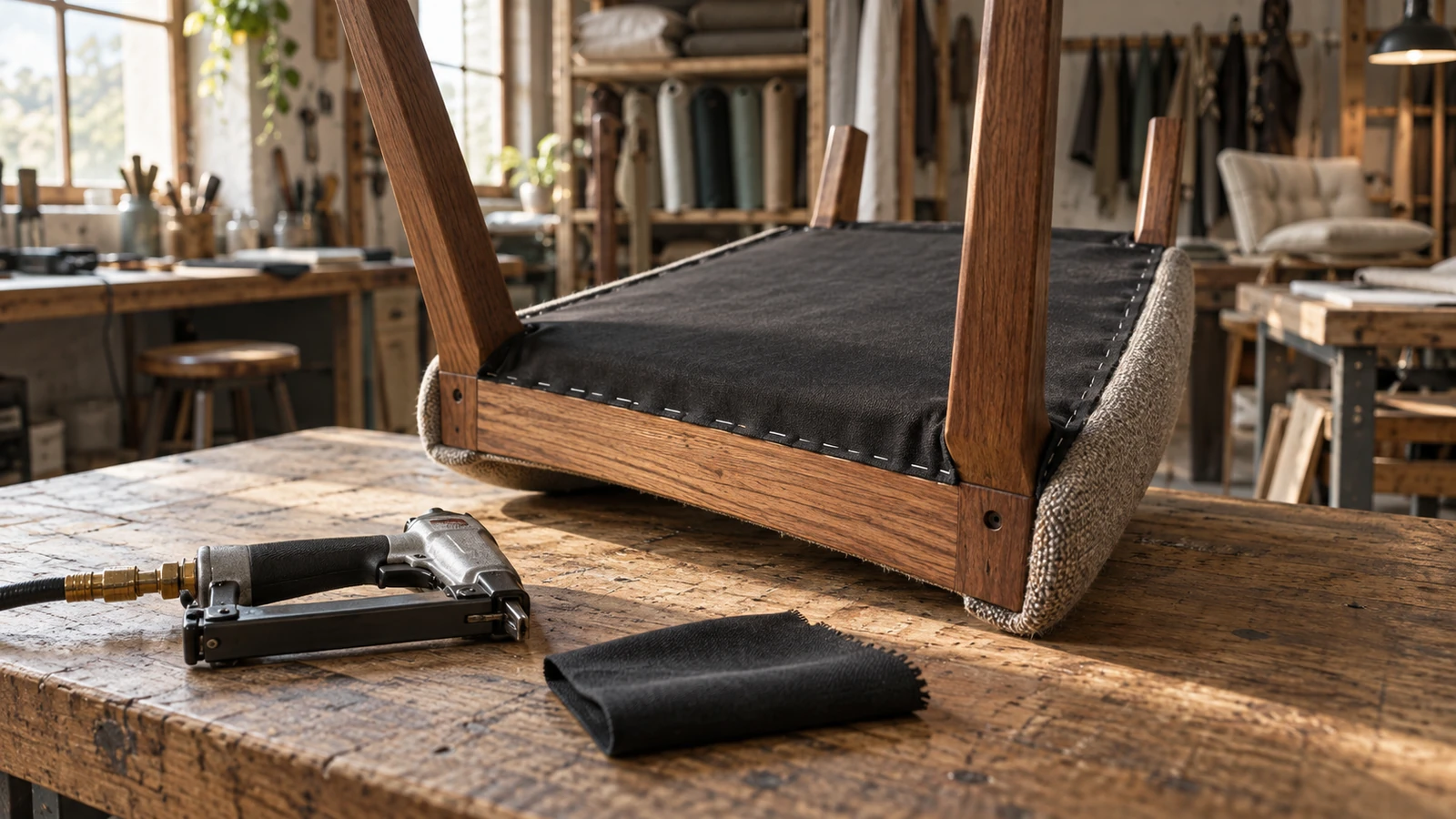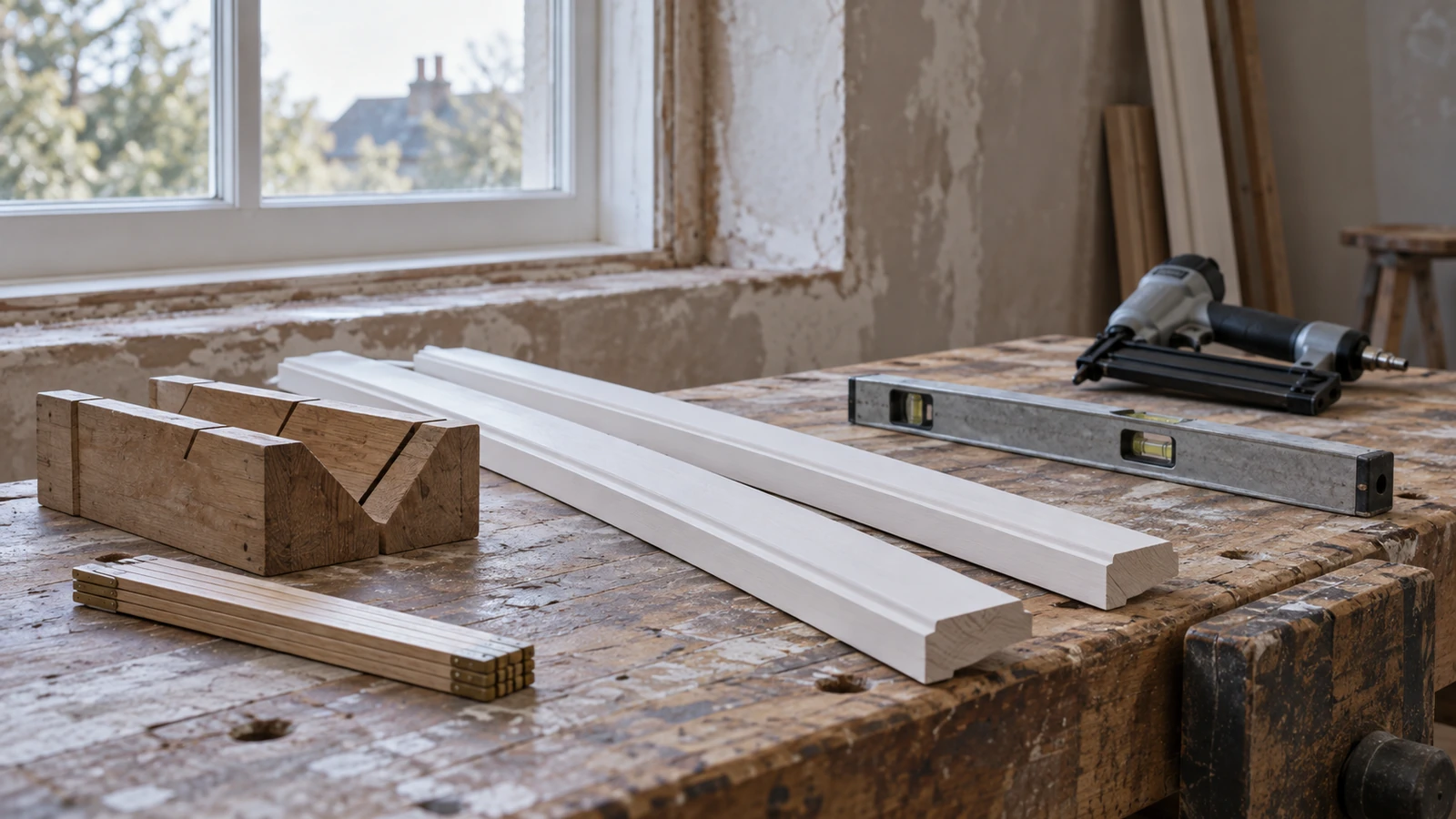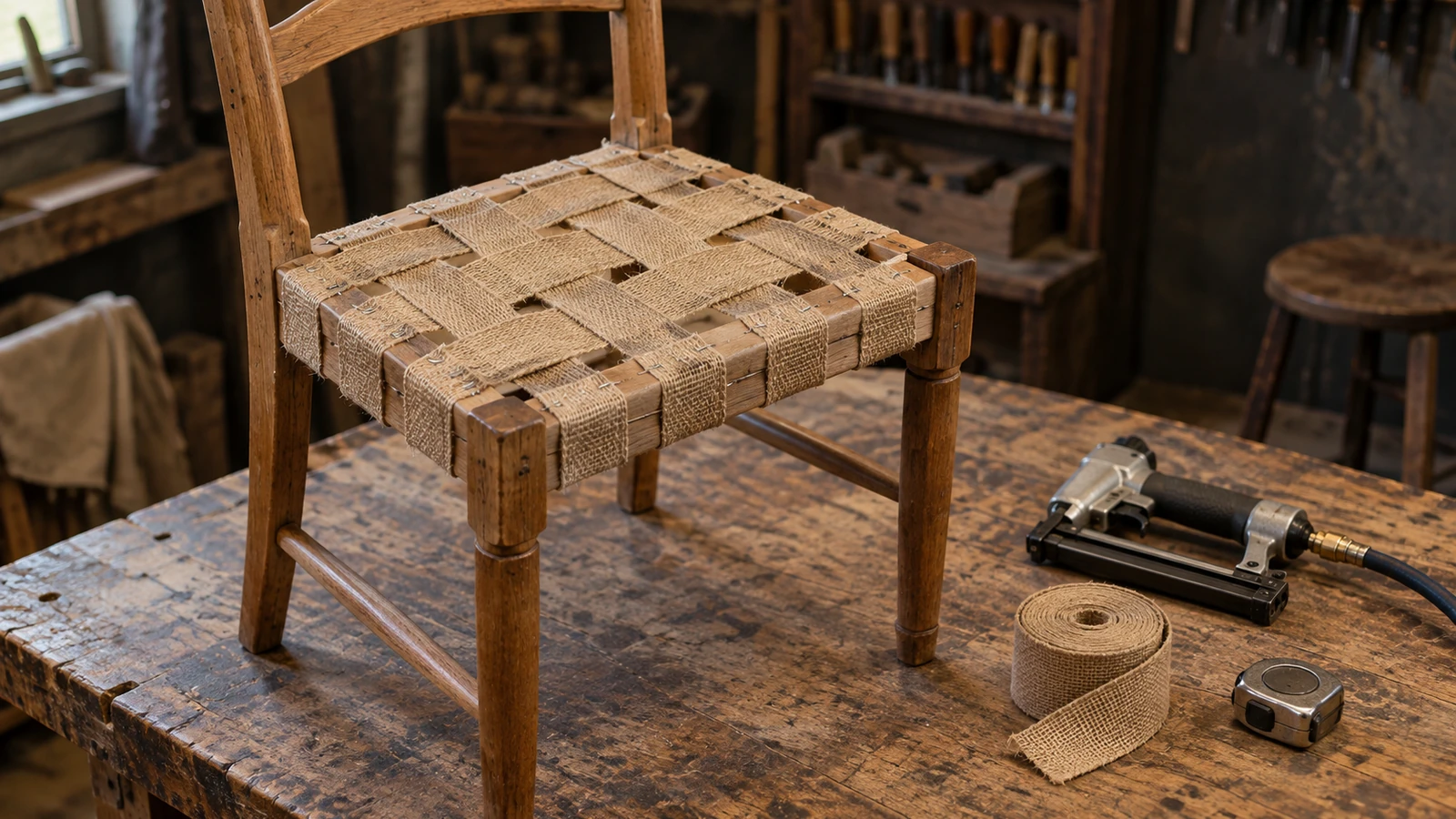

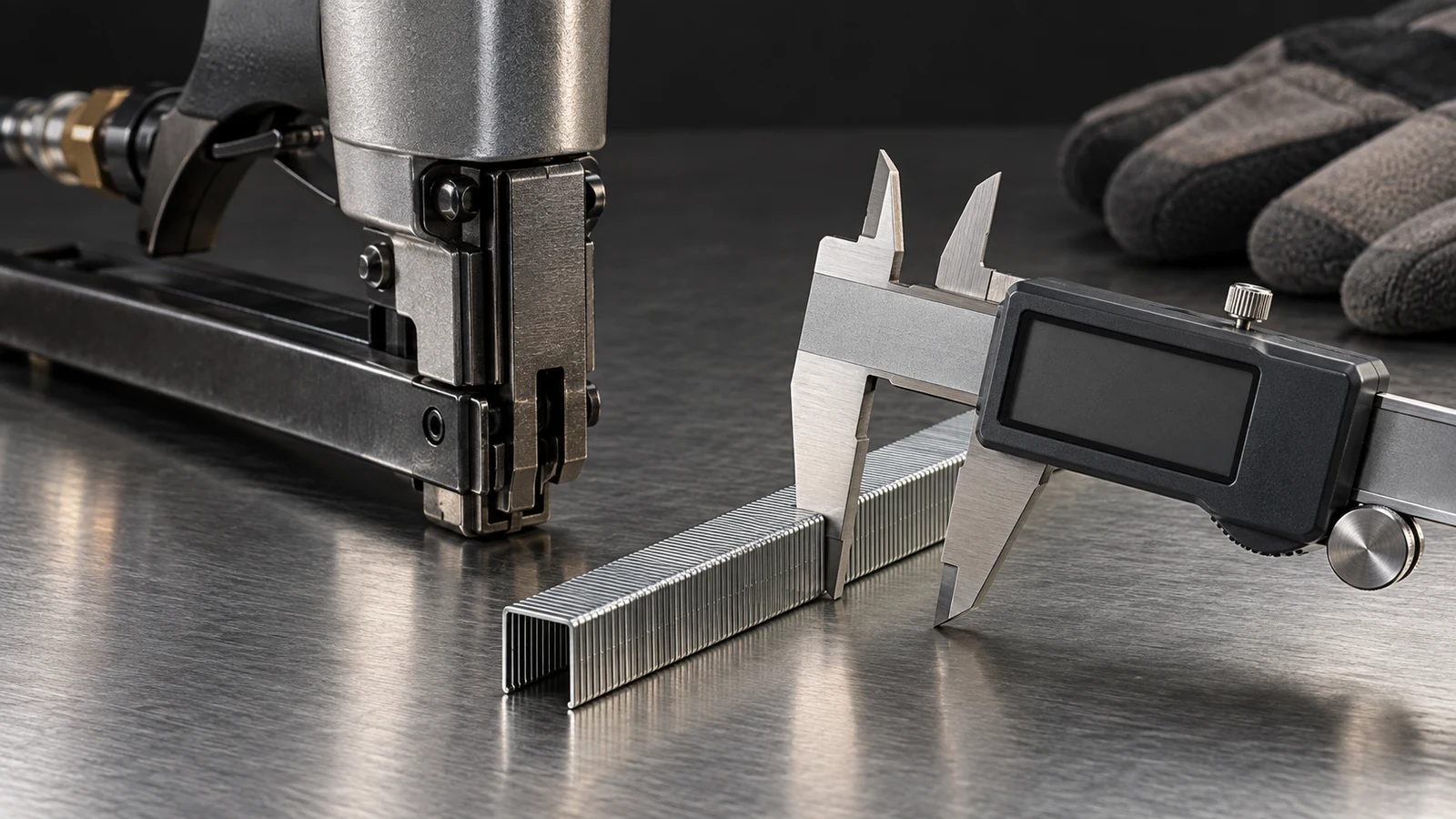
21 gauge 84 series staples are selected by leg length, because the series already settles everything above it. Gauge, wire section, and crown come from the family itself, so the one number a buyer can still get wrong is how far the leg travels. That number decides whether the staple turns over under a thin panel or breaks through the far face of it.
ProAirNails builds the 84 series with a 12.3 mm outside crown and legs from 4 mm to 16 mm. The enquiries we receive are rarely about the crown. They are about the two ends of that range, and about what a fine wire staple is allowed to do once the material stack gets thin.
Read the fixed side of 21 gauge 84 series staples first
Before a length is quoted, the buyer should be able to write down the fixed half of the specification without help. When that record exists, every supplier is answering the same question instead of describing a different product.
| Parameter | Typical value for the 84 series | What it decides downstream |
|---|---|---|
| Gauge | 21 GA fine wire | Clinch behaviour and the risk of a visible witness on a thin face |
| Wire width | 0.92 mm with a tolerance band | Crown strength and how much the strip resists bending |
| Wire thickness | 0.66 mm with a tolerance band | How much material the leg displaces on entry |
| Outside crown | 12.3 mm | Minimum edge distance where the crown must sit flat |
| Leg range | 4 mm to 16 mm | The widest and thinnest stacks the family can address |
Ask the supplier to state the tolerance on width, thickness, and crown rather than a single nominal figure. A tolerance band is what the incoming inspection will actually use, and it is the difference between two carts of staples that look identical on the outside of the box.
The short end: when 4 mm is too little to clinch
A staple holds because the legs pass through the material and roll over underneath. Legs that are too short for the stack never reach the point where they can turn. They enter, they stop, and they leave a staple that is only friction, which is the failure mode that shows up as a loose trim rail a week after installation.
Two conditions push a job toward the short end of the range: a genuinely thin assembly, and a substrate that must stay unmarked. Both are reasonable, and both need the same answer. The leg must still cross the interface and hook into the layer that carries the load.
The long end: 16 mm legs and what is on the far side
The other mistake is quieter. A 16 mm leg on a stack that is only 9 mm thick will exit the far face, and on furniture that face is often the one the customer sees. On a laminated panel the exit point can lift the laminate, and on a veneered part it can register as a shadow under raking light.
Draw the stack before ordering. Include the face thickness, the core, any adhesive line, and the layer that the clinch is allowed to disturb. If that drawing shows the leg ending outside the assembly, the answer is a shorter leg, a different fastener family, or a change to the joint, and none of those decisions belong to the supplier alone.
This is the point where a quote for 21 gauge 84 series staples turns into a design conversation. Sending the section drawing with the enquiry removes the guesswork in one message.
Total thickness, not top layer thickness
A length is often chosen from the thickness of the visible layer. A 12 mm face is not a 12 mm assembly. The leg has to cross the face, the glue line, and enough of the core to roll over, so the number that matters is the full depth on the drawing.
| Assembly situation | Where the leg has to reach | Question to settle before the trial |
|---|---|---|
| Thin decorative face over a light core | Through the face and into the core | Will the clinch disturb the visible face from behind? |
| Two panels joined at a lap | Through both panels | Is the joint a fixing or only an assembly aid? |
| Face fixed to a solid rail | Deep enough to hook into the rail grain | Does the point follow the grain or cross it? |
| Panel fixed to a thin back | Into the back, without breaking its surface | Is a shorter leg or a pin nail the better answer? |
Treat these as trial points, not approvals. A length of 21 gauge 84 series staples earns approval on the real stack, with the real adhesive and the real tool setting, and the record should say so.
Where the 12.3 mm crown can sit
A 12.3 mm outside crown needs an edge distance that lets both legs enter clean wood. Staples placed close to a narrow edge split the rail between the legs instead of holding it, and once the split opens the repair is a new part rather than a new staple.
Crown width also sets the geometry of the row. Wider crowns carry more of a thin panel, so fewer staples cover the same area; narrow crowns concentrate the load and are easier to conceal in a decorative rail. Mark the crown position on the sample so a later reorder does not quietly change the appearance of the finished line.
Clinch quality is the acceptance test
21 gauge 84 series staples should be judged from the back of the joint, not the front. Turn the sample over and look at what the legs did. That single view answers most of the questions a purchase order cannot.
- Both legs should turn, not one leg and one straight leg.
- The clinch should sit inside the substrate rather than splitting out of the side.
- The crown should sit flat on the face without crushing a soft layer.
- A glue line should still be closed after the staple is driven.
- The back of the assembly should show no witness where the customer can see it.
Record the tool pressure or depth setting that produced the approved clinch. A setting is part of the specification, and a batch that passes on the bench can fail on the line if the tool has been re-set for a different job.
Series fit, magazine fit, and strip condition
21 gauge 84 series staples arrive as a collated strip, and the strip geometry belongs to the tool. A series that looks close in a photograph may not index correctly, which shows up as a dry fire, a doubled staple, or a jam in the middle of a production run. Confirm the tool model, the magazine angle, and the series designation together, and keep one empty strip and one full strip in the sample file.
The ASTM F1667 driven-fastener specification is a useful shared language for fastener dimensions, materials, and finishes, and it is the kind of document an incoming inspection can reference. It does not approve a furniture joint, so the physical sample still controls the release.
Prove it on the bench before the bulk order
A short bench trial costs an afternoon and prevents a container of staples that nobody can use. Build the sample from the actual material, not from a convenient offcut, and include at least one joint that will be visible on the finished product. Compress the result into one page, and a new shift can repeat the same joint without a phone call.
Where the 84 series is the wrong answer
No series is universal, and a supplier who says otherwise is not helping. 21 gauge 84 series staples stop being the right choice when the stack is deeper than a 16 mm leg can cross and clinch, when the joint has to resist a load that a fine wire crown cannot carry, or when the finished surface cannot tolerate a crown at all.
At that point the conversation moves to a heavier gauge staple, a brad or finish nail, or a concealed pin. Moving family is a design decision, and it should be recorded next to the reason, so the next order does not drift back to the original length by habit.
Pneumatic tool safety belongs in the same document
Stapling tools cause serious injuries when they are handled without training, and the NIOSH nail-gun safety guidance covers training, protective equipment, and trigger discipline. For shop work, the AWI architectural wood casework scope is a useful reference for the drawing and aesthetic expectations that sit alongside the fastener choice. Keep the safety method on the same card as the staple setting.
FAQ
What does the 84 series designation actually fix?
It fixes the crown width, wire section, and strip geometry, so those values cannot be traded against each other to solve a length problem.
How do I choose between 4 mm and 16 mm legs?
Measure the full stack on the drawing, then choose the shortest leg that still crosses the interface and clinches in the load-bearing layer.
Can 21 gauge 84 series staples hold a structural joint?
They are intended for light assembly, trim, and furniture work. A structural connection needs a fastener and a design that were specified for that load.
Why did a staple pull loose without splitting anything?
The leg probably stopped inside the material and never rolled over, which leaves friction as the only holding force.
Is a longer leg always the safer choice?
No. A leg that exits the far face can lift a laminate or a veneer and create a visible defect on the finished side.
Does the crown width change the number of staples needed?
Yes. A wider crown covers more of a thin panel, so the row spacing and count should be re-checked whenever the crown changes.
Should the clinch be inspected from the front or the back?
From the back. That is the only view that shows whether both legs turned and whether the clinch is inside the substrate.
What causes a dry fire with staples in the magazine?
Usually a strip that does not match the tool, damaged collation, or a magazine not fully seated rather than an empty tool.
What should the sample card record?
Crown, leg length, material stack, adhesive, tool model, pressure setting, fastener lot, and photographs of both faces of the joint.
What is the final question before release?
Ask whether the approved staple, the tool setting, and the material can all be traced to the paperwork that goes with the order.
Send the stack with the enquiry
ProAirNails supplies air staple pins and runs 21 gauge 84 series staples alongside air staplers, brad nails, and other pneumatic nails for furniture, trim, and packaging work. The fastest quote comes from a request that includes the material stack, the joint drawing, the tool model, the crown and leg you intend to trial, the finish, the quantity, and the delivery window.
Submit that through Contact Us, and attach the bench sample photographs. An enquiry with a stack section and a clinch photo is answered with a specification. An enquiry with a series name alone is answered with questions, and that exchange costs a week.
ProAirNails keeps the approved sample card alongside the order record, so a reorder is checked against the joint that was actually released rather than against a series name.