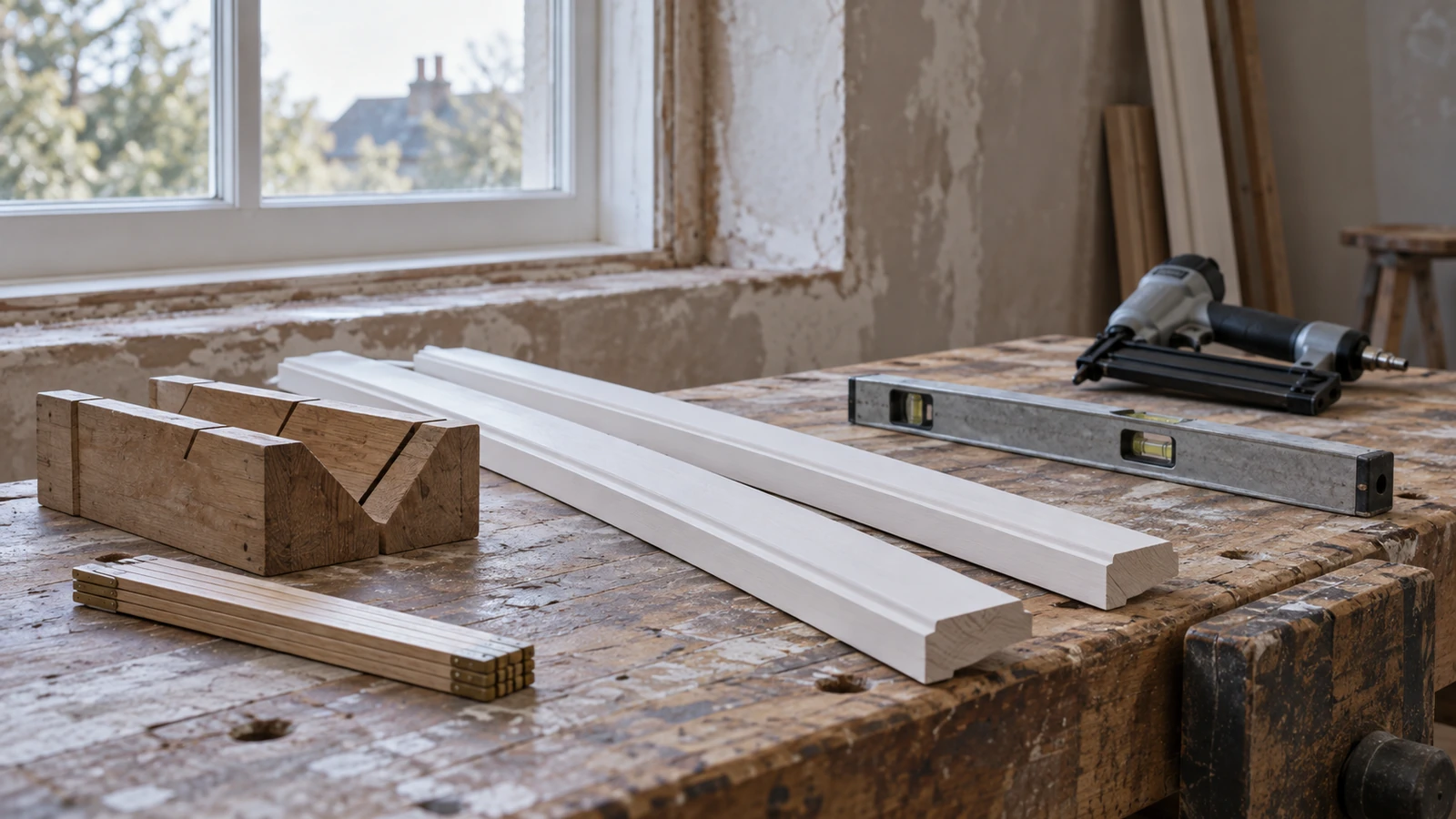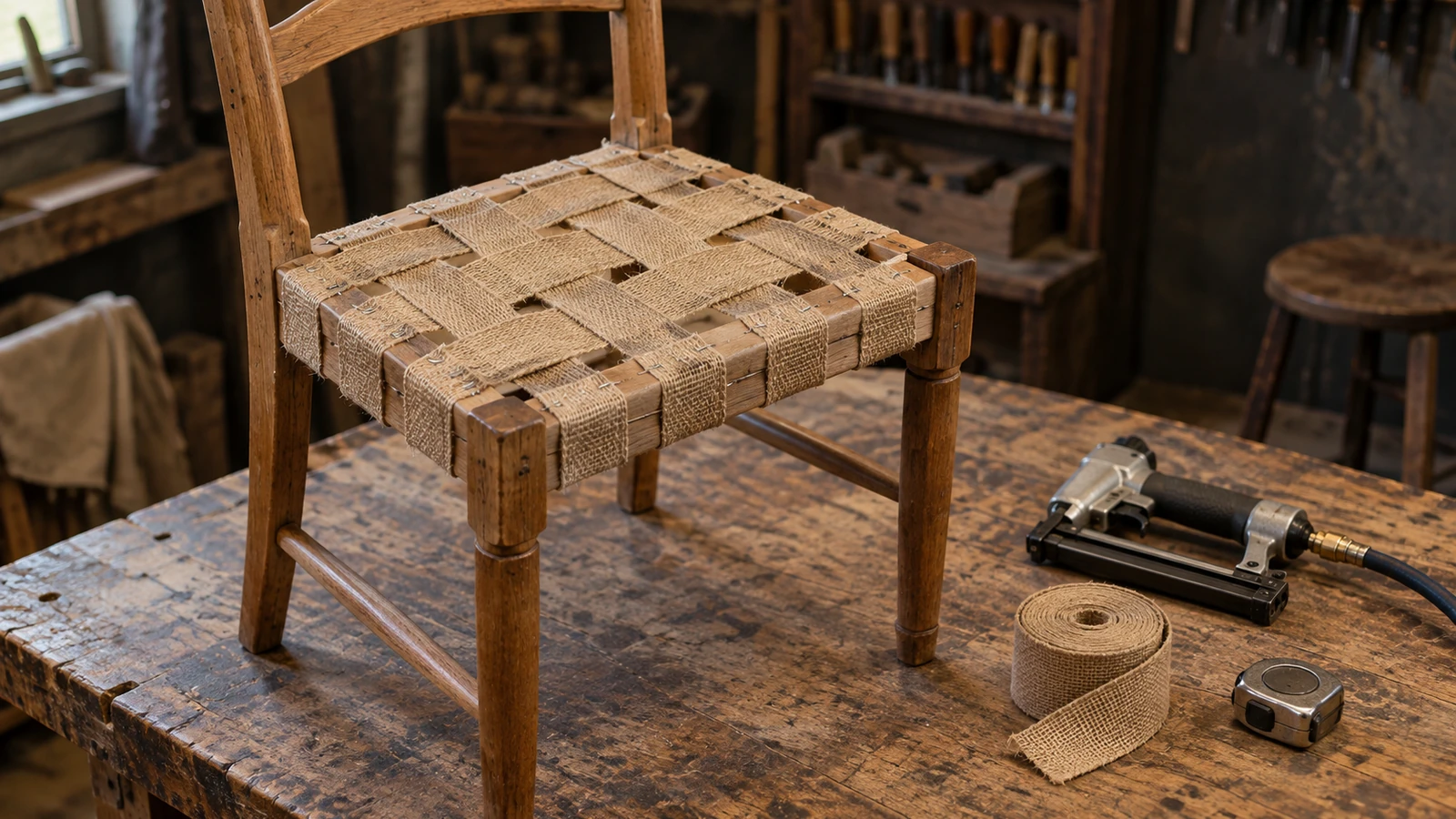

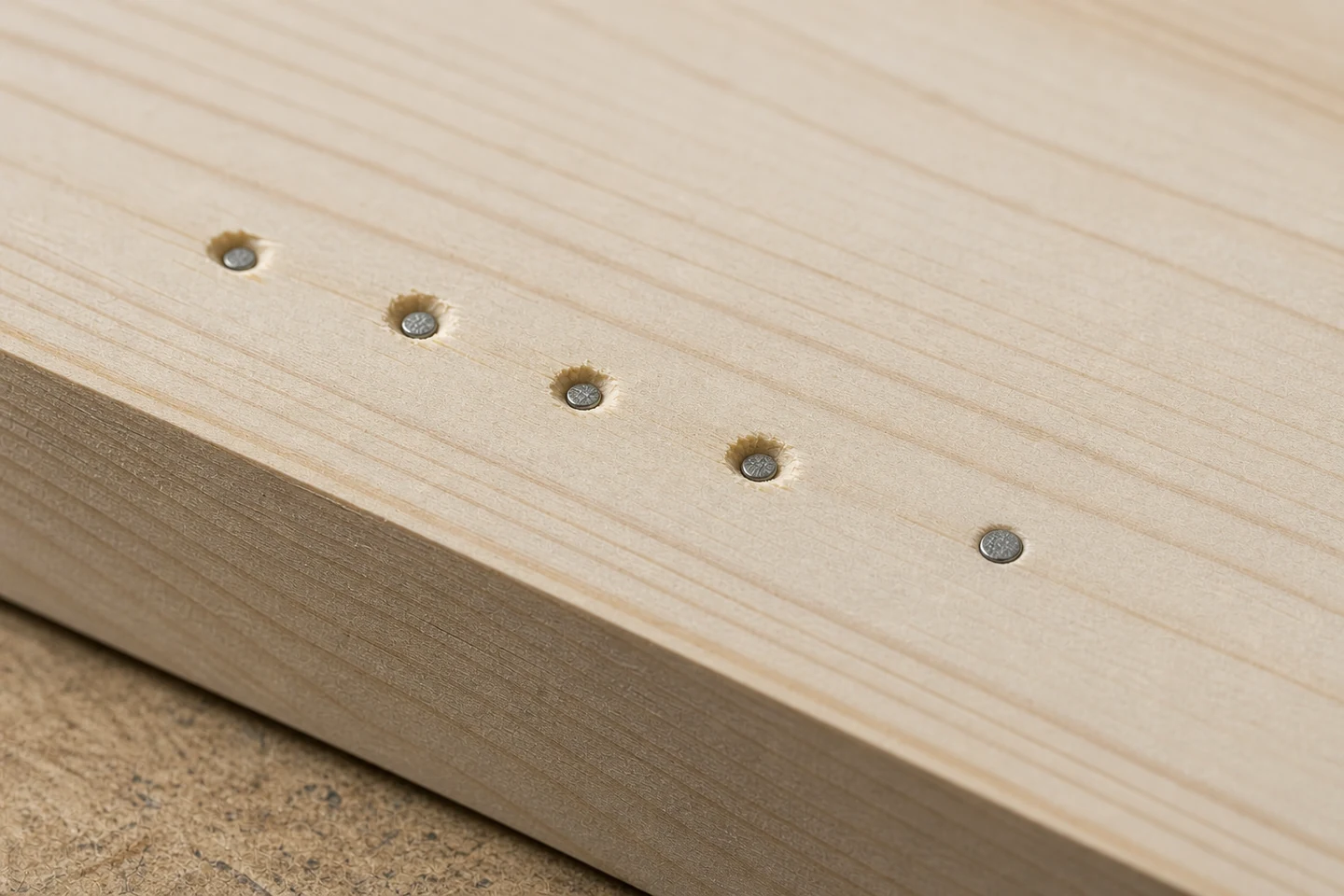
When brad nails overdriven in softwood leave deep recesses, measure the pattern before filling or sanding the surface. A single sunken head may follow local grain, while a row of increasing depths can point toward tool recovery, pressure, contact force, or a changing support condition. Re-firing the same position removes useful evidence.
At ProAirNails, we recommend treating depth as a distribution rather than relying on one accepted and one rejected shot. Mark the shot sequence, board location, tool direction, support points, and operator before changing settings.
Build a depth map across the actual trim
Measure the distance from the undamaged wood surface to the brad head using the approved shop method. Include early, middle, and late shots in the strip, plus positions near edges, profiles, knots, and supported or unsupported spans. Photograph each group under side light.
Record fiber compression separately from head depth. A small recess with torn fibers may need a different correction from a smooth deep pocket in very soft earlywood.
Read the pattern before changing pressure
| Depth pattern | Possible direction | Next comparison |
|---|---|---|
| All heads consistently deep | Depth setting, supply condition, soft material | Confirmed setting on representative stock |
| Depth increases during rapid firing | Tool recovery or operator rhythm | Defined pause between shots |
| Only profile edges are deep | Low support or nose concentration | Full backing under the entry zone |
| One side of head is lower | Tool angle or uneven nose contact | Square contact and marked orientation |
Do not raise or lower supply pressure outside the tool specification. Pressure is one variable, not a substitute for checking depth control, seals, driver condition, fastener fit, and workpiece support.
Inspect the brad and the entry crater together
Retain unused brads from the same strip. Check length, gauge, head shape, straightness, collation, coating, and visible damage. Where an approved section is possible, inspect whether the shank stayed straight and whether the recessed head also crushed or split the surrounding fibers.
A fastener can be fully driven yet still be unsuitable for the appearance requirement. Conversely, reducing energy until every head is flush can create proud heads or incomplete engagement in denser regions.
Run a one-variable softwood trial
Use offcuts from the actual trim profile and moisture condition. Keep brad reference, tool, operator, entry angle, pace, and support fixed. Change only one approved variable such as depth adjustment or contact method, then record at least several positions rather than selecting the best result.
ProAirNails uses this type of comparison to help buyers and workshops describe the combination they need: tool model, brad series, trim species, thickness, finish requirement, and acceptable seating range. It does not replace the tool manufacturer's settings or the project's performance criteria.
Release a visible acceptance standard
Define the allowed head depth, torn-fiber limit, profile distortion, filler allowance, and action for a deep drive. Include a labeled sample board at the station where practical. Recheck after changes to wood species, profile, coating, brad length, tool, or production pace.
Include the measuring tool, reference surface, sample count, and inspection timing in the work instruction. That detail prevents one operator from measuring to compressed fibers while another measures to the original trim surface, which can make the same board appear to meet two different limits.
The limitation is clear: surface depth alone does not establish joint strength, complete tool safety, brad conformity, or durability in every service condition. Those conclusions require the relevant design and test requirements.
Explore the ProAirNails Brad Nails category and related pneumatic fasteners. Send the tool model, brad reference, softwood species, depth map, support condition, and photographs through the ProAirNails inquiry page when investigating brad nails overdriven in softwood.
FAQ
Will lowering air pressure stop brads from sinking too deep?
It may change depth, but the tool must remain within specification and the diagnosis should also check depth control, nose contact, material softness, support, fastener fit, and pace.
Can a deeply recessed brad still hold correctly?
Surface depth cannot confirm joint performance. Deep driving may crush fibers or reduce useful material under the head, so apply the required joint test and acceptance rule.
Should every softwood species use the same nailer setting?
No. Density, grain, moisture, profile, finish, support, tool, and brad geometry can change the result. Validate the actual production combination.
A measured ProAirNails sample plan turns brad nails overdriven in softwood into a controlled depth decision instead of a filler-only repair.