
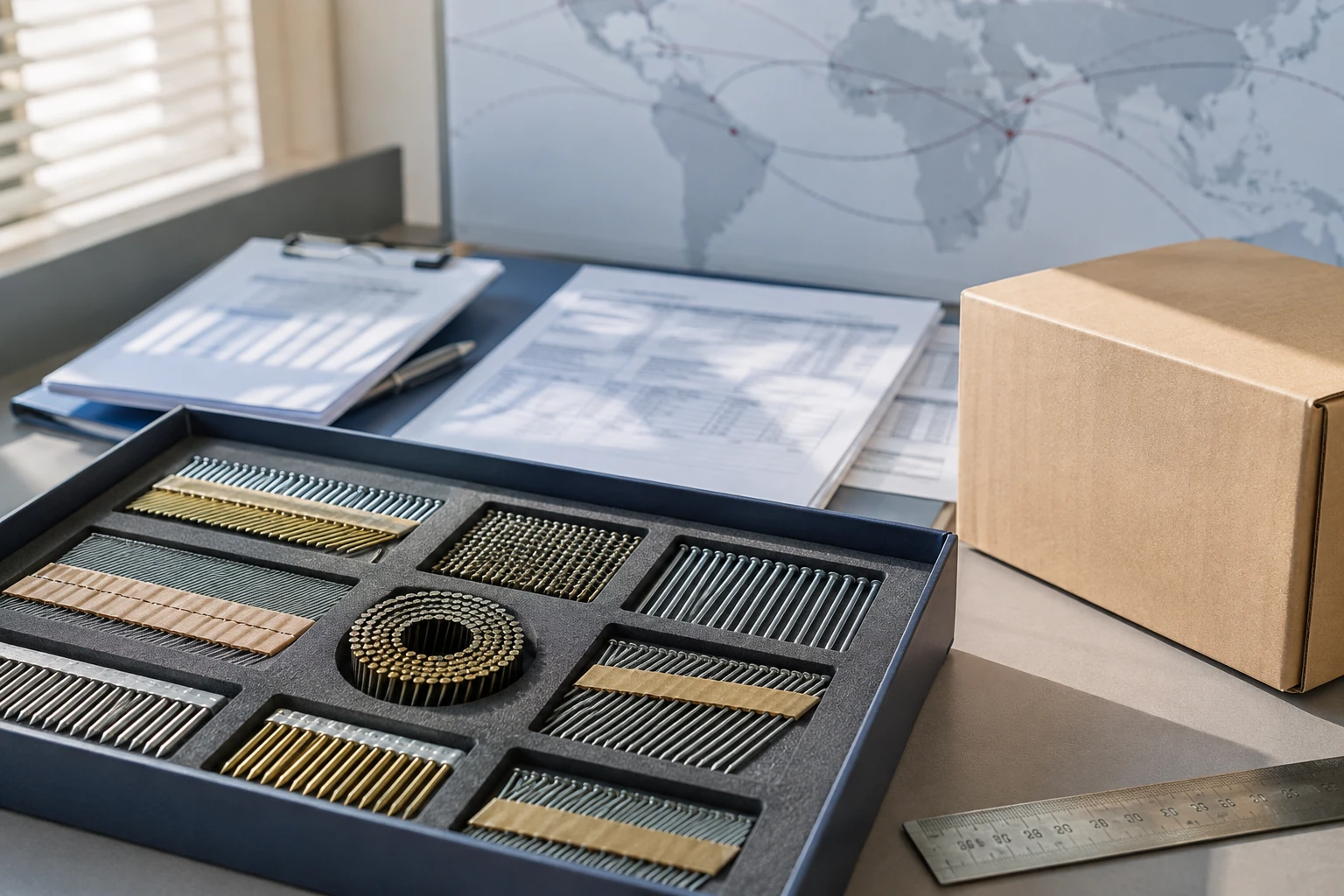
A China pneumatic nails supplier can respond more accurately when the first inquiry contains a product identity, tool context, package route, destination, and acceptance rule. “Send your catalog” is easy to answer but often produces a quote that cannot be compared because nail geometry, collation, carton count, or delivery assumptions are missing.
ProAirNails recommends treating the RFQ as a small data packet. It should let a supplier distinguish the requested fastener from nearby series, understand how the coil or strip will be used, and show which sample or document is needed before a purchase order.
Open with the application snapshot
State the job in one paragraph: material stack, joint or fastening purpose, tool model, magazine, drive direction, visible-face sensitivity, environment, destination, annual volume, and first-order quantity. Mention whether the inquiry is for a trial, recurring production, private label, or a replacement for an existing item. This context is more useful than a product family name alone.
Put product identity before commercial terms
List diameter or gauge, length, head, shank, point, coating, collation, angle, pitch or strip format, count, and packaging. Attach a reference photo or drawing when possible. A supplier should be able to mark each line as confirmed, needs sample, or needs clarification. That visible uncertainty is healthier than a confident quote built on an incomplete description.
What a China pneumatic nails supplier needs in the RFQ
A China pneumatic nails supplier needs enough detail to separate the requested item from nearby series: named tool, fastener geometry, application stack, package, destination, sample route, and written acceptance rule.
Build the export RFQ packet
| Packet section | Buyer supplies | Supplier returns |
|---|---|---|
| Product | Dimensions, point, shank, collation, surface | Item code, drawing, sample identity |
| Tool | Nailer, magazine, pressure, driver, feed direction | Compatibility notes and trial questions |
| Application | Substrate, finish, exposure, load, visible face | Evidence limits and recommended sample setup |
| Package | Inner count, carton, label, pallet, route | Pack proposal, protection, carton dimensions |
| Commercial | Quantity, destination, target timing, brand needs | Quote assumptions, lead time, sample route |
Ask the five questions that prevent a false comparison
First, is the quoted item the same geometry as the reference? Second, which tool and magazine were assumed? Third, what is included in the package and label? Fourth, which claims are based on a test report and which are only a recommendation? Fifth, what changes require notice before the next lot? Put the answers in the quote file, not only in a chat window.
- Request a marked drawing or item code.
- Ask for samples from identified packaging.
- State the destination and route assumptions.
- Separate sample price from recurring price.
- Define the approval and reorder gate.
Use the named tool for a feed sample
Load the sample into the actual nailer or stapler and record first shot, steady feed, pause, restart, final strip, seating, interventions, and surface marks. A product may be dimensionally correct yet unusable in the magazine. Keep the sample, carton, tool setting, substrate coupon, and event log together so a later commercial discussion can refer to the same evidence.
Keep tool safety separate from a supplier quote
The official ISO 11148-13:2017 page addresses safety requirements for hand-held non-electric fastener driving tools within its scope. It does not certify a particular product and tool combination in a buyer's workplace. Follow the tool maker's instructions, isolate energy before clearing faults, and keep the quote from being treated as a safety approval.
Use a product standard as a reference, not a shortcut
The ASTM F1667/F1667M-21a page describes driven-fastener requirements within its stated scope. It does not determine the buyer's tool, timber, packaging route, customs paperwork, or finished-joint acceptance. Ask the supplier to identify which product properties are supported and which application questions still require a sample trial.
Turn packing into part of the quote
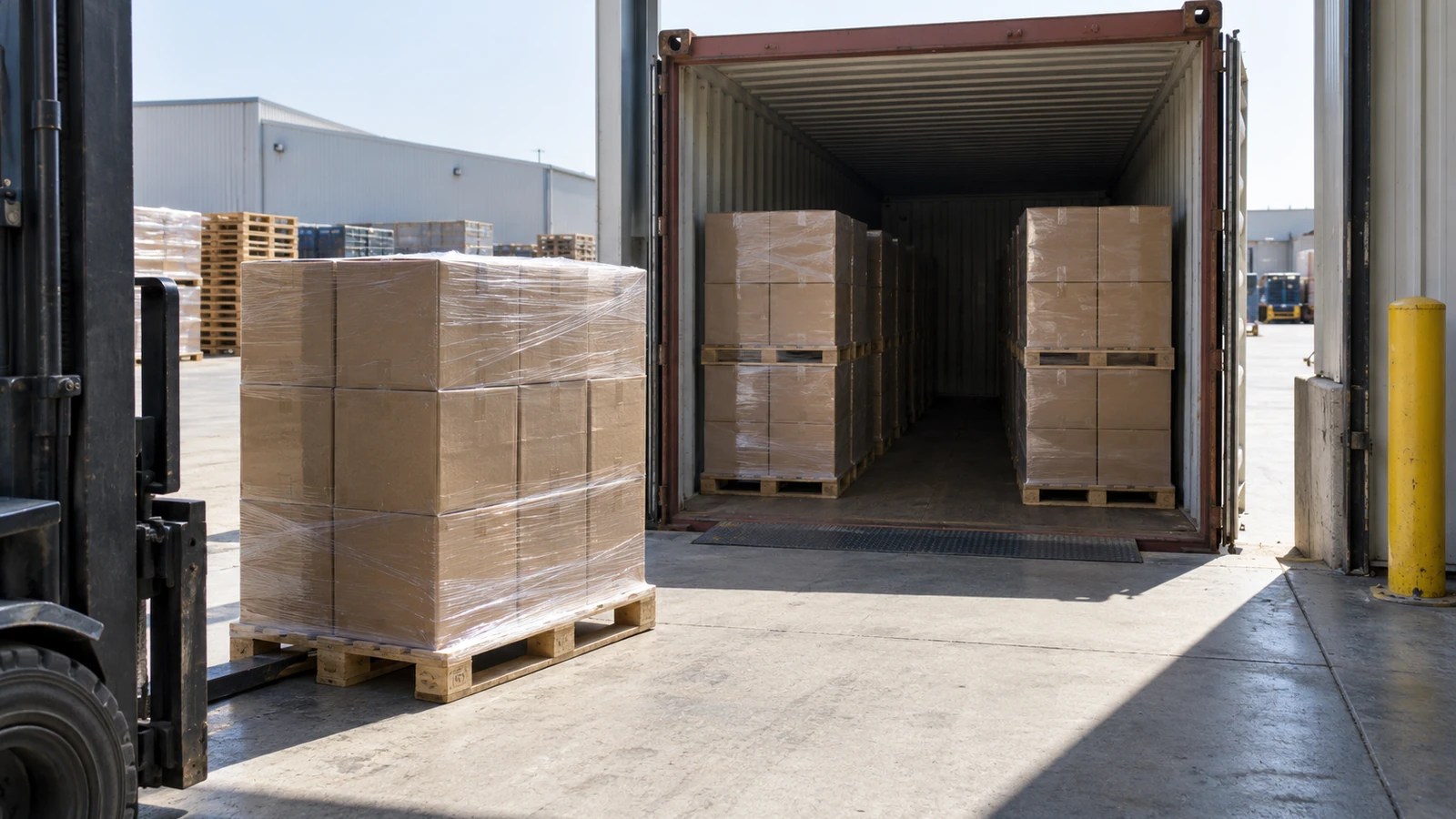
Declare inner count, carton dimensions, moisture protection, pallet pattern, label language, barcode needs, carton marks, and whether mixed items are allowed. Ask how leaders, strips, coils, and small boxes are protected during the route. A correct fastener that arrives with crushed packaging or mixed labels creates a receiving problem before it creates a fastening result.
Compare landed assumptions line by line
| Quote line | Clarify | Keep as evidence |
|---|---|---|
| Product price | Exact item, geometry, finish, quantity basis | Quote revision and item code |
| Sample route | Sample quantity, charge, packaging, timing | Sample request and tracking |
| Packaging | Inner, carton, pallet, labels, protection | Pack drawing or photos |
| Delivery | Destination, route, timing, assumptions | Written commercial terms |
| Change control | Notice, resample, and approval trigger | Accepted change rule |
Send ProAirNails a complete inquiry
Include the product drawing or reference, tool and magazine, substrate, finish, environment, package count, destination, annual and trial quantities, label needs, sample plan, target timing, and acceptance rule. ProAirNails can discuss pneumatic nails, related coil nails, the product range, and samples through the inquiry page.
Limit the export decision to written assumptions
China pneumatic nails supplier selection does not prove every product family, tool, destination, carton route, lot, or future change. ProAirNails can support a product-specific quote and sample path; the buyer controls import review, local tool safety, application validation, payment approval, and final release.
FAQ
What should I send first in an export RFQ?
Send the product identity, tool and magazine, application stack, package needs, destination, quantities, timing, and acceptance rule.
Is a catalog number enough?
Usually not. Confirm dimensions, collation, surface, pack, and the exact tool series behind the number.
Why include the nailer model?
Feed, magazine, driver, pressure, and seating assumptions depend on the named tool and its condition.
What should a sample prove?
It should address identity, loading, feed, seating, surface, application, packaging, and the declared pass/fail rule.
Should sample and production packaging match?
As far as practical, yes. Packaging can affect identity, damage, moisture, and receiving checks.
Does ASTM F1667 approve my full application?
No. It provides product-standard context within scope, not a project-specific tool or joint approval.
Does ISO 11148-13 certify the fastener?
No. It addresses tool safety requirements within scope; product and workplace approval remain separate decisions.
How should two suppliers be compared?
Normalize item identity, sample evidence, package, route assumptions, timing, change control, and total usable cost.
When should a quote be revised?
Revise it when geometry, quantity, package, destination, label, route, timing, or acceptance assumptions change.
What should a China pneumatic nails supplier receive with the first inquiry?
Send the reference or drawing, tool and magazine, application, package, destination, quantities, timing, sample plan, and acceptance rule.