
Working with a China staples supplier is easiest to control when the first inquiry, sample, artwork, shipment, receiving inspection, and reorder all refer to the same approved staple. The country name does not define product quality; the evidence chain, commercial terms, and buyer controls do.
ProAirNails uses this seven-checkpoint timeline to help importers, distributors, furniture and packaging buyers, and private-label teams prevent small assumptions from becoming repeat-order problems.
Checkpoint 1: send a specification that survives translation
Use buyer SKU, supplier SKU, tool brand and model, crown, wire dimensions or gauge family, leg lengths, point, finish, collation, pieces per strip and box, application material, and required result. Add photographs and a dimensional sketch where series names vary by market.
Avoid relying on an internal nickname or one competitor code. Ask the supplier to return a marked compliance table showing confirmed values, exceptions, and open points.
Checkpoint 2: make the sample answer buyer questions
| Question | Sample evidence | Approval owner |
|---|---|---|
| Does it fit the tool? | Loading, follower movement, feeding, jams, skips, doubles | Production and quality |
| Does it work in the assembly? | Depth, crown mark, leg path, holding or closure result | Engineering or application owner |
| Does the strip survive handling? | Collation condition before and after normal loading | Quality and warehouse |
| Can it be identified later? | Sample code, product revision, package and lot link | Purchasing and quality |
Test actual materials and tools. Retain accepted and failed samples. A sample should not be approved only because it looks like the current staple.
Checkpoint 3: approve the commercial map
Confirm minimum quantities, mixed lengths or series, sample and artwork charges, lead-time start point, payment milestones, inspection timing, partial shipment, replacement terms, and the named delivery place. Use the ICC's Incoterms rules resource to define responsibilities accurately.
Record which legal entity issues the quotation, receives payment, manufactures or supplies the product, and appears on documents. Ask when another site or source may be used and what approval is required.
Checkpoint 4: freeze artwork and packing physically
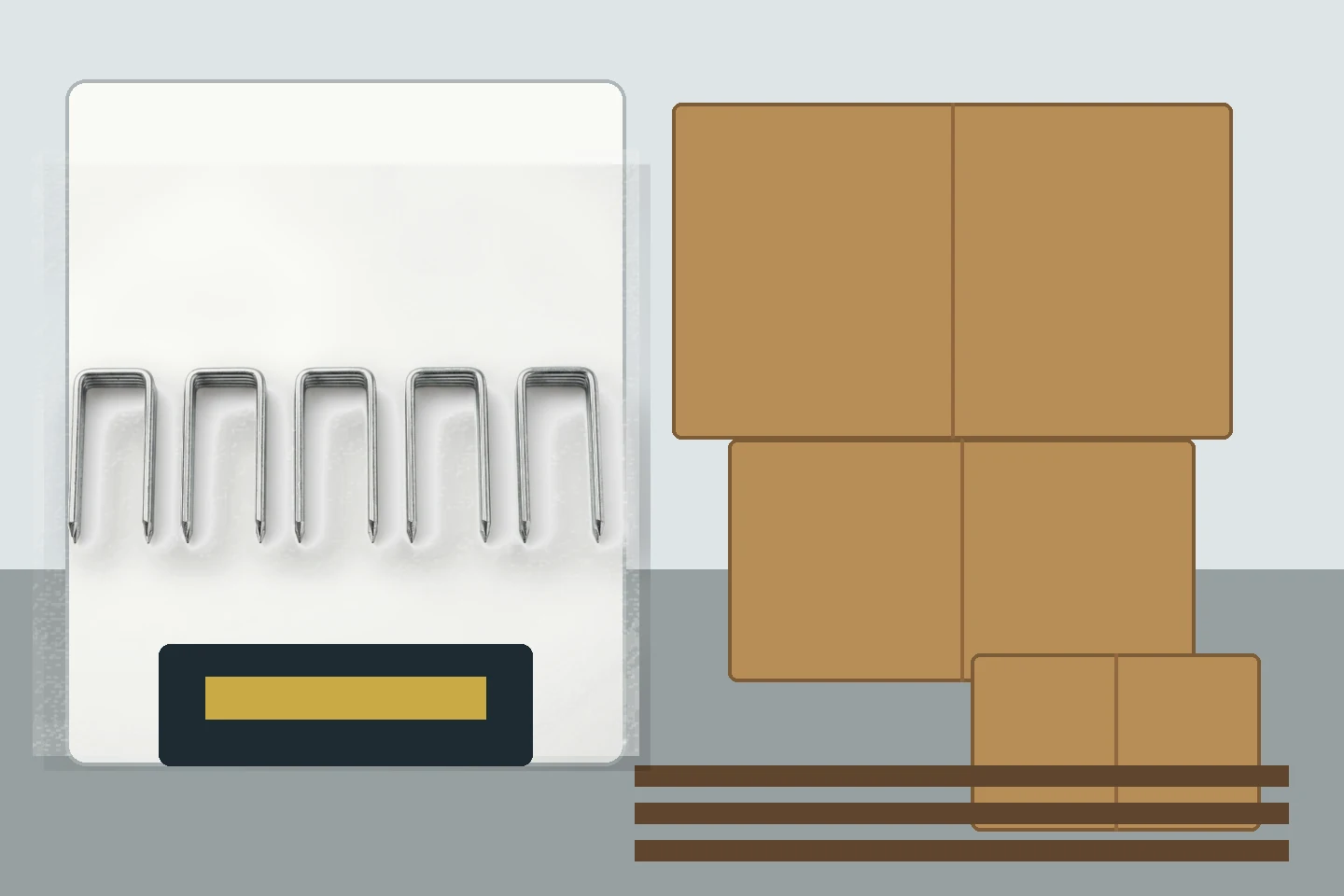
Approve the inner box, master carton, labels, barcode, language, product code, dimensions, piece count, lot code, destination marks, and pallet label. Use a physical packed sample when possible, not only a flat artwork PDF.
| Packing layer | Control | Typical failure prevented |
|---|---|---|
| Staple strip | Supported orientation and collation protection | Loose or broken strips |
| Inner box | Correct count, SKU, length, and lot identity | Mixed or short boxes |
| Master carton | Strength, moisture protection, handling weight | Crushing and receiving damage |
| Pallet | Pattern, corner protection, restraint, labels | Load movement and hidden SKU confusion |
Checkpoint 5: release the first shipment against evidence
- Current specification and approved sample code
- SKU, quantity, box, carton, and pallet schedule
- Artwork and barcode revision
- Required inspection and document results
- Approved exceptions and change declaration
- Shipment plan, named place, and receiving contact
A pre-shipment inspection should use the agreed sampling and acceptance method. Photographs without product identity, quantity context, or measured results are not enough.
Checkpoint 6: treat receiving as part of supplier approval
At arrival, record pallet and carton condition, moisture or corrosion evidence, labels, counts, mixed products, strip integrity, representative dimensions, tool feed, and assembly result. Separate transport damage from product conformity where evidence allows.
Report problems with shipment, SKU, lot, carton position, sample size, photographs, failed pieces, tool and material details, and the requested containment. A clear report helps a China staples supplier trace the issue without guessing.
Checkpoint 7: earn the reorder
Compare the first shipment with the approved sample and receiving plan. Review yield, tool interruption, customer complaints, packaging performance, count accuracy, document quality, response time, and any changes. Decide whether to release the reorder unchanged, revise the specification, request new samples, or hold approval.
Do not create a “golden first order” that later shipments are not required to match. Put change-notification rules into the controlled purchasing documents.
A China staples supplier earns the reorder by repeating the approved product and responding transparently when evidence shows a difference.
Keep product standards and safe tool use in scope
The ASTM F1667 standard page may support a driven-fastener specification when its actual scope and edition apply. Use the tool manufacturer's instructions and the NIOSH nail gun safety guide for trial and training context. Neither source certifies a supplier.
Start the ProAirNails timeline with complete inputs
Review the ProAirNails air staple pin range, compare the full pneumatic fastener category, and review brad nails when a narrow finish nail may better fit the assembly. Send the tool model, staple measurements, application, quantities, destination, packing, artwork, documents, and sample plan through the ProAirNails inquiry page.
A controlled China staples supplier relationship is built at every checkpoint, then proven again at reorder.
FAQ
What should my first inquiry include?
Include tool models, staple dimensions or series, leg lengths, finish, application, quantities, packing, destination, private-label needs, documents, and sample method.
How do I avoid staple-series confusion?
Use dimensions, tool references, photographs, buyer and supplier SKUs, and an approved physical sample rather than a series name alone.
Should I approve artwork before the product sample?
Product identity and sample approval should come first. Final artwork must then match the approved product and packing specification.
What Incoterm information is incomplete?
A term without the agreed rules version and named place can be ambiguous. Define the exact destination point and each party's responsibility.
What should a pre-shipment inspection check?
Check identity, quantities, packing, labels, lot traceability, representative product features, required tests, documents, and approved exceptions.
How should receiving damage be reported?
Record pallet and carton condition, location, labels, lot, photographs before movement, affected quantities, and whether product inside is damaged.
When should the supplier issue corrective action?
Use the agreed complaint process. Repeated, systemic, safety-relevant, or high-impact failures generally need containment, cause analysis, correction, and effectiveness evidence.
Can a supplier change production sites?
Only according to the agreed change-control rule. Site or source changes may require documents, samples, inspection, and renewed approval.
What makes a reorder low risk?
Stable specification, retained samples, good receiving data, effective packing, traceability, complete documents, no unapproved changes, and responsive complaint handling.
Does buying from China determine staple quality?
No. Product quality depends on specification, process control, evidence, sample performance, packing, traceability, and buyer-supplier execution, not country name alone.