
Coil nail carton damage prevention starts with the coil geometry and handling path, not with a stronger outer carton alone. Support, separators, inner bags, carton orientation, pallet pattern, moisture control, labels, forklift entry, and receiving inspection all influence whether a coil reaches the tool in usable condition.
ProAirNails recommends mapping the damage path from production pack to warehouse receipt, then testing the controls against real pallet positions and handling events.
Identify the damage that matters
Separate crushed cartons, deformed coils, broken welds, protruding wire, loose nails, rust, wet labels, mixed SKUs, undercount, and pallet collapse. Each finding points to a different control. A carton can look acceptable while a coil inside has lost its roundness or the carrier has separated.
Map the package as a system
| Package layer | Control | Failure if missing |
|---|---|---|
| Coil support | Core, separator, edge protection | Coil deformation or wire contact |
| Inner bag | Moisture and loose-piece containment | Rust, debris, count uncertainty |
| Carton | Board grade, closure, compression | Crush, open flaps, lost identity |
| Label | SKU, finish, lot, count, pallet | Mixed stock and slow containment |
| Pallet | Pattern, wrap, corner, load height | Shift, collapse, forklift damage |
| Handling | Fork entry, drop, clamp, stacking limits | Hidden impact or wetting |
Keep coil geometry stable
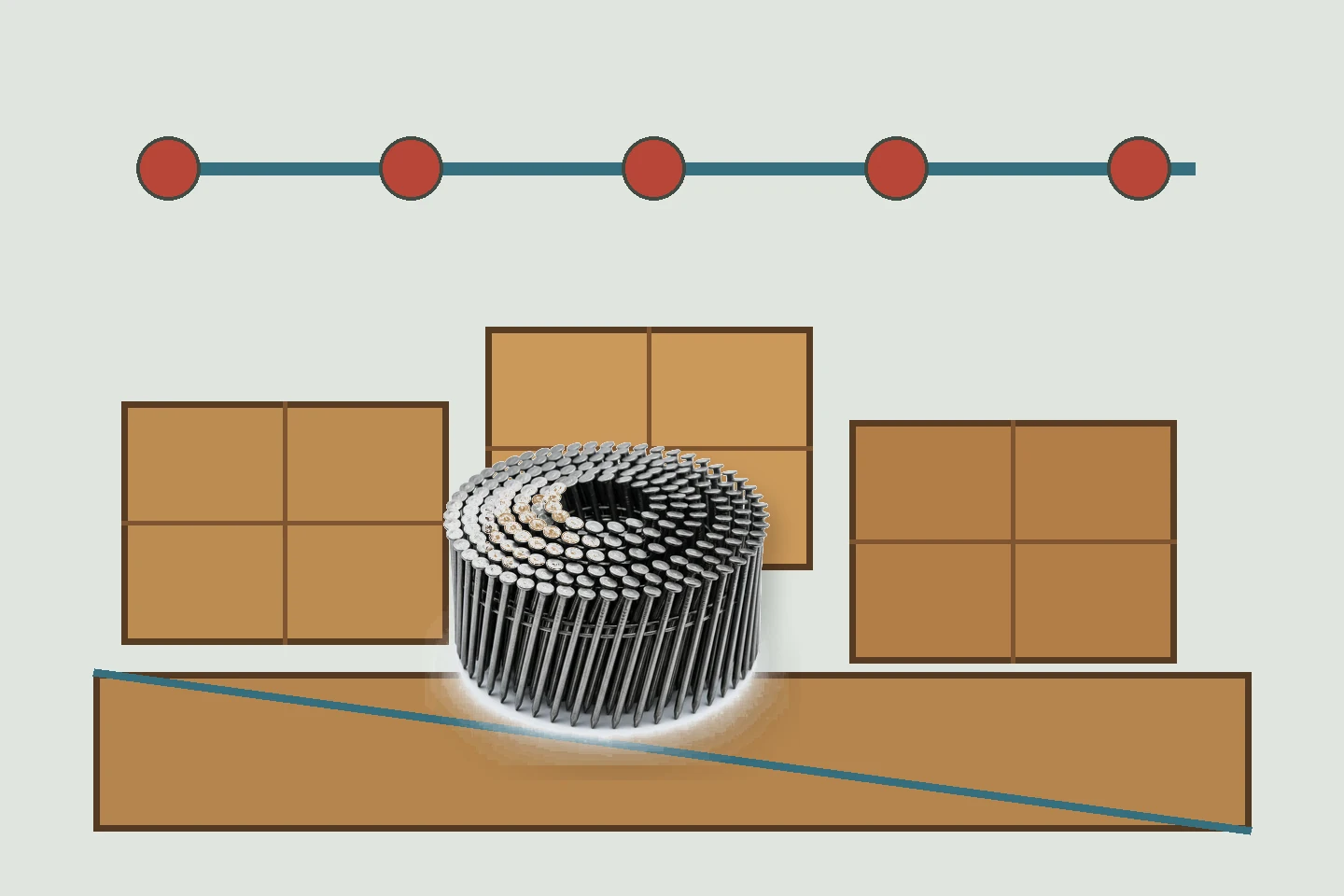
Specify coil diameter, height, nail count, inner support, separator, orientation, and the clearance needed around the nail and carrier. Avoid compression that bends the outside turns or allows the coil to migrate inside the carton. Retain a packed sample and a receiving sample so the package can be compared after transit.
Control moisture before it becomes rust
Define inner liner, desiccant or barrier where appropriate, carton storage, pallet wrapping, condensation risk, and exposure limits. A wrapped pallet can trap moisture if product is packed warm or moved between climates. Inspect the inner bag, not only the outside carton, and record whether the label or corrugate was wet first.
Use a pallet pattern that protects the edges
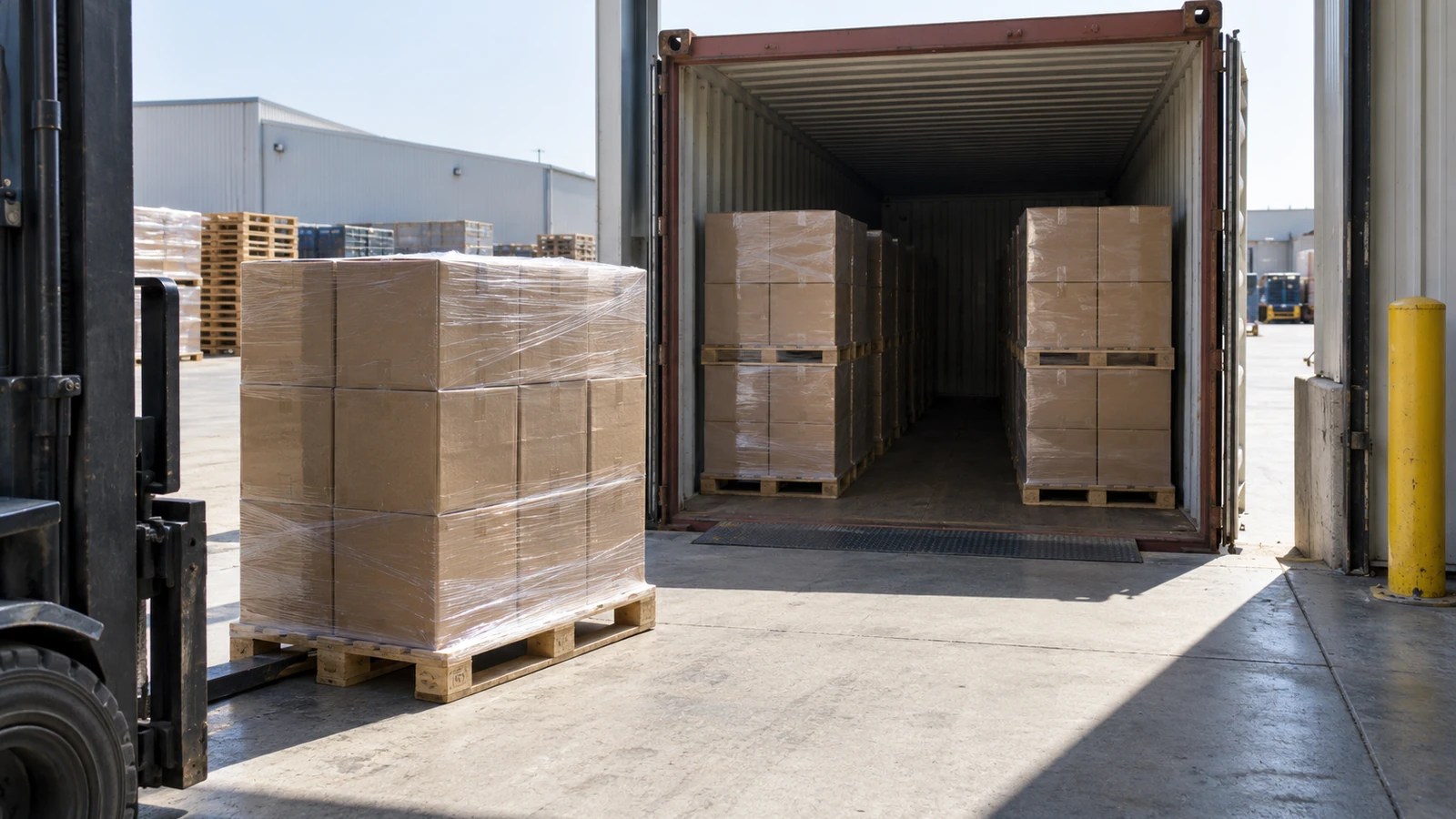
Keep carton corners aligned, prevent overhang, distribute weight, protect the bottom layer, and define maximum stack height. Show forklift entry and clamp restrictions. Photograph the pallet before wrap and after arrival. If only corner cartons are crushed, investigate edge protection and handling; if the middle collapses, investigate compression and stack design.
- Mark top, bottom, corner, and center sampling positions.
- Record pallet height, wrap, and corner boards.
- Keep carton sequence visible.
- Photograph impact and wetting before repacking.
- Hold damaged scope before mixing it with released stock.
Connect packaging to fastener requirements
The active ASTM F1667/F1667M page covers driven fasteners and related material, physical-property, workmanship, coating, and dimensional requirements. The packaging plan must preserve those properties and the approved collation; the standard itself does not select a carton or transit test.
Inspect by pallet position, not convenience
| Receiving check | Evidence | Hold signal |
|---|---|---|
| Identity | SKU, finish, lot, carton, pallet | Mixed or unreadable labels |
| Structure | Crush, open seam, wet board, wrap | Loss of support or exposure |
| Coil | Roundness, height, carrier, loose pieces | Deformation, broken weld, protruding wire |
| Count | Carton and inner pack quantity | Undercount or unexplained opening |
| Disposition | Inspector, location, quantity, action | Product moves without a decision |
Use lot sampling for the shipment
The current ISO 2859-1:2026 page describes AQL-indexed lot-by-lot sampling by attributes. Define the lot, carton selection, defect classes, sample size, acceptance rule, and response to rejection. A sample cannot reveal every damaged coil, so packaging design and handling controls remain necessary.
Make a damage claim actionable
Preserve pallet photos, carton numbers, impact marks, moisture evidence, coil condition, lot, quantity, carrier, route, delivery time, and storage history. Separate transport damage from pack-out damage where evidence allows. Do not discard the damaged carton before the supplier or carrier has a chance to review it.
Price prevention against usable output
Compare carton upgrades, inner support, pallet materials, inspection, sorting, return freight, line delay, rust claims, and lost production. Coil nail carton damage prevention is valuable when it protects usable coils and avoids an emergency replacement, not merely when it makes a carton look stronger.
Review coil nail carton damage prevention after the first route, warehouse, and receiving cycle; the best control is the one that stops the actual repeated failure.
Write the packaging specification into the RFQ
Include coil dimensions, count, inner pack, support, liner, carton strength, label, lot, pallet pattern, wrap, stack limit, handling, transit route, inspection photos, and claim timing. ProAirNails can discuss coil nails, pneumatic nail products, the product range, and RFQ details through the inquiry page.
Keep the prevention boundary explicit
A packaging trial cannot guarantee every route, warehouse, climate, forklift, carrier, or future carton revision. The buyer and supplier should review actual handling conditions and reopen the evidence after changes. ProAirNails can support product and packaging information within the agreed scope.
Use coil nail carton damage prevention as a chain of controls from coil support to receiving release, not as a single carton material choice.
FAQ
What damage should be separated first?
Separate crush, deformation, broken weld, loose pieces, rust, wetting, mixed identity, undercount, and pallet movement.
Why is inner support important?
It keeps the coil round, limits nail and carrier contact, and reduces damage under compression.
Can wrapping prevent all moisture?
No. Wrapping, condensation, warm packing, storage, and climate changes can still create moisture risk.
Where should cartons be sampled?
Sample top, bottom, corner, center, and different pallet positions rather than only the easiest carton.
What should a label identify?
Record buyer and supplier SKU, finish, dimensions, count, lot, carton, pallet, and approved revision.
Does ASTM F1667 specify packaging?
No. It defines applicable fastener requirements; packaging must preserve the approved product and collation.
What should be photographed at receiving?
Capture pallet, wrap, corners, cartons, labels, moisture, impact, opened packs, coils, and final disposition.
How should damaged cartons be handled?
Hold and segregate them, record quantity and location, preserve evidence, then sort, return, or release by instruction.
When should the pack be retested?
Retest after changes to coil, count, inner support, carton, pallet, wrap, route, carrier, or storage conditions.
What belongs in the packaging RFQ?
Include geometry, count, support, liner, carton, label, pallet, handling, transit, inspection, and claim requirements.