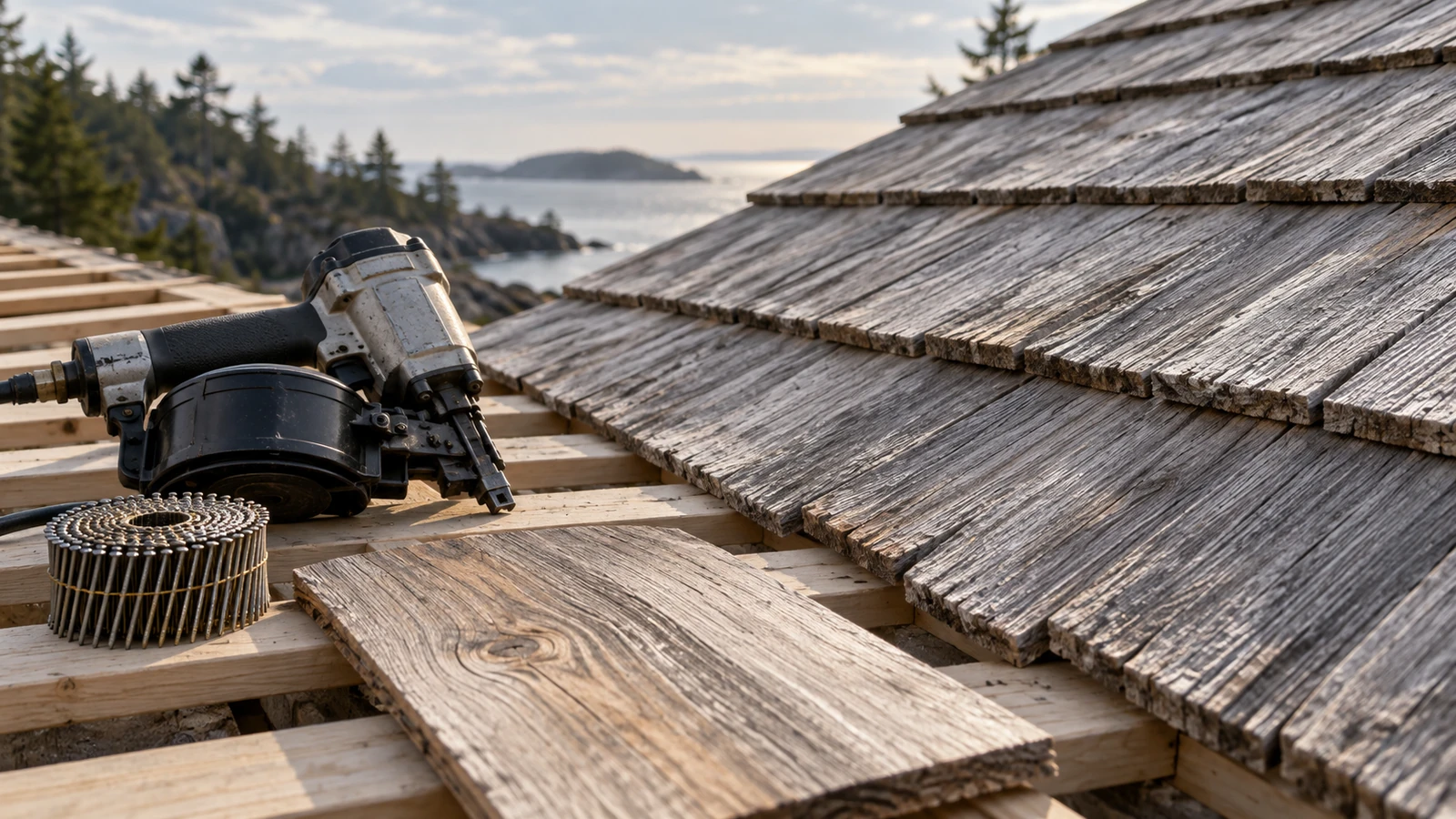

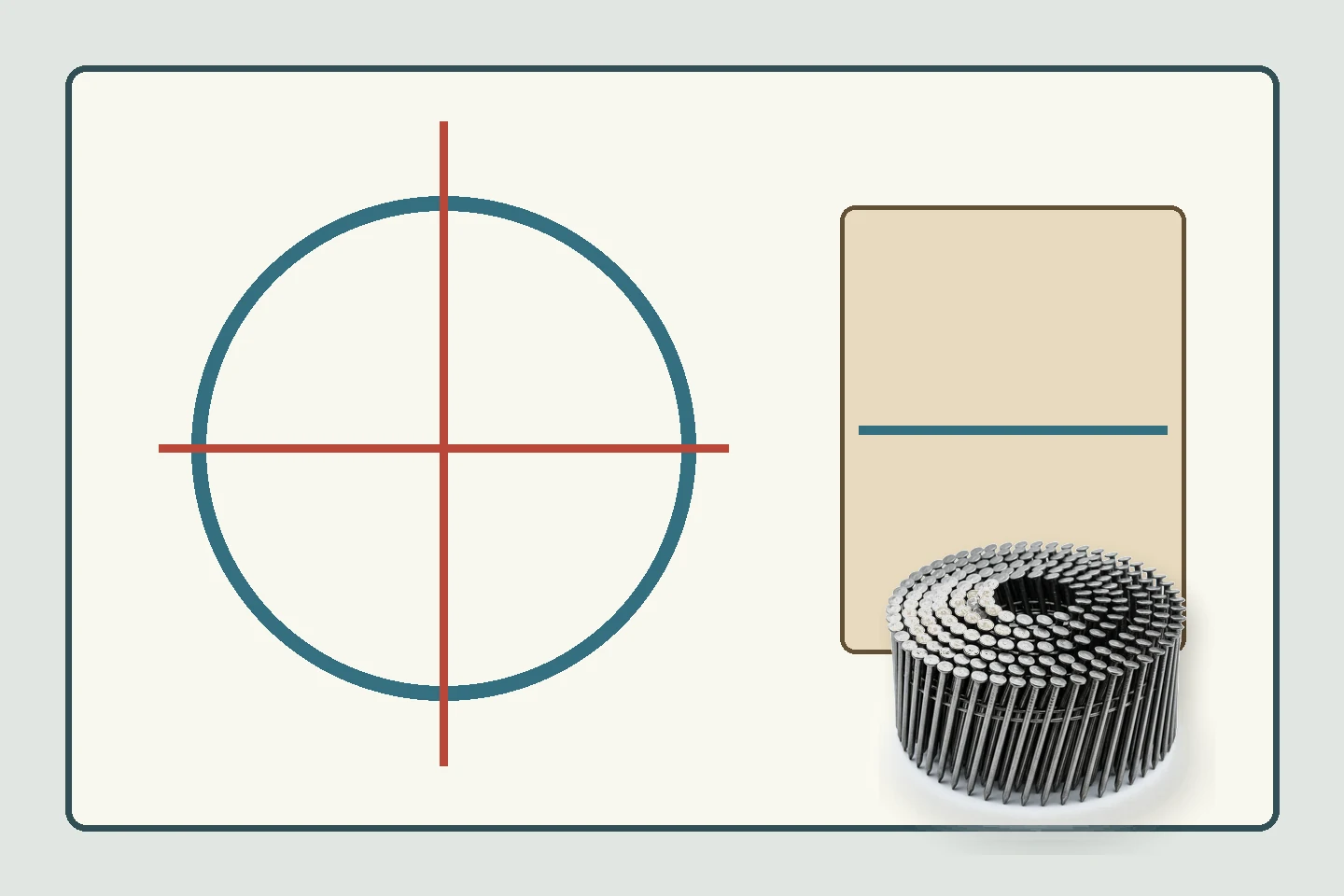
Coil nail coil diameter inspection should measure the free coil condition that reaches the magazine, not a circle forced into a convenient shape by hand. Outside diameter, roundness, wire joints, pitch, end release, and inner support work together to determine whether a coil loads and advances consistently.
ProAirNails recommends recording the coil as a three-dimensional assembly: observe it on a stable surface, inspect multiple positions, then confirm the identified sample in the intended nailer.
Define which diameter matters
Clarify whether the requirement concerns outside diameter, inside opening, radial height, coil width, or a magazine clearance. A single maximum reading can hide ovality or a local wire protrusion. Record the direction, location, support condition, and measurement method.
Inspect in the free state first
Place the coil without compressing it. Check roundness at several clock positions and note whether the circle relaxes after the carton is opened. A coil that springs back may have been constrained by packaging; a coil that remains open may have a collation or handling issue.
| Check | Record | Why it affects feed |
|---|---|---|
| Outside diameter | Several positions and largest deviation | Controls magazine clearance |
| Roundness | Ovality and local flat areas | Changes rotation and advance |
| Pitch | Spacing across the coil | Controls driver timing |
| Wire joint | Location, finish, protrusion | Can create a local feed event |
| End condition | Loose, bent, crossed, or damaged | Influences loading and first shots |
Sample the inner and outer turns
Inspect the first, middle, and final turns where accessible. The outer surface may look clean while a compressed inner section contains a displaced wire. Record the carton, coil position, direction, and whether the coil was opened or still restrained. Do not pull the coil apart before documenting its original state.
Separate geometry from packaging damage
Compare coils from the top, bottom, corners, and center of cartons. If only edge coils are oval, review carton compression and pallet handling. If every coil has the same local deviation, review winding or collation. If the coil is round but the tool hesitates, inspect magazine, driver, pressure, and loading procedure before rejecting the product.
- Photograph the carton and coil label.
- Use a stable reference surface.
- Measure without forcing the circle.
- Keep affected coils identified.
- Record the tool and magazine used in any feed trial.
Run a controlled magazine trial
The coil nail coil diameter inspection bench result should be connected to a named tool, magazine, driver, pressure window, substrate, and event count. Record loading effort, first-shot behavior, skips, doubles, wire protrusion, rotation resistance, and remaining coil shape. One successful shot does not validate an entire coil.
Use applicable fastener terminology carefully
The active ASTM F1667/F1667M page provides requirements and terminology for driven nails, spikes, and staples. It does not approve a particular coil diameter, magazine, wire weld, or buyer acceptance band. Keep those application controls in the product record.
Apply a lot-based sampling plan
The official ISO 2859-1:2026 page describes attribute sampling by lot. Define the lot, critical and major defects, positions, sample count, acceptance numbers, and reaction before receiving. Record ovality or feed behavior as observed attributes rather than inventing an unsupported universal limit.
Choose disposition by the pattern
| Pattern | Likely focus | Control |
|---|---|---|
| One damaged end | Handling or opening | Separate coil and inspect adjacent scope |
| Edge coils oval | Carton or pallet compression | Hold affected positions and review pack |
| All coils oval | Winding or collation route | Stop release and request process evidence |
| Round coil, tool hesitation | Magazine or tool condition | Run controlled comparison tool trial |
| Wire protrusion | Joint or collation defect | Contain lot and inspect weld/finish records |
Send a measurement-ready inquiry
Provide nail diameter and length, coil outside and inside dimensions, wire and collation, weld or adhesive detail, tool model, magazine, packaging, carton positions, photos, test method, and acceptance rule. ProAirNails can discuss coil nails, pneumatic nails, the product range, and samples through the inquiry page.
Keep the limit visible
Diameter inspection cannot prove every feed event, corrosion condition, structural performance, or future warehouse change. Tool trials are application evidence for stated settings, not a universal guarantee. The buyer controls final acceptance and safe tool operation.
When a coil is close to magazine clearance, repeat coil nail coil diameter inspection after it has rested outside the inner pack. The comparison between constrained and free condition can reveal packaging memory.
Keep the accepted coil, nearest-limit coil, and failed example with their carton labels. This makes the supplier discussion about a traceable geometry difference.
ProAirNails can compare the retained coil with a new sample when a magazine or packaging revision is proposed.
For a repeat shipment, compare the coil condition before loading, after opening, and after a short feed trial. That three-point record keeps coil nail coil diameter inspection connected to both packaging and tool evidence.
Do not compare a relaxed sample with a coil still compressed inside a carton without labeling the difference. Record the elapsed time after opening and whether the coil was handled, rotated, or partially loaded. When several diameters appear acceptable, the magazine trial should still use the same loading sequence used by operators. This is how coil nail coil diameter inspection becomes a repeatable release check rather than a one-time photograph.
Use coil nail coil diameter inspection to connect a circle on the bench to the rotation path inside the magazine.
FAQ
Which coil dimension is most important?
It depends on the magazine; clarify outside diameter, inside opening, width, and clearance rather than using one generic dimension.
Should the coil be forced round?
No. Record the free condition first because forcing can hide ovality or local damage.
Where should coil samples come from?
Use varied carton and pallet positions, including edge, center, upper, and lower locations.
Can a round coil still fail to feed?
Yes. Magazine condition, driver, pressure, pitch, wire joints, and loading can still cause failures.
What does a wire protrusion suggest?
It may indicate a collation joint, weld, handling, or finish issue and should be contained until identified.
Does ASTM F1667 approve a coil diameter?
No. It provides driven-fastener requirements and terminology, not a buyer-specific tool clearance rule.
What should be photographed?
Photograph carton labels, free coil condition, measurement positions, damaged areas, tool setup, and failed events.
When should a lot be held?
Hold it when identity, geometry, collation, or application evidence is incomplete or defects repeat.
How should ovality be reported?
State support, direction, positions, method, resolution, and whether the coil was constrained or free.
What belongs in an RFQ?
Include coil dimensions, tool, magazine, collation, packaging, samples, test method, and acceptance.