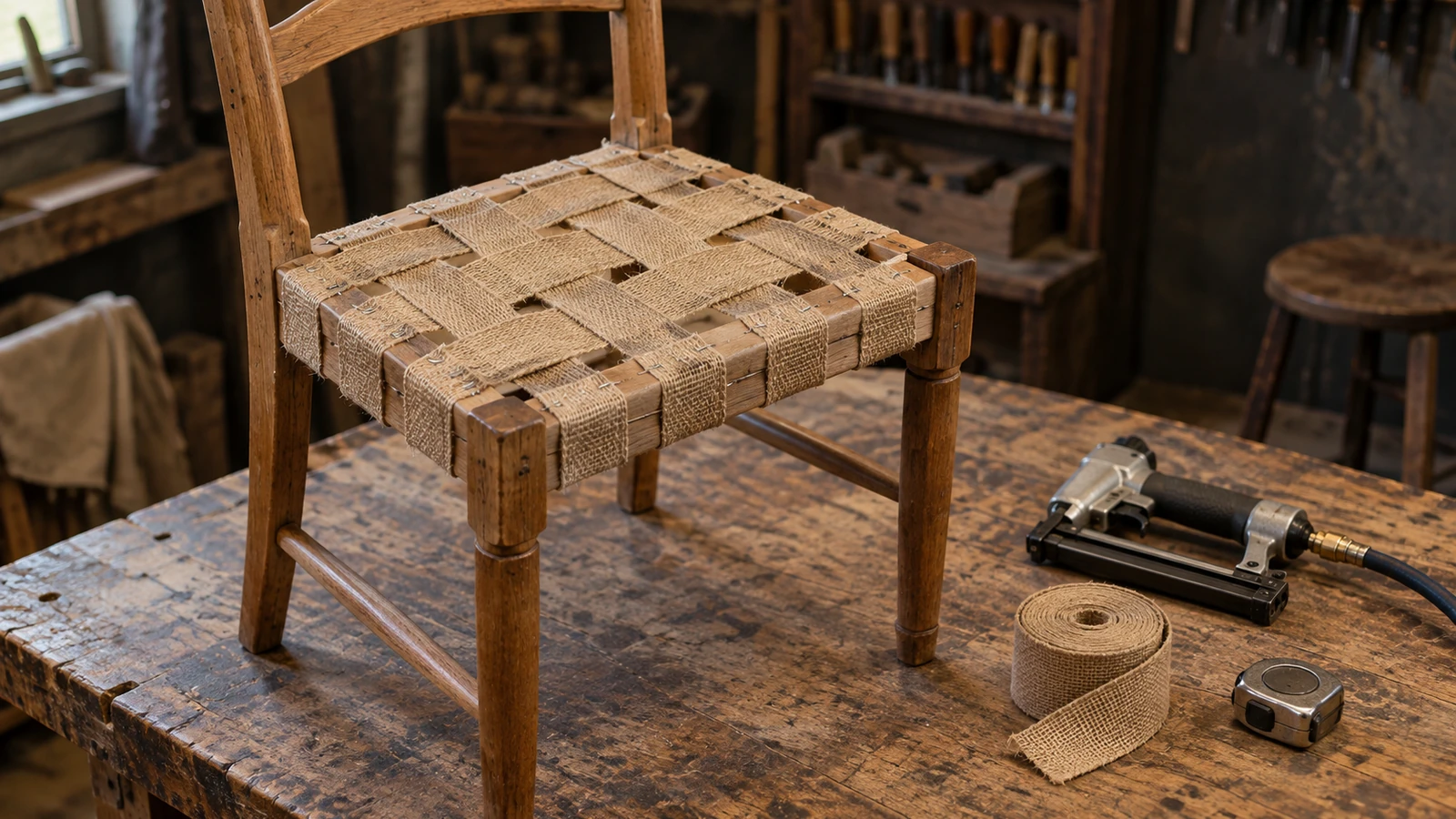

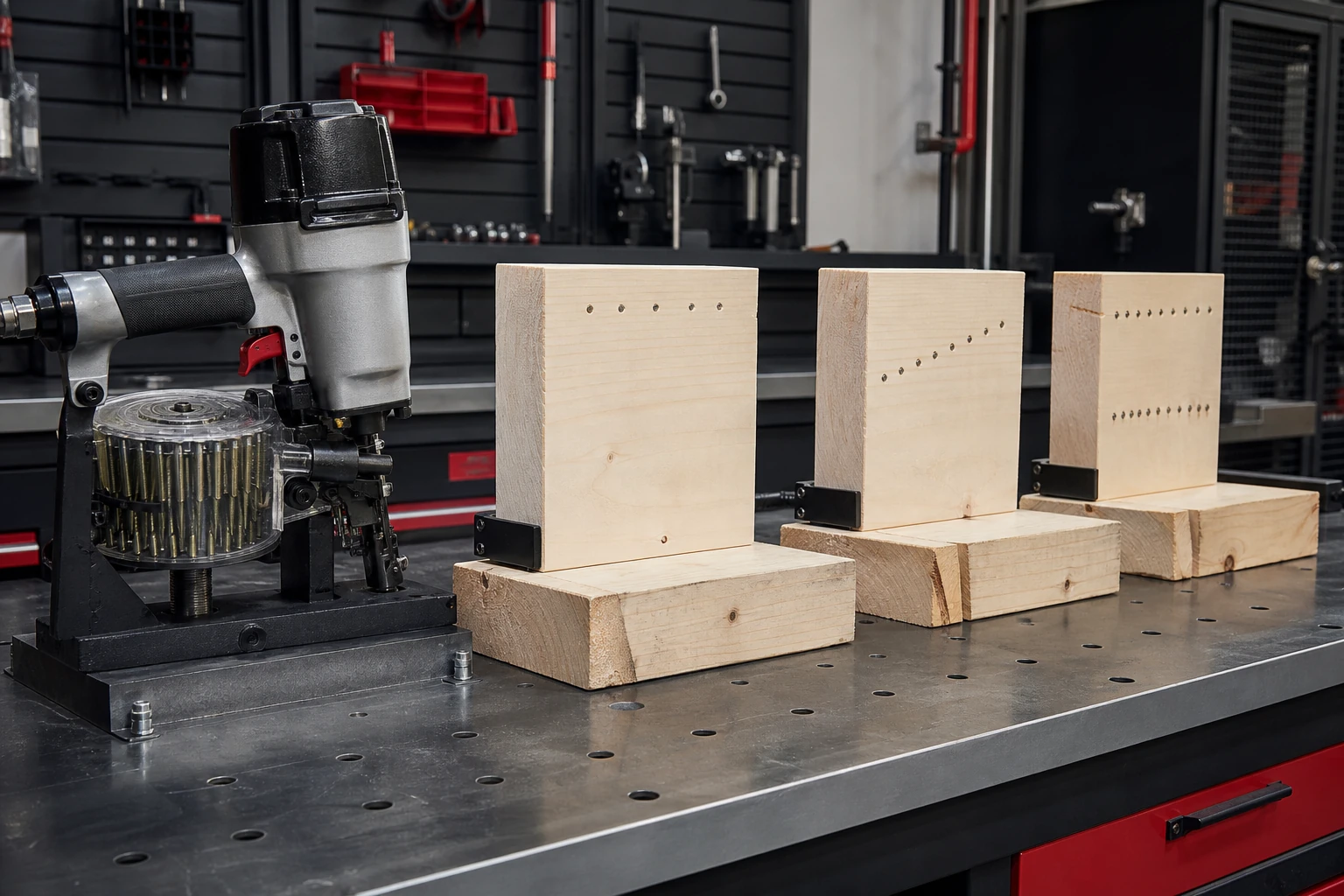
A coil nail first shot consistency test should keep the first drive after loading, reconnecting air, clearing a stop, and pausing visible as separate events instead of burying them inside a long-run average. If shot one is proud, overdriven, or fails to advance while the next fifty drives look normal, the process still has a startup problem.
ProAirNails recommends building an event sequence that mirrors the operator's real shift. Record what happened immediately before each first shot, compare it with steady-state drives, and preserve the tool, coil, pressure, substrate, and setup identity.
Define every version of “first”
The first shot of a new coil is not the only startup event. A production line may reconnect a hose, open a magazine, change depth, clear a jam, wait through a break, or restart after pressure falls. Name each event in the protocol. Otherwise different causes will be grouped under one vague first-shot failure rate.
Draw the run before testing
| Run segment | Precondition | Record separately |
|---|---|---|
| Load start | New identified coil loaded | First drive and first five advances |
| Steady state | Tool operating continuously | Depth, feed, wire, and damage |
| Short pause | Declared idle interval | First drive after pause |
| Air restart | Supply disconnected and restored | Pressure stabilization and first drive |
| Reload | Next coil or partial coil installed | Loading condition and first drive |
Stabilize the tool state
Inspect the driver, magazine, feed pawl, nosepiece, seals, lubricating condition, hose, regulator, and compressor capacity. Record static and dynamic pressure where the procedure allows. A gauge at the compressor may not represent pressure at the tool during firing. Use the manufacturer's safety and operating instructions throughout the trial.
Preserve the coil entry condition
Photograph the coil before loading and note outside condition, leader position, wire joints, damage, looseness, and carton location. Load it with the declared route and do not reshape the leader unless that action is part of normal work. A corrected coil and an as-received coil are different samples.
- Identify every coil and substrate panel.
- Number drives in firing order.
- Mark pauses and interventions on the run chart.
- Record pressure before and during each segment.
- Keep misfed nails, wire pieces, and photographs.
Score the drive, feed, and recovery
For each event, record depth relative to the surface, head damage, bending, incomplete drive, overdrive, skipped advance, double feed, wire protrusion, air leak, and operator intervention. Also record how many cycles are needed to recover. A first shot that requires touching the coil is not equivalent to an uninterrupted pass.
Compare sequences instead of one average
Report the first shot, shots two through five, and the steady-state group separately. Use a median or range for continuous depth measurements and counts for event attributes. Do not let hundreds of later drives mathematically erase repeated startup failures.
| Pattern | Likely investigation | Useful comparison |
|---|---|---|
| Only load-start shot is proud | Leader, feed engagement, seating | Alternate loading method with same coil |
| Every restart is shallow | Pressure recovery or tool state | Dynamic pressure trace |
| First five shots vary | Coil settling or feed geometry | Coil and magazine observation |
| Failures appear after pauses | Seal, lubrication, or regulator behavior | Declared pause-duration ladder |
| Random failures throughout | Fastener, tool, or substrate variation | Matched tool and lot cross-check |
Repeat across coils and operators
Use more than one coil and distribute samples across cartons and lot positions. Where operator technique matters, first standardize the loading and firing route, then compare trained operators. Report the number of first-shot opportunities, not only total drives. Five hundred drives may contain only two meaningful restart events.
Use sampling language accurately
The official ISO 2859-1:2026 page describes AQL-indexed lot-by-lot sampling by attributes. It can support a declared receiving plan, but it does not define the tool state, number of restart events, defect classes, or application limit. The buyer must set those fields before release.
Separate fastener scope from tool scope
The active ASTM F1667/F1667M page covers terminology and requirements for driven fasteners. It does not certify a coil nailer, compressor, loading habit, or buyer-specific startup sequence. A useful investigation compares the same fastener lot across controlled tools and the same tool across controlled lots.
Turn the run chart into an RFQ
Provide nail size, finish, collation and wire, coil dimensions, tool and magazine, pressure window, substrate, firing mode, pause durations, restart definitions, event count, defects, and acceptance. ProAirNails can discuss coil nails, associated pneumatic nails, available products, and samples through the inquiry page.
State what the trial cannot prove
A coil nail first shot consistency test cannot prove all future tool conditions, operators, climates, compressors, or shipments. It is not a substitute for tool maintenance, guarding, training, or application approval. ProAirNails can support identified product evidence; the buyer controls safe operation and final release.
For production monitoring, track first events as their own rate. Retain one accepted run chart and repeat the coil nail first shot consistency test after changes to the coil, wire, packaging, tool, regulator, hose, maintenance route, or loading method.
When a failure is corrected by operator intervention, log that intervention beside the event. Removing it from the dataset makes the process appear more stable than it was. A transparent recovery record is often more valuable than a perfect average.
Use the coil nail first shot consistency test to make startup behavior an engineered part of the cycle rather than an anecdote at the end of a shift.
FAQ
What counts as a first shot?
Define it for new loading, reloading, air reconnection, pause, jam clearing, and other relevant restart states.
Why separate shots two through five?
They show whether the system stabilizes gradually after the initial event.
Should static pressure be enough?
No. Where practical, observe dynamic pressure because the tool may behave differently while firing.
How should drive depth be recorded?
Use a declared reference surface, measurement method, resolution, and acceptance band.
What if only one operator sees the issue?
Standardize loading and firing first, then compare technique, tool state, and sample identity.
Can later good shots cancel a bad first shot?
No. Report startup and steady-state events separately.
How many coils should be checked?
Use a defined plan spanning cartons and lot positions, with enough restart opportunities to reveal a pattern.
Should partial coils be included?
Include them if production uses them, and identify their handling and storage history.
Does a passing nail standard certify the tool?
No. Fastener conformity and tool-process performance are related but separate evidence.
What belongs in the retained record?
Keep coil labels, tool identity, settings, event order, interventions, defects, photos, and disposition.