
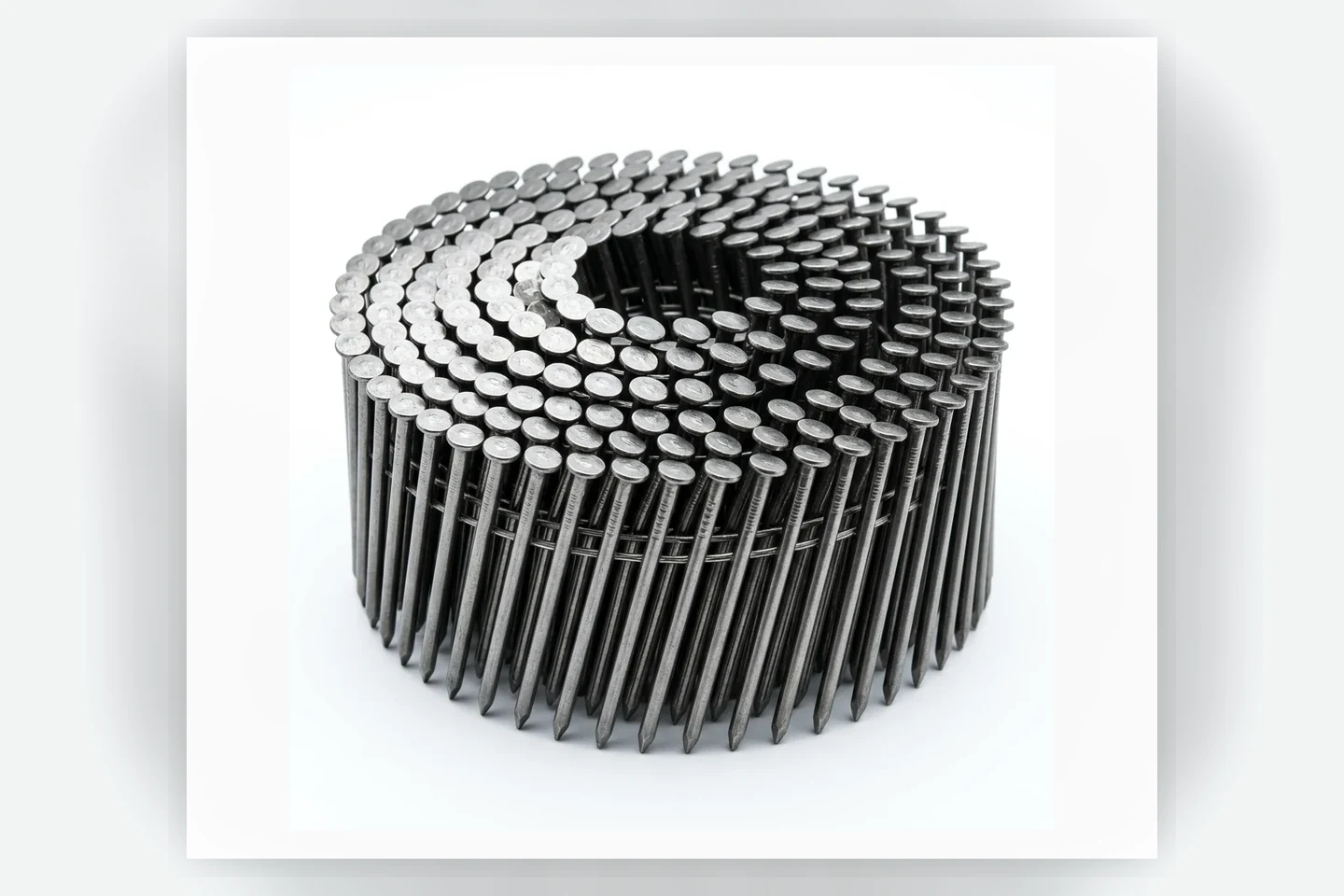
A coil nails factory should be evaluated by how it controls the complete fastener system: nail geometry, shank, point, head, finish, collation, coil shape, packaging, identification, and repeat production. A coil that looks uniform in a catalog can still create feeding, welding, storage, or drive problems when the nailer and production pace are introduced.
ProAirNails recommends treating the audit as evidence collection. Define the requested product first, observe how the factory controls it, approve representative samples, and connect the approved result to the later shipment. This guide is intended for pallet, crate, fencing, packaging, construction-supply, distribution, and private-label buyers.
Decide whether a factory audit is the right tool
A physical or remote coil nails factory audit is valuable when order volume is material, product failure can stop a line, private-label claims need support, or a buyer is approving a new source. It is less useful when the buyer has not yet defined the nailer, collation type, dimensions, shank, finish, application material, and acceptance rules.
The audit does not replace product testing. It shows whether the supplier has a controlled way to make and trace the requested coil; the buyer's trial shows whether that coil works in the intended tool and assembly.
Translate the application into a controlled specification
| Specification area | Buyer question | Factory evidence |
|---|---|---|
| Nail geometry | Which diameter, length, head, point, and shank are required? | Drawing, inspection method, retained samples, calibrated checks |
| Collation | Wire or plastic, angle, spacing, weld or carrier position? | Setup record, in-process check, coil comparison, feed trial |
| Finish and material | What description is contractually required? | Purchase identity, processing record, relevant test or declaration |
| Coil and pack | How many nails, what coil diameter, and how protected? | Count method, canister-fit sample, box and pallet specification |
| Identification | How will the shipment link back to production? | Lot code, carton label, pallet record, complaint trace |
Do not let the supplier substitute a familiar internal code for the buyer's approved description without a cross-reference. Every quoted code should link to a drawing or specification revision that both parties can read.
Follow the production flow, not only the showroom
Ask the coil nails factory to explain the flow from incoming material through nail forming, shank creation where applicable, finishing, collation, coiling, inspection, packing, storage, and release. At each step, identify the product characteristic that can change and the record used to detect it.
For wire-collated coils, the buyer should pay particular attention to nail spacing, alignment, weld location, protruding wire, head overlap, coil tightness, and damage at the leading segment. For plastic-collated products, review carrier consistency, angle, breakaway behavior, storage sensitivity, and debris expectations. These are product-specific questions, not claims that one collation is always better.
Use a process audit table during the visit
| Audit station | Observe | Retain or record |
|---|---|---|
| Incoming material | Identity, segregation, condition, acceptance status | Example receipt and release record |
| Nail forming | Head and point consistency, straightness, shank setup | First-piece and periodic inspection results |
| Collation | Spacing, angle, weld/carrier location, damaged pieces | Setup sample and nonconforming example |
| Coiling | Coil shape, count, leading end, wrap stability | Approved coil and canister-fit check |
| Packing | Box support, moisture protection, labels, SKU separation | Pack specification and drop/handling evidence if required |
| Final release | Sampling, authorization, lot trace, retained sample | Shipment release record and retention period |
Photographs are helpful only when the supplier permits them and when each image is labeled with product, station, date, and context. A close-up of a machine does not prove that the audited controls apply to the buyer's SKU.
Challenge traceability with one realistic scenario
Select a finished carton and ask the team to trace it backward to the relevant production and incoming records. Then choose a production record and trace it forward to affected cartons or pallets. The purpose is not to create a performance trap; it is to verify that a complaint can be contained without holding every shipment.
Also ask how mixed labels, mixed nail lengths, incomplete coils, damaged cartons, weld defects, and repeated tool misfeeds are handled. Review a closed corrective-action example with confidential customer details removed. The quality of the reasoning matters more than a perfect-looking form.
Approve samples from a representative process
A sample made separately from the normal process may not predict bulk supply. Ask whether the sample uses the same material route, forming equipment, collation method, inspection, and packaging planned for the order. Label the sample revision and retain controls on both buyer and supplier sides.
Test coil loading, canister fit, leading-segment presentation, feeding, drive depth, head seating, bending, collation fragments, jams, and performance at the actual production pace. Use representative wood or assembly material and follow the nailer manufacturer's operating instructions. ProAirNails can discuss product compatibility, but tool safety and service remain under the tool maker's procedures and qualified personnel.
Compare commercial resilience
Capacity statements need a defined unit, product mix, shift pattern, period, and evidence. Lead time needs a start point: artwork approval, deposit, final specification, or sample approval. Ask how the factory handles peak demand, maintenance, raw-material delay, partial shipment, replacement production, and urgent trace requests.
Do not publish or rely on an unsupported capacity or certification claim. The buyer should request current documents, verify their scope, and confirm that the legal entity and site match the quotation. This article deliberately treats those items as audit checks rather than ProAirNails declarations.
Control changes after approval
A coil nails factory can produce a good first order and still create future risk if changes are not communicated. Define which changes require advance notice: material description, finish, nail dimensions, shank, collation wire or carrier, coil count, equipment route, inspection method, packing, label, or production site.
For each change type, decide whether document review, new samples, line testing, or full reapproval is required. Put the rule in the purchase specification instead of relying on an informal promise from one sales contact.
Close the audit with an evidence-based action list
Do not end the audit with a general rating such as “factory looks good.” Separate conforming evidence, open questions, minor documentation gaps, product risks, and approval blockers. Assign an owner and due date to every open item, then link closure evidence to the correct product revision.
- Approved specification and sample code
- Open process or traceability evidence
- Required tool and application trial
- Packaging and artwork approval status
- Change-notification agreement
- Decision: approved, conditional, or not approved
This closing record makes the next coil nails factory review faster because the buyer can check whether previously accepted controls still exist and whether conditional actions were completed.
Use authoritative references without overclaiming
The ASTM F1667 standard page can help buyers identify a recognized driven-fastener framework. Confirm the applicable edition, scope, dimensions, and contractual requirements for the exact product. The NIOSH nail gun safety guide is relevant to training and safe tool practices during trials; it does not certify the coil or factory.
Prepare the ProAirNails audit request
Review the ProAirNails coil nail range, compare the full pneumatic nails category, and consider the brad nail range for finish-fastening programs. Send the nailer model, drawing, collation, shank, finish, packing, forecast, destination, audit format, and sample plan through the ProAirNails inquiry page.
The strongest coil nails factory decision is a chain of evidence from application to specification, process, sample, shipment, and repeat-order control.
FAQ
What should I define before auditing a coil nails factory?
Define nailer models, nail dimensions, head, point, shank, finish, collation, coil count, application material, packing, labels, expected volume, and acceptance tests.
Is a factory audit enough to approve coil nails?
No. The audit reviews process controls; the buyer still needs representative samples and application testing in the intended tools and materials.
What are the main collation checks?
Review angle, nail spacing, alignment, weld or carrier location, leading-segment condition, head overlap, coil tightness, loose nails, and feed behavior.
How can I test traceability?
Select a finished carton and trace it backward to production and material records, then trace a selected production record forward to cartons or pallets.
Should I ask for production capacity?
Yes, but require a defined product mix, unit, period, shift assumption, maintenance basis, and evidence. A single large number without context is not useful.
What factory changes should require notice?
Changes to material, finish, dimensions, shank, collation, coil count, production route, site, inspection, packaging, or labels may require advance approval.
How should factory samples be identified?
Use a sample code linked to the drawing/specification revision, production route, date, packing, inspection results, and buyer approval record.
Can a remote audit replace a site visit?
It can answer many questions when documents, live process views, labeled samples, and trace exercises are available, but the buyer should choose the method according to risk.
What packing failures matter most?
Crushed boxes, loose coils, moisture exposure, damaged leading segments, mixed SKUs, incorrect counts, unreadable labels, and weak pallet restraint can make conforming nails unusable.
How often should a coil nail source be requalified?
Set the interval by risk, order history, changes, complaints, market requirements, and performance. Significant changes or recurring failures should trigger earlier review.