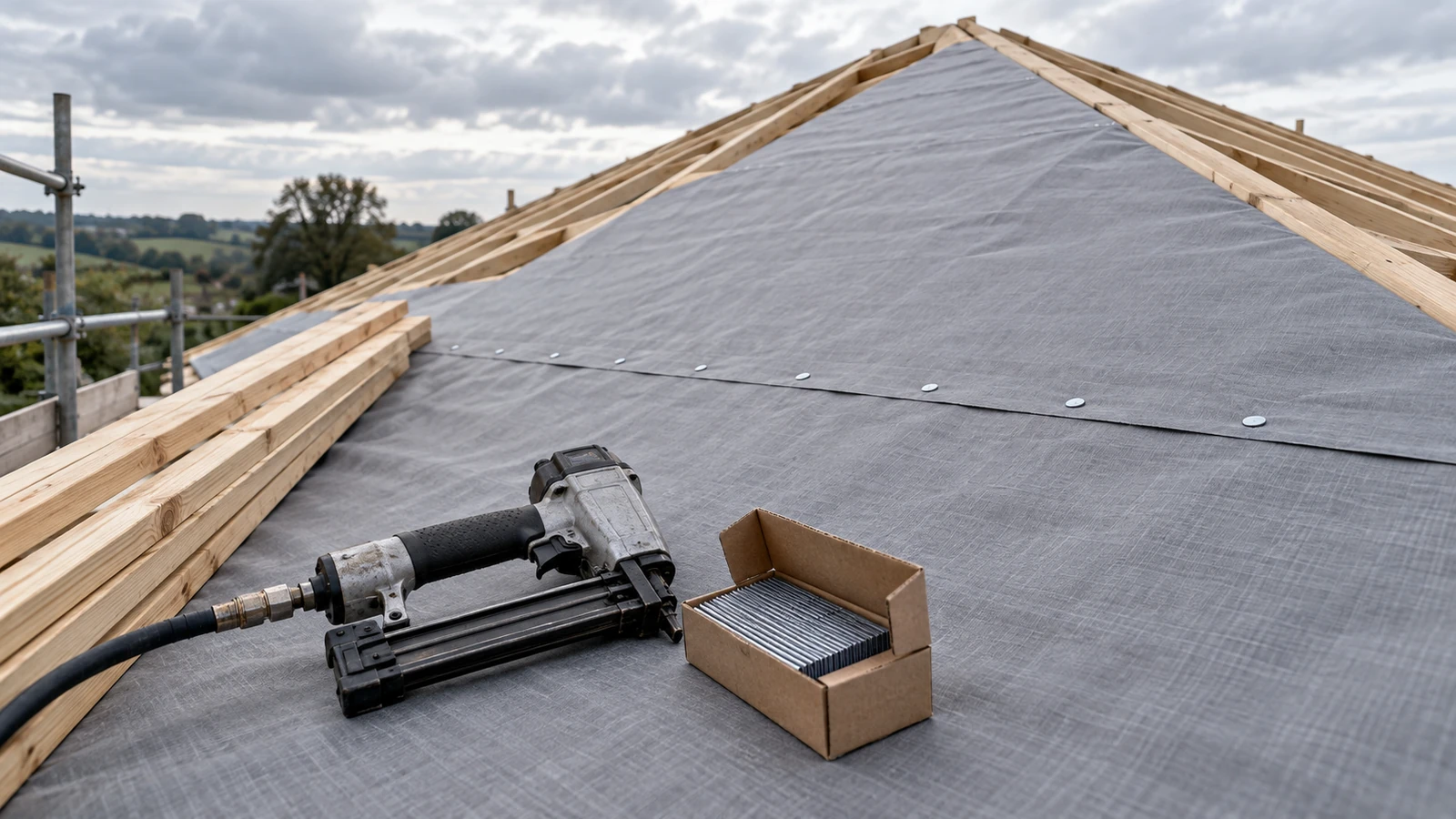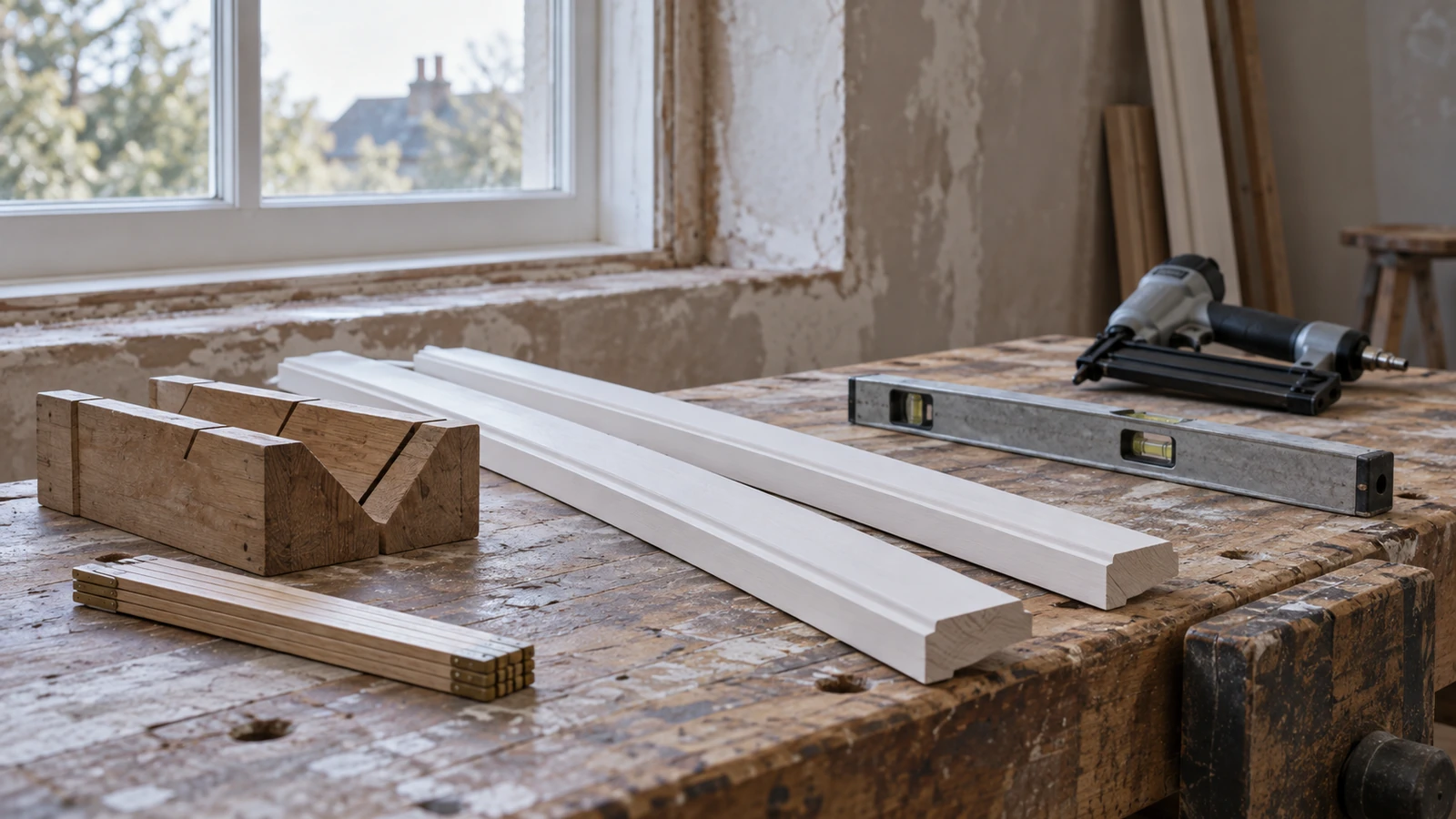

A furring strip is a spacer before it is a fixing, and the wall behind it decides almost everything else. The strip exists to create a plane and a gap: a straight surface for the boards, and a cavity for services, insulation or drainage. Get the substrate wrong and the straight surface fails first.
That is why the question of coil nails for furring strips rarely has a single answer. A strip fixed to timber framing is a straightforward joint. The same strip fixed over masonry is a different problem, because the fixing has to hold in a material that has almost no give and no capacity to accept a shank.
A furring strip is a spacer before it is a fixing
Start with the job the strip is doing. On an internal wall it usually carries a lining and creates a service void. On an external wall it may also hold insulation out, keep the cladding off a damp substrate, or provide the ventilation path that keeps the back of the cladding dry.
Those purposes set the strip depth and spacing before any fastener is considered. A 25 mm strip that has to carry a service void and a ventilation path is doing two jobs, and the fixing pattern has to hold it flat against a wall that may not be flat at all. ProAirNails quotes from that section rather than from the strip size.
Two conditions: strips on framing, and strips on masonry
On framing, the strip is fixed across studs or rails and the joint behaves like a normal timber-to-timber connection. Coil nails for furring strips can be driven with a collated tool, the spacing follows the framing, and the strip is supported at predictable intervals.
On masonry, the strip meets a surface that will not accept a nail in the way timber does. A shank driven into brick or block holds by friction in a hole it made itself, which is not the same mechanism as engaging timber fibres, and the result depends on the block, the mortar and the age of the wall. That is the point where coil nails for furring strips stop being a fixing strategy on their own.
When coil nails for furring strips meet a masonry wall
This is the case worth slowing down for. Coil nails for furring strips can be the right answer where the strip is fixed to timber pads or battens that are themselves mechanically fixed to the masonry, and they are the wrong answer when they are driven directly into brick or block as the only connection.
A workable arrangement is usually a two-stage one: pads or a batten frame fixed to the wall with a masonry-appropriate fixing, then the strips pinned to that frame with collated nails. The load path is then timber to timber, which is the joint the tool and the fastener were designed for.
Choosing the fastener for the substrate
Match the fixing to what it actually enters, and write that down so the second crew does not improvise.
| Substrate | Fixing that suits it | Why |
|---|---|---|
| Timber studs or rails | Collated coil nails, ring shank | Fast, consistent, and the rings resist withdrawal as the frame dries |
| Timber pads on masonry | Coil nails into the pad | Keeps the connection timber to timber with predictable hold |
| Brick or block directly | Mechanical masonry anchors | Friction in masonry is a different mechanism from fibre grip |
| Light gauge steel framing | Self-drilling screws | The nail will not engage a thin steel section reliably |
Spacing and the gap
Strip spacing follows the board being fixed to it, not the convenience of the fixing pattern. Heavy linings need closer support than light ones, and a strip that is spaced for the board it carries will not need to be corrected later.
| What the strip supports | Spacing to start from | Note |
|---|---|---|
| Plasterboard lining | Set by the board thickness and span | Follow the board manufacturer's support spacing |
| External cladding | Set by the cladding module | The strip position is usually fixed by the cladding detail |
| Service void | Wide enough for the services | Keep the void continuous so cables are not pinched |
| Ventilated cavity | Per the wall design | The gap must stay open top and bottom to work |
Services, insulation and the space behind the strip
The cavity is the reason the strip exists, so it has to survive the installation. A void that is bridged by a cable clip or blocked by an over-filled insulation batt stops performing its function even though the strip looks correctly fixed.
- Mark service runs before the strips are fixed, and keep the cavity clear where they pass.
- Never compress insulation into a ventilated cavity; a compressed batt is a damp batt.
- Keep the bottom of a drained cavity open so water has somewhere to leave.
- Check the strip depth against the service diameter, plus the clip.
- Photograph the open wall with a tape measure, so the strip positions can be found after the lining goes on.
Checking a wall before the boards go on
Flatness is the check that matters most, and it is the one that is hardest to correct after the fact. Run a straight edge across the strips in both directions and record the worst deviation, because a wall that is out of plane will show through every subsequent layer.
The ASTM guidance on the application and finishing of gypsum board is the usual reference for how a lined wall is expected to be prepared and finished, and it is a useful way to describe the tolerance to a client. Where the wall also carries insulation, the North American Insulation Manufacturers Association publishes background on how insulation performs in different assemblies, which is relevant when a cavity has to stay ventilated.
Where this guidance stops
Nothing here decides the structural adequacy of a masonry wall, or whether a particular wall needs a drained and ventilated cavity at all. That is a design decision that depends on the wall, the climate and the cladding system, and ProAirNails quotes on the fixing rather than on the wall.
A fastener specification also cannot correct a substrate that is crumbling or badly out of plane. If the masonry will not hold a pad, the fixing problem is downstream of a repair that has to happen first, and a longer coil nail will not help.
FAQ
Can coil nails for furring strips be driven straight into brick?
They should not be the only connection. A nail in masonry holds differently from a nail in timber, so pads or mechanical anchors belong in the load path.
What shank suits a furring strip?
Ring shank for most timber-to-timber work, because the strip is thin and withdrawal resistance is the property that matters as the frame dries.
How far apart should strips be?
Close enough to support the board or cladding being fixed to them. The board thickness and span set the figure, not the tool.
Why does a lined wall show a wave after painting?
Usually because the strips were out of plane, or because the board was fixed to strips that were not flat to begin with.
Does the cavity need to stay open?
Where it is designed as a drained or ventilated cavity, yes. A blocked cavity stops doing the job it was built for.
What changes on a steel-frame wall?
The fastening method. A nail will not reliably engage a thin steel section, so a self-drilling screw belongs in that joint.
Can strips be fixed over existing render?
Only where the render is sound and the fixing reaches the structural substrate behind it. Loose render cannot carry a fixing.
How do I keep the strips straight?
Set a line at each end, string between them, and check with a straight edge rather than by eye along the wall.
Should the bottoms of vertical strips be treated?
Where they can get wet, yes, and a drained cavity detail should keep water away from the strip ends.
What should a furring enquiry include?
The substrate, the strip size and depth, the board or cladding being fixed, the cavity requirement and the tool on site.
Send the wall build-up, not the strip size
A section drawing is worth more than a list of parts. Send the substrate, the cavity, the strip, the board or cladding and the tool, and the answer can be a fixing schedule rather than a box size. ProAirNails supplies coil nails, pneumatic nails and pneumatic staplers into framing and cladding work, and a photograph of the open wall is enough to start. Send it through Contact Us.