
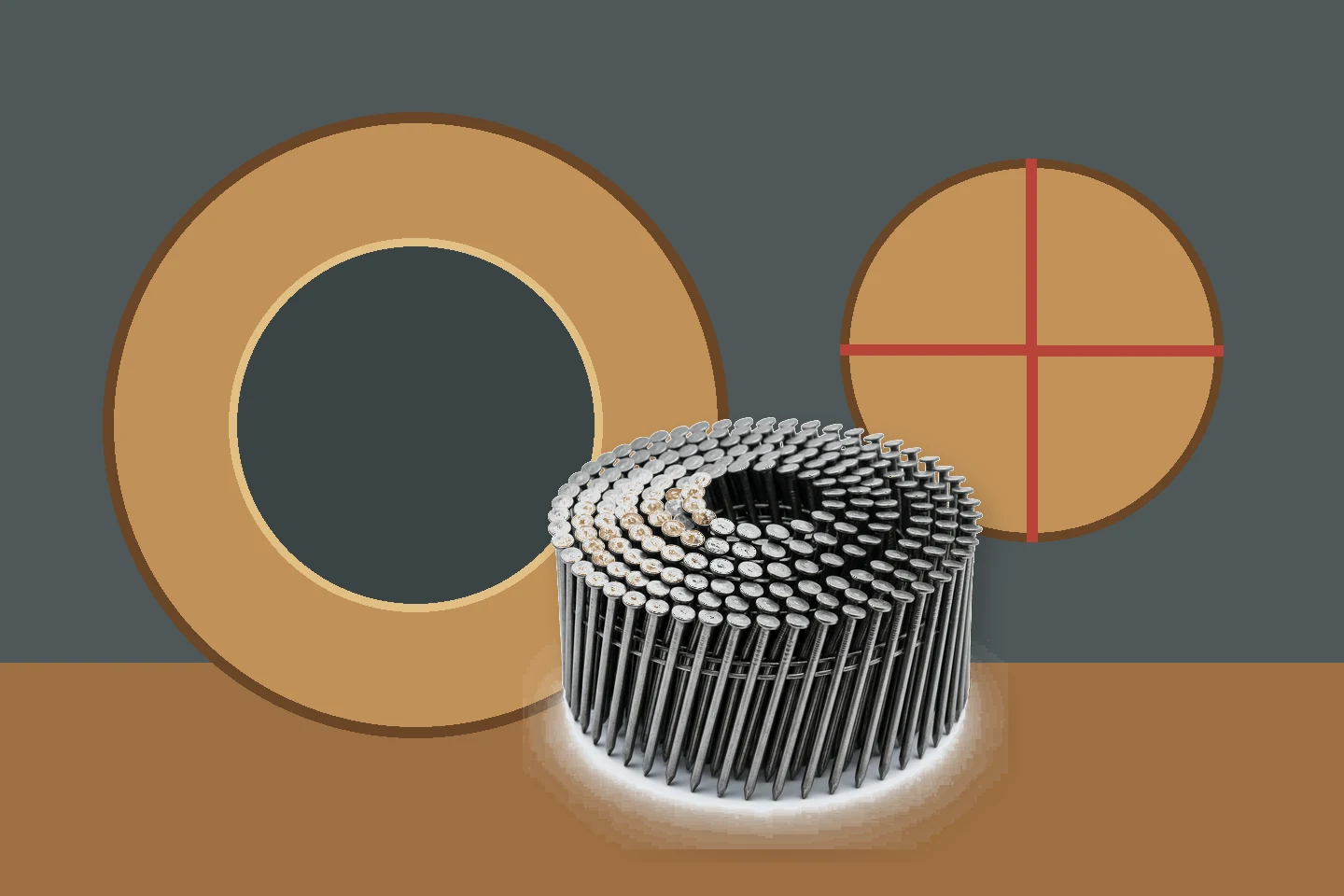
Select coil nails for wooden cable reels from the reel's load paths, flange and drum construction, wood condition, assembly sequence, handling, and intended service. Nominal diameter alone does not define the joint or the fastener evidence required.
ProAirNails recommends beginning with an engineering-controlled reel drawing and joint schedule. The fastener supports that design; it should not be chosen from a generic pallet assumption.
Map loads before naming a nail
Identify assembly loads, cable winding forces, lifting and rolling exposure, storage, transport restraint, flange impacts, and any reuse or return cycle. Mark which joints locate parts, transfer load, resist separation, or provide temporary assembly support.
Use qualified engineering judgment for structural decisions. A sourcing guide cannot calculate the reel's safe working capacity.
Separate reel joints by function
| Joint area | Define | Evidence focus |
|---|---|---|
| Flange members | Board pattern and thickness | Splitting, seating, path |
| Drum construction | Staves, support, gaps | Location and repeatability |
| Flange-to-drum | Geometry and load role | Joint-specific validation |
| Protective parts | Temporary or permanent | Damage and removal rule |
Keep each joint linked to fastener size, shank, point, finish, entry pattern, tool, and inspection method.
Match shank and point to tested wood
Document species or grade, density range, moisture condition, knots, grain, edge distance, thickness, and support. Compare relevant smooth, ring, or screw-shank options only where the design and application justify them.
Record splitting, bending, incomplete seating, head damage, deflection, and material crushing. Do not infer long-term joint performance from withdrawal feel in one convenient board.
Control finish by exposure and compatibility
Define manufacturing environment, storage, route, destination, moisture, chemicals, and expected service exposure. Confirm the stated finish on the actual nail route and review compatibility with the wood, cable, or other materials where contact matters.
A visual coating description does not prove a corrosion life. Use applicable specifications, qualified testing, and engineering requirements.
Run a production-pace feed trial
| Trial measure | Count | Decision use |
|---|---|---|
| Coil loading | Correct and difficult loads | Handling suitability |
| Feed events | Skips, doubles, jams | Usable throughput |
| Drive result | Depth, bending, head condition | Joint consistency |
| Downtime | Clearance, adjustment, repair | Total production cost |
Use named tools, approved settings, normal operators, actual fixtures, and representative work pace. Retain failed coils and joint samples by lot.
Inspect the assembly, not only individual nails
- Verify pattern and missing-fastener rules.
- Check flange flatness and member position.
- Record gaps, splits, protrusions, and incomplete drives.
- Inspect hidden or opposite surfaces where accessible.
- Apply engineering-defined assembly tests.
Sampling must represent reel size, joint types, shifts, material variation, and production lots.
Challenge handling and transport
Use a qualified plan to represent lifting, rolling, stacking, restraint, humidity, and route exposure. Reinspect joints and reel geometry afterward. Handling trials must be designed safely and must not substitute for applicable engineering or regulatory requirements.
Use the ICC Incoterms rules resource to clarify international delivery responsibilities where relevant.
Protect coil condition in packing
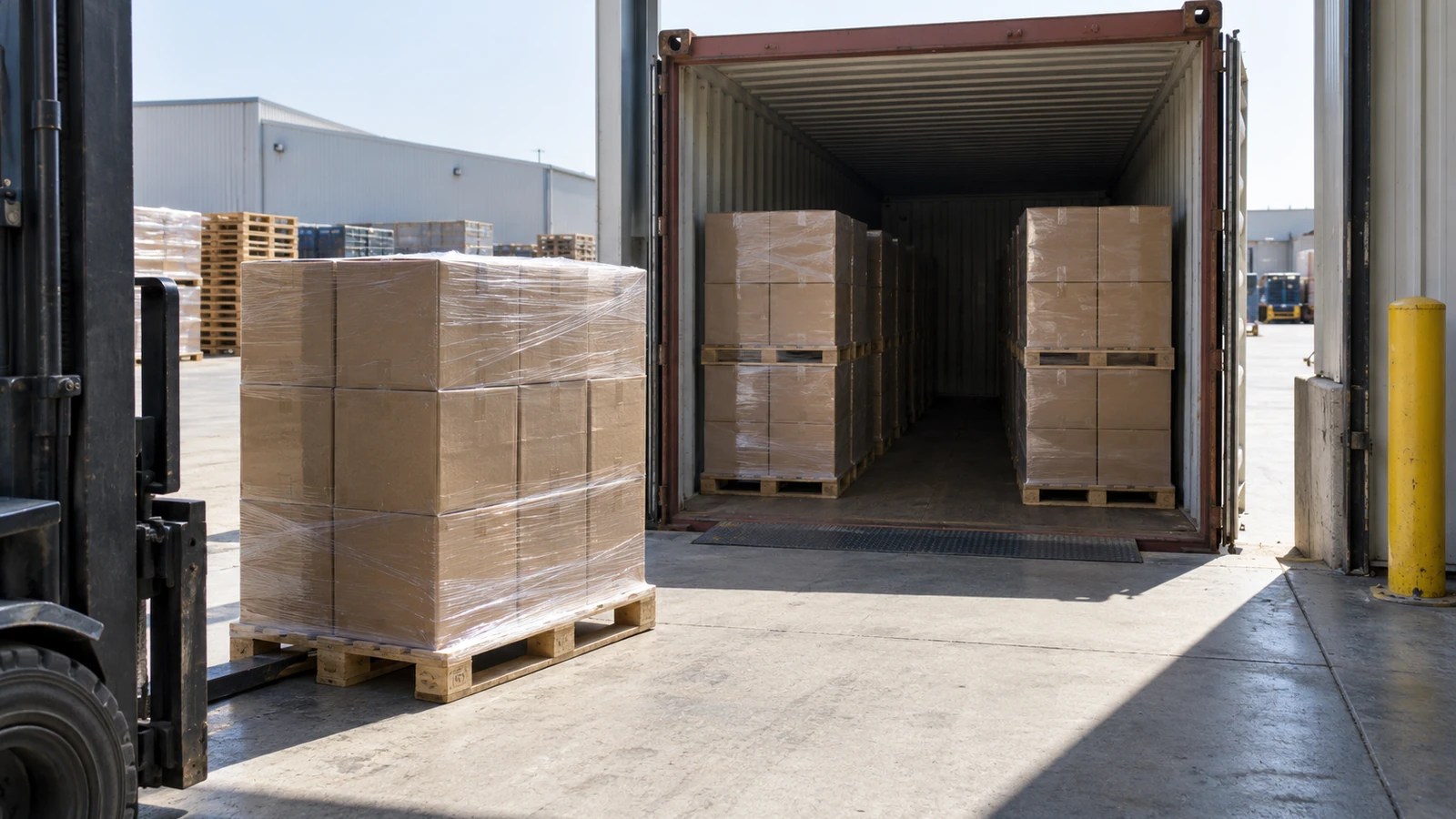
Specify coil count, orientation, carrier protection, inner packaging, carton strength, labels, lots, pallet pattern, moisture protection, and handling. At receipt, inspect deformation and run a short feed confirmation before line release.
Scale the pilot across reel variation
Include representative reel diameters, flange constructions, joint types, wood lots, shifts, and assembly tools. Select ordinary coils from multiple boxes and record every drive against a defined joint location. Increase sample depth where a missed or poorly seated fastener could be concealed by later assembly.
The pilot for coil nails for wooden cable reels should define hold boundaries when a dimensional, feed, drive, or assembly result fails. Do not sort only the visible defect and release the surrounding lot without evidence.
Compare production cost per accepted reel
Track fastener price together with usable coils, feed interruptions, tool clearing, incomplete drives, inspection, repair, material damage, and accepted reels. Compare the first order and reorder with the pilot baseline so changes in wood, collation, packing, or pace remain visible.
Review ProAirNails coil nail options when defining the controlled candidate. Reliable coil nails for wooden cable reels reduce variation across the whole assembly route, not just purchase price.
Use safety and standards within scope
Follow tool instructions and consult the NIOSH nail gun safety guide as broader safety context. The ASTM F1667 page may support applicable fastener requirements but does not approve a reel design.
State the evidence boundary
A validated sample route cannot guarantee every reel, cable, future wood lot, handling event, or service environment. Monitor production and reopen affected evidence after relevant change or failure.
Send ProAirNails the joint schedule
Review ProAirNails coil nails and the broader pneumatic fastener range. Send drawings, joint schedule, wood, tools, volumes, pack, destination, and test requirements through the inquiry page.
Approved coil nails for wooden cable reels must connect product evidence to the actual reel route and its engineering requirements.
FAQ
Why start with the reel load path?
It identifies which joints and fasteners perform location, separation resistance, load transfer, or temporary assembly functions.
Can pallet nail selection be copied to reels?
No. Reel geometry, loads, wood, winding, handling, joint schedule, and service must be evaluated for the actual design.
Which wood details matter?
Record species or grade, density, moisture, knots, grain, thickness, edge distance, support, and relevant production variation.
How should shank type be compared?
Compare only design-relevant candidates in controlled joints while recording driving, splitting, seating, path, and qualified performance evidence.
What belongs in a feed trial?
Track loading, skips, doubles, jams, depth, bends, head condition, coil deformation, downtime, and accepted output.
How should finished reels be inspected?
Verify pattern, missing fasteners, protrusions, splits, gaps, position, flange condition, geometry, and engineering-defined tests.
Why test after handling?
Lifting, rolling, stacking, restraint, moisture, and transport can expose joint or geometry weaknesses not visible at assembly.
What packing protects coil nails?
Use coil support, controlled count and orientation, strong cartons, labels, lot identity, pallet restraint, and suitable moisture protection.
When is reapproval required?
Review changes to design, wood, fastener, finish, collation, site, tool, fixture, process, pack, handling, or service requirements.
What should accompany a quotation request?
Provide reel drawings, joint schedule, wood, exposure, tools, nail candidates, volume, packing, destination, and validation requirements.