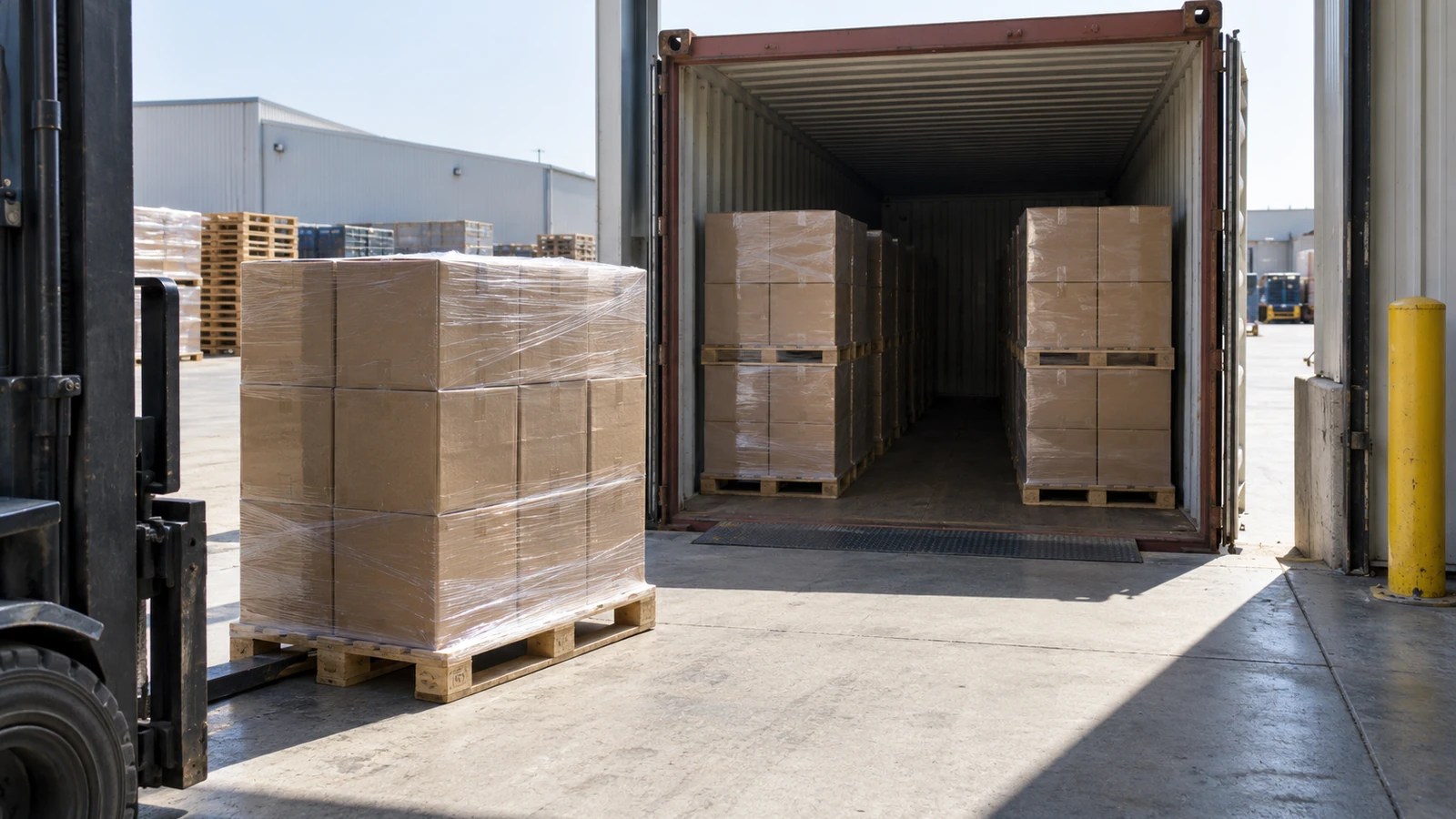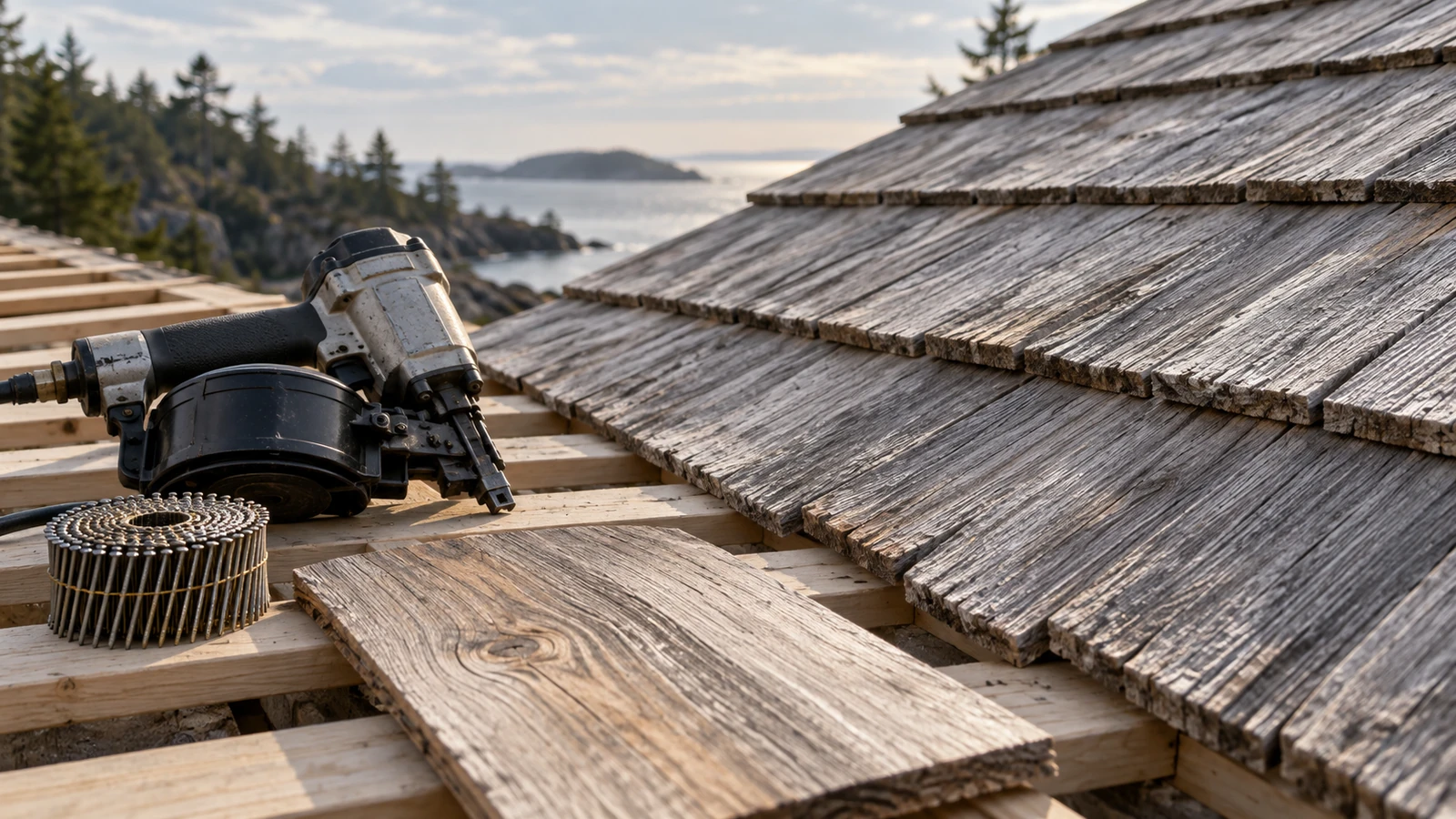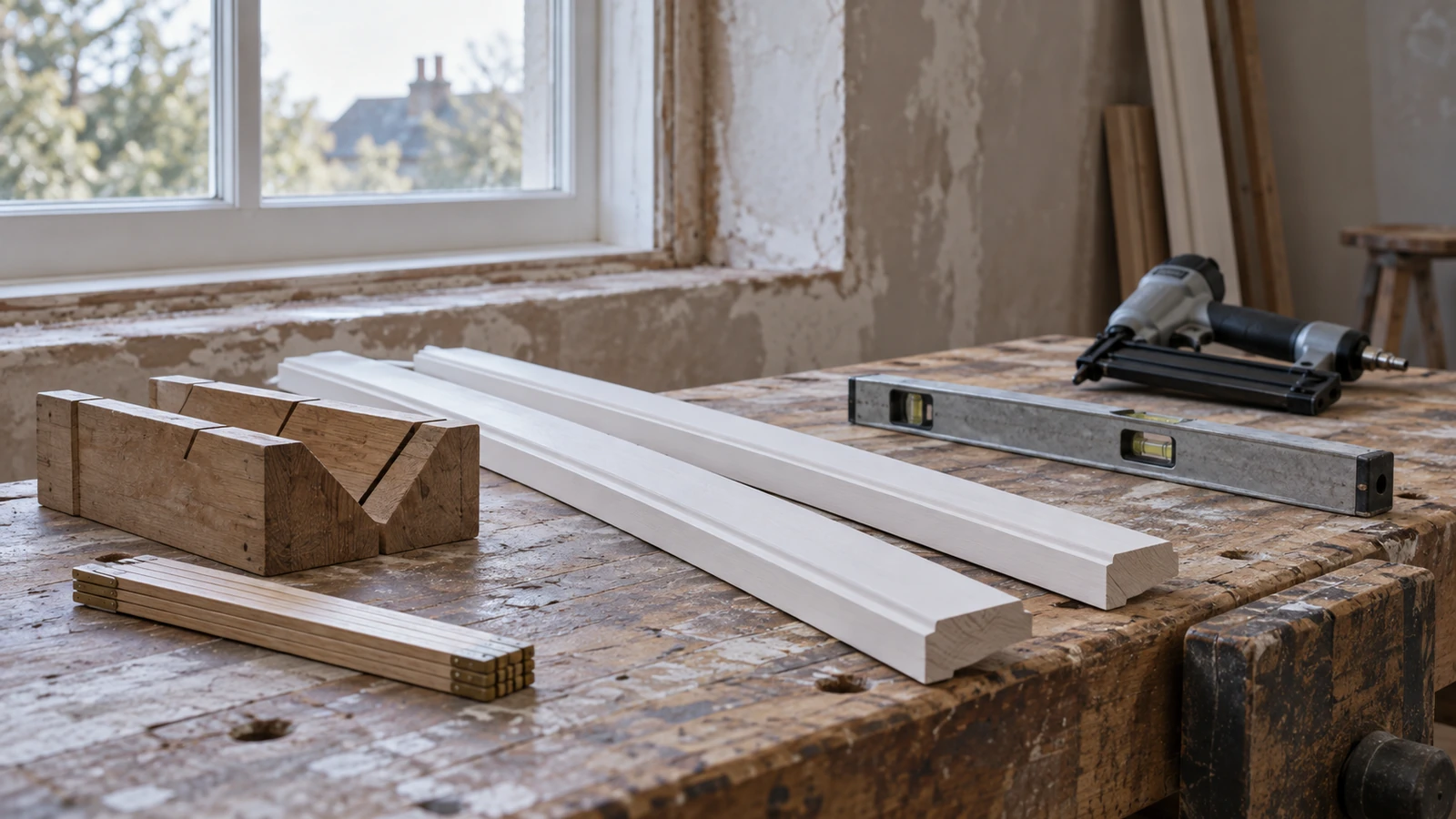

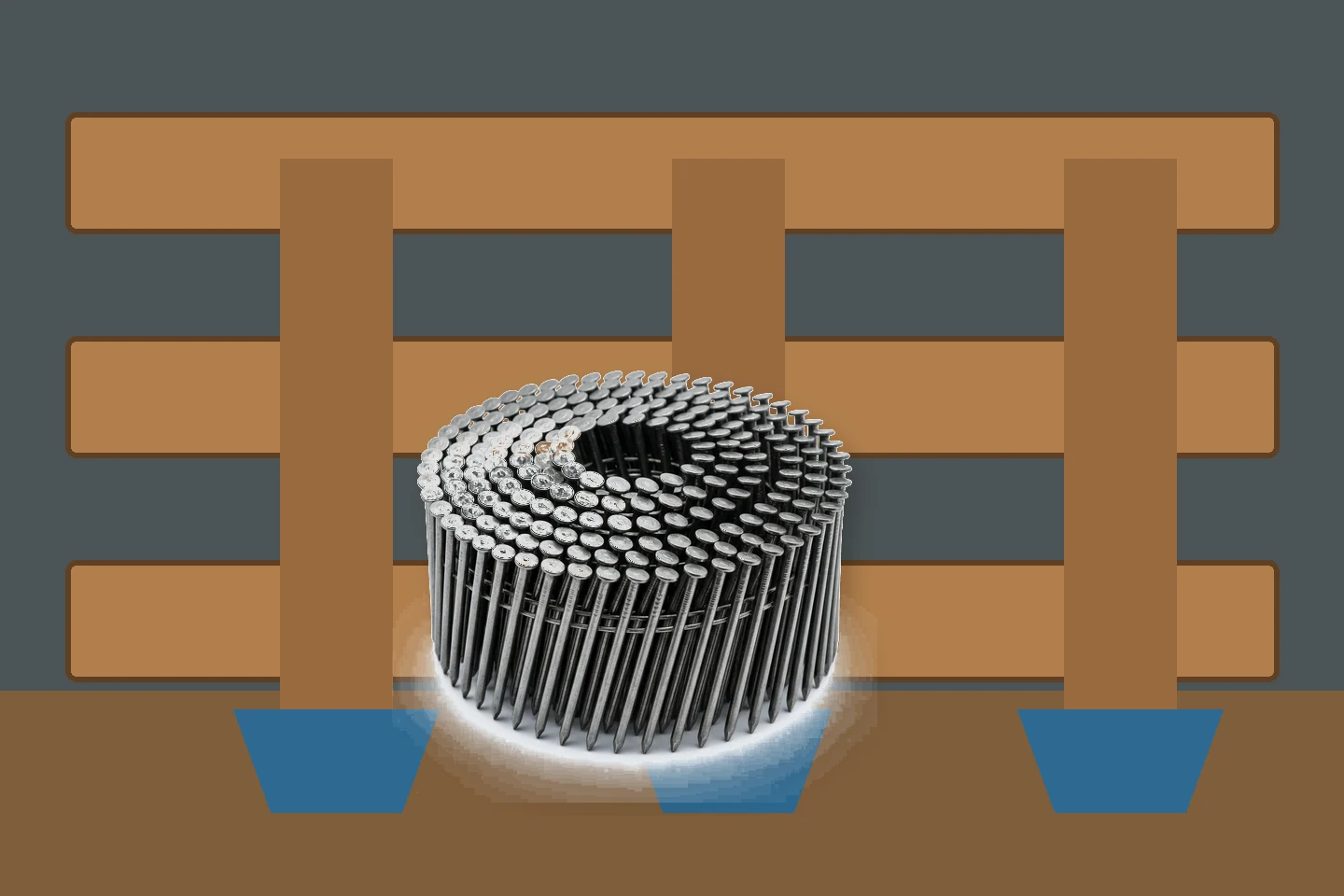
Select coil nails for wooden shipping skids from the complete logistics route: fork entry, deck and bearer joints, load placement, restraint, lifting, movement, storage, and destination handling. A skid is not approved by driving nails into one loose board.
ProAirNails recommends starting with an engineering-controlled skid drawing and joint schedule. Fastener evidence supports that design; it cannot establish safe load capacity by itself.
Trace the fork-entry route first
Mark entry directions, openings, bearer locations, deck edges, chamfers, clearances, and possible contact areas. Identify where fork impact, misalignment, or lifting could damage boards or approach fastener paths.
Separate joints by logistics function
| Joint | Function | Evidence |
|---|---|---|
| Deck-to-bearer | Position and load transfer | Pattern, path, splitting |
| End boards | Entry and edge protection | Impact and protrusion |
| Blocking | Geometry and restraint | Joint-specific validation |
| Temporary parts | Handling or shipment | Removal and identity |
Document wood and joint condition
Record species or grade, treatment, density, moisture, knots, grain, dimensions, gaps, support, edge distance, and lot. Test realistic variation permitted by the design. A different bearer or wet deck board can change driving and splitting response.
Compare fastener configuration in the real joint
| Feature | Control | Observe |
|---|---|---|
| Length and diameter | Drawing and margin | Path and breakout |
| Shank and point | Approved candidates | Drive and joint evidence |
| Head | Size and seating | Crushing or protrusion |
| Finish | Exposure and compatibility | Actual stated route |
Do not infer service life or safe load from appearance or withdrawal feel in one board. Use applicable engineering, specifications, and qualified tests.
Run production-pace coil trials
Use named tools, approved settings, normal operators, actual fixtures, and representative pace. Count loading issues, skips, doubles, jams, incomplete drives, bends, head damage, splits, downtime, and accepted joints.
- Identify every coil and wood lot.
- Inspect fork-entry and edge zones.
- Verify pattern and missing-fastener rules.
- Retain representative failures.
- Define the hold boundary before testing.
Inspect the complete skid
Check dimensions, square, deck gaps, bearer positions, protrusions, splits, missing fasteners, loose parts, and surfaces that contact product or handling equipment. Apply only engineering-defined assembly and load tests under a safe plan.
Challenge handling and shipment conditions
Represent fork entry, lifting, set-down, restraint, stacking, storage, and transport exposure as the qualified validation plan requires. Reinspect joints and geometry afterward. Use the ICC Incoterms resource to clarify international responsibilities where applicable.
Scale the pilot across skid families
Include representative sizes, joint types, wood lots, shifts, tools, operators, fork-entry directions, and load routes. Increase coverage where a concealed failure or protrusion has higher consequence.
A pilot for coil nails for wooden shipping skids should report accepted skids per coil, repair, downtime, and failed joint location.
Protect coils through receiving
Control coil count, carrier, orientation, cartons, labels, lots, pallet restraint, and moisture protection. Inspect deformation or corrosion and run a short feed confirmation. Follow tool instructions and use the NIOSH nail gun safety guide as broader context.
Review cost per accepted skid
Compare unit price with usable coils, feed events, tool clearing, split wood, repairs, inspection, handling damage, production pace, rejected skids, and complaints.
This keeps coil nails for wooden shipping skids tied to logistics-ready output.
Release a pilot load through the real route
Select representative skids and apply only the engineering-approved load, restraint, lifting, fork-entry, movement, stacking, and set-down sequence. Inspect geometry and every critical joint before loading, after each defined handling stage, and after unloading. Record equipment, operator, route, load identity, impacts, repairs, and authorization.
Define containment by joint and wood lot
When a split, bend, missing drive, protrusion, or loose part appears, identify the affected joint type, wood lot, coil lot, tool, shift, and time since the last accepted check. Hold the evidence-based scope until correction and reinspection establish a release boundary.
Connect skid supply to the product route
Review ProAirNails coil nail options against the controlled skid drawing, not a generic packaging label. The approval file should connect one nail configuration to each permitted joint, tool, wood condition, pack, inspection, and handling route.
Define the evidence limit
The trial cannot reproduce every load, handling event, route, climate, wood lot, or service duration. Preserve the approved drawing, joint schedule, samples, photographs, tool record, and exceptions; reopen affected evidence after relevant changes. Record load identity, restraint, handling equipment, entry direction, storage condition, destination, and the timing of each inspection. Assign every unresolved split, protrusion, loose part, or geometry change an owner, affected scope, evidence requirement, due date, and disposition. The final record should show who authorized release and which conditions remain explicitly outside the approved route. Compare the first reorder against this complete baseline before expanding to a new load, route, destination, or wood source.
Send ProAirNails the skid schedule
Review ProAirNails coil nails and the pneumatic range. Send drawings, joints, wood, tools, volume, packing, destination, and validation requirements through the inquiry page.
Reliable coil nails for wooden shipping skids connect production evidence to the complete handling route.
FAQ
Why start with fork entry?
It reveals openings, bearer locations, edge impacts, clearance, geometry, and handling contact near important joints.
Can pallet nail choices be copied directly?
No. The skid drawing, load, joints, wood, equipment, route, and validation requirements must control selection.
Which wood variables matter?
Record species or grade, treatment, density, moisture, knots, grain, dimensions, gaps, edge distance, and lot.
How should shank type be selected?
Compare only design-approved candidates in real joints using qualified driving and performance evidence.
What belongs in a coil trial?
Count loading, skips, doubles, jams, depth, bending, head damage, splits, downtime, and accepted output.
What should completed skid inspection cover?
Check geometry, square, gaps, bearer position, pattern, missing nails, protrusions, splits, loose parts, and contact surfaces.
Why test handling?
Fork entry, lifting, set-down, stacking, restraint, and transport can expose joint weaknesses missed at assembly.
What packing protects coils?
Control coil support, count, orientation, carrier, carton, labels, lots, moisture protection, and pallet restraint.
When should approval be reopened?
Review changes to design, load, joint, wood, nail, finish, collation, site, tool, pack, route, or criteria.
What supports a quotation?
Provide skid drawings, joint schedule, wood, load and handling route, tools, nail candidates, volume, packing, and tests.