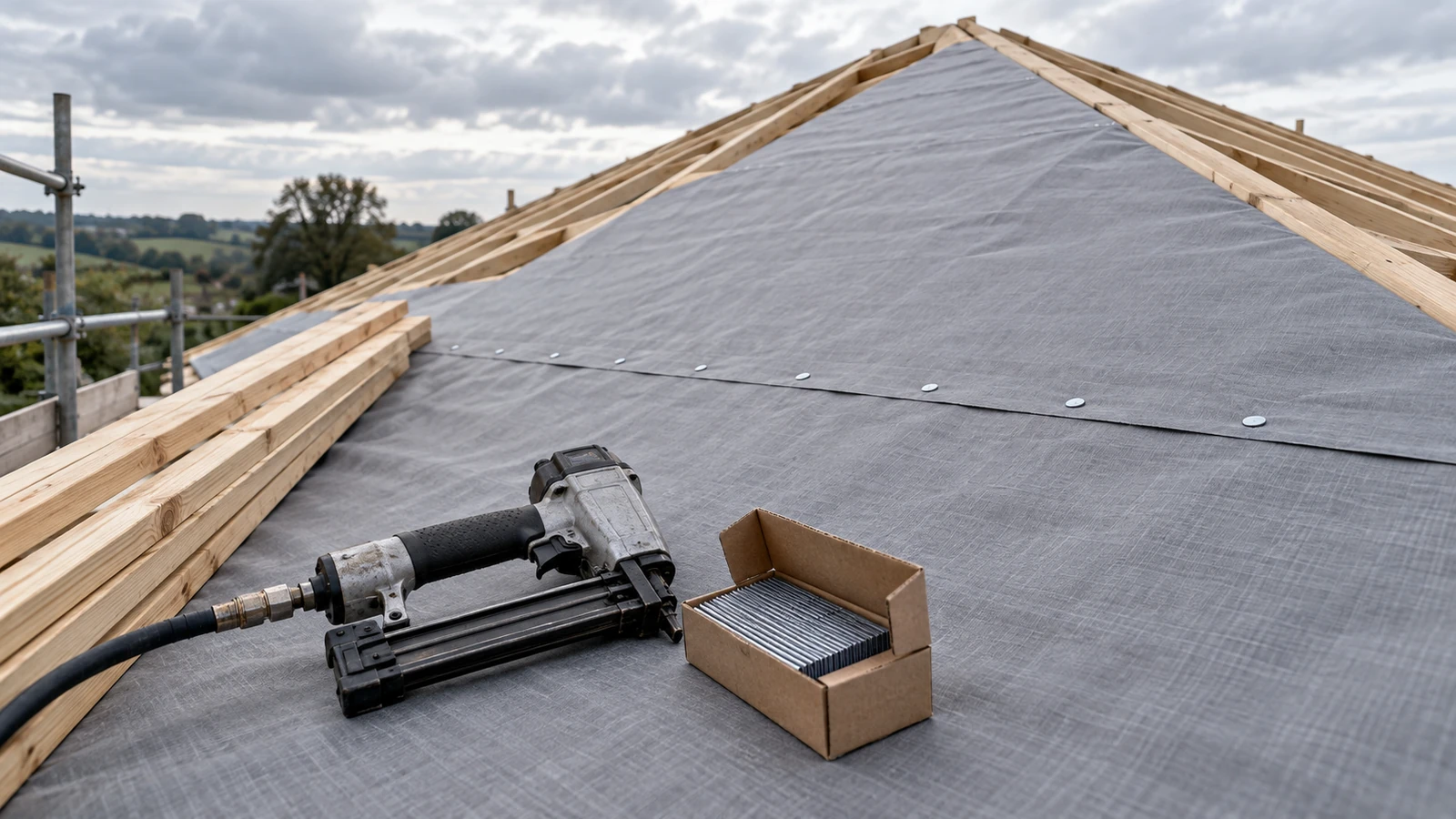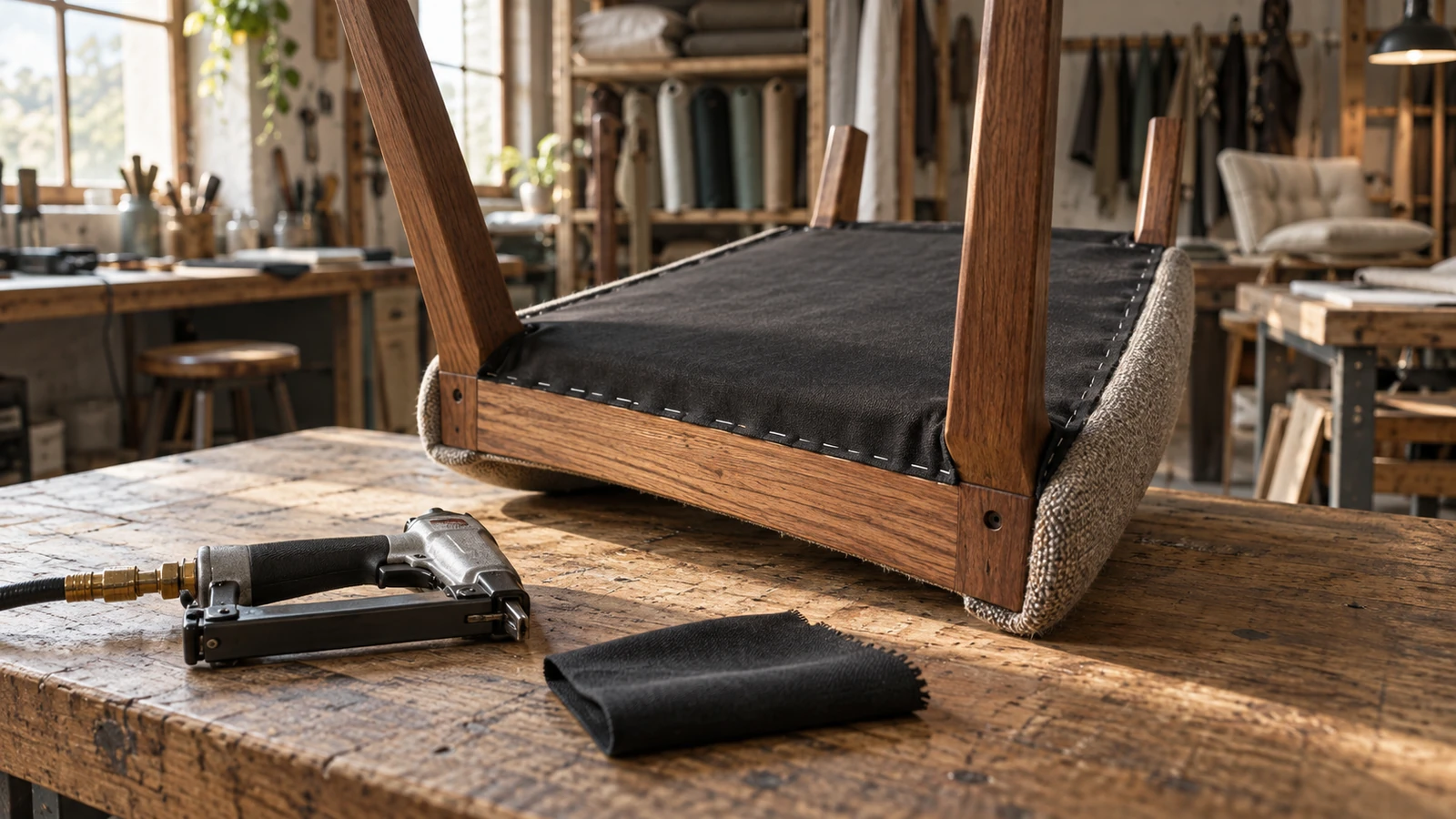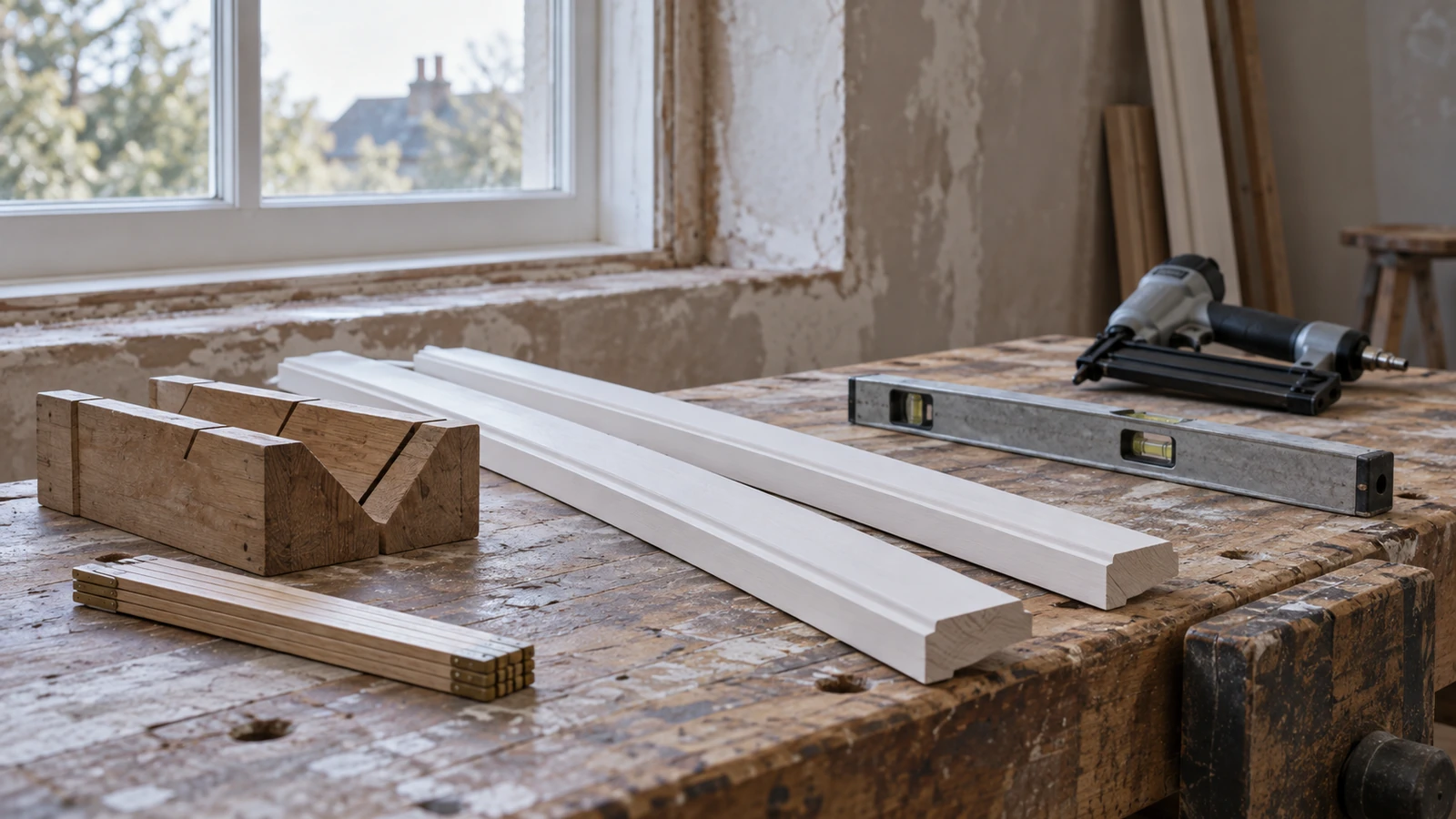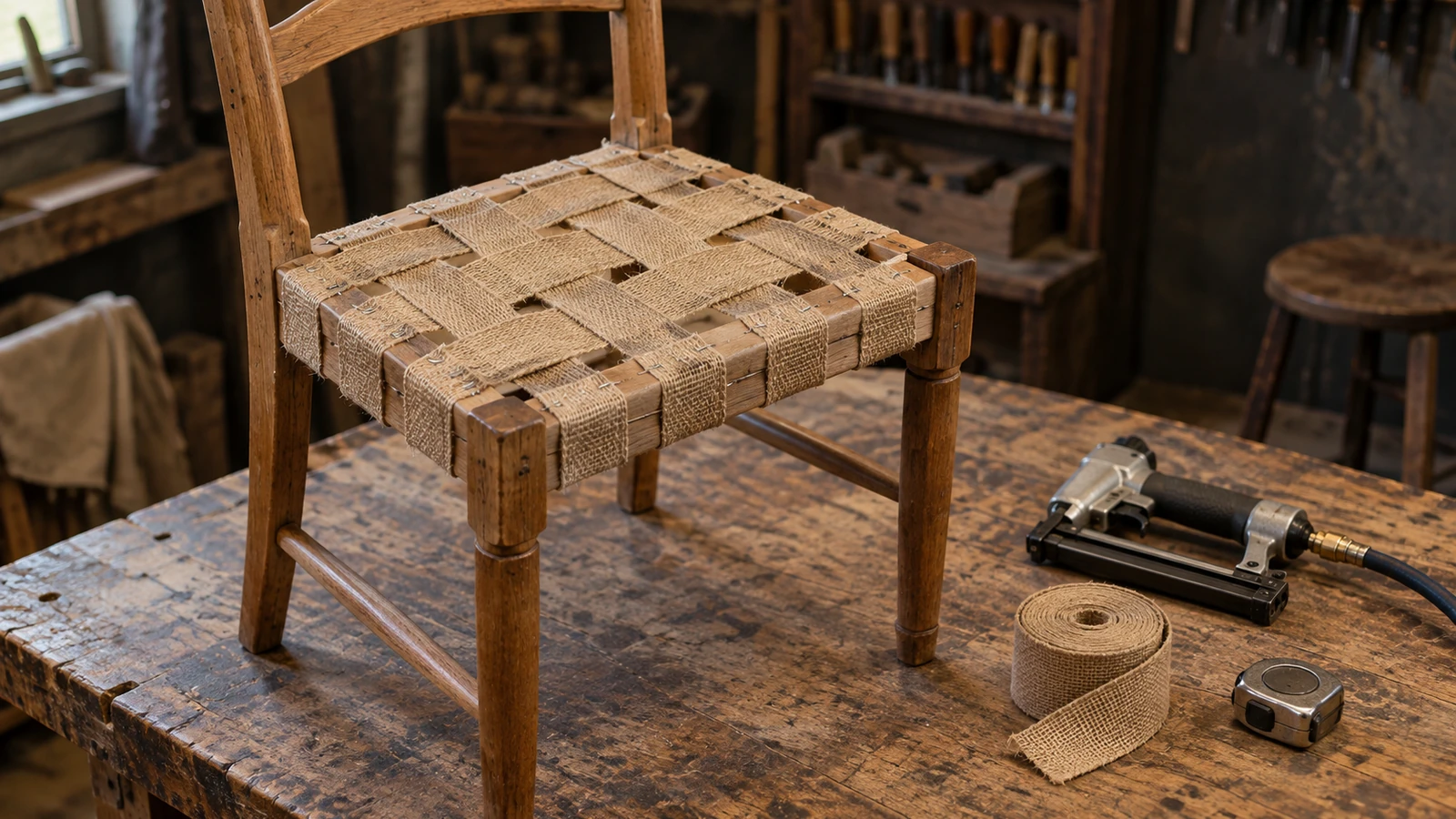

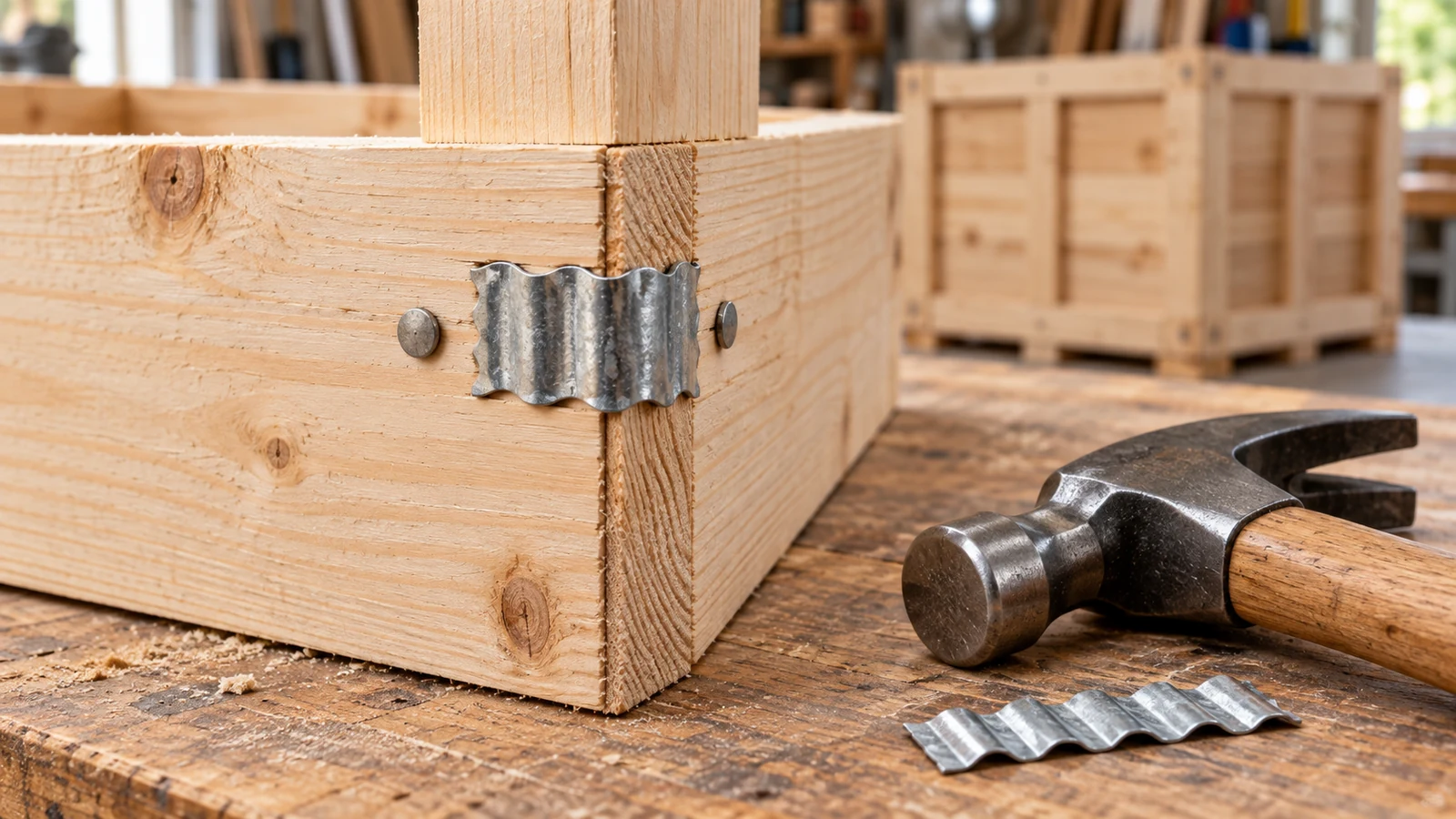
Corrugated staples for crate corners are chosen for the load that tries to fold the box, not the load that tries to pull a board off it. A corner fastened with a straight row of nails can look complete and still rack: the panels slide against each other, the diagonal changes, and the corner opens at the top of the stack. Stopping that movement is a different job from holding a board down.
ProAirNails supplies corrugated staples in 6.5 mm, 9.5 mm and 12.7 mm lengths on a 25.4 mm wide strip. The questions we receive from export packers are almost never about the strip width. They are about which way the waves face and which length belongs on the joint in front of them.
What corrugated staples for crate corners are actually restraining
Round nails and corrugated staples resist different movements. A nail driven through two boards resists them being pulled apart, and it does that well. What a nail resists poorly is the joint rotating inside its own plane, which is what happens when a loaded crate is dragged across a floor, stacked on uneven ground, or lifted by one corner while the rest of the load hangs.
Corrugated staples take that second job. The wave pattern bites both members across the joint line. The two boards stop sliding. That is why they show up on crates, pallet boxes and machine frames, and why they are rarely trusted alone on a corner that has to survive handling.
Write the job down before choosing a part, and answer three questions:
- Is the corner separating, or is it rotating?
- Is the load carried by the wood, by the banding, or by both?
- Will the corner be opened and reassembled, or is it permanent?
The wave direction is the whole decision
Corrugated staples for crate corners are driven across the joint line, and the wave direction decides which movement they resist. A corrugated fastener has a strong axis and a weak one. Turned one way, the waves grip the joint line and the assembly resists the shear that would fold it. Turned ninety degrees, the same part on the same joint adds almost nothing against that movement, even though the corner looks busier.
Mark the direction on the packing drawing rather than leaving it to the bench. A joint that was tested in one orientation has not been tested in the other, and the difference is invisible in a photograph of a finished crate. If a loader or a repair carpenter turns the strip to save time, the corner loses the property that was approved.
Match the series length to the joint, not to the crate
Choosing corrugated staples for crate corners by crate size rather than by joint thickness puts the decision in the wrong place. Length is set by how much material the fastener has to bite through on both sides of the joint line. A short fastener on a thick lumber corner never reaches enough grain, and a long one on thin panel edges can break out of the face that the customer sees.
| Series length | Typical joint it addresses | Question to settle before release |
|---|---|---|
| 6.5 mm | Light panel corners and display work where the face must stay flush | Does the fastener stay inside the skin without marking the outside? |
| 9.5 mm | Panel box assembly where two boards meet at a square corner | Is the joint line clean enough for the waves to bind both members? |
| 12.7 mm | Heavy corner posts and machine crates with thicker sections | Are both members thick enough to take the bite without splitting? |
These are starting points, not approvals. The length that works on one crate design is not transferable to another with a different board thickness, a different species, or a different moisture condition.
Banding, strapping, and the anchor point
Steel banding carries tension; the fastener only has to keep the banding where the design put it. Corrugated staples for crate corners hold that anchor in position but do not carry the banding tension, so the anchor detail has to be designed as a connection in its own right. When banding is anchored to a timber frame, the anchor sees a concentrated load that a light fastener can tear out of, so it should sit on solid wood rather than on a panel edge or a knot.
Check the anchor after the banding is tensioned, not before. A corner that looks correct with slack banding can distort once the load is applied, and re-tensioning a crate after the anchor has moved is a repair, not an adjustment.
Corner blocks and the parts already doing work
Many crates arrive with a block, a cleat, or a gusset already carrying the corner. Adding a second fastening system on top of a working detail can split the same piece of wood twice without adding strength. Look at what the corner already resists before adding a row of fasteners to it.
If a block is present, its grain direction matters. Fasteners driven into end grain hold far less than fasteners driven across grain, and a corner block rotated during assembly quietly moves the fastener from one condition to the other.
Inspect the corner as a load path
Inspection for corrugated staples for crate corners is a walk through four stages rather than a single check at the end, because the corner can be spoiled before a fastener is ever driven.
| Stage | What to look at | What to record |
|---|---|---|
| Before driving | Joint line fit, member thickness, moisture | Board sizes and species for the trial |
| After driving | Wave seating, breakout, splits at the ends | Series length, orientation, and tool setting |
| After banding | Anchor movement, corner distortion, band clearance | Banding tension method and photographs |
| After stacking | Racking, top-corner opening, base spread | Stack height and handling notes |
The ASTM F1667 driven-fastener specification gives buyers a shared language for fastener dimensions, materials, and finishes, which helps when incoming inspection has to compare a delivery against the sample. It does not approve a crate corner, so the physical trial still governs the release.
Stacking, stowing, and the transport trial
A corner that passes on the bench has only been tested against the bench. Export packing adds stack load, vibration and handling that no single-joint sample reproduces. The trial has to include a loaded crate. Not a piece of one.
- Stack at the height the container or warehouse will actually use.
- Push the loaded crate sideways rather than only lifting it straight up.
- Photograph the top and bottom corners after the trial, not only the failure.
- Keep the test crate as the reference for the next order.
If a corner does move, record where it moved. A corner that opens at the top of a stack tells a different story from one that spreads at the base. Two symptoms, two fixes.
Tool handling and the safety rule
Pneumatic and powered drivers speed this work up. They also raise the consequence of a mistake, which is why the NIOSH nail-gun safety guidance belongs in the packing area alongside the tool manual. For packed goods that also carry a stated quality expectation, the AWI architectural wood casework scope is a useful reference for how a written standard and a physical sample are meant to work together.
Neither document decides a crate corner. They do make the argument easier when a delivery has to be judged by someone who was not on the packing line.
FAQ
Can corrugated staples for crate corners replace nails?
No. They resist a movement that nails resist poorly, but they do not replace the withdrawal resistance a nail or screw provides.
Which way should the waves run?
Across the joint line, in the direction that resists the movement you are trying to stop. Confirm it on a trial corner before it becomes a drawing.
How do I choose between 6.5 mm, 9.5 mm and 12.7 mm?
By the thickness of material on both sides of the joint and by whether the outside face can tolerate the bite.
Does the strip width matter to the strength?
The strip width sets how much of the joint line the fastener bridges, so it changes the joint, not just the appearance.
Why did a corner split next to the fastener?
Usually too long a fastener for the section, or a fastener placed too close to the end of a board with no room for the wedge effect.
Should a crate corner use glue as well?
Only when the packing design calls for it. On a crate that will be opened, permanent adhesive may be the wrong choice.
When is a corner block better than another fastener row?
When the corner needs stiffness rather than grip, and when there is solid material to fasten the block to.
What should the corner trial record?
Board sizes and species, series length, wave orientation, tool setting, banding method, stack height, and photographs before and after.
What changes force a new corner trial?
A change of board thickness, species, moisture, corner detail, banding method, or fastener series.
What should an export crate enquiry include?
The corner drawing, board sizes, load weight, stack height, handling method, fastener series you intend to trial, and the delivery schedule.
Put the corner on the packing specification
ProAirNails supplies corrugated staples for crate corners alongside air staplers, coil nails, and other pneumatic nails for crate, pallet, and packing work. A request that includes the corner drawing, board thicknesses, load weight, and the orientation you intend to trial can be answered with a specification instead of a series name.
Send the packing drawing through Contact Us, and attach the trial photographs. ProAirNails keeps the approved corner sample with the order record so the next delivery is compared against the joint that was actually released.