
When reviewing a fastener manufacturer China sourcing model, determine whether the quoted portfolio comes from one factory or from a controlled network, then map every product, process, site, handoff, inspection, and release authority. Either model can work, but an unclear model prevents meaningful approval.
ProAirNails recommends requesting the source map before a broad audit. Buyers then spend time on the actual route instead of assuming that every forming, finishing, collation, packing, or testing step occurs behind one address.
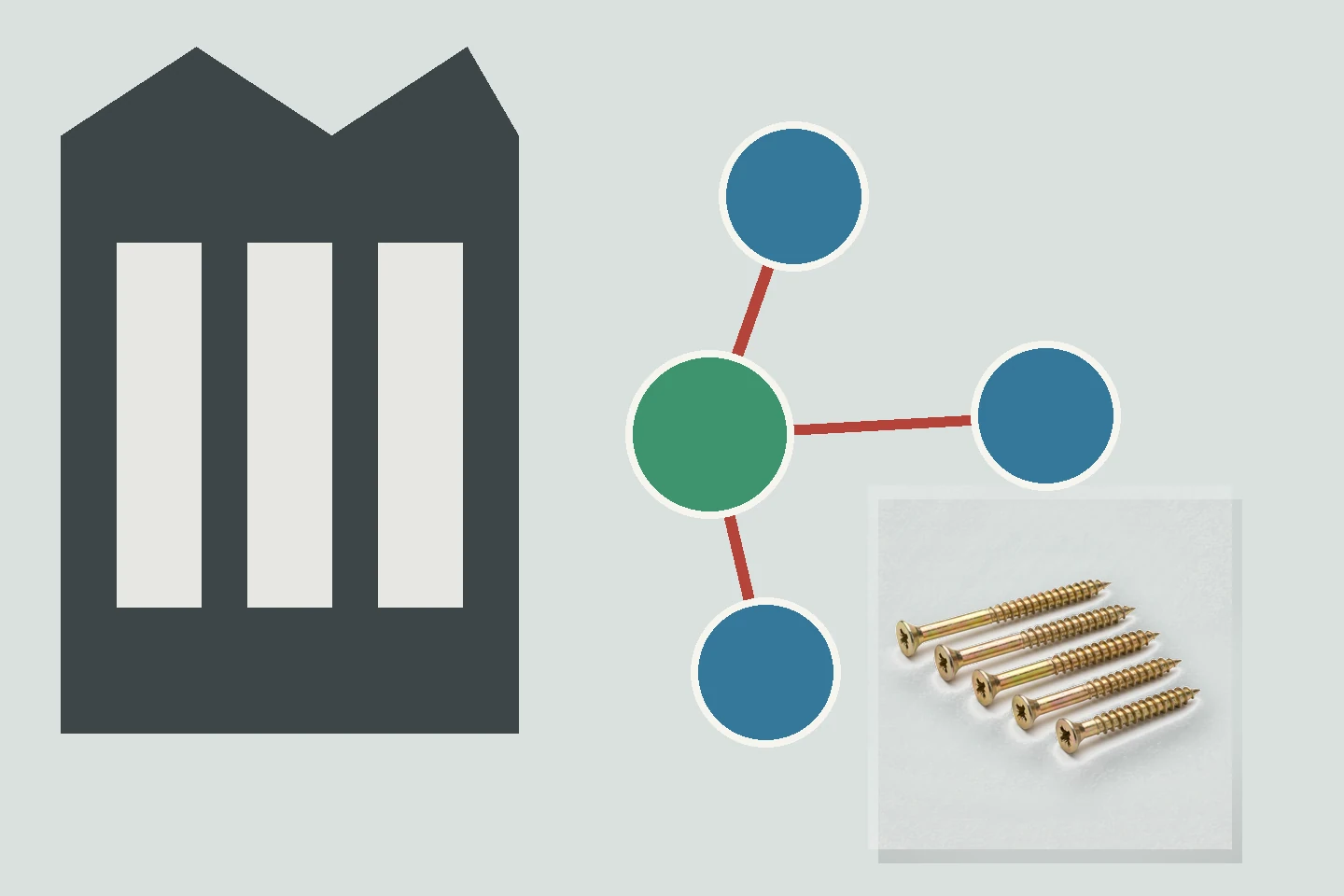
Draw the declared source map
For every buyer SKU, list legal entity, sales entity, manufacturing site, subcontracted process, material source, finishing route, collation route, packing location, testing location, warehouse, exporter, and release owner. Mark approved alternatives and prohibited substitutions.
Use site names and addresses, not vague labels such as partner factory. The map must connect to quotations, samples, purchase orders, and shipment records.
Understand the one-factory model
| Potential strength | Question to verify | Residual risk |
|---|---|---|
| Short handoffs | Which processes are genuinely internal? | Hidden external finishing |
| Direct scheduling | How is capacity reserved by family? | Shared bottleneck |
| Unified quality system | Does it reach every shift and process? | Procedure-practice gap |
| Simple traceability | Can inputs and outputs be recovered? | Lot merging |
A single address does not eliminate risk. Confirm the equipment, process capability, people, materials, and capacity for the actual quoted products.
Understand the controlled-network model
A network can provide specialized processes, more product families, alternate capacity, or geographic resilience. It also adds handoffs, transport, document interfaces, and change risks. The lead supplier must define how sites are selected, approved, monitored, and removed.
Ask whether the same buyer SKU may move between sites. If so, define equivalence evidence, buyer notice, sample approval, traceability, and label consequences before ordering.
Put each handoff under control
| Handoff | Minimum control | Buyer evidence |
|---|---|---|
| Material to forming | Identity, status, quantity, lot | Receipt-to-production trace |
| Forming to finishing | Protected product and specification | Transfer and process record |
| Finishing to collation | Configuration and released status | Lot mapping and checks |
| Production to packing | SKU, count, labels, separation | Packing traveler |
| Release to exporter | Authorization and destination | Shipment distribution record |
Select one finished carton and trace it through every handoff. Then choose one input or production lot and trace all related outputs forward.
The fastener manufacturer China review should preserve the elapsed time and every gap found during this exercise.
Separate commercial ownership from technical ownership
Name who may quote, accept an order, approve specifications, authorize changes, release product, communicate deviations, investigate complaints, and agree corrective action. A trading or sales entity can coordinate effectively, but coordination is not proof of manufacturing control.
- One controlled specification and revision per buyer SKU
- One approved source map linked to the order
- Named authority for deviations and release
- Defined records retained across organizational boundaries
- Buyer notification before relevant route changes
- Complaint access to every involved site
Audit by risk, not by corporate presentation
Prioritize critical forming, heat treatment where applicable, finishing, collation, inspection, packing, and change control. Review a representative buyer SKU at each relevant route. Remote evidence can prepare the review, but higher-risk routes may justify on-site confirmation.
A fastener manufacturer China source map should be tested against recent production and shipment records rather than accepted as a sales diagram.
Approve samples with their route attached
Record the site and route that produced each sample, along with configuration, date, lot, equipment or line where relevant, special preparation, and differences from planned production. Repeat approval when a route change could affect form, fit, finish, feed, strength, packing, or compliance.
The ASTM F1667 standard page can support applicable driven-fastener requirements, but a standard reference does not prove that alternate sites produce equivalent output.
Test continuity with realistic scenarios
Ask what happens when one forming line stops, a finishing partner is unavailable, a material lot is held, or a port route changes. Identify approved inventory, alternate capacity, notice timing, validation, documents, and who can authorize the response.
Use the ICC Incoterms rules resource to clarify international delivery responsibilities. It does not resolve manufacturing-source approval by itself.
State the limits of the source decision
An approved map describes declared and verified routes at a point in time. It cannot guarantee future capacity, every lot, or unchanged sub-sources. Performance monitoring, periodic review, change notification, and reapproval remain necessary.
During application trials, follow tool manuals and use the NIOSH nail gun safety guide as broader safety context.
Map a ProAirNails supply route
Review ProAirNails pneumatic fasteners, brad nails, air staple pins, and coil nails. Send the SKU list, tools, applications, volumes, destination, and source-control needs through the ProAirNails inquiry page.
A credible fastener manufacturer China proposal makes the actual route visible, controllable, and recoverable before the first bulk order. The source map should remain linked to every approved SKU and change decision.
FAQ
Is one factory always safer than a network?
No. Risk depends on actual capability, handoffs, capacity, controls, traceability, change management, and evidence in either model.
What belongs on a fastener source map?
Include entities, sites, material, forming, finishing, collation, packing, testing, warehousing, exporting, release, and approved alternatives.
How should subcontracted processes be disclosed?
Name the site, process, affected SKUs, approval status, controls, records, handoffs, and change-notification requirements.
Can a supplier move production between approved sites?
Only under the agreed source and change rules, with required equivalence evidence, notice, traceability, samples, and buyer approval.
What makes a network controlled?
Defined selection, approval, specifications, handoffs, monitoring, records, release authority, change control, complaints, and removal rules.
Who should authorize a deviation?
A named supplier authority should document it, while the buyer's authorized function decides acceptance when buyer requirements are affected.
How should samples identify their source?
Record the actual site, route, date, lot, configuration, relevant equipment, special preparation, and differences from planned production.
What continuity scenarios should be reviewed?
Review line downtime, held material, unavailable processes, labor or energy disruption, route changes, capacity pressure, and alternate-source activation.
Does an audit guarantee future quality?
No. An audit samples a system at a point in time; lot evidence, monitoring, change notification, complaints, and periodic review remain necessary.
What should I send before a source review?
Send SKU specifications, applications, tools, volumes, critical processes, packing, destination, documents, risks, and source-change expectations.