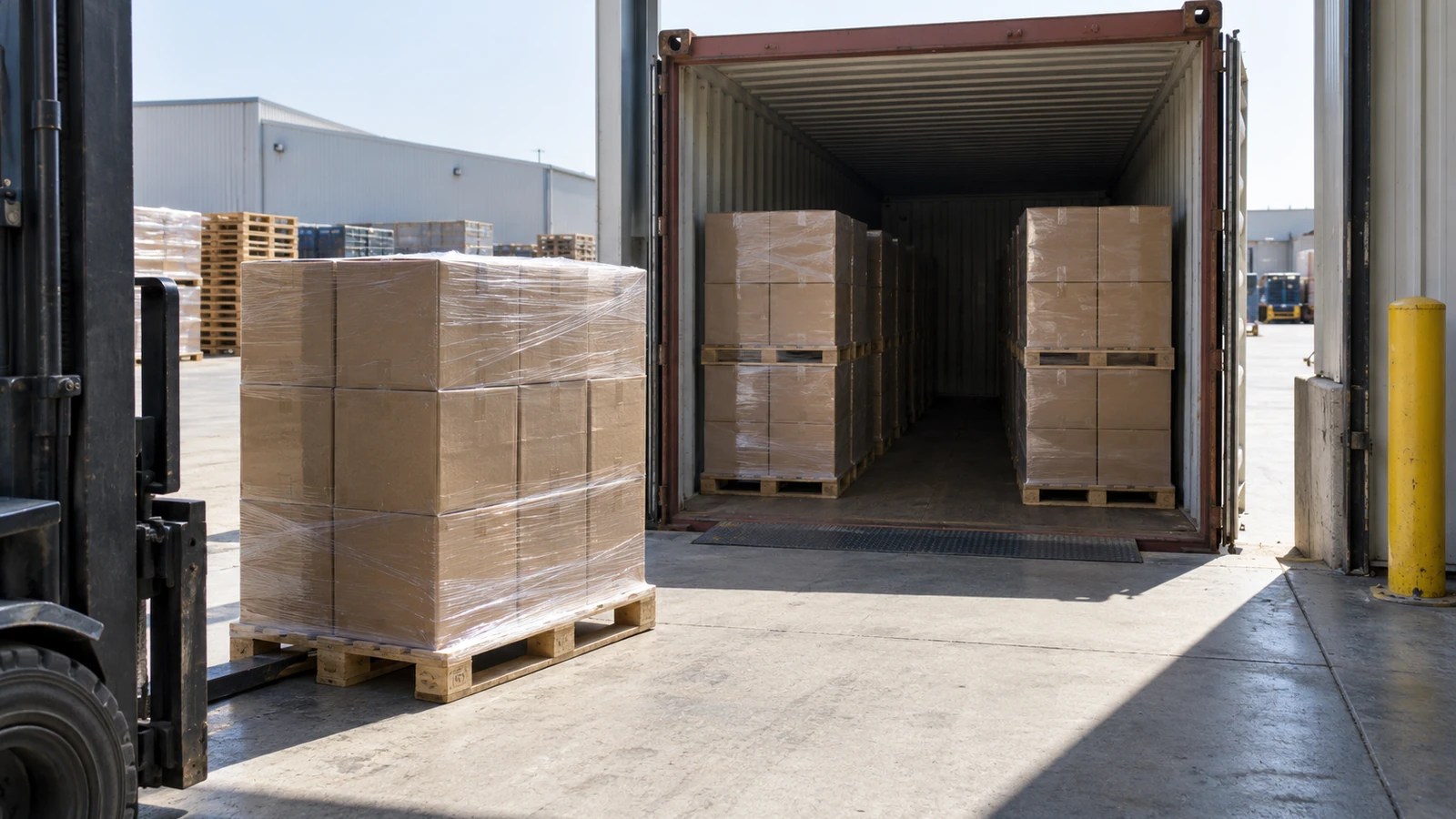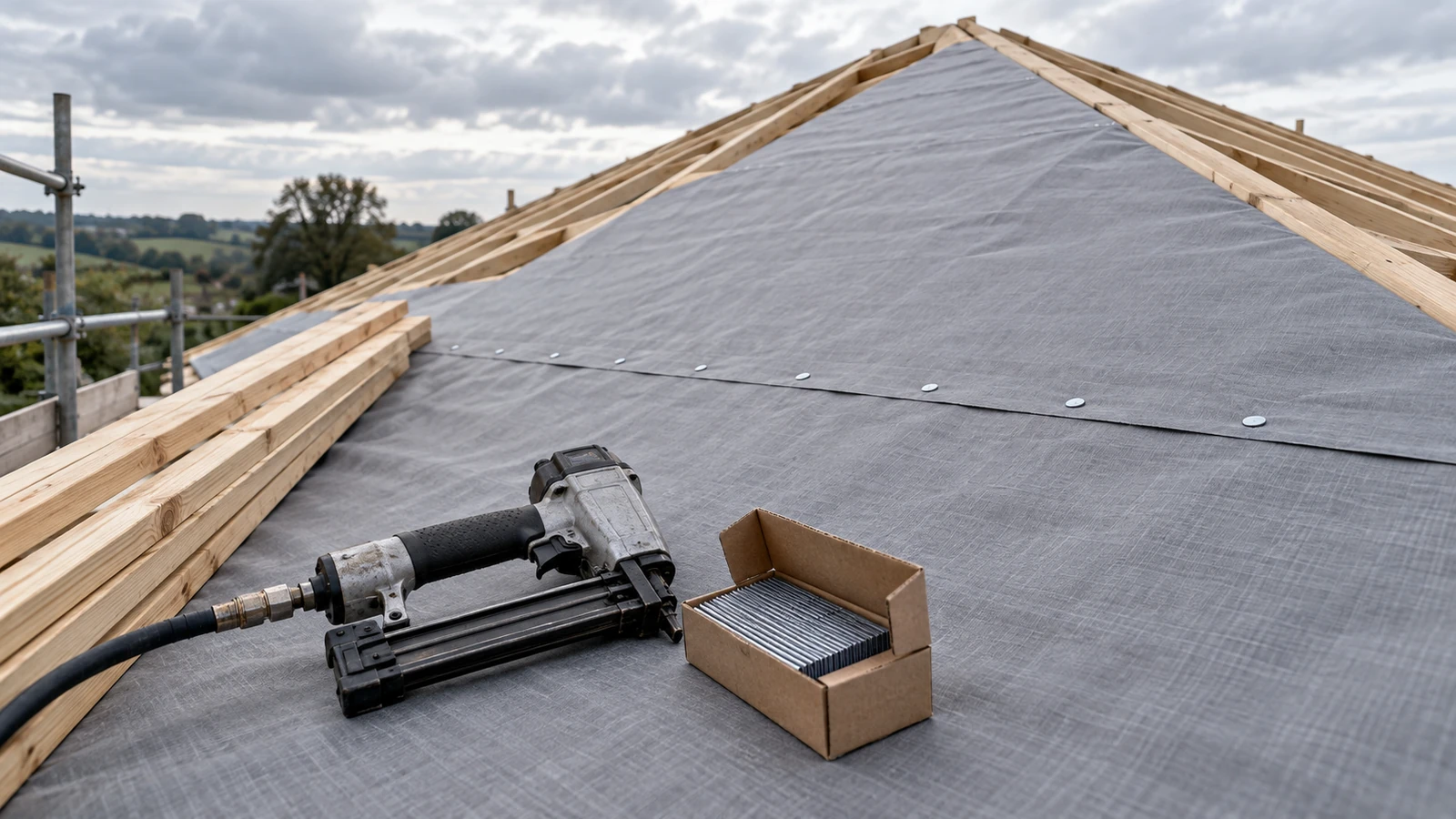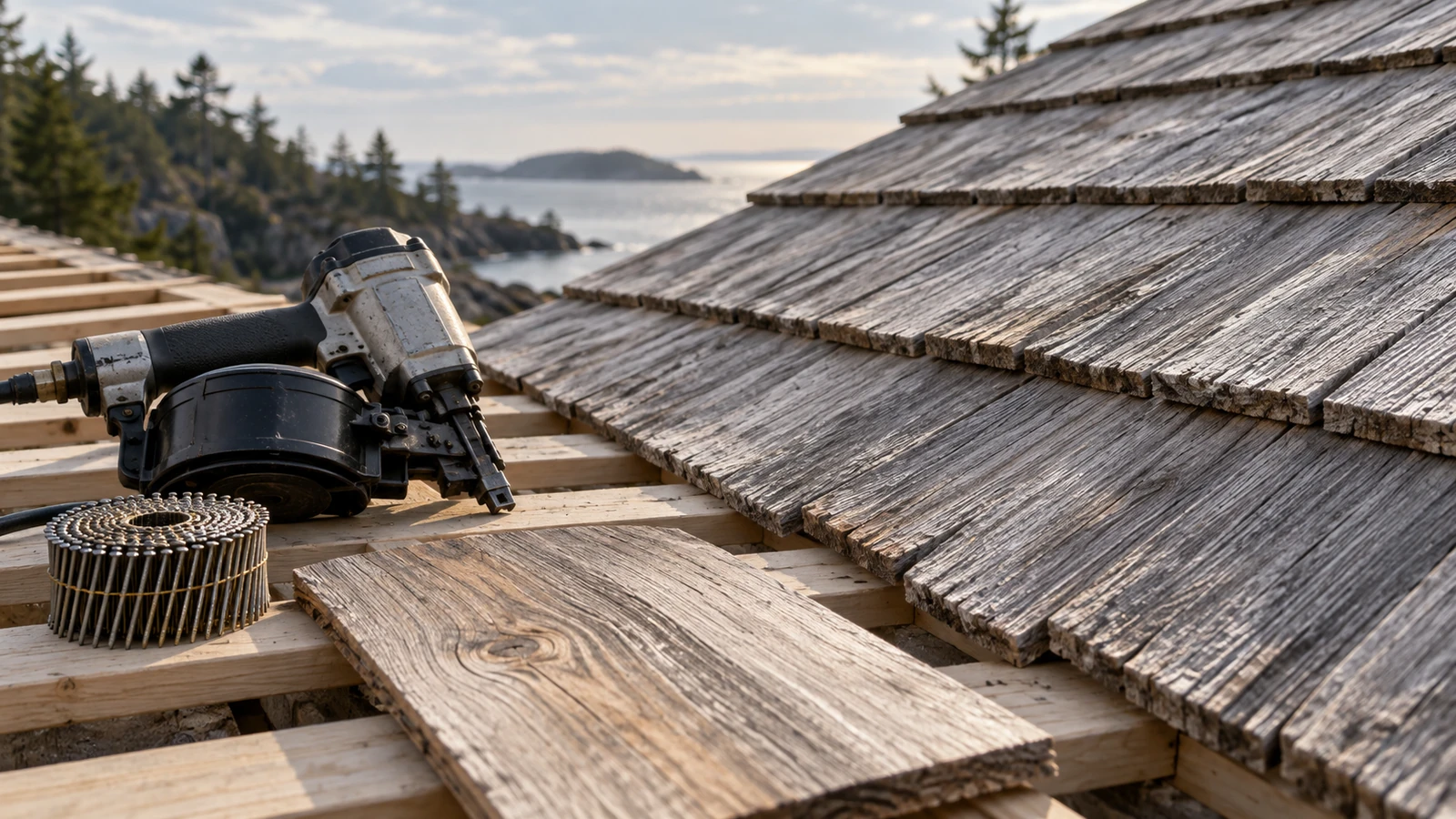

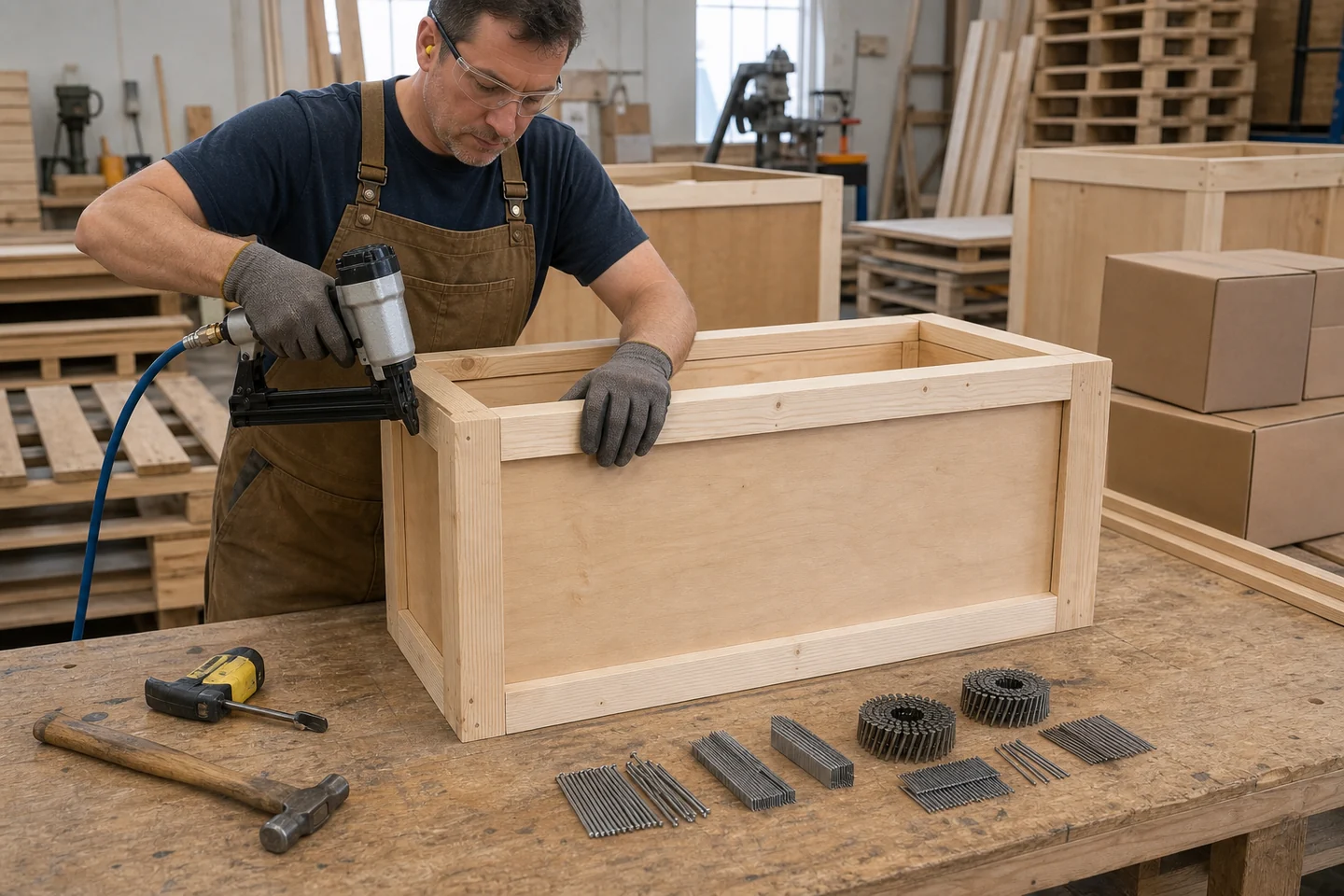
A wooden crate is built for the moment when ordinary handling stops being gentle. It may be lifted by forklift, tightened with straps, moved through a humid port, and opened far from the factory that packed it. The fasteners for wooden crates therefore need to work as part of the complete package, not simply look suitable beside a stack of timber.
A useful approval trial begins with the crate drawing and the actual load. Timber thickness, joint direction, edge distance, nail pattern, tool access, shipping route, and opening method all influence the choice.
Start with the joint that carries the handling stress
A base frame, side panel, cleat, and lid do different jobs. The base may see shock from lifting and setting down. A removable lid must stay secure in transit yet remain practical to open. Thin plywood over a frame asks for a different balance from two solid timber members.
Mark the joints most likely to loosen, split, or pull away. Test those first. Nail length, diameter, head, point, and shank should be selected around useful penetration and the real grain direction rather than around the largest fastener the tool can drive.
Production timber is less tidy than a sample block
Crate shops often handle boards with knots, changing density, variable moisture, and occasional edge damage. A trial made only in clear, wide softwood can hide deflection and splitting. Include narrow members, knotty sections, plywood edges, and any heat-treated material used in the normal packing program.
International shipments may also be subject to wood-packaging requirements. The International Plant Protection Convention publishes the international standards for phytosanitary measures, including requirements relevant to regulated wood packaging. Buyers should confirm the rules for the destination and the crate design with their packaging specialist.
The nailer and fastener have to keep the same rhythm
For a production trial, load the intended coil or strip into the actual tools used on the floor. Run at normal pace and record misfeeds, bent nails, proud heads, broken collation, pressure changes, and driver marks. Older nailers should be included when they remain in service.
The test should continue long enough to expose handling problems inside the carton. A perfect first coil does not reveal whether lower layers were crushed or whether strips break after warehouse movement.
Transport conditions belong in the specification
Finish selection depends on storage, ocean freight, condensation risk, destination climate, and whether the fastener remains exposed. Packaging must protect both the finish and the collation before use. Clear carton labels are especially important when several lengths or shank styles share one packing area.
For destructive opening, repairable crates, or reusable designs, the receiving team's method also matters. The approved connection should protect the load without creating an unreasonable unpacking hazard.
ProAirNails supports crate-line approval
ProAirNails supplies fasteners for wooden crates to packaging producers, equipment exporters, distributors, and industrial buyers. An inquiry can include the crate drawing, timber stack, load weight, nailer model, current nail, shank preference, finish, monthly volume, and packing requirements.
Review the Coil Nail range, compare Pneumatic Nails, or learn more at About ProAirNails. Samples of fasteners for wooden crates can then be evaluated against the actual assembly and shipping route.
FAQ
Are coil nails always the best fasteners for wooden crates?
No. The right format depends on the crate design, timber, joint, load, production tool, handling route, opening method, and applicable requirements.
What timber should be included in a crate-fastener trial?
Use the actual production species and thicknesses, including narrow edges, plywood, knots, changing moisture, and treated material where relevant.
What information helps a supplier prepare crate-nail samples?
Provide the nailer model, current fastener, crate drawing, timber stack, joint locations, finish, monthly use, destination, and box and carton targets.
Send your crate application through the ProAirNails inquiry page.