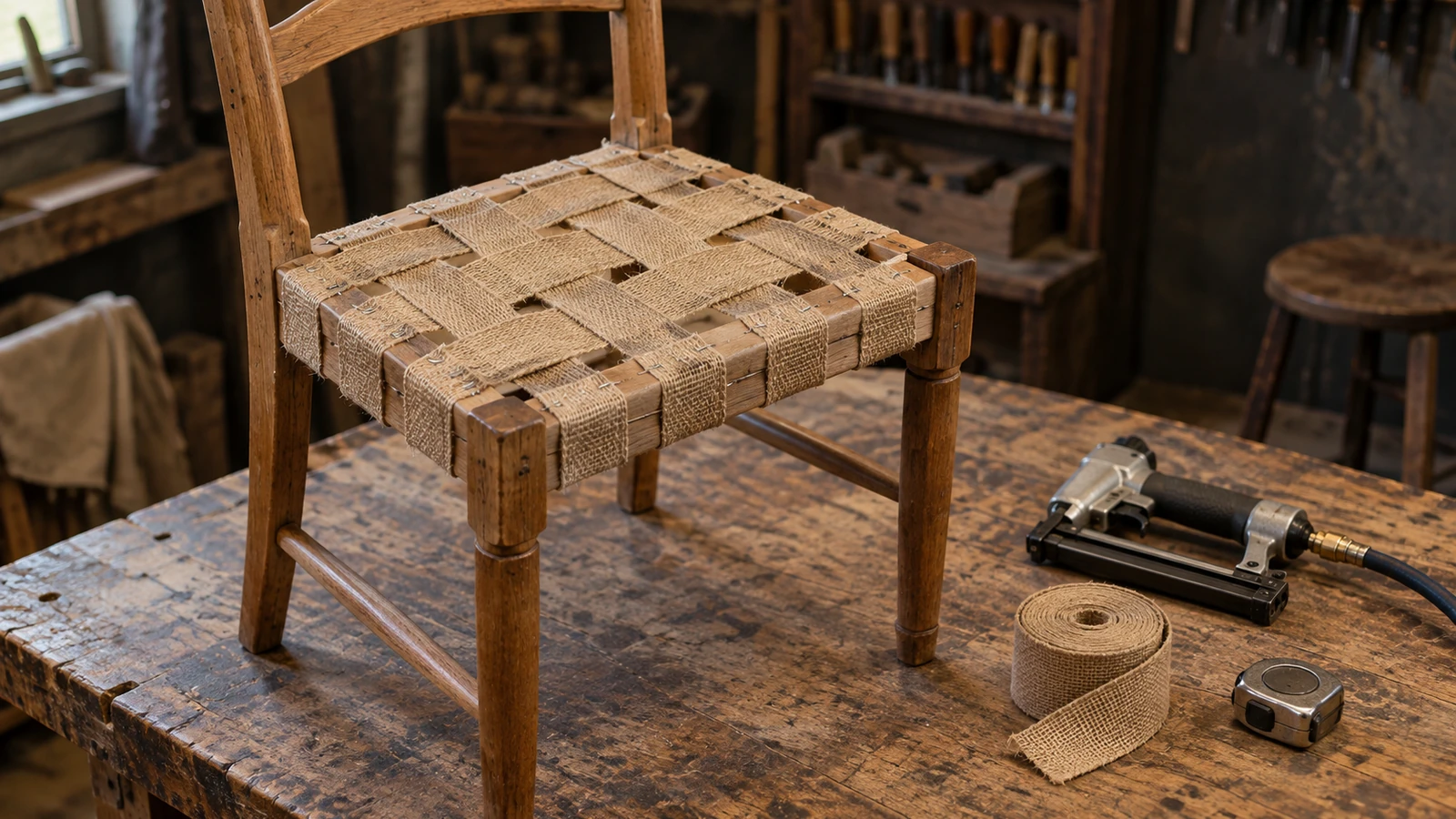

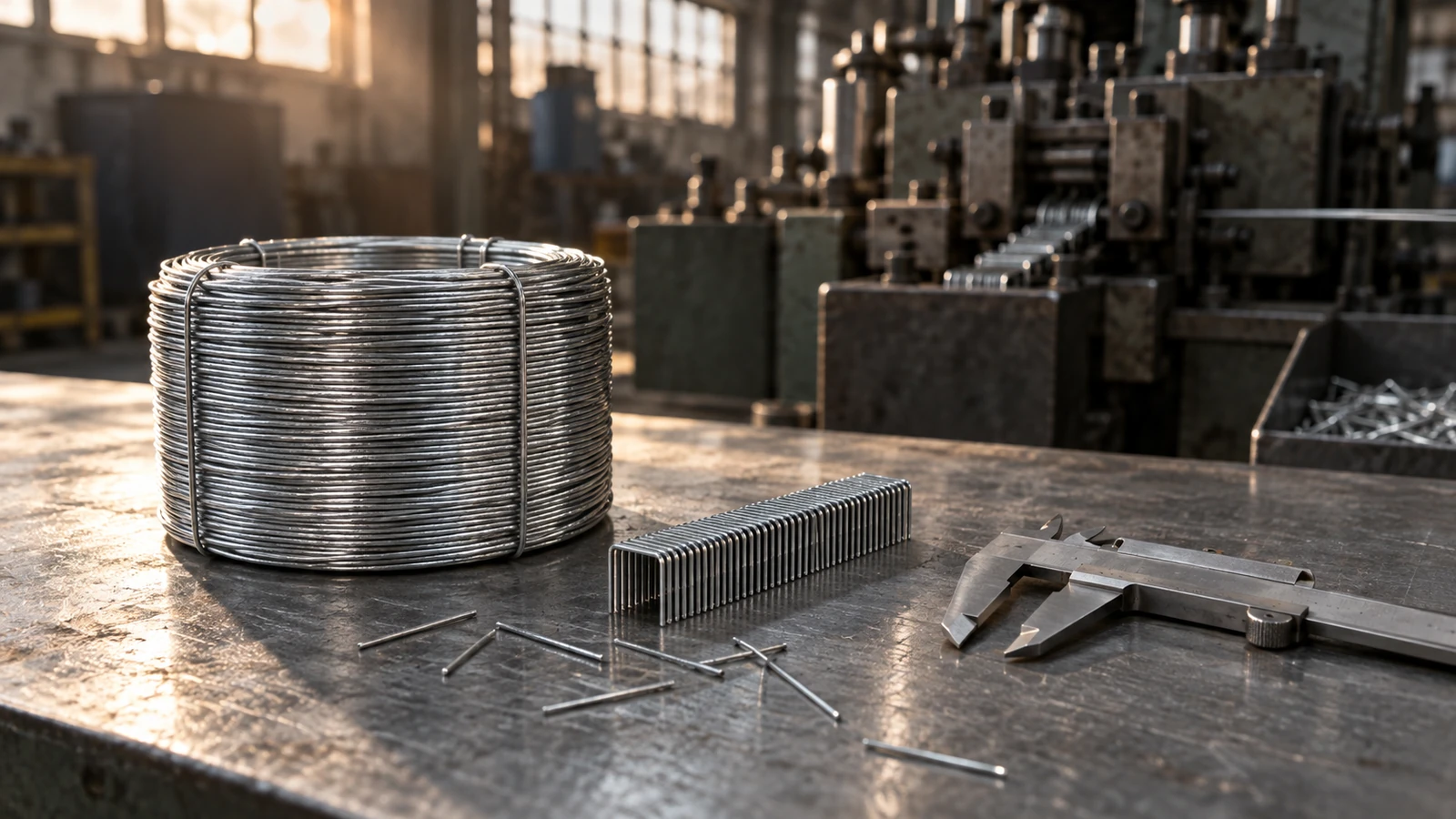
The crown of a staple is only as consistent as the wire it was drawn from, and that decision is made weeks before the strip reaches a tool. A plant buying wire on price alone can still press a strip that looks correct in the hand and measures differently under a caliper.
ProAirNails supplies collated staples into furniture, packaging and construction shops, and the question buyers ask most often is not about a part number. It is how to tell two suppliers apart when both send a neat sample box and a competitive quotation. A practical approach is to audit a fine wire staple manufacturer on the wire, on the press and in the paperwork, in that order, because that is the order in which the variables are fixed.
What a wire audit has to prove before a fine wire staple manufacturer quotes
Three claims are worth testing at the start, and none of them needs a laboratory. First, that the wire grade and diameter are known rather than assumed. Second, that crown width holds across a shift and not only across the sample. Third, that the coating survives being bent into a staple, which is a harsher test than being bent by hand.
When those three are answered, price becomes comparable. Until they are, two quotations describe different products, and the cheaper one is usually the one that gave up a dimension somewhere no one was measuring.
Crown width, wire gauge and the tolerance nobody writes down
Crown width is the distance across the top of the staple, and it is the dimension that decides whether a strip feeds cleanly through a magazine. Wire gauge sets the leg thickness and, with the crown, most of the holding behaviour. Both are usually stated on a drawing and rarely stated with a tolerance, which is where the trouble starts.
Ask what the crown tolerance is in millimetres and how often it is checked. A press that has been running for years drifts, and a supplier without an interval for checking it will find the drift with your complaint rather than with its own gauge. The same question applies to leg length, where the tolerance decides whether a staple buries to the right depth in a softwood rail or stands proud of a hardwood face.
Six stations on the line that decide staple quality
An audit does not need to cover the whole plant. It needs to cover the six places where a fine wire staple manufacturer takes a decision that the buyer will later feel on the line.
| Station | What to look at | What good evidence looks like |
|---|---|---|
| Wire intake | Grade, diameter, coating weight on the delivery note | A certificate that matches the coil, not a generic sheet |
| Drawing and straightening | Diameter consistency after drawing | Readings logged per coil, with the coil number |
| Forming press | Crown width, leg length, corner radius | An interval stated in hours, not in shifts |
| Coating | Adhesion after forming and bending | A bend test the operator can repeat on the line |
| Collation | Strip length, glue or paper bond, angle | Strip pull tests with a pass and fail figure |
| Packing | Count, carton weight, moisture protection | A weighed carton, not a counted one |
The order matters. A defect introduced at the drawing stage cannot be fixed by a better coating, and a crown that is out of tolerance cannot be corrected by sorting the cartons afterwards.
Coating, adhesion and the salt question
Most staple complaints that arrive months after delivery are coating complaints dressed up as holding complaints. Adhesion is the property that decides whether the zinc stays on the wire when the staple is formed, and it is decided by surface preparation rather than by the thickness of the coating alone. Any buyer auditing a fine wire staple manufacturer should ask to see the bend test rather than the coating certificate.
| Finish | Where it suits the work | What to ask the supplier |
|---|---|---|
| Bright, uncoated | Dry interiors, short service life | How the strip is protected in storage and transit |
| Electro-galvanised | Interior furniture and packaging | Coating weight per unit area and a bend test result |
| Hot-dip galvanised | Exteriors, treated timber, damp rooms | How the heavier coating behaves through the forming dies |
| Stainless | Coastal, chemical or food-adjacent exposure | Grade, and whether the tools are set for a harder wire |
Where a joint has to survive a defined salt exposure, the coating specification belongs in the purchase order with a test method attached. The ASTM specification for driven fasteners is a reasonable place to start when a buyer needs a shared language with a supplier about finish and dimensions.
Tool settings, and the safety rules that keep them honest
A staple that measures perfectly can still be driven badly. Magazine pressure, nose wear and air pressure all change how a leg enters timber, and a plant that never revisits those settings will read a tool problem as a fastener problem. The NIOSH guidance on pneumatic nail gun safety is written for the operator, and its logic applies just as well to a stapler: inspect the tool, set the pressure, and treat a misfire as a signal rather than a nuisance.
Count, collation and the last metre of the box
Collation is the least glamorous part of a staple and the one that stops a line most often. A strip that is glued slightly too firmly jams; one that is too loose drops legs in the magazine. Both failures are invisible in a sample box that was packed by hand, which is why ProAirNails asks for strips taken from the middle of a run rather than from the top of the pallet.
Ask for strips taken from the middle of a production run and check the count in two or three cartons by weight. Short counts rarely arrive as a dramatic shortage. They arrive as a line that finishes a shift with fewer cartons than the paperwork predicted.
Sample approval that survives a repeat order
A sample is only useful if it is described well enough to be reproduced. Photograph the strip beside a rule, record the crown width, leg length, wire diameter and coating, and keep the carton label. A fine wire staple manufacturer that cannot reproduce the sample from that description is telling you something useful before the order is placed. When the repeat order arrives, the comparison takes minutes instead of another round of samples.
ProAirNails keeps approved samples with the order record for exactly this reason, and quotes against pneumatic staplers, staple pins and pneumatic nails from a described joint rather than a remembered one.
Questions to send a fine wire staple manufacturer
- Which wire grade and diameter do you buy, and does the certificate follow the coil into production?
- What crown and leg tolerances do you hold, and how often are they measured?
- How do you test coating adhesion after forming, and what figure do you accept?
- Which strip pull test do you run, and what happens to a batch that fails it?
- How is count verified before the carton is closed?
- What changes between a sample run and a repeat order?
Where an audit stops being useful
An audit cannot prove that a staple will hold in a joint nobody has tested, and walking a fine wire staple manufacturer's line is not the same as approving a joint. It also cannot replace a trial, because the wood, the tool and the operator belong to the buyer, not to the supplier. A visit that produces a clean checklist and no trial panel has produced comfort rather than evidence.
Equally, a checklist should not be used to reject a supplier for a measurement that has no effect on the joint. The purpose is to compare suppliers on the variables that matter to the application, and to write those variables down so the next order does not reopen the discussion.
FAQ
What is a fine wire staple manufacturer?
It is a plant that forms staples from drawn steel wire, usually in the smaller wire gauges used for furniture, packaging and light assembly, rather than from heavy-gauge wire for structural work.
Does wire gauge decide holding power on its own?
No. Gauge, crown width, leg length, coating and the material being fastened all contribute, and a change in any one of them is a new joint.
Why does crown width matter so much?
It governs how the strip sits in the magazine and how the load spreads over the surface. A crown outside tolerance feeds badly and marks the workpiece.
How can a buyer test coating adhesion without a laboratory?
Bend a staple over a known radius and look at the outside of the bend. Flaking or cracking at the bend is a coating that will not survive the joint.
Is a heavier zinc coating always better?
Not for every joint. A heavier coating resists corrosion longer but can behave differently through forming, so it has to be matched to the application.
What should accompany an approved sample?
The measured crown width, leg length, wire diameter, coating, strip length and the carton label from the run it came from.
How often should tool settings be checked?
At the start of every run, and again after a jam, a nose change or any period when the line stood idle.
What causes a strip to jam in the magazine?
Usually collation bond, crown width or magazine wear. Separating those three takes minutes and saves a shift.
Can one staple series cover a whole product range?
It can cover similar joints in similar materials, but a change of material thickness or hardness is a new trial.
What belongs in a first enquiry to a supplier?
The joint, the materials, the tool, the annual volume, the coating requirement and the records you expect with each delivery.
What to put in the enquiry
Send the joint rather than the part number: the two materials, their thicknesses, the tool and the finish the exposure demands. Add the records you want with each delivery, because those records are the difference between a repeatable product and a lucky one. ProAirNails quotes from that description rather than from a remembered part number, and the reply can be a specification with tolerances on it instead of a price for a pin. A short note through Contact Us is enough to start.