
A brad can disappear neatly beneath paint and still be the wrong choice for the environment around it. Workshops may be dry, while warehouses, shipping containers, kitchens, bathrooms, or coastal destinations are not. Galvanized brad nails add a zinc-based protective layer, but the word “galvanized” alone does not tell a buyer how a fastener will perform in every setting.
The useful question is not whether a nail looks bright or silver. It is where the nail will spend its life, what material surrounds it, whether its head remains exposed, and how much corrosion protection the finished product actually requires.
Map the exposure before discussing the coating
A painted interior molding in a climate-controlled room faces a different risk from trim installed near an exterior door. Furniture stored for months in humid packaging presents another situation again. Moisture, condensation, chemicals, treated timber, salt, and repeated wetting can all change the selection.
Buyers should describe the route from factory to end use. Include storage, ocean freight, jobsite conditions, final location, and whether the fastener is concealed. This gives the supplier something more useful than a request for a “rust-proof” nail, a phrase that is too broad to approve responsibly.
Galvanized is a family description, not a single performance level
Zinc coatings can be applied by different processes and at different coating weights. Appearance is not a dependable substitute for a specification, test record, or agreed sample. If corrosion resistance is important, ask what process is used, what documentation can be supplied, and how the requirement will be controlled on repeat orders.
The American Galvanizers Association provides a useful overview of zinc and galvanized protection. It also helps explain why coating type, thickness, and environment belong in the same discussion.
Finish selection cannot rescue the wrong brad
Galvanized brad nails still need the correct gauge, length, head, point, collation, and tool fit. A well-coated strip that jams, bends, splits a profile, or leaves inconsistent drive depth is not a successful purchase. On painted trim, the entry mark and final filling process matter as much as the coating description.
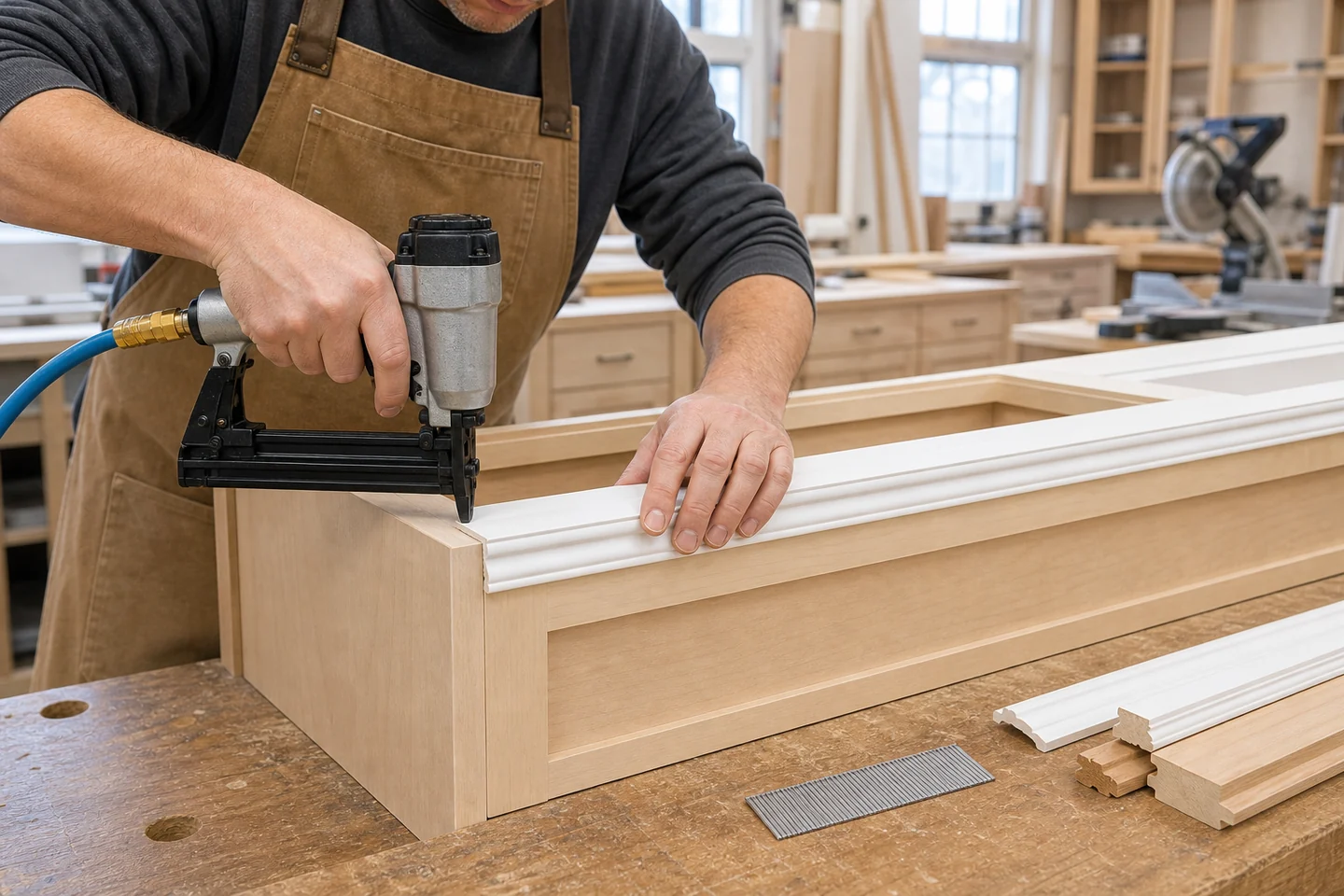
Run samples in the exact nailer and actual material stack. Include dense grain, edge shots, painted or laminated profiles, and the normal production air setting. Then inspect feeding, seating, surface marks, and any coating damage created during driving.
Packaging protects the finish before the customer uses it
Collated brads can arrive with the right specification and still disappoint if boxes absorb moisture or strips break during transport. Inner wrapping, carton strength, pallet protection, warehouse conditions, and clear size labels should be part of the approval. Buyers shipping mixed fasteners should also prevent heavy cartons from crushing lighter brad-nail boxes.
How ProAirNails supports application-based selection
ProAirNails supplies galvanized brad nails and related pneumatic fasteners for importers, distributors, furniture producers, cabinet shops, and trim manufacturers. A useful inquiry can include the nailer model, timber or board type, visible finish, exposure conditions, present sample, required lengths, and monthly volume.
Explore the Brad Nails range, compare related Pneumatic Nails, or review About ProAirNails. Samples and packing details can then be evaluated against the real application instead of a color description alone.
FAQ
Are galvanized brad nails suitable for outdoor trim?
Suitability depends on the coating specification, exposure severity, timber, design, local requirements, and expected service life. “Galvanized” by itself is not enough information for every outdoor application.
Can buyers judge zinc coating quality by appearance?
Appearance may reveal obvious damage, but it does not establish coating process, coating weight, or field performance. Use an agreed specification, samples, and suitable documentation.
What should be included in a brad-nail sample trial?
Use the intended nailer, material, edge distance, finish system, air setting, operator speed, and enough strips to assess feeding and drive consistency.
Discuss your environment and tool requirements through the ProAirNails inquiry page.