
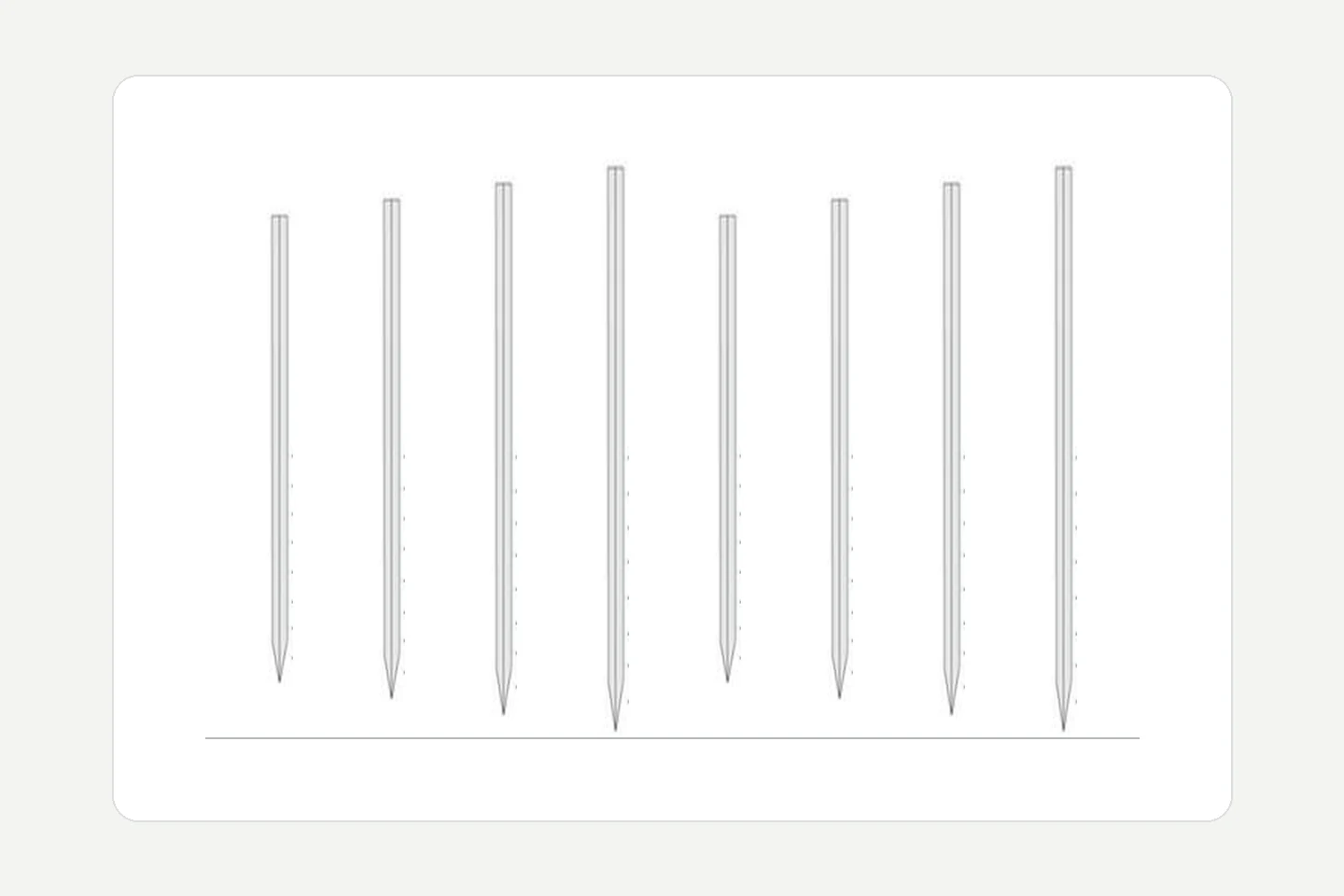
Headless pin nails are selected when a very small visible entry mark matters, but their fine profile makes application testing more important, not less. Buyers should confirm tool compatibility, pin length, straightness, collation, wood or panel behavior, edge distance, joint fit, adhesive contribution, packaging, and the limits of the connection.
ProAirNails recommends using fine pins for the task they have actually passed: positioning, delicate trim, molding, frames, decorative parts, or other light finish work defined by the application owner. A nearly invisible head does not prove that the pin provides the required holding force.
Know who benefits from fine pinning
| Use case | Potential benefit | Critical limitation to test |
|---|---|---|
| Fine molding and decorative trim | Minimal visible repair at the entry point | Edge breakout, grain deflection, joint movement |
| Picture and display frames | Temporary alignment while adhesive sets | Whether adhesive or another joint carries the service load |
| Cabinet details and returns | Small surface mark on finished components | Material thickness, hidden exit, assembly handling |
| Delicate hardwood profiles | Fine appearance compared with a larger head | Bending, curling, splitting, insufficient engagement |
| Primary structural connection | Generally not assumed from appearance alone | Use the designed fastener and validated performance method |
The buyer should explicitly describe what the pin does: holds alignment during curing, reduces part movement before another operation, secures a low-load decorative piece, or contributes to a tested joint. That sentence prevents headless pin nails from being treated as a universal invisible fastener.
Confirm the exact pin and tool system
Send the pin nailer brand and model, accepted gauge or series, required lengths, strip format, and current product sample. Record wood species or board type, part thickness, backing material, finish, edge distance, grain direction, joint fit, and any adhesive. Similar fine pins can differ in dimensions, collation, length range, and presentation inside the magazine.
The current ProAirNails finish-fastener category includes 23 gauge headless mini pins among its listed options, while exact sizes, finish, packing, and availability must be confirmed for the quotation. Buyers should approve the exact SKU rather than assuming every fine pin fits every pinner.
Select length from the complete material stack
Pin length must pass through the attached part and enter the receiving material without creating an unacceptable exit risk. Very long pins can deflect through sloping grain, a gap, dense feature, or mixed material. Very short pins may leave too little useful engagement. The correct length therefore depends on both parts, fit-up, entry angle, and the pin's limited role in the joint.
Do not derive length from face thickness alone. Include profiles, voids, adhesive lines, backing position, edge geometry, hidden finished faces, and nearby services or hardware.
Run a surface-and-path trial
| Trial check | What to inspect | Decision |
|---|---|---|
| Entry appearance | Visible mark, fiber lift, finish cracking, filler need | Acceptable cosmetic standard |
| Hidden path | Straight path, curl, bend, side exit, joint-interface turn | Section representative samples when permitted |
| Joint fit | Gap, movement, spring-back, clamp effect | Whether the pin stabilizes or distorts the assembly |
| Feed behavior | Skips, doubles, jams, broken collation, mixed lengths | Tool-product compatibility and strip condition |
| Handling result | Movement during transfer, curing, finishing, or packing | Whether another fastening or clamping method is needed |
Use actual finished material, not only soft scrap. Keep the tool, pressure range, operator, contact method, support, edge distance, and shot direction fixed. Mark each sample and retain both clean and failed sections. The small entry point can hide a curled or redirected pin.
Define the role of adhesive and other fasteners
Many fine-finish assemblies use pins to hold position while adhesive develops strength. If that is the design, record adhesive type, open time, clamp or handling sequence, cure condition, joint fit, and the point at which the assembly may be moved. Do not let the pin quietly become the only load path because production skips the planned adhesive or cure time.
Where another fastener carries the primary load, define its location and sequence so the fine pin does not interfere. When appearance is critical on both faces, map the maximum safe length and entry direction.
Inspect supplier and packaging controls
Ask how straightness, length, surface condition, collation, strip count, and mixed-SKU prevention are checked. Fine pins can be damaged by crushed inner boxes, moisture, careless strip handling, or poor separation between similar lengths. Require clear labels, lot identity, supported strips, strong master cartons, and a retained approved sample.
For private-label orders, verify every length on artwork and barcode records. A single copied number can place the wrong pin in the right-looking carton. ProAirNails recommends a physical packed-sample approval before mass printing or packing.
Calculate risk-adjusted value
Compare unit cost with tool downtime, broken strips, hidden side exits, surface repair, discarded trim, sorting, mixed lengths, and customer complaints. A low-cost pin that needs more filling or creates unpredictable paths may be more expensive than a stable approved product.
Also plan the length mix. A buyer ordering too many similar SKUs can increase warehouse errors and slow turnover. Use the smallest range that covers validated material stacks without encouraging operators to substitute an unapproved length.
Prepare a headless-pin RFQ
- Pin nailer brand, model, accepted gauge or series, and length range
- Requested lengths and estimated quantity by SKU
- Material species or type, thickness, profile, finish, and edge distance
- Joint function, adhesive or secondary fastener, and handling sequence
- Surface-mark and hidden-path acceptance criteria
- Pieces per strip, box, carton, pallet, label, barcode, and lot code
- Sample plan, retained controls, change notice, and complaint response
Use a release gate before moving from sample to bulk order
The sample should not be released merely because the entry mark is small. Confirm that headless pin nails load and feed correctly, remain inside the approved material path, meet the cosmetic limit, support the defined handling sequence, and arrive in packaging that protects fine strips. The approval record should identify tool, pin length, material, joint fit, adhesive or secondary fastener, settings, sample code, and reviewer.
If one of those inputs changes, decide whether the existing approval remains valid. This release gate is especially important when several nearly identical pin lengths share one work area, because a visually minor warehouse substitution can create a hidden exit or reduce intended engagement.
Use technical references as decision support
The USDA Forest Products Laboratory's Wood Handbook resource provides broader technical context on wood and mechanical fastening; the buyer still needs an application-specific joint test. For pneumatic tool safety, pair the nailer manual with the NIOSH nail gun safety guide.
These resources do not state that headless pin nails are suitable for every trim joint. They support informed testing and safer tool use.
Review ProAirNails pin options
Explore the ProAirNails pin nails selection, compare the brad nails range when a larger head or stronger finish fastener may be appropriate, and review the full pneumatic nails category. Send the tool model, pin lengths, material stack, joint role, packing, and sample method through the ProAirNails inquiry page.
Well-selected headless pin nails solve a defined finish-work problem; they are not simply the smallest fastener in the catalog.
FAQ
What are headless pin nails used for?
They are commonly considered for delicate trim, molding, frames, cabinet details, positioning, and other light finish work where a very small visible entry mark is important.
Are headless pins strong enough without adhesive?
That depends on the tested joint and load. Fine pins are often used with adhesive or another connection, so do not assume the pin alone carries the service requirement.
How do I choose pin length?
Use the complete material stack, required receiving engagement, edge and exit risk, grain, joint fit, tool range, and the pin's defined role. Validate representative samples.
Can a longer pin hold better?
Not automatically. More length may add engagement but can also increase deflection, curling, side-exit, or hidden-face risk.
Why do fine pins curl inside wood?
Possible factors include sloping grain, dense features, gaps, angled entry, poor support, damaged pins, excessive path length, or movement at the joint interface.
Do headless pins leave no mark?
They leave a very small entry, but visibility depends on material, finish, depth, grain, lighting, and whether fibers lift or crack.
Are all 23 gauge pins interchangeable?
No. Tool fit also depends on profile, dimensions, length, strip and collation format, and manufacturer specifications. Test the exact product.
How should pin strips be packed?
Use supported inner packaging, clear length labels, lot identity, strong cartons, moisture protection, and separation that prevents similar SKUs from mixing.
When should I use brad nails instead?
Consider brads when the assembly needs a larger finish fastener or more holding contribution and the visible mark remains acceptable. Test both options in the real joint.
What should I send ProAirNails for a quotation?
Send the pinner model, requested lengths, materials and thicknesses, joint function, finish standard, quantities, destination, packing, artwork, and sample requirements.