
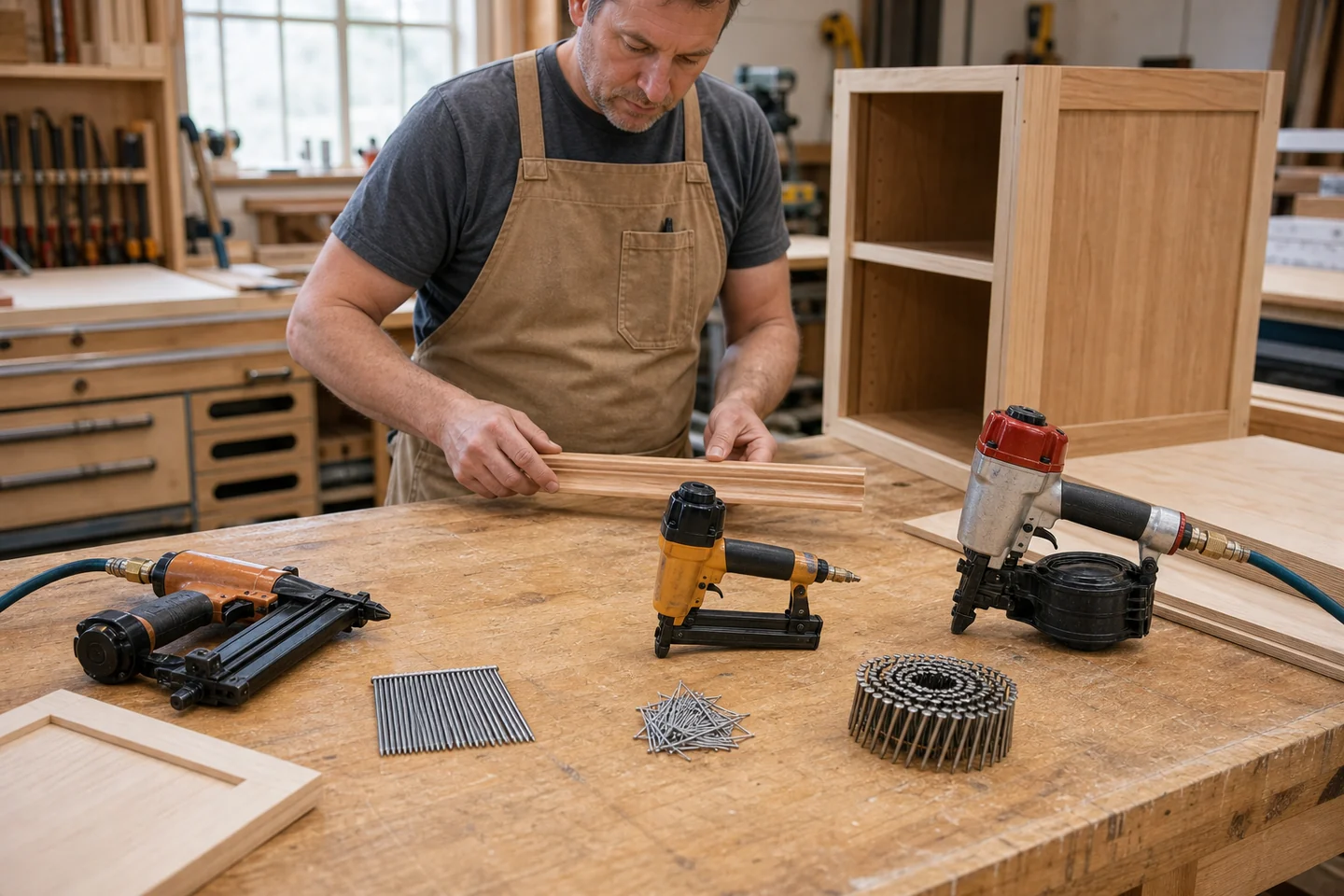
Place a half-finished cabinet on the bench and the phrase nails for woodworking becomes surprisingly vague. The thin molding on the door, the plywood back, the drawer support, and the shipping base may all need different fasteners. Choosing one nail because it happens to be loaded in the nearest tool usually moves the work elsewhere: filling holes, replacing split trim, or correcting a joint that shifted.
A better decision begins with the part in your hand. Look at the timber, the receiving thickness, the face the customer will see, and what happens to the assembly after this operation. The carton label comes later.
One cabinet can contain four different fastening jobs
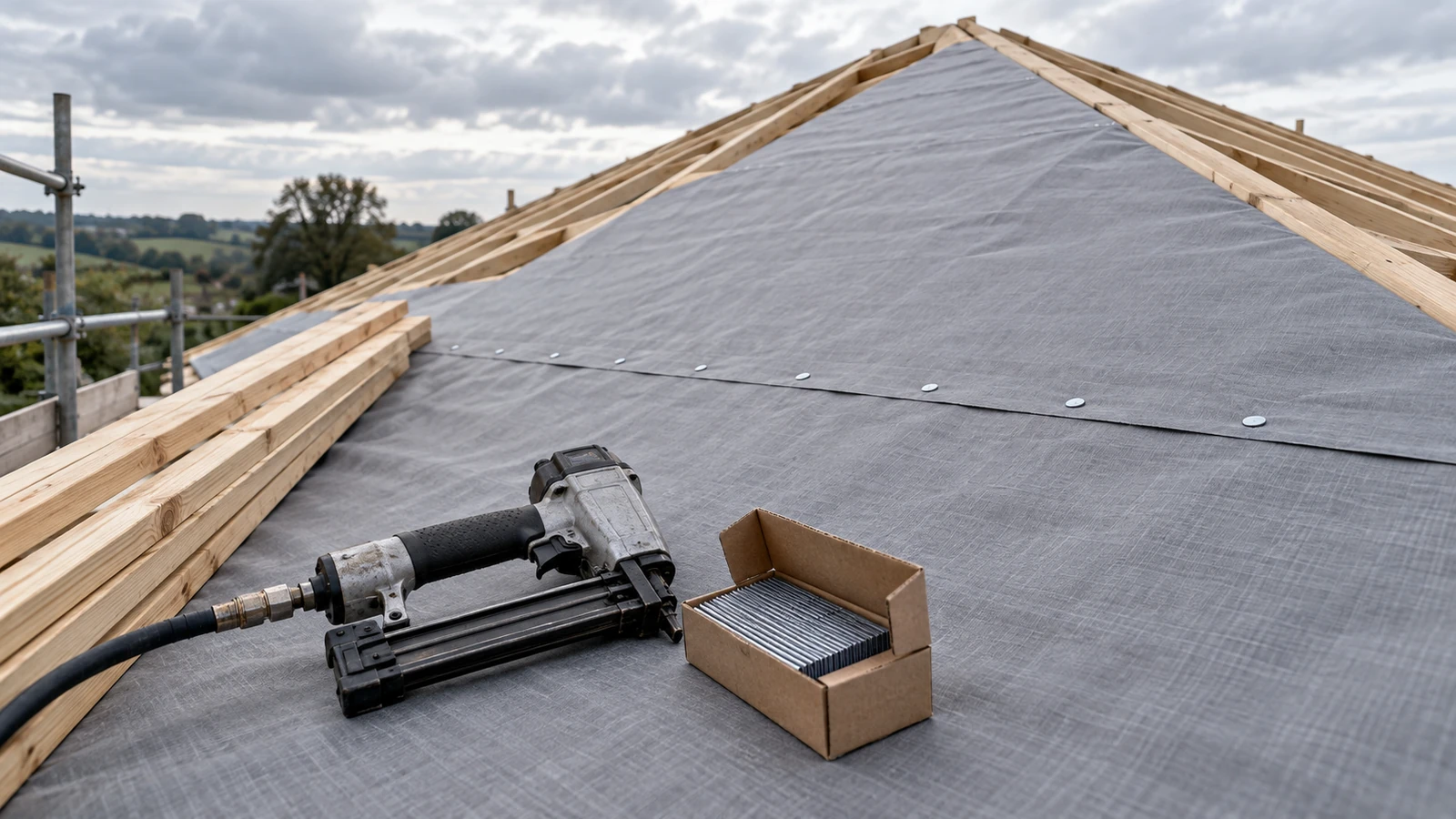
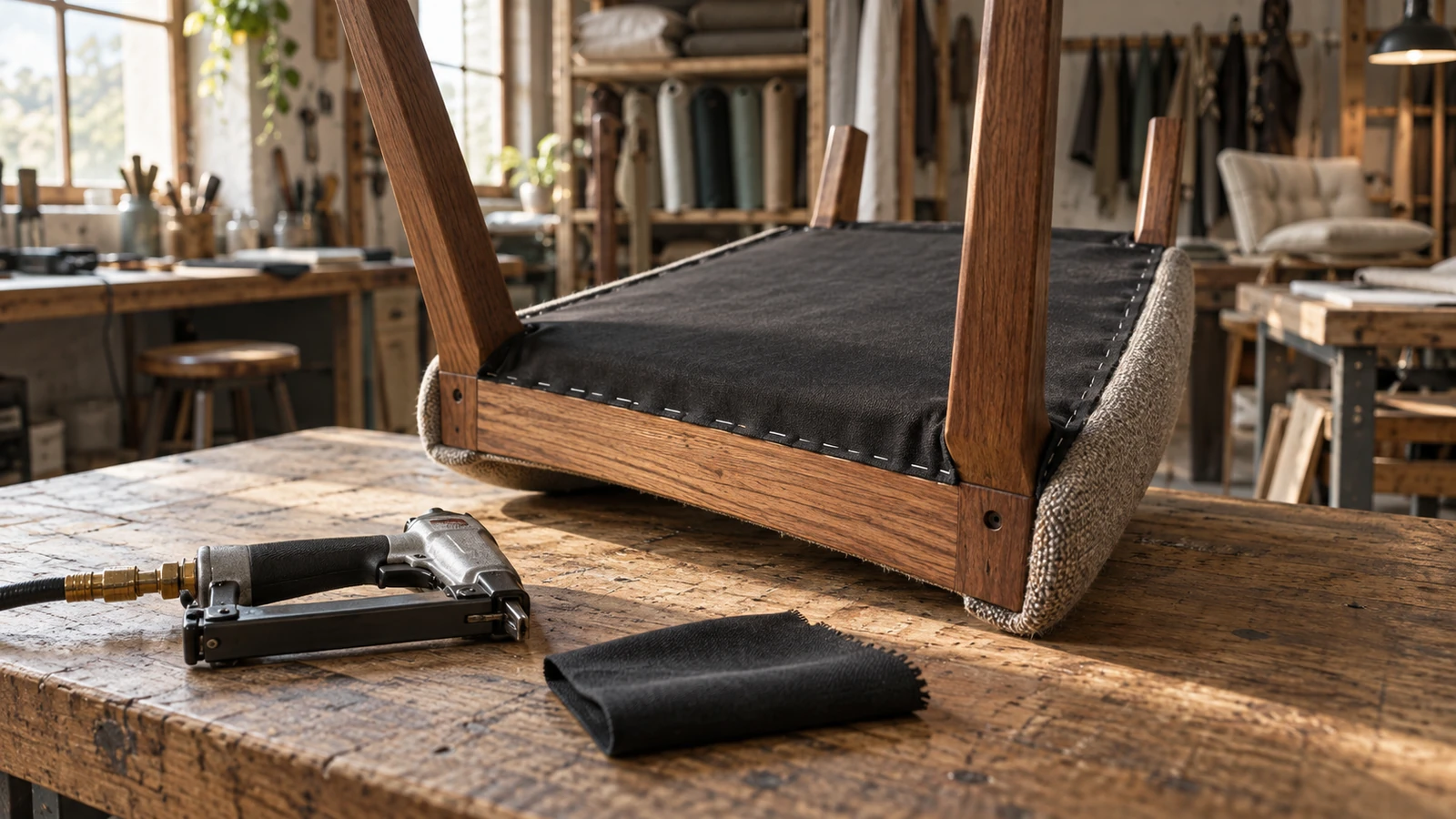
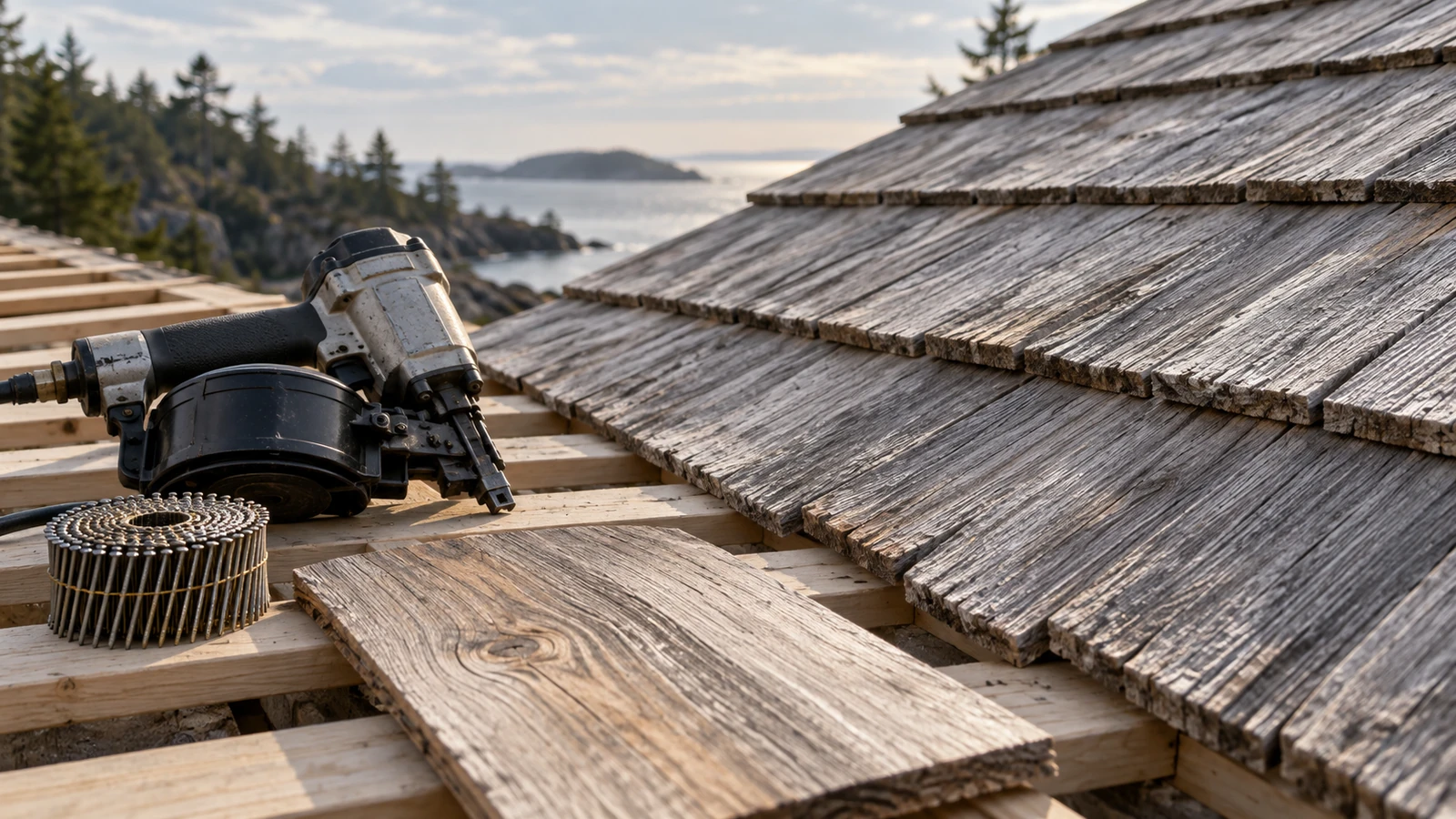
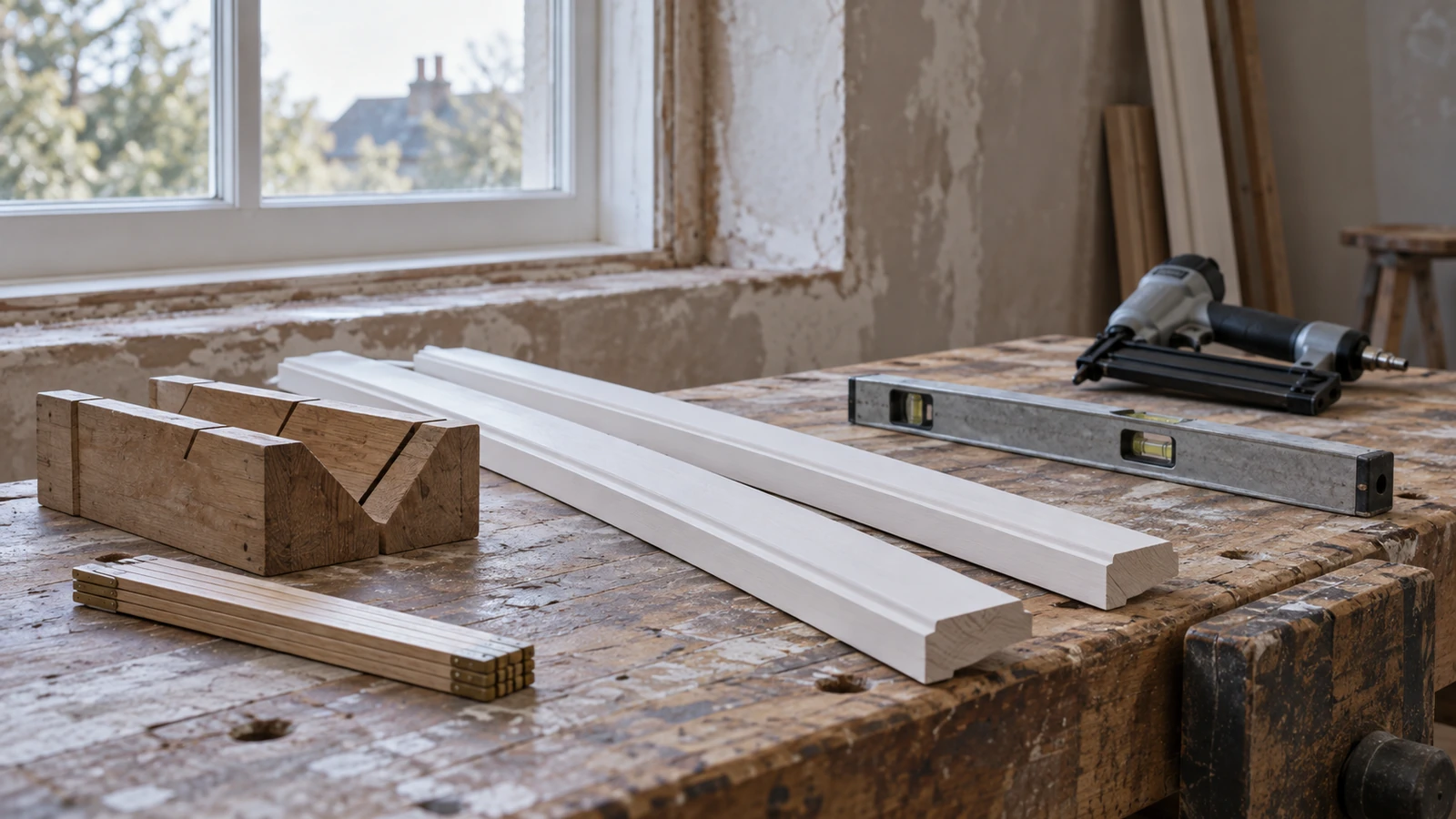
Fine decorative trim may only need to stay still while adhesive cures. A headless pin can be useful there because the entry mark is small. A cabinet back asks for broader restraint across sheet material, which may lead the workshop toward a brad or staple. A crate or pallet component faces rough handling and repeated production, where a compatible coil-nail system may make more sense.
None of these fasteners is “best” by itself. Each trades entry mark, holding, driving effort, speed, and tool requirements differently. The joint decides which trade is acceptable.
The customer sees what the production drawing may miss
Walk around the finished object before approving a sample. A nail hidden against a wall can leave a different mark from one beside a stained edge. White paint may reveal a dent that looked harmless on raw timber. Veneer, laminate, narrow profiles, and end grain also change how forgiving the surface is.
For appearance work, test the awkward pieces rather than saving them for later. Use the dense offcut, the thin molding, and the corner where the fastener might follow the grain. Ten perfect drives into a wide block prove very little about that edge.
Length should stop when the joint has enough
Extra length can feel like insurance, but it can also bring splitting, deflection, breakthrough, longer driving time, or contact with hidden hardware. The fastener needs to pass through the top piece and enter the receiving material far enough for the intended job. Beyond that point, more steel is not automatically more security.
Load-critical construction needs project-specific design. The American Wood Council provides National Design Specification resources for engineered wood construction. Cabinetry, furniture, packaging, and structural connections do not share one simple rule, so the applicable design requirements still govern.
Make the trial look like an ordinary Tuesday
Run proposed nails for woodworking through the tools that actually stay on the line, including the older nailer everyone knows has its own personality. Let the usual operator work at normal pace. Open more than one strip or coil, and include the timber that tends to cause trouble.
Write down the interruptions: a jam after reloading, a head sitting proud near a knot, a strip breaking when handled, or a pin appearing at the edge. “Sample passed” loses those details. A short note tied to the tool, material, and batch makes the next purchase far easier to judge.
Too many similar cartons create their own defects
A workshop shelf can collect near-duplicate sizes because nobody wants to remove the one that might still fit an old tool. Soon, the operator is comparing tiny label print while a partly opened box has lost its reference.
Give every stocked fastener a named job and tool family. Keep the approved sample, carton label, specification, and trial note under one code. If two items genuinely cover the same work, decide whether both are earning the space and training they consume.
How ProAirNails helps narrow the choice
ProAirNails supplies nails for woodworking across pin nails, brad nails, coil nails, staples, and related pneumatic tools. Buyers can send a joint photo, nailer label, current fastener, timber or board sample details, order volume, and a plain description of what is going wrong.
Compare Brad Nails, Coil Nail options, and the broader Pneumatic Nails range, then review About ProAirNails.
FAQ
Which fastener is suitable for fine trim?
Headless pins or brad nails are often considered when the visible mark matters, but material, profile, adhesive, load, tool, and acceptable finish determine the final choice.
Can similar-looking nails be used in the same nailer?
Not necessarily. Confirm gauge, collation, angle, length range, and magazine requirements in the tool manufacturer's instructions before testing a substitute.
What information makes a supplier inquiry useful?
Include the tool model, current fastener, joint photo, materials, dimensions, visible-face requirement, finish, volume, packing, and specific trial problem.
Share your application through the ProAirNails inquiry page.