
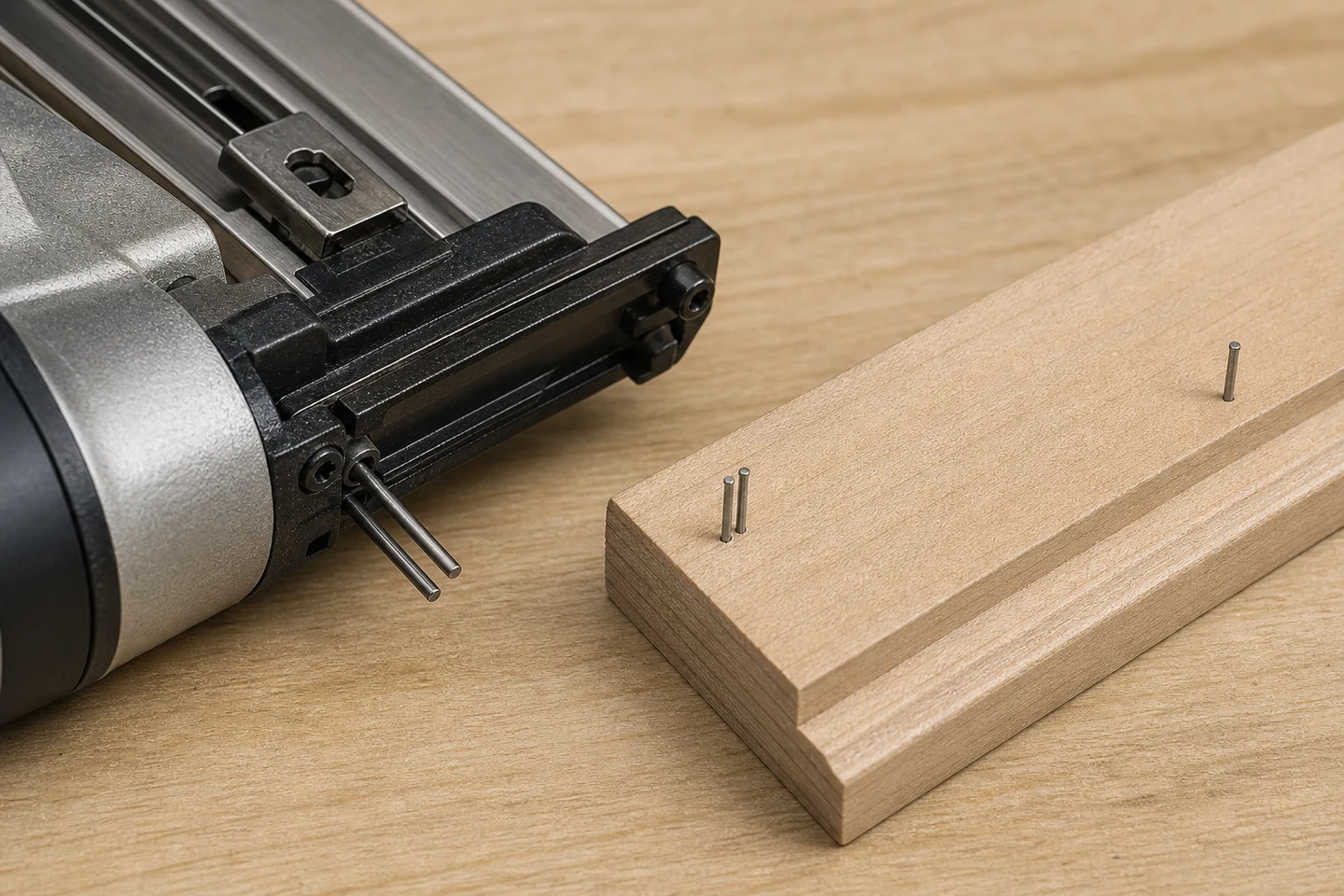
When a pin nailer shoots two pins, stop cycling the tool and preserve both the workpiece and magazine state. Two nearby pins may result from one paired feed, two trigger events, a bounced contact sequence where applicable, damaged collation, an incorrectly loaded strip, feed pressure, or a nose and driver condition that requires qualified service.
Disconnect the energy source and follow the manufacturer's clearing instructions. ProAirNails recommends marking the two entry points, tool direction, trigger sequence, strip position, remaining pin count, and last accepted shot.
Confirm whether one or two firing events occurred
Ask the operator to describe sound, recoil, trigger movement, contact movement, and workpiece repositioning without reenacting the event. Record whether the pins share one opening, form parallel holes, cross inside the material, or entered at different angles.
Do not pull both pins through the face immediately. Extraction can merge two holes, change the hidden paths, and obscure whether the fasteners were presented together or driven in rapid sequence.
Preserve the feed stack in order
Photograph the magazine, follower, leading pins, strip end, loading direction, and any loose pin or adhesive fragment. Remove the strip only through the approved procedure and keep its original front-to-back order.
| Feed evidence | Possible direction | Next check |
|---|---|---|
| Two pins missing from one strip position | Paired presentation or collation break | Leading sequence and adhesive condition |
| Loose pin beside intact strip | Handling or magazine debris | Package and loading-route inspection |
| Double event follows strip change | Loading position or mixed reference | Documented reload with confirmed pins |
| Pattern repeats at a similar count | Feed geometry, follower, or timing | Qualified tool inspection |
Inspect pins and tool interfaces separately
Check unused pins for gauge, length, straightness, spacing, adhesive distribution, mixed strips, corrosion, crushed edges, and package damage. Confirm the pin series is listed for the tool. Very fine headless pins can appear interchangeable even when their dimensions or collation do not match the feed system.
Qualified personnel should inspect the magazine, follower, feed channel, nose, driver, trigger system, and safety features according to the tool instructions. Do not file, bend, lubricate, or bypass parts as an informal correction.
Run a counted restart trial
After service clearance, load a confirmed compatible strip by the documented route. Use representative material on full support. Keep tool, pins, operator, pressure, contact method, and pace fixed, then number each trial point and stop at the first abnormal sound, feed, or entry mark.
ProAirNails can review the tool model, pin reference, magazine photographs, failed strip sequence, package identification, material stack, and entry map when discussing compatible product options. Tool diagnosis and service decisions remain with the manufacturer or qualified service personnel.
Contain work exposed to an uncertain count
Define how to inspect assemblies made since the last confirmed single-pin event. A hidden second pin can exit an edge, cross a visible face, interfere with another fastener, reduce intended receiving engagement, or approach concealed components. Do not add another pin until the unknown paths are located.
Section representative rejected samples when permitted and compare them with a single-pin control. Label the section direction, pin length, material orientation, support, and entry spacing. Keep accepted trials as well as failures so the review does not overgeneralize from one dramatic sample.
The limitation is important: a successful counted trial does not establish tool safety, pin-lot conformity, joint capacity, or reliability at every production pace. Use the tool manual and applicable quality and performance requirements.
Explore the ProAirNails Pin Nails category and wider pneumatic fastener range. Send the pin and tool references, feed-stack photographs, shot sequence, package details, and section evidence through the ProAirNails inquiry page when a pin nailer shoots two pins.
FAQ
Can two pins come from one trigger pull?
A paired feed is possible, but two rapid firing events can look similar. Preserve the strip, entry pattern, operator account, and tool state before deciding which occurred.
Should I keep testing after one double-pin event?
Stop and follow the manufacturer's clearing and inspection procedure. Repeated firing can create more hidden paths or worsen a feed problem.
Does changing pin strips prove the old strip was defective?
No. A clean result with another strip is useful evidence, but loading, tool condition, follower pressure, timing, handling, and material support still require review.
A preserved ProAirNails feed sequence turns pin nailer shoots two pins into a traceable double-feed investigation instead of an unexplained extra hole.