
When pin nails jam in nailer, isolate the tool before pulling the strip apart or clearing the nose. The original position can show whether the pins entered the rail crooked, separated at the adhesive line, rode over the follower, caught at a transition, or reached the driver out of sequence. A cleared tool without a feed record removes most of that evidence.
Disconnect the energy source and follow the tool manufacturer's service procedure. Mark the strip front, loading direction, magazine location, and last successful shot before any authorized disassembly.
Freeze the feed stack at the first abnormal event
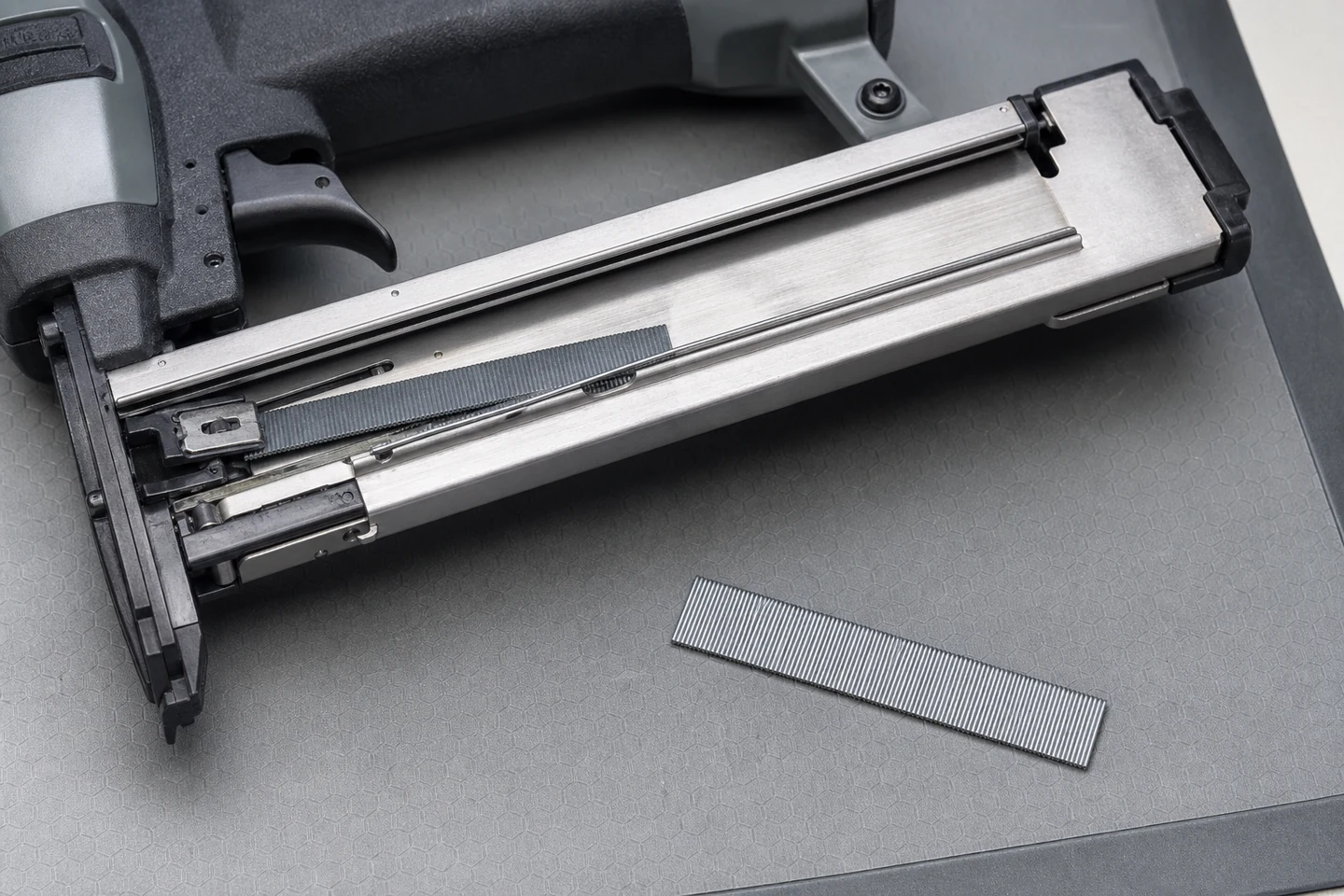
Photograph the magazine from above and from the side. Record the number of pins remaining, follower position, strip angle, visible gaps, loose pins, adhesive flakes, and whether the strip is bowed against either rail. Keep any fragments in their original sequence.
Note what the operator observed: no fire, dry fire, partial drive, unusual recoil, air leak, double sound, or a follower that stopped moving. The symptom helps identify where the feed sequence ended.
Classify the jam location
Use the jam position to choose the next inspection rather than forcing the strip forward. A blockage near the loading end points toward insertion or follower alignment. A jam midway along the magazine raises questions about rail clearance, strip straightness, contamination, or local damage. A jam at the nose requires qualified inspection of the feed transition, driver channel, and fastener presentation.
Measure only with methods approved for the tool. Scraping the rail or prying at the nose can change clearances and introduce new damage.
Build a strip condition checklist
| Strip clue | Possible effect | Control comparison |
|---|---|---|
| Bowed or twisted strip | Rail contact and skewed feed | Flatness on a clean reference surface |
| Broken adhesive bridges | Loose pins or spacing change | Unopened strip from the same pack |
| Excess adhesive or debris | Drag in magazine or nose | Confirmed clean compatible strip |
| Mixed length or orientation | Follower and driver mismatch | Package label and pin reference |
Retain the package, lot reference, and storage history. Crushing, moisture, heat, open cartons, and repeated loose handling can alter a fine pin strip even when individual pins look straight.
Inspect follower travel and rail condition
After the tool is made safe and handled by qualified personnel, check follower movement through its permitted range. Look for side play, weak or uneven force, burrs, dents, residue, fastener fragments, and wear at rail joints. Confirm that the magazine closes fully without shifting the strip.
Do not add lubricant to the magazine unless the tool instructions explicitly call for it. Oil can collect dust, change adhesive behavior, and create another variable.
Separate strip, loading, and tool effects
Use a confirmed compatible pin strip in the suspect tool only after inspection. Then compare the suspect strip in a confirmed compatible tool if the quality procedure permits. Keep pin length, operator, loading method, work material, pressure, pace, and shot count fixed.
Stop at the first abnormal feed. If the event follows one strip or package across a confirmed tool, retain that material. If it follows one tool across confirmed strips, route the tool for service. If it follows one loading method, revise the work instruction and verify the change.
Release the process with observable criteria
Define acceptable strip straightness, storage, loading direction, follower engagement, magazine closure, trial-shot count, and action after a misfeed. Record both clean runs and failures so the team does not base a decision on one successful strip.
The limitation is clear: a feed comparison does not establish tool safety, full strip conformity, or suitability for every pin, material, and production rate. Follow the tool manual and applicable service and quality requirements.
Review the Pin Nails category and the wider pneumatic fastener range. Send tool model, pin reference, package condition, jam photographs, follower position, pressure, and shot sequence through the inquiry page when pin nails jam in nailer.
FAQ
Can I pull a jammed pin strip out with pliers?
Use only the isolation and clearing method specified by the tool manufacturer. Pulling can damage rails, move the driver, or erase the original feed position.
Do bent pin strips always come from shipping damage?
No. Packaging, storage, loading, follower force, rail condition, adhesive behavior, and handling at the bench can all change strip alignment.
Will higher air pressure prevent pin nail jams?
Feed alignment is not generally corrected by more pressure. Stay within the tool specification and diagnose the magazine, strip, and driver sequence.
Preserving the strip order makes pin nails jam in nailer a repeatable feed investigation instead of an undocumented clearing event.