
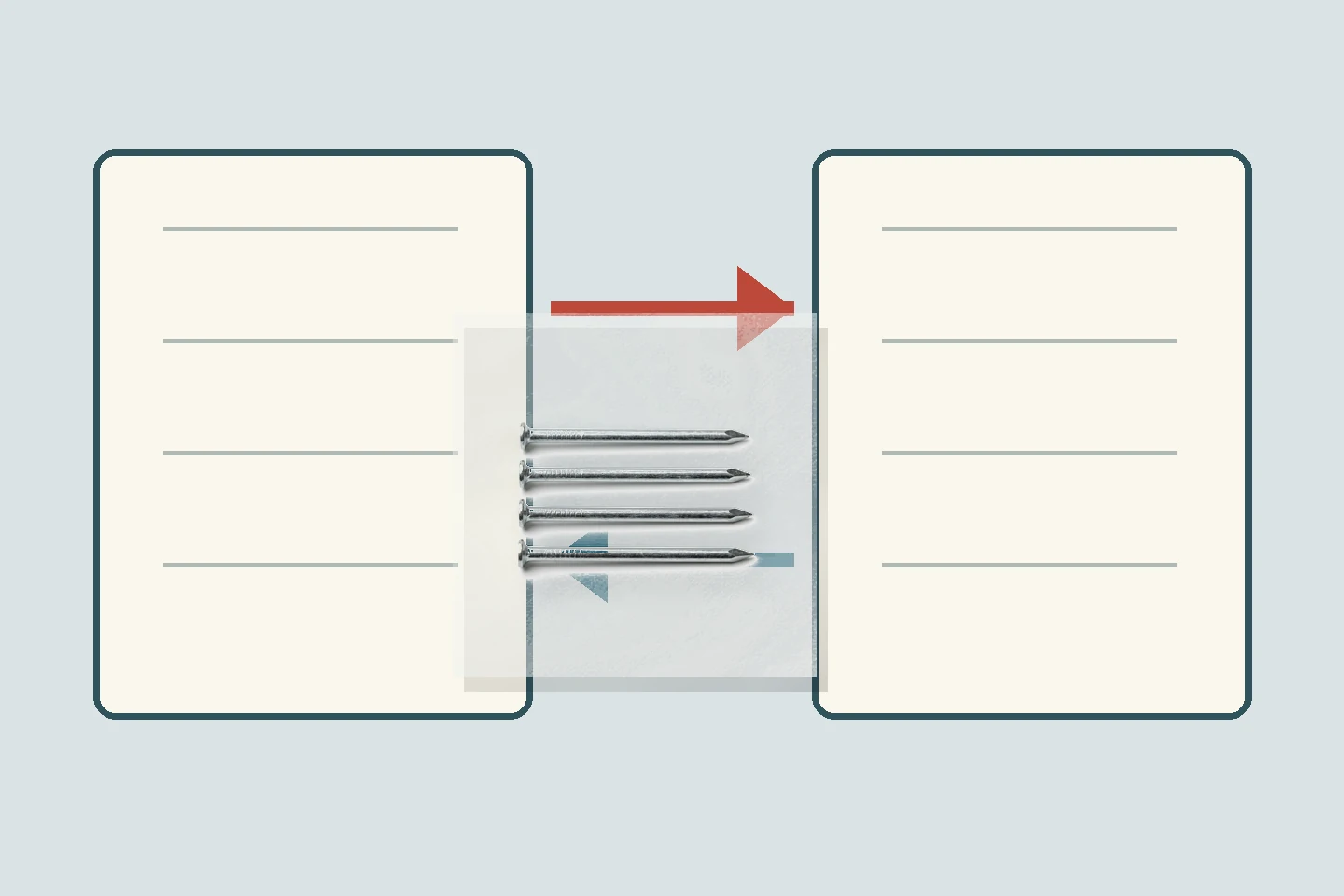
A pneumatic fastener change control process should identify a proposed change before production, assess which requirements and applications it can affect, select proportionate retests, obtain approval, and preserve the implementation lot. A repeat SKU is not the same product route when its wire, finish, collation, tool, carton, or factory process has changed.
ProAirNails recommends putting notification timing, decision owners, evidence, approval status, and first affected shipment into the supply agreement rather than relying on informal email updates.
Define what counts as a controlled change
Include changes to material source, grade, wire diameter, head, point, shank, coating, collation wire or carrier, weld or adhesive, machine, line, tooling, subcontractor, inspection method, carton, label, pallet, production location, and approved application. Also control temporary deviations.
Route each change through a decision map
| Stage | Required record | Decision owner |
|---|---|---|
| Notice | Change description, reason, proposed date | Supplier change owner |
| Impact | Affected SKUs, tools, applications, documents | Buyer engineering or quality |
| Evidence | Samples, tests, comparisons, risk controls | Named technical reviewers |
| Approval | Approved, conditional, rejected, or on hold | Authorized buyer |
| Implementation | First lot, carton, shipment, monitoring plan | Supplier and receiving |
Describe the change without hiding combinations
Show old and new values side by side. If several inputs change together, list them separately and explain their combined risk. A new coating plus a new collation carrier may affect corrosion, friction, weld behavior, and tool feed; a single label such as “process improvement” is not enough.
Assess impact by evidence category
| Change category | Possible impact | Evidence to reopen |
|---|---|---|
| Material or finish | Strength, corrosion, appearance, friction | Certificate, finish check, application trial |
| Geometry or tooling | Fit, penetration, holding, surface damage | Dimensions, sections, tool trial |
| Collation | Loading, jams, doubles, carrier debris | Feed run and defect log |
| Pack or label | Damage, count, identity, receiving | Pack trial, scan, shipment map |
Use documented information as a control
The official ISO 9001 explained page identifies documented information, monitoring, measurement, performance evaluation, and continual improvement as key quality-management elements. These concepts support a controlled change route but do not approve a particular fastener change.
Choose retests from the actual impact
Do not repeat every test automatically, and do not waive every test because the SKU name remains unchanged. Select dimensions, coating evidence, collation checks, tool feed, application performance, packaging, label, storage, or shipment trials based on the old-to-new comparison and application risk.
Use fastener standards carefully
The ASTM F1667/F1667M page can support applicable driven-fastener terminology and requirements. The buyer must still evaluate the named tool, substrate, finish, process, and acceptance criteria before approving a changed route.
Mark conditional approvals visibly
If production may proceed with open evidence, state the scope, quantity, expiration, additional inspection, owner, and due date. A conditional approval should not silently become permanent after the first shipment. Block repeat orders until the closing evidence is reviewed.
- Retain old and new approved samples.
- Record the first affected material and production lot.
- Identify cartons and shipments using the change.
- Notify receiving and production before arrival.
- Review early performance and complaint signals.
Prevent mixed implementation
Define the cut-in event: material lot, machine setup, production date, carton sequence, pallet, or shipment. Segregate old and new product where necessary. If both versions ship together, label and allocate them so a buyer can compare performance and contain risk.
Connect change control to total cost
Compare validation effort with line disruption, obsolete stock, mixed inventory, claims, and replacement. Keep pneumatic fastener change control process decisions connected to predictable accepted output rather than approving a lower price without knowing what changed.
Write change notification into the RFQ
State controlled inputs, notice period, evidence, approval authority, first affected lot, labeling, and emergency-deviation route. ProAirNails can review pneumatic nails, brad nails, and coil nails through the inquiry page.
Keep the approval boundary clear
Change approval cannot guarantee every future lot, tool, operator, substrate, or environment. It releases a defined change against stated evidence and conditions. Preserve the notice, risk review, samples, test results, decision, first lot, and monitoring record.
Use the pneumatic fastener change control process to protect repeat-order knowledge. ProAirNails can provide proposed-change evidence, while the buyer decides which applications, tests, and commercial commitments require reopening.
Review the change after implementation
Schedule a review after the first production lot and again after an agreed volume or time. Compare dimensions, feed events, finish, packaging, receiving findings, line adjustments, scrap, and complaints with the old baseline. Close the change only when conditions are met and temporary controls are removed deliberately. The pneumatic fastener change control process cannot prove a changed route is equivalent when the comparison sample, tool, or application was different; record those limitations and keep monitoring open. If performance worsens, define rollback inventory, supplier capacity, relabeling, and communication before returning to the previous route. This follow-up makes approval a measured transition rather than a signature collected before the real product arrives.
FAQ
What changes require notification?
Control material, geometry, finish, collation, tooling, line, subcontractor, inspection, packaging, label, and production-location changes.
Is a supplier change always a product change?
It can affect material, process, evidence, and traceability even when nominal dimensions remain the same.
How much notice is needed?
Set a contract period that allows impact review, samples, testing, approval, and inventory planning before implementation.
Must every test be repeated?
No. Repeat the evidence affected by the change and any linked risks identified by engineering or quality.
What is conditional approval?
It allows a defined scope under stated controls while open evidence, owner, due date, and expiration remain visible.
How is the first changed lot identified?
Record material, production, carton, pallet, and shipment identifiers for the exact cut-in point.
Can old and new product ship together?
Only when approved and clearly segregated, labeled, allocated, and monitored under the buyer's plan.
Who approves the change?
Name the buyer's authorized quality, engineering, or product owner and supplier implementation owner.
What should receiving know?
Provide the first affected lot, label difference, inspection change, sample reference, and hold or release instruction.
What belongs in the change file?
Keep notice, comparison, risk assessment, samples, tests, decision, implementation record, and early performance review.