
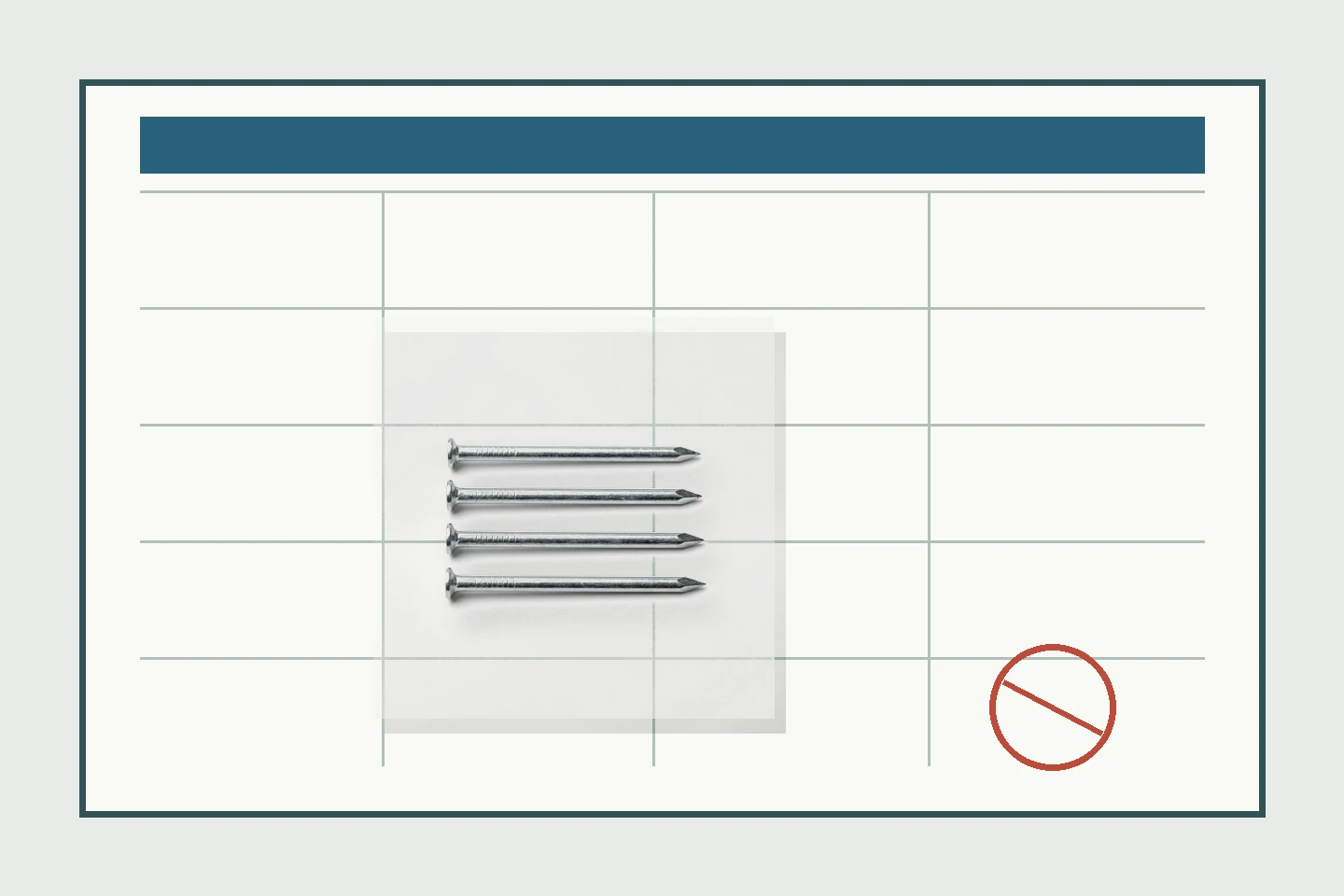
A pneumatic fastener technical data sheet should let purchasing, engineering, receiving, and production identify the same product without interpretation. The useful version connects dimensions and material to collation, tool fit, application, inspection, packaging, and revision control. A product photograph alone cannot do that work.
ProAirNails recommends treating the sheet as a release document: freeze the fields before sample approval, mark any tolerances or options, and link every production lot and carton to the approved revision.
Start with the release question
State what the buyer needs to decide. Is the sheet for an RFQ, a pre-production sample, an incoming inspection plan, a new tool, or a repeat order? The purpose controls which fields are mandatory and who signs the release.
Use a specification decision table
| Field group | What to show | Why the buyer needs it |
|---|---|---|
| Identity | SKU, revision, product family, drawing link | Prevents mixed descriptions |
| Geometry | Gauge or diameter, length, head, point, shank | Supports tool and application fit |
| Collation | Angle, carrier or wire, weld, strip or coil format | Controls feeding and loading |
| Material and finish | Wire grade, coating, surface, intended environment | Frames durability and appearance |
| Commercial pack | Count, carton, pallet, label, lot, MOQ | Supports receiving and planning |
Freeze the dimensional callout
List nominal values, permitted tolerances, measurement method, and the characteristics that are critical. Explain whether length is measured under the head, whether diameter is nominal or measured, and whether the point or head has a controlled profile. If an equivalent dimension is allowed, state who approves it.
Describe collation and tool fit
Identify the receiving nailer, magazine, nosepiece, angle, strip or coil format, carrier material, weld or adhesive, and the expected loading direction. A fastener can meet a dimensional callout yet fail when the carrier is too stiff, the angle drifts, or the weld breaks in the magazine. Put the named tool family on the same page as the fastener.
Separate material from marketing claims
Record substrate, wire or steel description, coating or plating, surface appearance, and the environment the buyer has actually qualified. Use terms such as galvanized or stainless steel only with a defined material or finish record. Do not turn a broad corrosion statement into an outdoor guarantee.
Show the evidence route
| Claim | Evidence to attach | Review trigger |
|---|---|---|
| Dimension | Gauge, sample readings, method, lot | Drawing or tooling change |
| Collation | Feed trial, jam log, carrier photos | Line, tool, or carrier change |
| Finish | Coating record, visual standard, exposure plan | Wire or coating source change |
| Pack | Carton drawing, count check, label photo | Artwork or transport change |
The ISO 9001 quality-management overview is a useful reference for documented information and change control. The ASTM F1667/F1667M page can help frame applicable driven-fastener terminology. Neither source replaces the buyer's own tool and application validation.
Make the sheet usable at receiving
Repeat the SKU, revision, dimensions, finish, collation, count, lot format, carton quantity, and label example in a receiving-friendly block. A warehouse should be able to compare a carton with the approved sheet without opening every box. Include a photograph only as a supplement; text fields and tolerances remain the controlling record.
Connect the sheet to cost
Include packaging, usable pieces, expected feed interruptions, inspection effort, and replacement route when comparing suppliers. Keep pneumatic fastener technical data sheet decisions tied to cost per accepted installation, not just the unit price quoted beside a generic image.
Control revisions and options
Give each sheet a revision, effective date, owner, approval, and change note. Mark options such as finish, length, coil diameter, carton count, or private label as separate selectable fields. Never leave a choice hidden in an email or a sales quotation.
- Assign one owner for the master sheet.
- Link the sheet to the drawing and sample record.
- Keep obsolete revisions visible but blocked.
- Record affected SKUs when a field changes.
- Notify receiving and production before shipment.
Use the sheet in the RFQ
Ask suppliers to return missing values, proposed tolerances, sample timing, tool compatibility, test evidence, carton details, MOQ, and lead time. ProAirNails can review pneumatic nails, coil nails, and other fastener families through the inquiry page.
Keep the application boundary visible
A data sheet cannot prove every tool setting, substrate, operator, climate, finish, or production speed. It is a controlled description and evidence index, not a universal performance guarantee. Reopen the relevant trial when an application input changes.
For a pneumatic fastener technical data sheet to remain useful, preserve the revision, measurement method, approved sample, tool route, packaging label, and change history together. That record gives buyers a stable reference when several departments or suppliers use different names for the same fastener.
Hand the sheet to every decision owner
Before release, send the approved sheet to purchasing, engineering, receiving, production, quality, and customer service. Ask each team to identify the field it will use during a normal order: purchasing checks the commercial pack, receiving checks the carton identity, production checks the tool route, and quality checks the evidence record. ProAirNails can mark the open fields, owner, due date, and approval signature so the pneumatic fastener technical data sheet becomes a working handoff instead of a file that only engineering reads. Keep a dated PDF with the purchase order and a controlled editable master with the drawing. When a buyer changes length, finish, carton count, or destination, compare the old and new sheet side by side and document the impact before the next sample or production run.
FAQ
What is the most important field?
Start with the controlled identity, revision, dimensions, collation, receiving tool, and application so the rest of the evidence refers to one product.
Should tolerances be listed?
Yes. Show nominal values, permitted limits, measurement method, and which characteristics are critical for release.
Can a photo replace a drawing?
No. A photo helps recognition, but it cannot define dimensions, tolerances, collation, or approved substitutions.
What tool information belongs on the sheet?
Include tool family, magazine or nosepiece, loading direction, collation format, and any approved setting range.
How should finish be described?
State the material or coating record and intended exposure; avoid broad outdoor or corrosion guarantees without application evidence.
Who should approve the data sheet?
Assign engineering or quality ownership with purchasing and production review when the fastener affects a line or finished product.
How often should it be updated?
Update it when product, material, collation, tool, pack, label, supplier source, or acceptance criteria changes.
Does ISO 9001 certify the fastener?
No. It is a quality-management framework; product conformity and application performance require their own evidence.
What should be attached?
Attach drawings, sample readings, tool trials, finish records, carton photos, label examples, and a clear revision history.
What makes the sheet procurement-ready?
It states the specification, evidence route, commercial pack, change owner, and release decision in terms every buyer team can use.