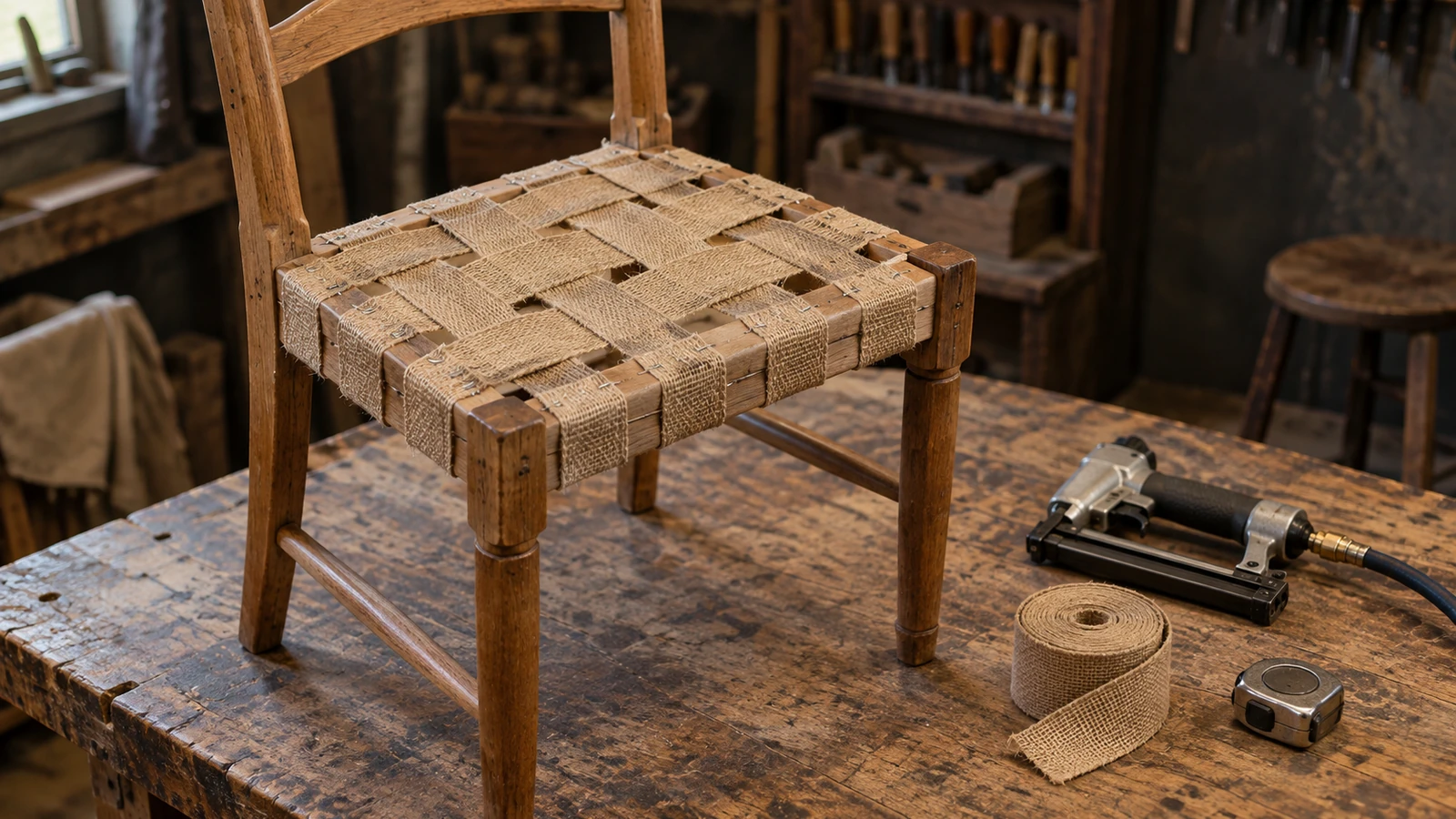

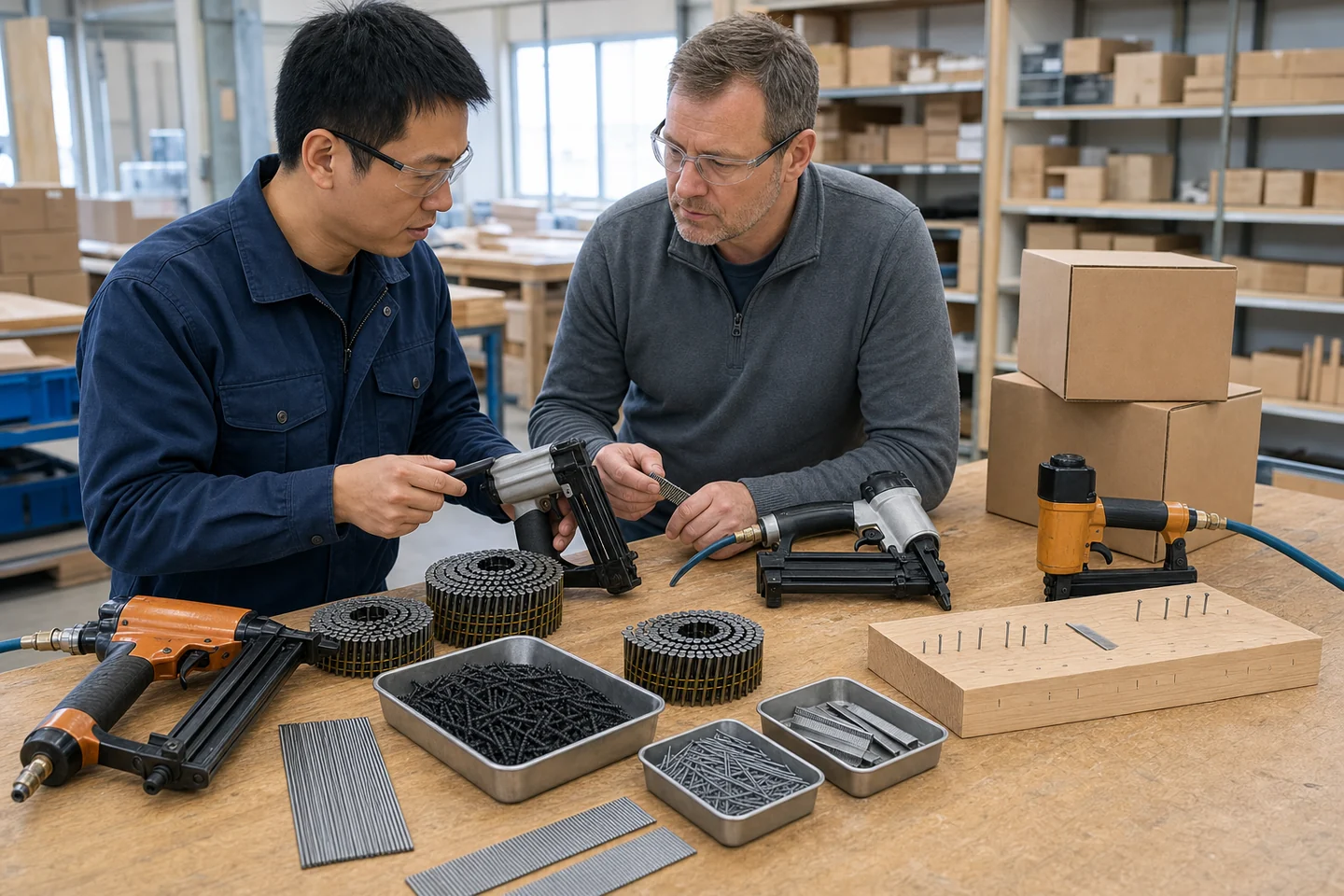
Fasteners on a sample table are quiet. They do not jam, double-feed, bend at a knot, leave a proud crown, or arrive with broken strips. Those problems appear when the product meets the tool, material, operator, and working pace. A pneumatic fasteners supplier should therefore be evaluated through application trials as well as documents and prices.
The first task is to define the buyer's operating system: nailers or staplers, substrates, joints, visible surfaces, production speed, finish conditions, packing route, and monthly demand.
Compatibility needs more than a familiar product name
“Brad nail,” “coil nail,” or “staple” describes a family, not a complete fit. Gauge, length, crown, collation angle, strip dimensions, wire or plastic connection, head, shank, and point can all affect the magazine and nose.
Ask the supplier to identify the information used to recommend a product. A current sample and tool model are useful, but the application material and joint explain what successful driving actually means.
A useful sample trial includes ordinary difficulties
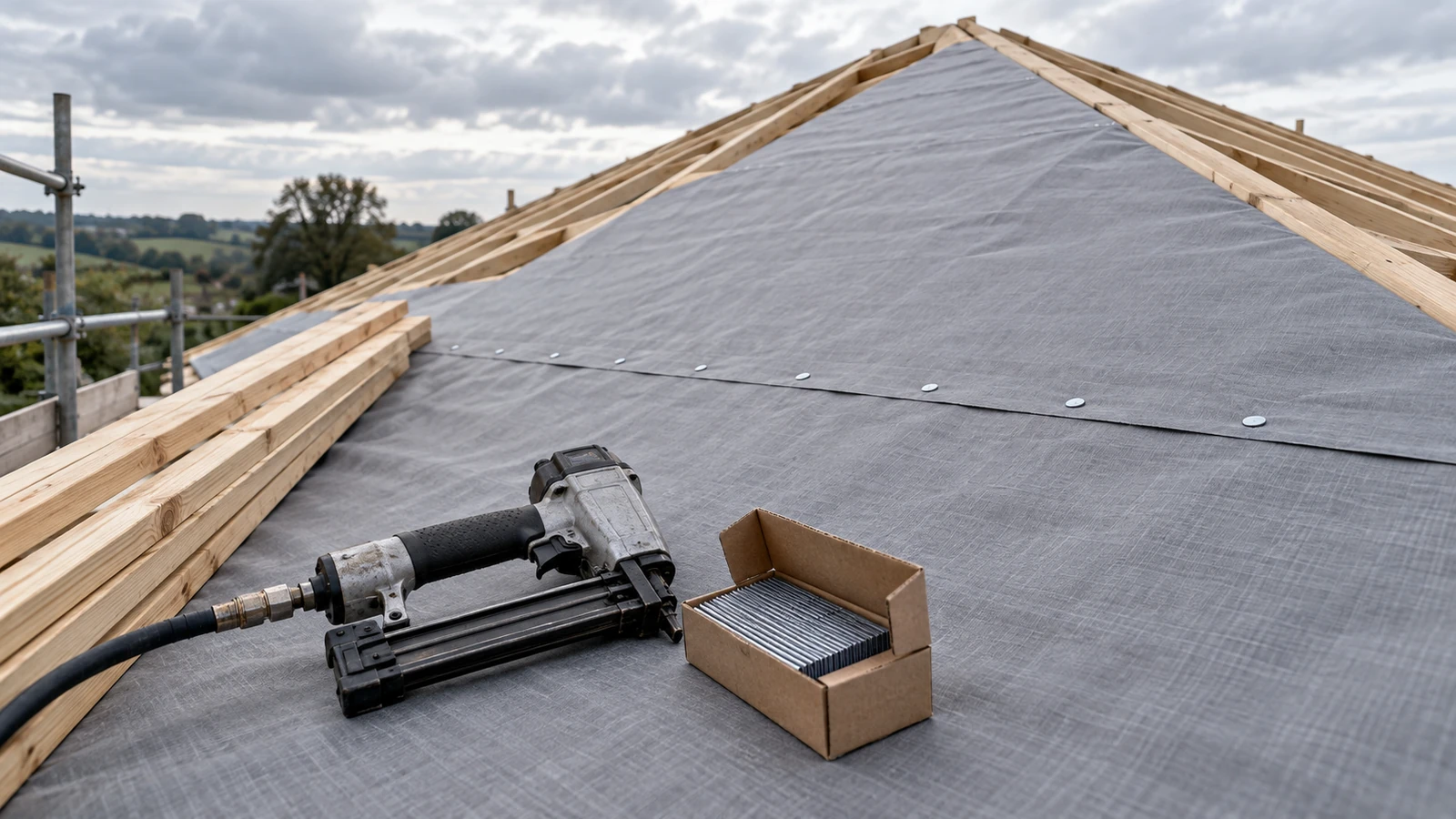
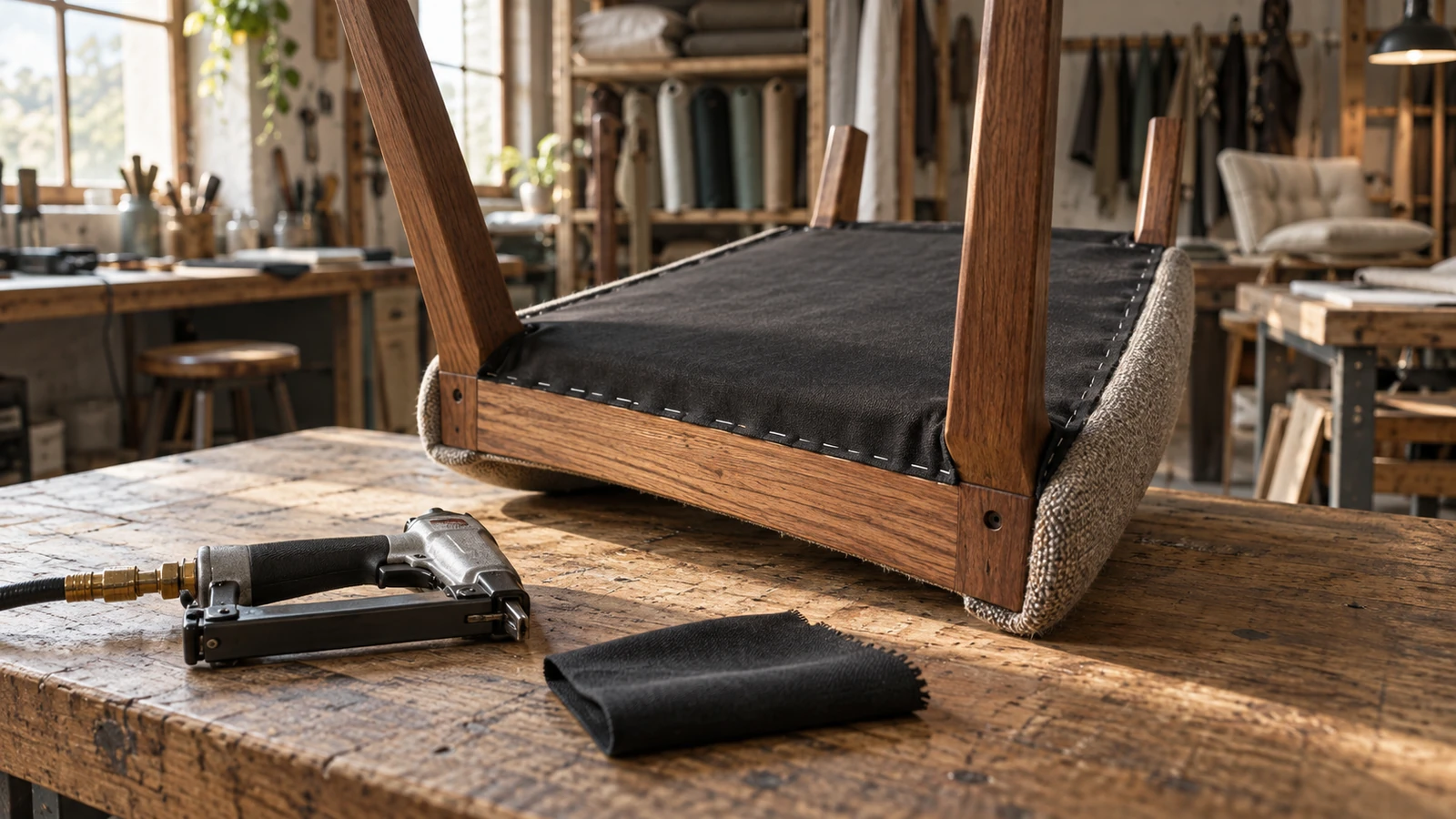
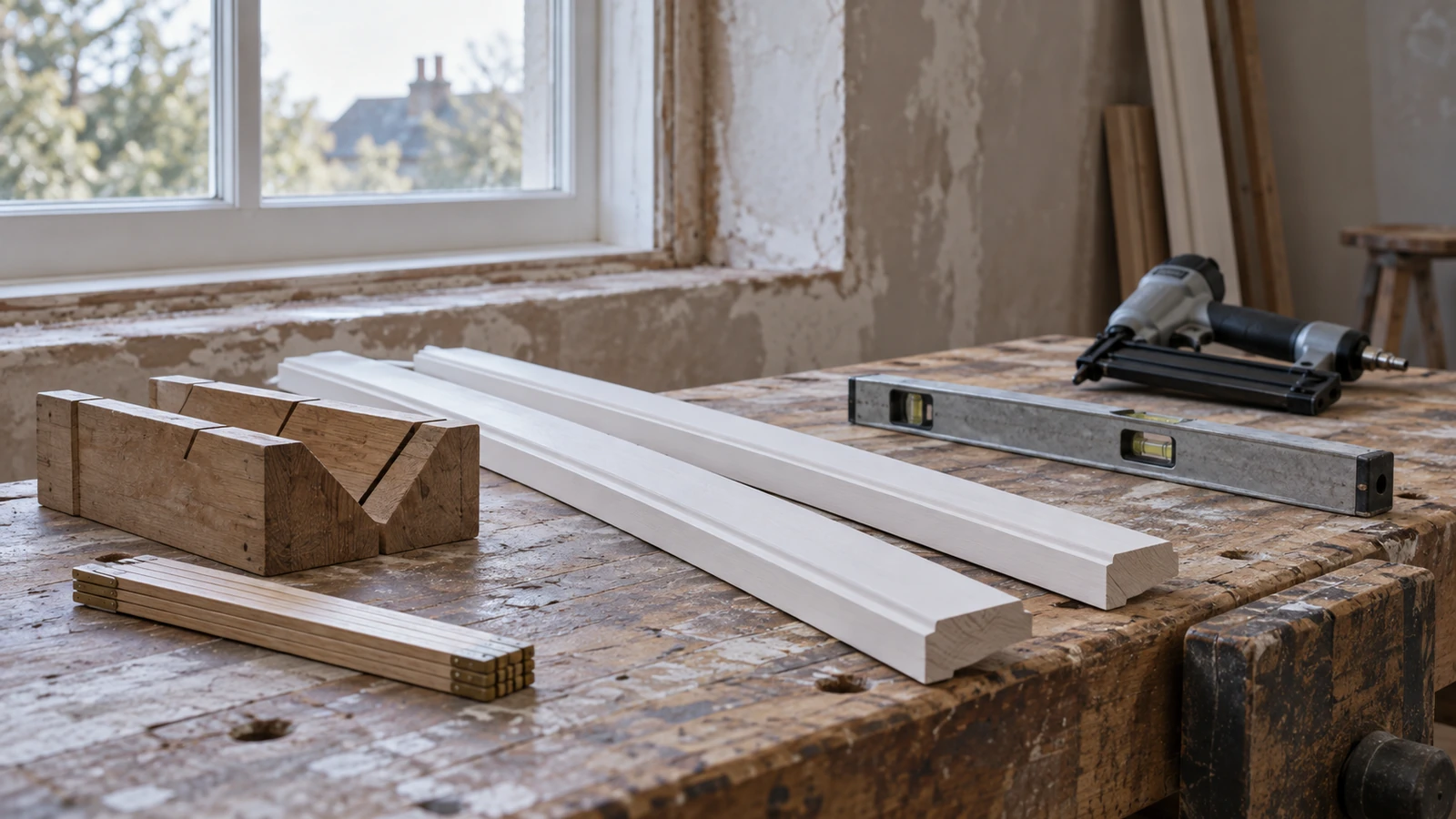
Run samples in the real tools, including older units that remain in daily service. Use production timber, board, fabric, carton, or other substrate. Add the narrow edge, dense section, knot, layered joint, or visible face that normally causes trouble.
Record loading, feed resistance, misfires, bent fasteners, broken collation, drive depth, surface damage, splitting, air-pressure changes, and operator comments. Longer runs matter because heat, vibration, strip handling, and the last fasteners in a coil may reveal issues that a short demonstration misses.
Safety and maintenance are part of the operating result
A reliable fastener does not replace correct tool selection, guarding, maintenance, training, or safe work practices. OSHA provides general guidance for pneumatic tools. Buyers should also follow the tool manufacturer's instructions and the requirements that apply in their workplace and market.
Trial notes should identify any unusual pressure, nose adjustment, lubrication, or cleaning needed to obtain an acceptable result. A sample that works only after constant compensation is not ready for broad customer use.
Inspection and packaging should preserve the approved result
Ask how critical dimensions, finish, straightness, collation, strip count, and packing are checked. The inspection plan should relate to the approved drawing and sample. Retained samples and revision numbers help both sides investigate later feedback.
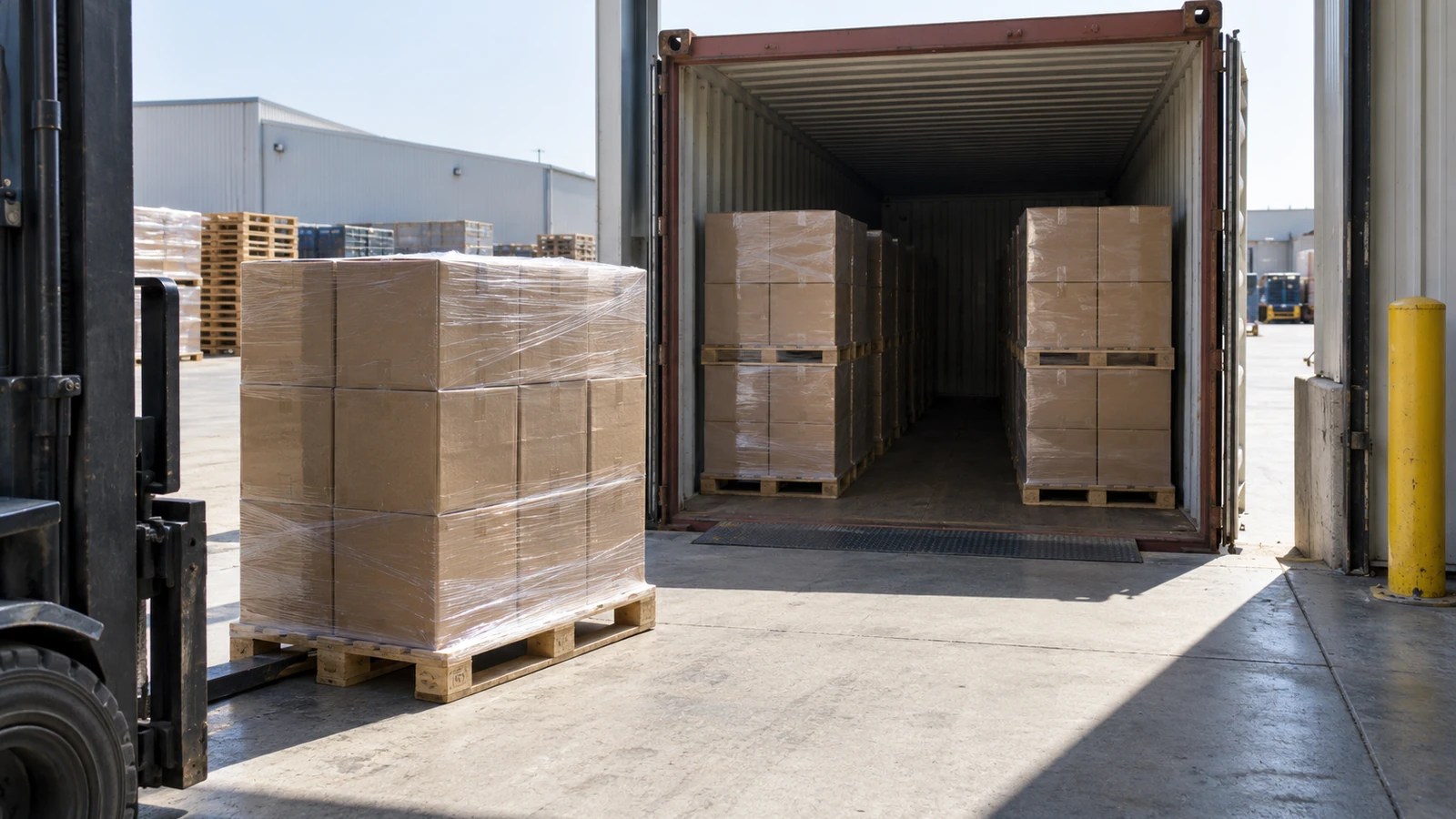
Collated products also need protection from crushing, humidity, rough palletization, and confusing labels. Approve inner boxes, carton weights, moisture protection, product identification, and mixed-load arrangements before the first large order.
ProAirNails supports range and application decisions
As a pneumatic fasteners supplier, ProAirNails works with importers, distributors, manufacturers, and private-label brands across coil nails, brad nails, pin nails, staples, screws, and related air tools. Buyers can begin with a single application or a coordinated product range.
Review Pneumatic Nails, explore Brad Nails, compare Air Staple Pin products, or learn more at About ProAirNails. A dependable pneumatic fasteners supplier should make sample feedback easier to turn into repeatable product and packing controls.
FAQ
What should buyers send a pneumatic fasteners supplier?
Provide the tool model, current fastener, application materials, joint, finish, performance issue, monthly volume, destination, and packing requirements.
How many samples should be tested?
There is no universal number. Test enough strips or coils to include normal production pace, different materials, more than one tool, and ordinary handling variation.
Why can a compatible-looking fastener still misfeed?
Small differences in collation, strip dimensions, angle, wire connection, straightness, or packaging damage can affect how the magazine and feed system present each fastener.
Discuss your pneumatic fastener requirements through the ProAirNails inquiry page.