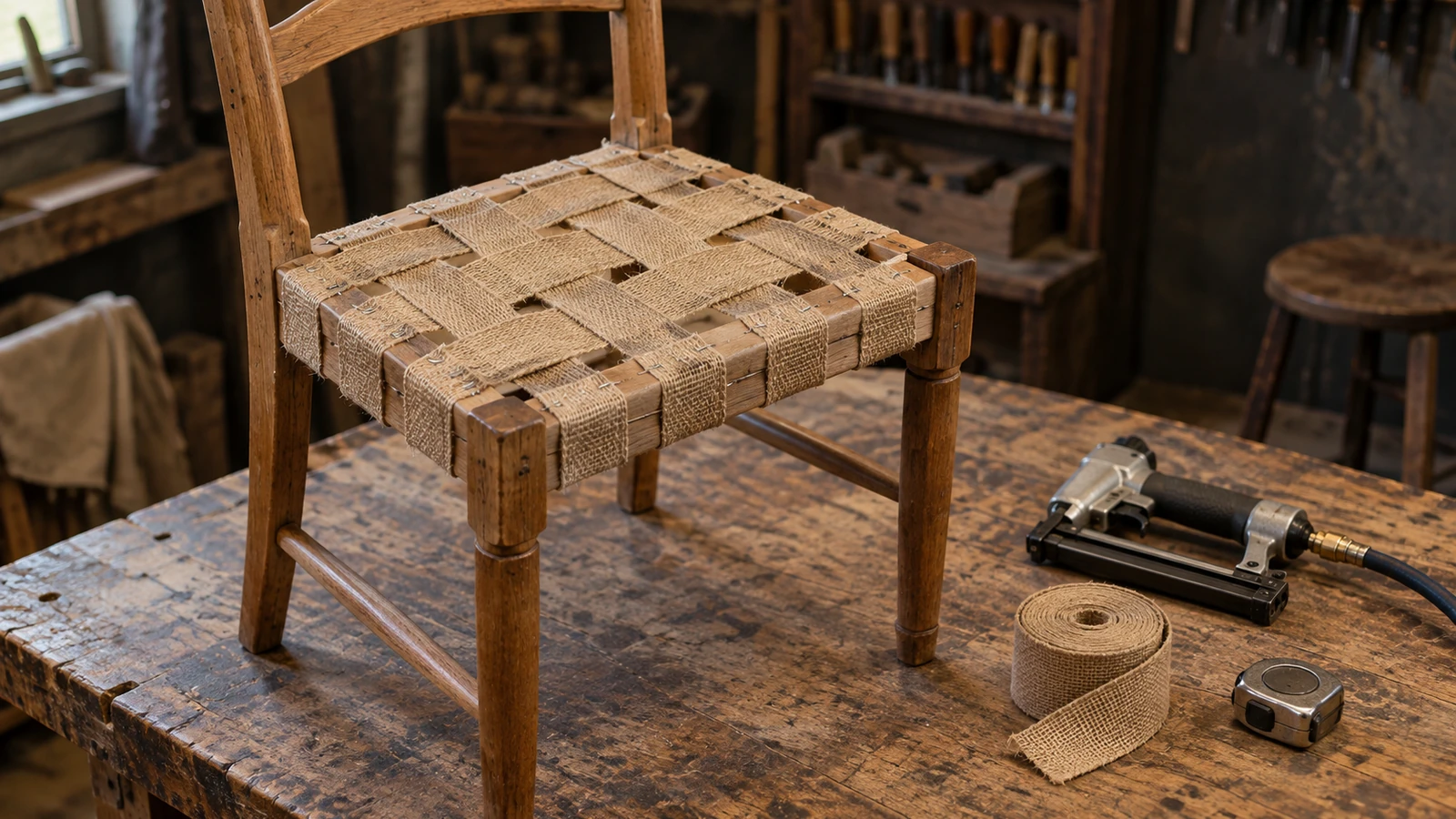

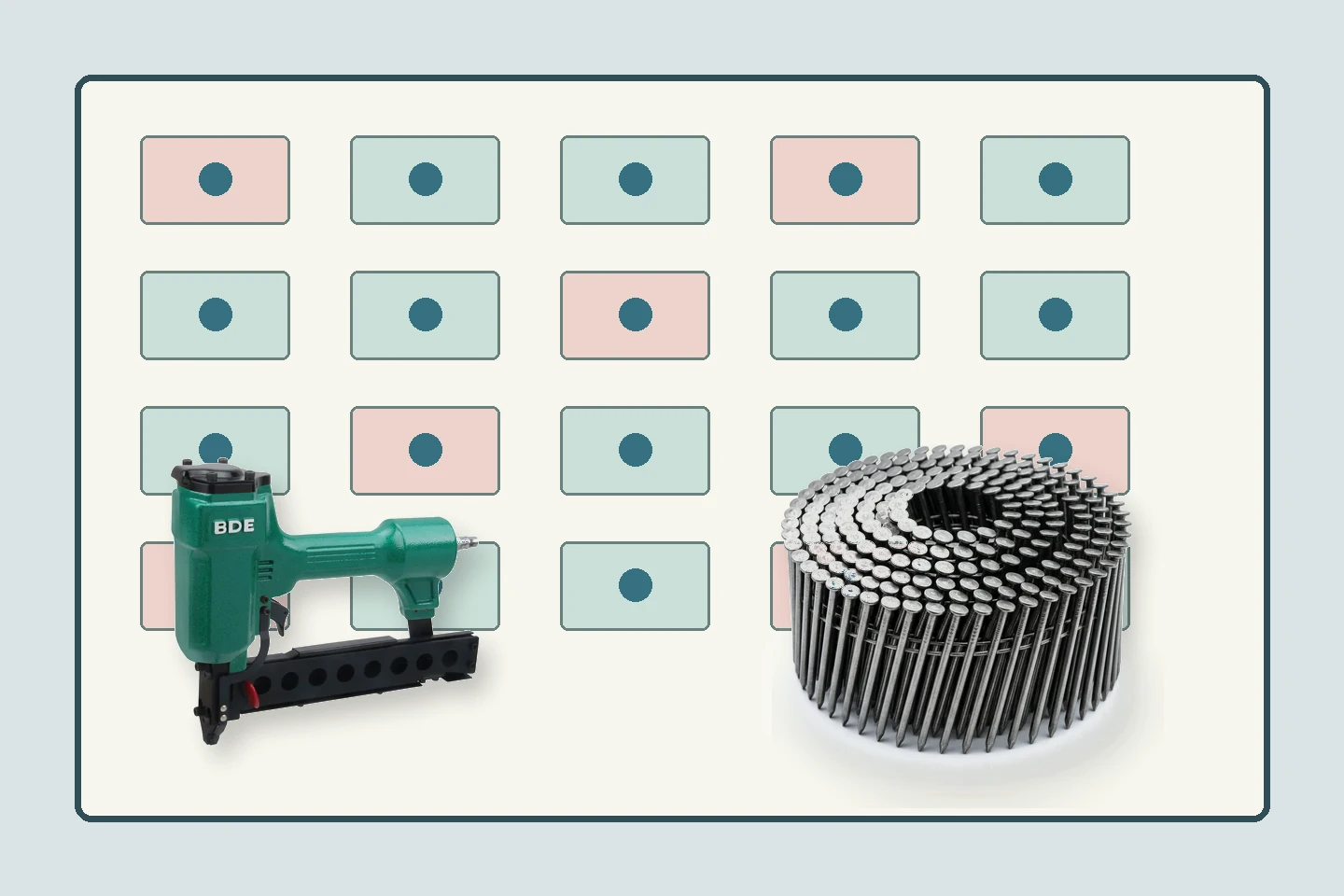
A pneumatic nailer fastener compatibility chart should show the exact tool, magazine, fastener geometry, collation, setting window, substrate, and trial result that were approved together. A product name or series cross-reference is only a starting point; feed and drive behavior still depend on the complete combination.
ProAirNails recommends using the chart as a controlled decision tool that can be updated after a tool service, fastener revision, or application change.
Make the chart answer five questions
Can the strip or coil load? Does it feed without skips or doubles? Does the driver engage the head or crown correctly? Does the fastener seat in the named substrate? Can the result be repeated across the approved production window? Each question needs a field, an owner, and a pass rule.
Use a compatibility row, not a loose note
| Column | Example content | Why it is needed |
|---|---|---|
| Tool | Model, magazine, station, service state | Separates real tool conditions |
| Fastener | Gauge, length, head, point, finish | Defines the driven item |
| Collation | Angle, pitch, carrier, weld, strip or coil | Controls loading and feed |
| Setting | Pressure, depth, nose contact, driver | Defines the operating window |
| Substrate | Species, thickness, layers, grain or steel | Defines the joint condition |
| Trial | Event count, failures, photos, reviewer | Provides release evidence |
The first version of the pneumatic nailer fastener compatibility chart should be owned by quality and engineering, then shared with purchasing and maintenance. ProAirNails recommends giving every row a revision date, sample lot, reviewer, and expiry trigger so an old approved cell cannot silently survive a tool repair or fastener change.
Separate identity from compatibility
A fastener can meet a dimensional description and still be unsuitable for a magazine, driver, or application. Conversely, a tool may feed a strip but create proud heads, overdrive, surface marks, or weak holding. Keep a conformity column and a compatibility column so a pass in one does not silently release the other.
Read the driven-fastener scope correctly
The active ASTM F1667/F1667M page covers driven nails, spikes, and staples, including material, physical-property, workmanship, coating, and dimensional information. Its scope does not make every collation material or relative orientation interchangeable. The chart must retain the actual carrier and tool evidence.
Use a staged trial instead of one demonstration
Stage the trial from empty-tool loading to repeated production cycles. Count loads, feeds, drives, jams, skips, doubles, broken carriers, bent fasteners, driver slips, proud heads, overdrive, and visible substrate damage. Use more than one carton or coil position and record every failed event rather than only the successful sample.
- Confirm the tool model and magazine marking.
- Record driver and nose condition.
- Use the approved pressure and depth window.
- Keep substrate and joint geometry constant.
- Attach failed pieces and photos to the row.
Mark conditional matches visibly
| Status | Meaning | Next action |
|---|---|---|
| Approved | All defined fields and events pass | Release named tool and application |
| Conditional | Limited tool, setting, lot, or quantity | Record expiry and extra inspection |
| Trial only | Sample works but commercial lot is unverified | Run first-lot confirmation |
| Hold | Identity or safety evidence is incomplete | Do not load into production |
| Rejected | Defined failure exceeds the rule | Contain, correct, or replace |
Account for tool service and revision changes
Record driver blade, nose, magazine, seals, pressure regulator, and maintenance status when they influence the result. A serviced tool may change depth or feed behavior. A changed fastener head, collation, point, finish, or packaging revision can also reopen the chart row even when the SKU remains familiar.
Use sampling for commercial lots
The current ISO 2859-1:2026 page describes AQL-indexed lot-by-lot sampling by attributes. Define the lot, defect classes, sample selection, acceptance criteria, and switching rules. Sampling complements the compatibility trial; it does not prove every fastener will feed every tool.
Make the chart useful to purchasing
Include approved substitute rows only when the tool and application evidence is comparable. Show supplier, SKU, lead time, MOQ, pack, finish, current revision, sample date, and expiry. ProAirNails can discuss pneumatic nails, brad nails, coil nails, and the inquiry route.
Maintenance should sign the tool fields, quality should sign the evidence, and purchasing should reference the approved row on the purchase order. This keeps an untested substitute from entering production through a rushed reorder.
Price compatibility failures honestly
Compare sample and inspection labor with jams, downtime, driver wear, rework, damaged substrate, sorting, replacement freight, and lost production. A cheap SKU that requires an unapproved pressure setting or frequent reload intervention is not an equivalent substitute.
When the pneumatic nailer fastener compatibility chart shows a conditional match, price the extra inspection, limited station assignment, and review time instead of presenting the candidate as a full replacement.
State what the chart cannot decide
A compatibility chart cannot replace tool manuals, guarding, operator training, joint design, safety review, or project requirements. It records a defined technical decision for named conditions. The buyer remains responsible for safe use and final application approval.
Keep the pneumatic nailer fastener compatibility chart close to purchasing, maintenance, quality, and production so a change is seen before a substitute reaches the line.
FAQ
What is the most important chart field?
Record the complete tool-fastener-substrate combination, not only a tool model or fastener series.
Can a cross-reference replace a trial?
No. It can suggest a candidate; loading and repeated drive events still need evidence.
What should a feed trial count?
Count loads, feeds, drives, jams, skips, doubles, broken carriers, driver slips, and depth failures.
Why record tool service state?
Driver, nose, magazine, seals, and pressure condition can change feed and seating results.
What does conditional approval mean?
It limits tool, lot, setting, quantity, or duration and must show an owner and expiry.
Does AQL prove compatibility?
No. It manages lot sampling risk; compatibility needs a named tool and application trial.
When does a chart row expire?
Set a review trigger for fastener, tool, setting, substrate, packaging, supplier, or process changes.
Should substitute SKUs share a row?
Only when identity and performance evidence are separately documented and comparable.
Who owns final approval?
Name the buyer's quality or engineering authority and notify maintenance and production.
What should be attached to a failure?
Keep the lot, tool, settings, event count, failed pieces, photographs, substrate, and disposition.